

What this blog includes
- What a rebound actually is, in plain words
- Seven signs you may be in a rebound right now
- Whether a rebound helps you heal, based on honest research
- When a rebound can be okay, and when it is a quiet problem
- What to do if you suspect you are in one
The first week after a breakup is a strange kind of empty. Then someone new is kind to you and the ache lifts for an evening. That short lift is what people mean when they say rebound meaning.
This blog has the plain definition, the common signs, and an honest answer: does dating someone new, soon, actually help you heal, or does it only put off the harder work? GoodLives is trusted by 500K+ people, and the answer is kinder than you think.
What does “rebound meaning” actually mean in a relationship?
A rebound is a new romantic relationship that begins soon after a previous one ends, usually while the person is still emotionally attached to the former partner. The rebound meaning in a relationship is not a slur; it describes timing and emotional state, not the people involved.
“Soon” is not a fixed number. Three weeks can feel like a rebound; three months can still feel raw. The clearer test is inside you: how often does the old relationship come up when the new one is quiet. Both people may be lovely; the issue is only when one is a soft landing from a fall that has not finished.
In short: A rebound begins while you are still tied to the last one. The marker is the inside, not the calendar.
Seven common signs you may be in a rebound
Most of us have been here at least once, in our own life or watching a close friend. The list below is not a verdict. If you nod at four or more, it is worth a slow think about what you are looking for in the new person right now.
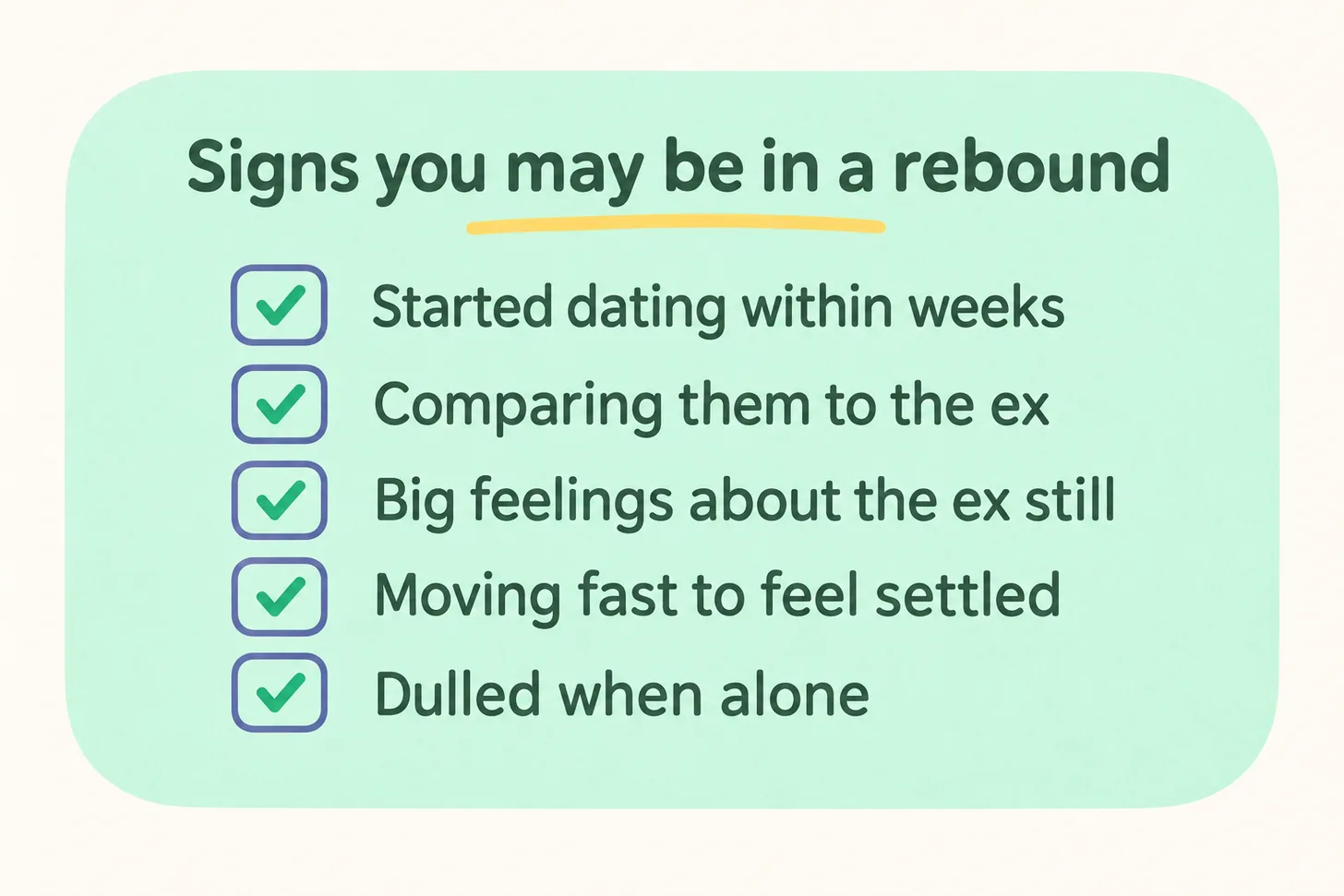
- You started dating within a few weeks, and it felt urgent
- You find yourself comparing them to your ex, often, to prove something
- Your ex still comes up in big feelings: anger, longing, “I will show them”
- You moved fast (meeting family, labelling it) to feel settled
- You spend time with them mostly when afraid of being alone
- Your friends have said it is “a lot, a bit soon”
- You feel better around them, duller when they are not around
In short: One line is a bad week; four or more is a pattern.
Why do we seek a rebound right after a breakup?
The body does not know the difference between heartbreak and injury. Your chest aches, your sleep breaks, food tastes less. A new relationship is an immediate painkiller: texts, attention, warm skin. In India the social piece sits on top: if family keeps asking when you will “settle down”, a new partner is a visible answer.
In short: Rebounds are not a weakness. They are the mind using the easiest tool it has for a pain it was not taught to sit with.
Does a rebound actually help you heal, or just delay it?
The honest answer is “it depends on what you are doing with it”, and research is kinder than most blogs suggest. A rebound helps when the new relationship is a real one, not a search party for a feeling. It hurts when the new person’s job is to stop you from feeling the previous one.
A 2015 study by Brumbaugh and Fraley in the Journal of Social and Personal Relationships found that people who entered a new relationship sooner after a breakup reported higher self-esteem and wellbeing than those who waited.
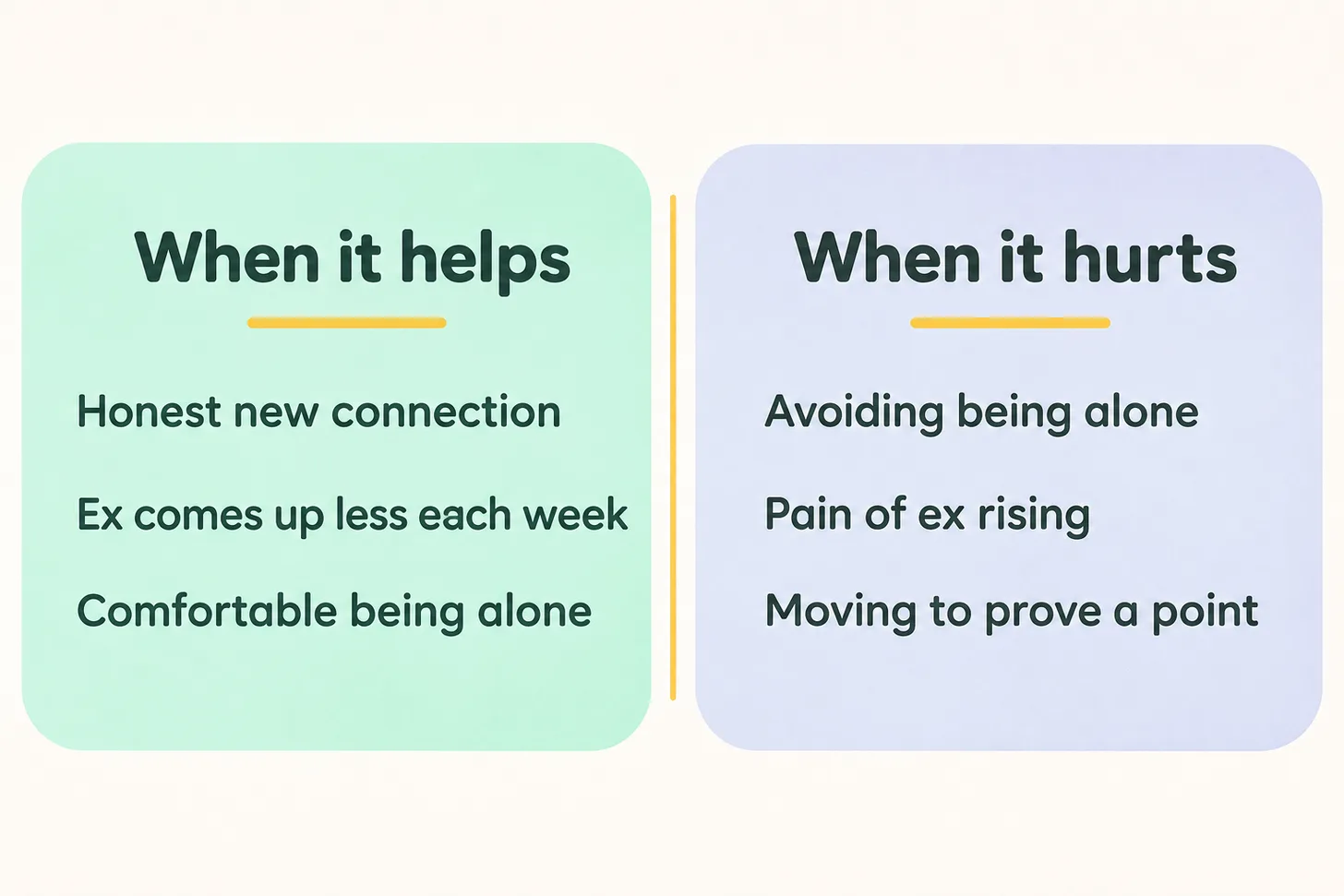
When a rebound tends to help
- You like the new person for who they are
- The ex comes up less each week, not more
- You can be alone for an evening without reaching for them
When a rebound tends to hurt
- You use the new person to avoid being alone at all
- The pain of the ex rises when they are not around
- You are moving fast to prove something to your ex or yourself
How to tell if you are in a rebound right now
Sit with these three questions for five minutes without typing a reply to anyone. If a message buzzes while you read, let it wait. These are quiet questions, not accusations about your character, and the answers tell you more than any list would.
- If this new person vanished tomorrow, which feeling would come first: missing them, or being alone with my ex-feelings again?
- In the last week, how much of our talk has been about me processing my last relationship?
- If my ex posted a photo with someone new today, would my response involve this new person?
One Hindi word captures the state: bechaini, that restless feeling that keeps looking for something to lift it. If one thought keeps looping, something like “I need someone to not feel broken”, take a minute with this.
Catch the thought
What thought is weighing on you right now? Write it down just as it sounds in your head.
Name the trap
Does your thought fall into one of these common patterns? Pick any that fit. This part is optional.
Look again
Use these as nudges, not rules. Then write one line back to yourself.
Your reframe
Thoughts are not facts. You just practised stepping back.
This stays on your device. Nothing is saved or sent.
In short: The clearest test is whether the new person stands next to your grief or in front of it.
What to do if you think you are in a rebound
You do not have to end the new relationship by Sunday or call your ex and apologise. You might be worried that honesty will break what you have; usually it does not. Smaller, kinder steps come first, and some can start tonight.
- Tell the new person the honest version: “I came out of something recent, I like you, I want to go slow.”
- Give yourself one weekend alone, with no messages. The feeling that comes up is the one you were avoiding.
- Journal about the old relationship for twenty minutes a few times. Our how to forget someone you love has 12 steps.
- Keep the parts of your life that are yours (one friend, the Saturday walk) separate.
- Notice the first week you feel okay alone.
If the breakup is still loud, practical breakup tips are kinder. In Hindi, Kisi ko kaise bhulaye covers the same ground.
In short: You do not need to fix this in a day. One honest talk and a few weeks of noticing.
When therapy is a kinder next step
Not every breakup needs therapy. If a close friend, a walk and better sleep put you back on your feet, that is enough. Therapy earns its place when the pain is still loud a month on, or when you keep ending up in the same shape of relationship.
A rebound only takes the edge off. A therapist helps you understand what you were trying to fix, so the pattern does not return with the next person. This work is covered under the Mental Healthcare Act 2017. Read breakup and heartbreak counselling bios first, and couples therapy online is there if a new partner is in the picture.
In short: Therapy is not the first move after every breakup. It is the kinder move when the loop keeps repeating.
FAQ
What does rebound mean in slang?
Is 2 months after a breakup a rebound?
What is meant by “rebound girl”?
What does “rebounce” mean in a relationship?
Can a rebound turn into a real relationship?
How long should I wait after a breakup to date again?
This post is for information only and is not a substitute for professional care.




Share your thoughts