
Something has shifted. You feel it in the pauses. You hear it in the apology almost said. Searching couples therapy at midnight is not too much. It is one honest thing to do.
GoodLives is one of India’s online therapy sites, trusted by 500K+ people. The homepage carries a 5 Google rating. A session here means a longer online meeting with a trained counsellor. You can both join from the same room, or from two cities.
This is a long post, written for the partner who opens the laptop first. Most of us have been here at least once.
What is couples therapy, really?
Couples therapy is a short, trained talk between two partners and one counsellor. The counsellor sets the rules. They ask what you would not ask alone. They help you both name the thing under the thing. It is a method, not a verdict on your bond.
A session runs 60 to 90 minutes. Most couples start weekly for six to eight weeks. Many then move to one session every two weeks.
The goal is not always to stay together. Sometimes the work ends in a clearer, kinder choice in either way. The counsellor’s job is to help you both hear each other. Picking a side is not the job.
Two frames come up in India. The Gottman Method is research-based. Emotionally Focused Therapy, or EFT, works with the patterns under your fights.
In short: The method is bounded and trained. Two people, one counsellor, a plan for the hard moments.
When it helps, and when it does not
Couples work helps when both partners can look at themselves. It helps when the fight has stopped moving. It is less useful when one partner is being hurt. It is also hard when one partner is only there to prove the other is wrong. These are the two real limits of the room.
A counsellor can work with patterns you can both name. We fight the same fight. We stopped talking about one topic. One of us pulls away when the other reaches.
If you recognise your relationship in the first flag, do not book a couples session. Call Women Helpline 181 or iCall on 9152987821. Ask for an individual therapist. A session where one partner is being hurt is a session where the one being hurt cannot speak freely.
You might be worried that a helpline makes it a bigger deal than it is. It does not. These lines are private. The person who picks up has heard this before.
Not every rough patch needs therapy. Some seasons are weathered with sleep, two honest talks and time. For deeper signs, see the toxic relationship guide.
In short: When both of you can look inward, the room helps. When one of you is being hurt, it is the wrong room.
Online or in person: which fits you?
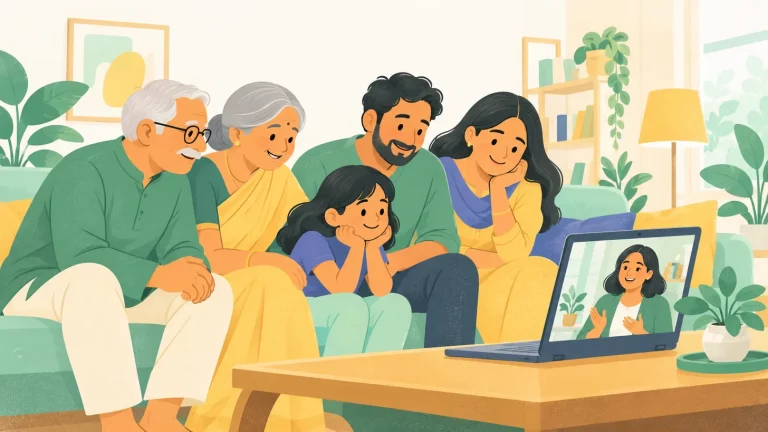
Online means both partners join a video call on their own devices. You can be in one room or in two cities. In person means you both sit with the counsellor in a clinic. For most Indian couples, online works well. For a few, in person is the better fit.
When online wins
- You live in different cities for work or family
- A counsellor in your language is not near you
- Private time at home is possible, away from in-laws
- Only after-work slots fit your week
- You both prefer logging in from home
When in person wins
- Raised voices or threats have been part of recent fights
- One of you is deaf, hard of hearing, or has sensory needs
- A reliable private space with good internet is missing
- You tried online for four sessions and it stayed flat

In short: Online works for most Indian couples. In person is worth the trip when safety, sensory needs or private space is the limiting factor.
How a session actually goes
A first session is mostly intake. The counsellor meets you both for 30 to 40 minutes. They may spend 10 to 15 minutes with each partner alone. They ask what brought you in. They ask what you have tried. You leave with a plan for the next few sessions.
Sessions after that have a shape. The counsellor opens with a check-in. They ask each of you to speak without the other cutting in. They repeat back what you both said. They ask one or two questions that go a layer under the content. There is often a small exercise to try at home.
A trained counsellor cuts in. If one of you is talking over the other, they will say so, kindly. If a pattern plays out live, they will name it. That is often the first time you both see it from the outside.
If you came here during a fight, take sixty seconds first. Choices right after a flare-up are the ones we tend to regret. The widget below helps you name the sharp thought. It then helps you write a kinder one, in a minute, no login.
Catch the thought
What thought is weighing on you right now? Write it down just as it sounds in your head.
Name the trap
Does your thought fall into one of these common patterns? Pick any that fit. This part is optional.
Look again
Use these as nudges, not rules. Then write one line back to yourself.
Your reframe
Thoughts are not facts. You just practised stepping back.
This stays on your device. Nothing is saved or sent.
For a session-by-session walk-through, read how couples therapy works.
In short: The session is boring on purpose. One speaker, one listener, one counsellor who spots the pattern you cannot see from inside it.
What a trained couples counsellor does differently
A trained counsellor is not a middle person. They are not a neutral umpire either. They use a set method with set moves. The method shapes the whole room. In India, the two methods you are most likely to meet are Gottman and EFT.
The Gottman Method is built on four decades of research by the Gottman Institute. It works with four behaviours that predict distress: criticism, contempt, defensiveness and stonewalling.
A Gottman-trained counsellor teaches you to notice these live. They give you small replacements, like a soft start-up at the start of a conflict.
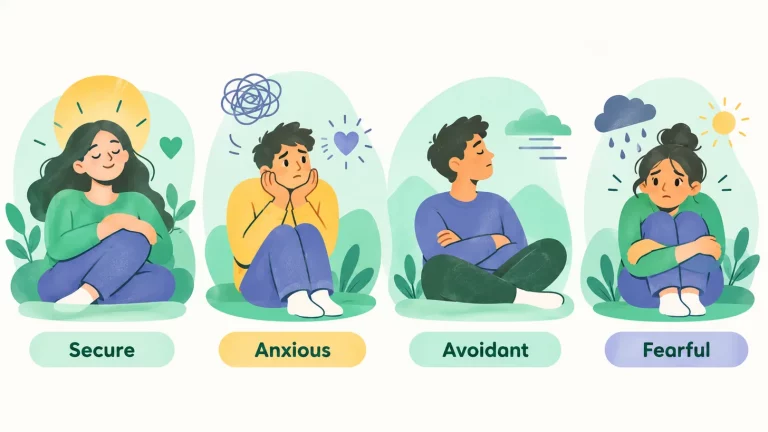
Emotionally Focused Therapy was developed by Dr. Sue Johnson. Research is summarised by ICEEFT. An EFT-trained counsellor looks under the surface fight for the attachment need being missed.
They slow a fight down. They help each partner name the softer feeling (fear, loneliness, not mattering) under the sharper one (anger, withdrawal).
Both methods have published outcome research. Around 70% of couples report meaningful change when the counsellor is properly trained and both partners engage between sessions. Success is not the same as staying together. It is often a clearer, calmer relationship.
You have probably tried a reset talk at home before. A good counsellor helps you see why it keeps falling apart. The pattern-breaking is work you both do in the room, with help.
In short: The method matters. Ask every counsellor what training they have. Gottman and EFT have the strongest research in India.
What couples therapy costs in India in 2026
Prices for Indian couples work sit in four bands by the counsellor’s training. A couples session usually costs 50% to 100% more than a solo session on the same site. It is longer and more complex. For our fee, see the GoodLives pricing page.
| Experience tier | INR range per couples session (as of October 2026) | Session length | Best for |
|---|---|---|---|
| Supervised novice (postgraduate student under supervision) | 900 to 1,600 | 60 min | Early talk, cost-first budgets, a trial session |
| Counsellor (MA counselling, 1 to 3 years with couples) | 1,500 to 2,500 | 60 to 75 min | In-law stress, parenting disagreements, early intimacy issues |
| Practicing psychologist (MA Psychology, 3 to 7 years) | 2,000 to 3,500 | 75 to 90 min | Trust rebuilding, affair recovery with disclosure, chronic conflict |
| M.Phil clinical psychologist or specialist (Gottman or EFT trained) | 3,000 to 6,500 | 90 min | Complex trauma inside the relationship, high-conflict couples |
We checked ranges across major Indian online therapy platforms in October 2026. Rates move. Recheck on the counsellor’s own page before you book.
If budget is tight, start at the counsellor tier. Ask if every-other-week is an option after the first four. Many Indian couples do eight sessions over three to four months and then pause. For a broader map, see the therapy cost guide.

In short: Most Indian couples pay ₹1,500 to ₹3,500 per session in 2026. A specialist costs more. The specialist is worth it when a pattern has run for years.
How to vet a counsellor in one 15-minute intake call
Most Indian sites, including GoodLives, offer a short intake call before you book a full session. Use it. The point is to find out if this counsellor’s method, pace and style fit you both. If the call feels rushed or vague, that is a useful signal too.
In short: Fifteen minutes is enough to tell if the fit is likely. Trust the counsellor who names when their room would not help.
The issues Indian couples usually bring in
Most Indian couples arrive with a mix of familiar themes. Communication breakdown is almost always one of them. In-laws, trust, intimacy and parenting usually sit next to it. The counsellor’s first job is to spot which fight is the real fight. Then the room can slow it down and work it out together.
Communication (we talk, but we do not get each other) usually sits on top of a feeling of not mattering. The surface fight is about the dishwasher. The real one is about who notices whom. See communication problems in relationships.
Trust, after a breach, is different work. The breach can be money-based, emotional or physical. It needs a counsellor who slows things down. They run a step-by-step repair, not a weekly chat. Trust issues in a relationship covers the signs and the rebuilding timeline.
In-laws, parenting fights, long-distance strain, the weight of family demands in India: these show up a lot. They are the daily texture of Indian marriages. A trained counsellor treats them as the real thing.
Intimacy, sexual or emotional, is often hard to name in session one. The counsellor makes it a sayable topic, not a shameful one.
That particular lump in the throat before a hard talk, ghabrahat (a restless unease), has a name. Saying it out loud in session takes some of the loudness out of it.
In short: You do not need the right words to come in. A good counsellor helps you find them.
If your partner will not join yet
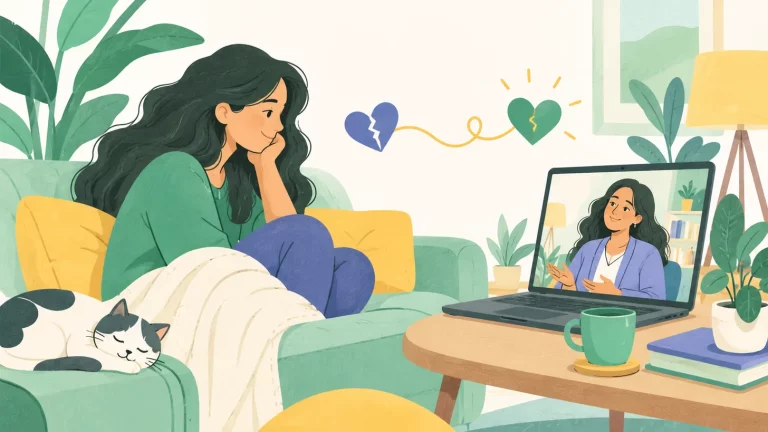
The partner opening the laptop usually arrives alone first. There is a real version of this where you begin by yourself. You will learn things that help the two of you later. Not every move forward happens from the same chair.
Begin alone with a solo therapist who has couples work in their list. Solo work on couple patterns is real work. You will see how your own style and family patterns show up inside the fights. One partner changing how they show up is often enough to shift the room.
Tell your therapist in session one that your goal is the relationship. Many will shift the frame. You can also bring your partner in for one joint session later, if they agree. That is a step, not a leap. For a longer walk, read do we need couples therapy.
In short: Begin alone if your partner is not ready. Solo work on couple patterns is real work. It often moves the pair forward.
How to bring up the idea at home
Try this when you are both calm, not twenty minutes after a fight. Pick a weekend walk or a Sunday morning tea. The subject needs air, which fights do not have. Lead with the pattern, not the person. Name what you want in one sentence.
“I am tired of us fighting the same fight” lands better than “you keep doing this.” If the word therapy is heavy for your partner, try couples counselling or relationship counselling. The lighter word opens the door.
Offer a choice. “There are a few people I have shortlisted. Would you like to pick one, or should I pick and show you the bio?” This moves it from your project to a shared one.
If the push-back is cost, show the price table above.
If the push-back is privacy, say honestly: it is online, no one in the family needs to know, and the counsellor is bound by confidence.
If the push-back is cultural, that is real. A counsellor who speaks your home language can help. For related reading, see marriage counselling online in India and family counselling online in India.
In short: Raise it when calm. Lead with the pattern. Offer choice. Address the real objection.
FAQ
What is the 5-5-5 rule for couples?
The 5-5-5 rule is a social-media pause tool, not a clinical method. The common version: wait 5 minutes, ask if it will matter in 5 months, and if yes, talk for 5 minutes. It can calm a flare-up. It will not change a returning pattern.
What is the success rate of couples therapy?
Research on evidence-based methods like EFT and the Gottman Method reports that around 70% of couples see meaningful improvement when both partners engage. Success is not always staying together. It can also be a clearer, calmer relationship. See ICEEFT research.
Is couples therapy on Netflix?
The Showtime documentary “Couples Therapy” streams on different platforms by country and season. Netflix India availability changes. This post is about the treatment, not the show. If you were looking for the series, please check your streaming app’s search.
Can we do couples therapy if my partner lives in another city?
Yes. Online couples work is designed for this. Each partner joins the same video session from their own device. The counsellor sees both faces at once. Many Indian couples with one partner working elsewhere meet this way every week.
Does couples therapy work if only one of us wants it?
Partly, and the honest answer is it is harder. Start with individual therapy where your goal is the relationship. Name that in session one. One partner changing how they show up often shifts the dynamic enough that the reluctant partner joins a few sessions in.
Is couples therapy covered by health insurance in India?
Partly, and it depends on the insurer and the plan. The Mental Healthcare Act 2017 requires insurers to cover mental health on par with physical health. Couples work as a non-diagnostic service is often outside what insurers reimburse.
How many sessions of couples therapy do we need?
Most Indian couples do eight to sixteen sessions over three to six months. Simpler communication work can land in six. Trust rebuilding often needs more. A good counsellor tells you by session four what your arc is likely to look like.

Share your thoughts