
What this blog includes
- A dated price map for therapy in India in October 2026
- The under INR 1,000 options nobody puts up front
- What insurance actually covers after the 2017 Mental Healthcare Act
- Your employer’s EAP, its honest limits, and the 4-step plan if the month is tight
If you have been putting off therapy because you are not sure what it costs, you are not alone. Most readers have Googled “therapy cost in India” more than once and still cannot tell if INR 500 and INR 3,500 are two prices for the same thing. They are not.
GoodLives, trusted by 500K+ people across India for therapy and workshops, hears that same money question in almost every intake call. This blog is the honest answer with October 2026 ranges.
Why does therapy cost what it costs in India?
A fair session price reflects what the therapist studied and the cost of her practice. A master’s in psychology is two years. An M.Phil in clinical psychology, needed for a licensed clinical psychologist under the Rehabilitation Council of India (RCI), adds two more years and a supervised internship.
The price also covers supervision, no-show slots, platform fees, and session-note time. A INR 2,000 session is not INR 2,000 of talking. It is 50 minutes with you plus 20 minutes of invisible work.
In short: a therapist’s rate is a floor, not a ceiling. It pays for training already done and the hours you never see.
How much does therapy cost in India today (October 2026)?
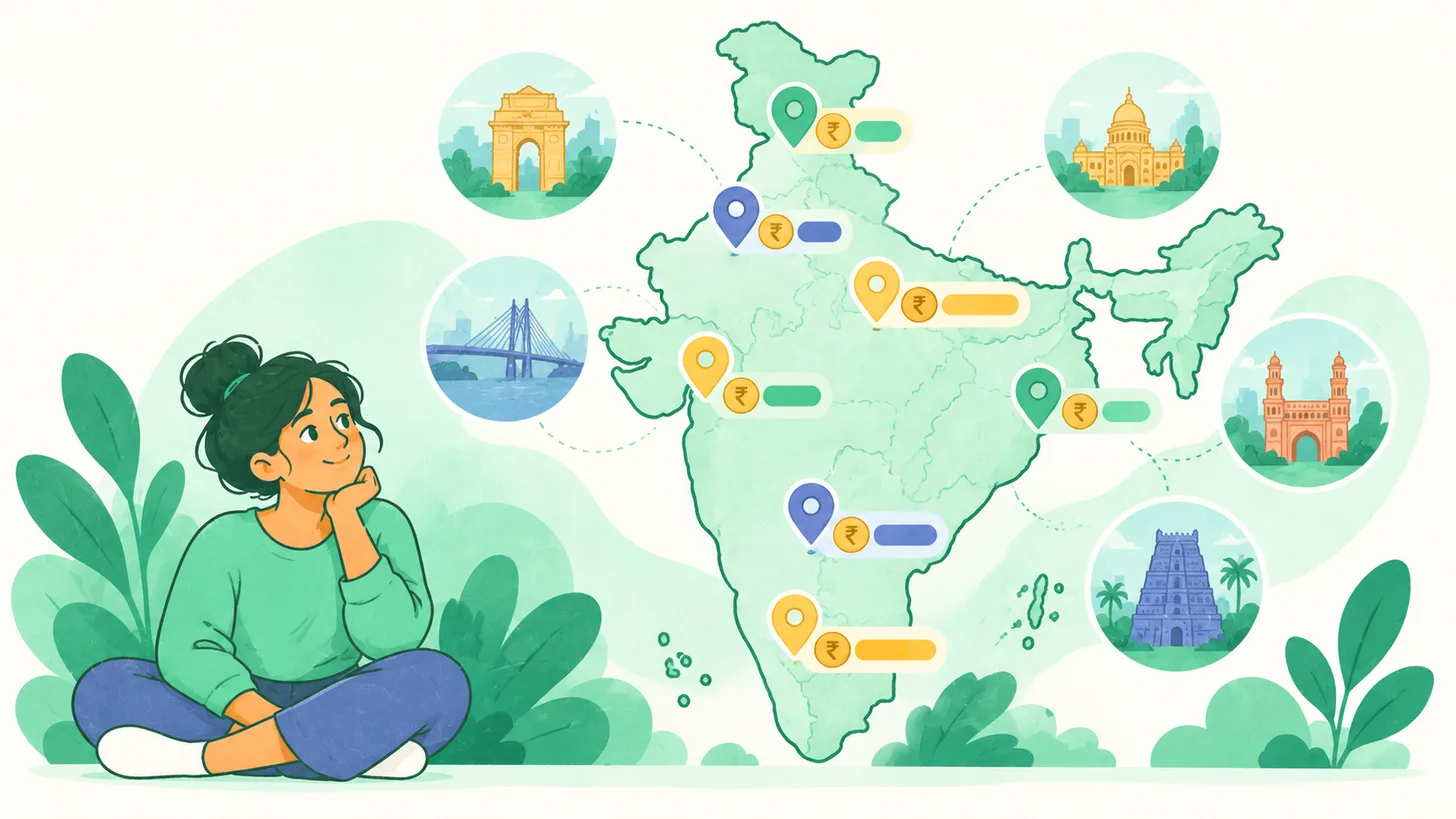
Here is what you will actually pay in a metro, by the therapist’s experience and training. The ranges are the live market as of October 2026, pulled from public rates on Indian therapy platforms and clinic sites. Tier 2 cities tend to run 30 to 40 percent lower.
We verified these on public pricing pages in October 2026. GoodLives does not publish per-session prices on this blog; see our pricing page for current rates. For context on a typical first session, see how online therapy works.
In short: a counsellor costs less because the training is shorter. A clinical psychologist costs more because her degree fits clinical conditions.
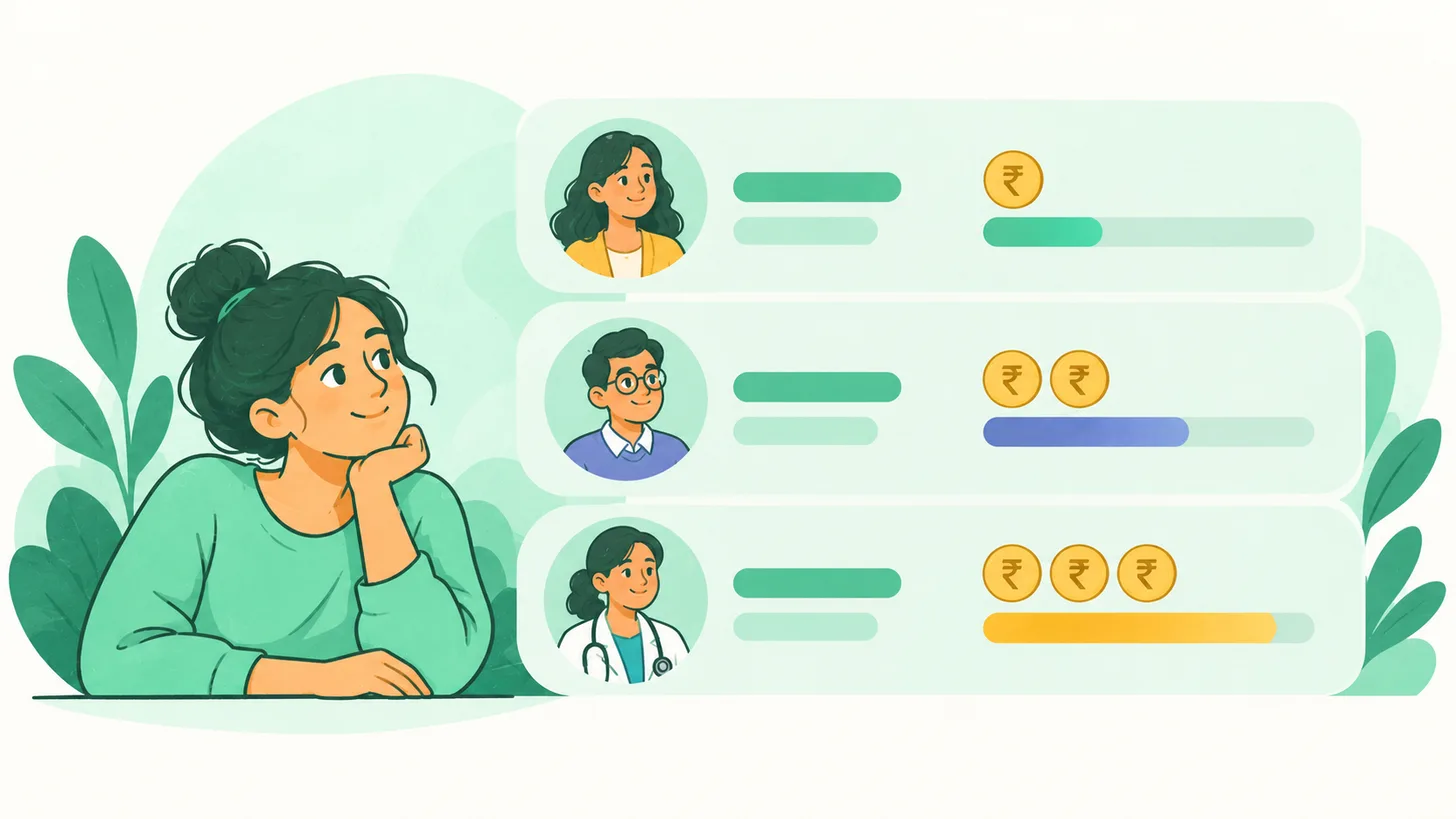
Two formats sit outside the main tiers. Group therapy for 6 to 10 people is INR 500 to 1,500 a session. Couples therapy runs INR 2,000 to 5,000 for 50 to 60 minutes.
What does a INR 500 session get you compared to a INR 3,500 session?
Both can be useful. They are not the same product. A INR 500 session is often with a trainee or supervised intern at a university clinic. A INR 3,500 session is usually with an M.Phil clinical psychologist who runs CBT or EMDR and holds the case between sessions.
What are the under INR 1,000 options for therapy in India?
More than most lists admit. The paths below cost between zero and INR 999 per session, and the people running them are real therapists or supervised interns.
Can you use health insurance for therapy in India?
Yes, by law, though in practice it is uneven. The Mental Healthcare Act, 2017 in Section 21(4) requires every insurer to cover mental illness on the same basis as physical illness.
The Insurance Regulatory and Development Authority of India (IRDAI) followed with its August 2018 parity circular directing all insurers to comply, and with later master circulars that broaden mental-health inclusion in health policies.
In practice: inpatient care is covered on most health policies issued after 2018. Outpatient therapy sessions, which is what most readers are asking about, are covered less consistently. Some insurers now pay for OPD mental-health sessions under a yearly cap. Many still do not.
The move: call your insurer, name the Mental Healthcare Act 2017 and the IRDAI parity circular, and ask three things. Does my plan cover outpatient therapy sessions? What is the cap per year? Do I need a psychiatrist referral first? Keep the call reference number. Save the therapist’s receipt with her RCI number.
In short: parity is the law, OPD cover is still uneven, and the answer for your plan is one phone call away.
Does your employer have an EAP, and what are its honest limits?
If you work at a company with 500 or more employees in India, there is a good chance you already have therapy credits. An Employee Assistance Programme (EAP) is a benefit most mid-size and large Indian employers buy from vendors like GoodLives, MindPeers, YourDOST, Amaha, or 1to1Help. If your HR portal mentions any of them, open a ticket today.
What an EAP usually gives you: 3 to 6 free sessions a year with a licensed therapist, booked through the vendor’s app. Sessions stay confidential from your employer by law and by vendor policy. Your company sees totals, not your name, your topic, or your therapist.
What an EAP cannot do: carry you through a 20-session course of CBT. If you need weekly therapy for three or four months, 6 free sessions is a start, not a plan. Many readers use EAP sessions as a free intake, pick a therapist, then pay out of pocket.
In short: ask HR before you pay. If the free sessions run out, you have already met your therapist, and the next cost is clear.
What to do if you cannot afford therapy this month
Not every month is a month for a INR 2,000 session, and not every anxiety needs therapy as the next step. If this week is tight, try these four moves in order. They are not a replacement for therapy, and they are not nothing.
- Call a free helpline when the hour is hard. One honest hour has pulled many readers through a bad night.
- Book a free or low-cost intake at an NGO or a university clinic.
- Ask HR about the EAP, in writing, this week. If you have one, 3 free sessions are waiting. If you do not, the ask tells HR this benefit matters.
- Try one week of a short daily practice: 10 minutes of 4-7-8 breathing, one page of journaling at night, and a walk without your phone. It will not fix the thing that made you anxious. It will take the edge off.
That restless, chest-tight feeling many of us call chinta (worry) does not shrink when you ignore it. It shrinks when you name the smallest honest next step and take it. This week, that step may be a free call, not a paid session.
In short: therapy is a tool, not the only tool. Picking the smaller tool this week is not failing. It is budgeting care.
Red flags when a therapist quotes you a price
Most Indian therapists price fairly. A few do not. Watch for these five patterns before you pay.
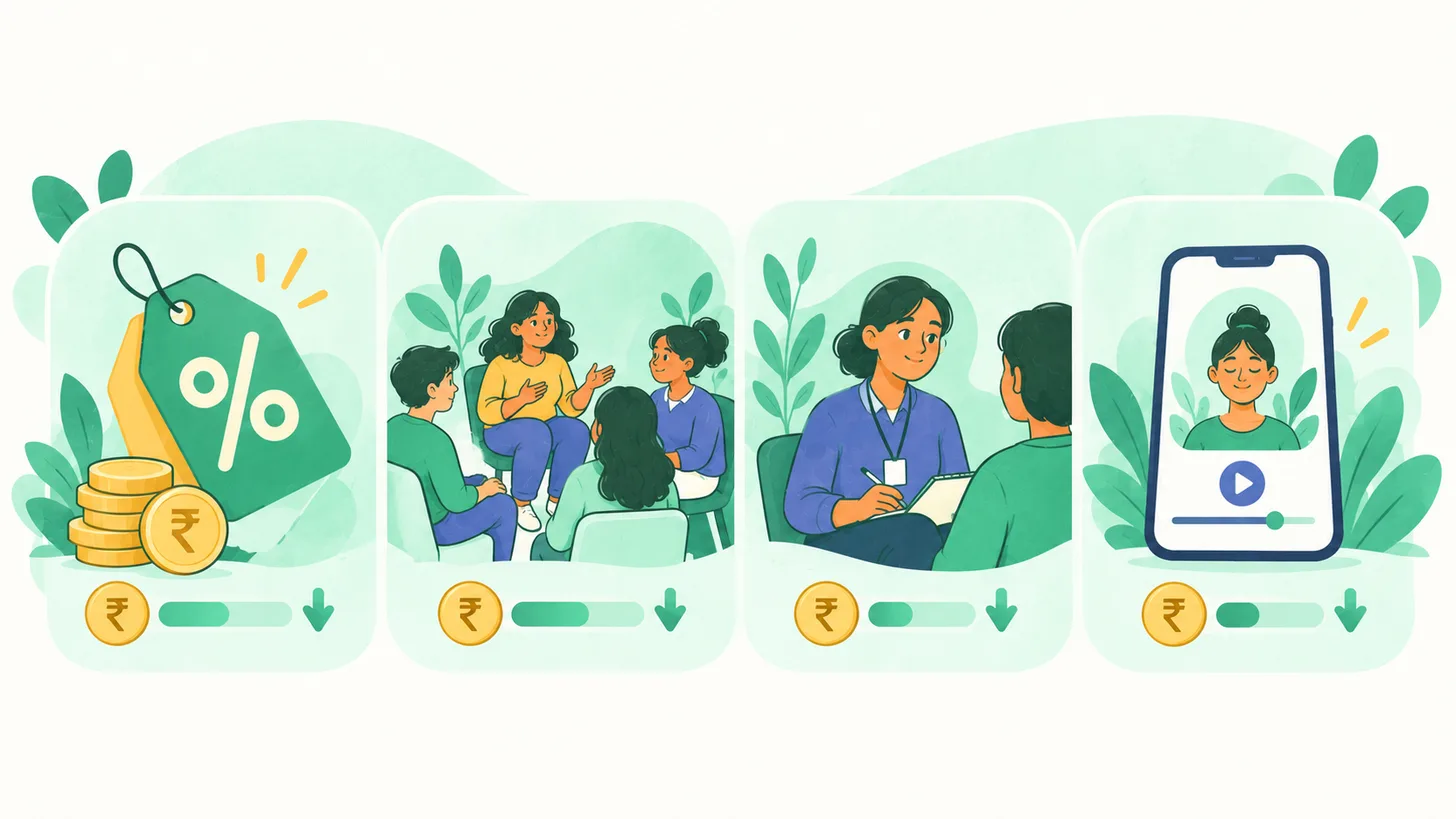
In short: a fair therapist tells you her rate, her refund policy, and her RCI number before you book. If any of the three is missing, keep looking. If you want help shortlisting, these online therapy platforms in India all publish rates on their own pages.
FAQ
Is therapy covered by insurance in India in 2026?
What is the cheapest therapy option in India?
Do therapists in India offer student rates?
How many sessions of therapy will I need?
Is online therapy cheaper than in-person therapy in India?
What is the cost of a psychiatrist consult in India?
Can I use my corporate EAP for ongoing therapy?
button: Book a Session
This post is for information only and is not a substitute for professional care. If you are struggling, please speak to a qualified mental health professional.


Share your thoughts