
What this blog includes
- What gamophobia means, in plain English and Hindi.
- Common signs of a marriage phobia in daily life.
- Where the fear often comes from, and the role of Indian family pressure.
- When therapy helps, and when the fear is a true signal.
Trusted by 500K+ people, GoodLives sees many readers who want to understand this fear before deciding anything.
The fear of marriage is one of those feelings people in India rarely say out loud. The rishta WhatsApps start. The family picks a date. You have probably told yourself to grow up. You are not being dramatic. The next sections walk through what helps.
What is gamophobia?
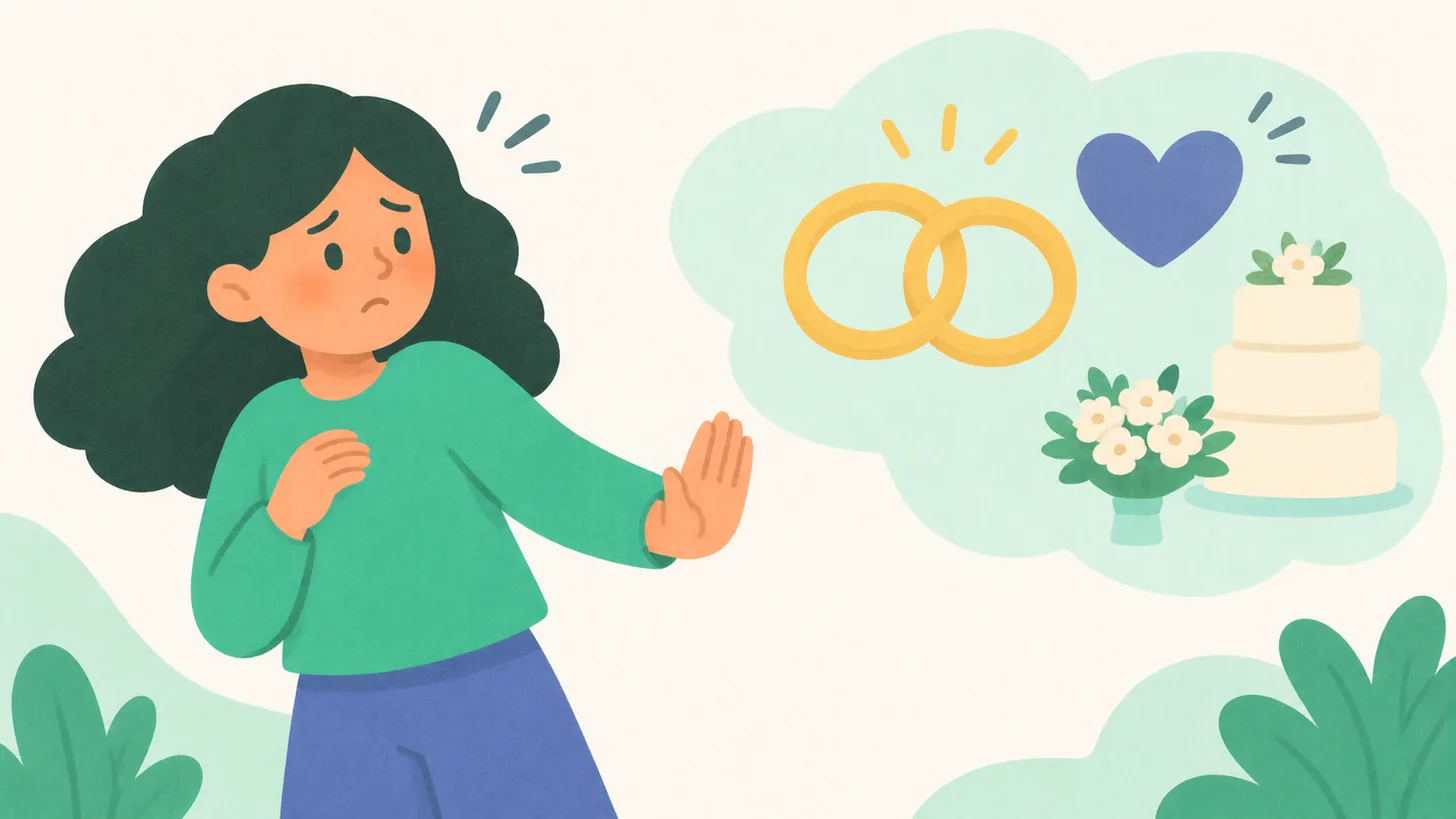
Gamophobia is an out-of-proportion fear of marriage or long-term commitment that gets in the way of ordinary life. The word has two Greek roots: gamos (marriage) and phobos (fear). Clinical writing calls it gamophobia. Indian English often says marriage phobia. Both mean the same thing.
Many of us confuse this with being commitment-shy. It is not the same. A worry you can talk through is one thing. A body refusal that shows up as nausea or panic is another.
The DSM-5 and the WHO ICD-11 do not list it on its own. It sits inside a wider group called specific phobia. That is a stubborn fear of one thing that gets in the way of daily life.
In short: this is a real fear with a plain name. It is not a verdict on you or on marriage.
Gamophobia meaning in Hindi (गैमोफोबिया)
In plain Hindi, this fear is often called shaadi ka darr, the uneasy feeling that returns every time marriage comes up. In Devanagari you may see गैमोफोबिया or शादी का डर. The English word points to the same feeling. It is used in clinic notes.
In Indian families, this fear sits behind other words. People say “my heart does not settle on it”, or shrug and change the topic. These are feelings, not diagnoses.
When the feeling disrupts sleep, work or decisions, the word begins to apply. You might be worried that saying it out loud will label you. It will not. A name gives you something to work with.
GoodLives has therapists who work in Hindi, English and more Indian languages. Describe the fear in the language it lives in your head.
In short: shaadi ka darr in Hindi, the clinical word in English.
What are the common signs of marriage phobia?
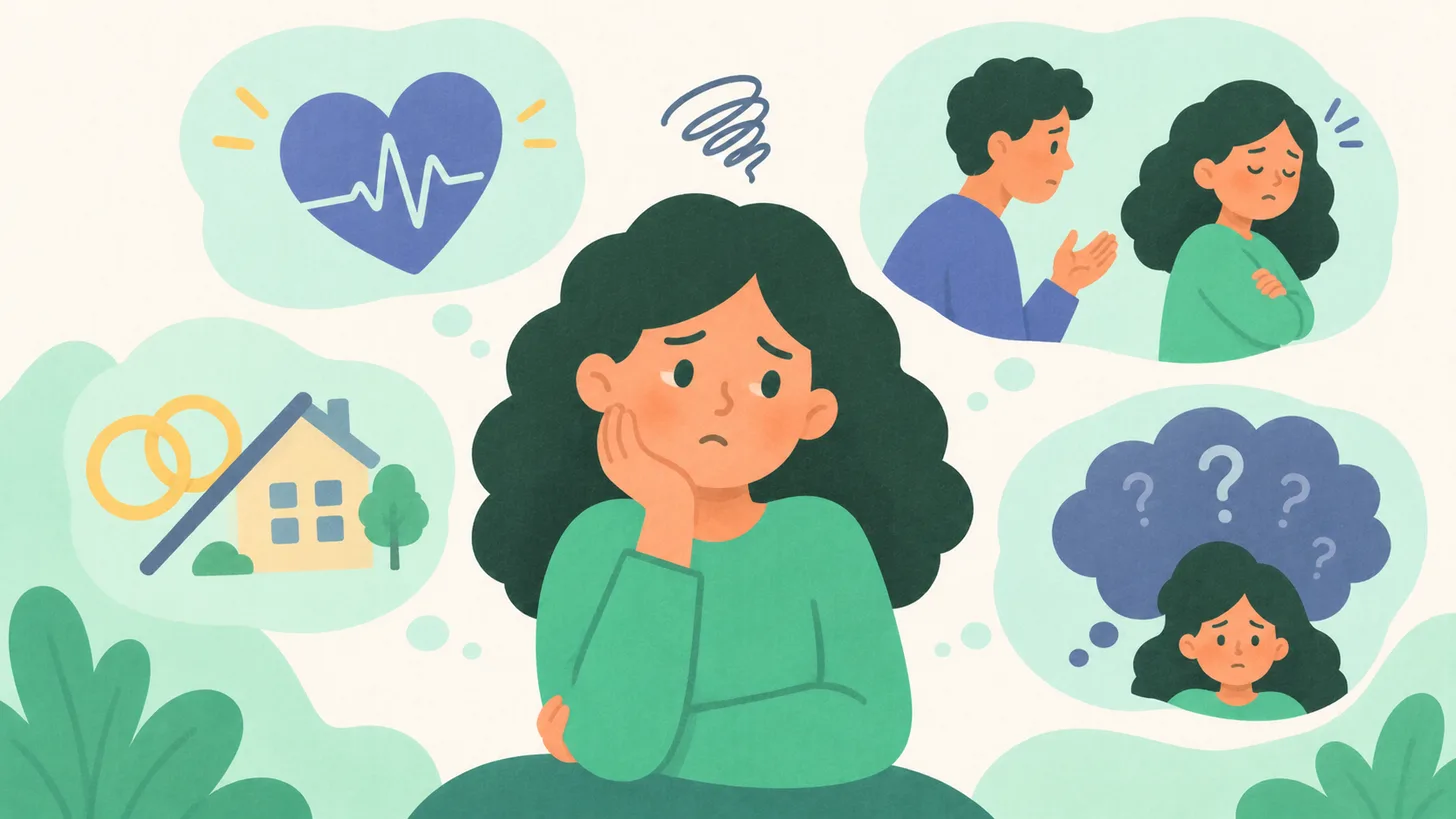
A marriage phobia shows up in three places: body, mind and action. It is more than a bad day of nerves. The feeling returns every time the topic comes up. Many readers notice three or four signs at once. The pattern is the point.
Body signals:
- Chest tightness or a racing heart when marriage comes up.
- Nausea or shaky hands before a rishta meeting.
- A sense of unreality when the family talks dates and venues.
- Trouble sleeping after an engagement conversation.
Thinking patterns:
- “I will lose myself if I say yes.”
- “Everyone I know is unhappy in their marriage.”
- “If I commit, I can never leave.”
Actions the body takes:
- Skipping family dinners when the topic may come up.
- Ending relationships when they turn serious.
- Breaking engagements more than once.
Someone who is gamophobic shows a pattern. If the same loop breaks a good relationship three or four times, that is worth looking at.
In short: the signs show up in body, mind and action. The pattern is the diagnosis, not any one sign.
Where does this fear come from?
Three roots show up most often. What you saw at home growing up. The past relationships you have lived through. The attachment style you built. Many readers carry two or three at once. Therapy starts by mapping your own mix.
Family. If a parent’s marriage had shouting or long silence, your body learned that marriage is a dangerous room. Your head can know your partner is different. The body remembers the house.
Past relationships. A controlling ex. A dishonest partner. An engagement that ended badly. These leave a mark.
Attachment style. If a parent was absent or often critical, you can develop avoidant attachment. That is a learned pull-away when closeness gets close. GoodLives has a post on how toxic parents affect mental health.
Reasoned caution is not a phobia. If you are worried about a specific partner, that is reasoning. Hear it. A phobia is the body refusing the whole category.
In short: the fear often traces back to family, past relationships and attachment. Look at these with care.
How marriage pressure in India turns up the volume
For many Indian readers, this fear is shaped by how marriage gets planned around them. Rishta meetings. Roka. Family money. Caste and religion. These push a quiet discomfort into something louder. The culture does not create the fear. It turns up the volume.
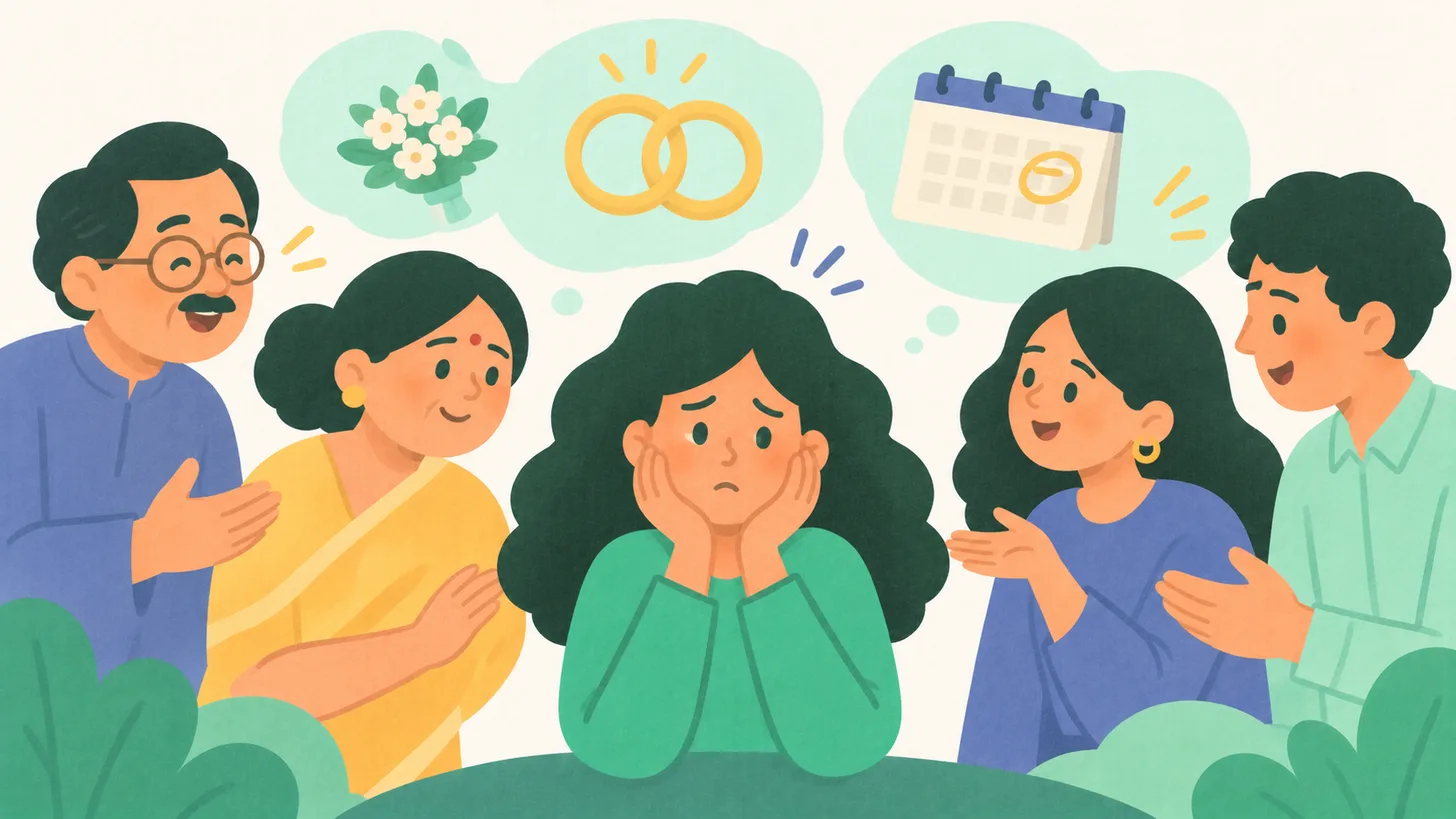
Rishta talks often start without warning. A cousin forwards a bio-data. An aunt mentions a boy. It can feel like being pulled toward a door you did not agree to open.
The roka. The plan speeds up. Dates. Catering. Outfits. The walls can feel like they are closing in.
The money. Indian weddings are often funded over years. When parents have spent savings, pulling out feels like failing the family twice.
Caste and religion. Who you marry carries meaning beyond the two people. The fear runs deeper when the only acceptable partner is a specific kind.
Joint-family life. Marrying often means moving into a house with its own rules. If your fear is about losing freedom, that part can be loud.
GoodLives has a related post on the psychology of phobias.
In short: family systems in India make the fear louder, not stranger. Naming the specific pressure helps separate the fear from the plan.
Pattern to work through, or honest signal?
This is the question most writing on this topic skips. Therapy is not a nudge toward a wedding. Its job is to help you see which of two things is going on. A pattern worth working through. Or an honest signal. Both are valid.
When it is a pattern worth working through. The fear is out of proportion to the person in front of you. You back away from safe, kind people. The same loop breaks a good relationship twice or more. The body refuses anyway.
When the fear is an honest signal. You are being told to marry someone you do not want. The partner has shown clear red flags: control, violence or dishonesty. The marriage would cost you part of your life that is not negotiable. Or marriage is not for you.
Therapy here helps you name it, not override it. Not every version of this fear needs therapy. Some weeks a close friend and three months of not deciding is enough. The honest answer is there is no single right path.
If a thought keeps looping, take a slow minute with this before you read on. A short tool like this will not fix the root. It only takes the edge off.
Catch the thought
What thought is weighing on you right now? Write it down just as it sounds in your head.
Name the trap
Does your thought fall into one of these common patterns? Pick any that fit. This part is optional.
Look again
Use these as nudges, not rules. Then write one line back to yourself.
Your reframe
Thoughts are not facts. You just practised stepping back.
This stays on your device. Nothing is saved or sent.
In short: therapy here is not pointed at marriage. It is pointed at clarity. Working through the pattern and saying no are both legitimate places to land.
How therapy actually helps
Therapy here does two things. It untangles where the fear came from. It gives your body a slow, new sense of being tied down. The right path depends on where the fear sits in you. For some readers it is a thinking pattern. For others it is a body-level freeze.

In India, any adult can seek this care. Under the Mental Healthcare Act 2017, you have the formal right to therapy, with no family member signing off.
Cognitive behavioural therapy (CBT). CBT is short and structured. It teaches you to spot the loops (“they will leave the moment I commit”) and build a kinder thought in their place. It often pairs with slow exposure, one small step at a time.
Attachment-focused therapy. If your fear traces to a parent, this work names patterns like avoidance. It is slower than CBT. It helps when you have tried to think your way out and the body still refuses.
Psychodynamic therapy. This is the longest. The therapist helps you see what you repeat, and why.
Couples therapy. When a partner wants to walk this with you, couples therapy helps. A psychologist on GoodLives helps both of you see what the fear is doing. See couples therapy online in India.
A reframe tool helps with one thought. A therapist helps you spot the loop behind dozens.
In short: three kinds of individual therapy and couples therapy all have a role. The fit depends on the fear.

Share your thoughts