
What this blog includes
- A plain definition of peniaphobia and where it sits.
- Why this fear is heavy for Indian readers today.
- Signs to watch for, and how they differ from healthy money sense.
- How money anxiety feeds work stress, and what helps right now.
- Two helpers: a therapist for the feeling, a fee-only adviser for the facts.
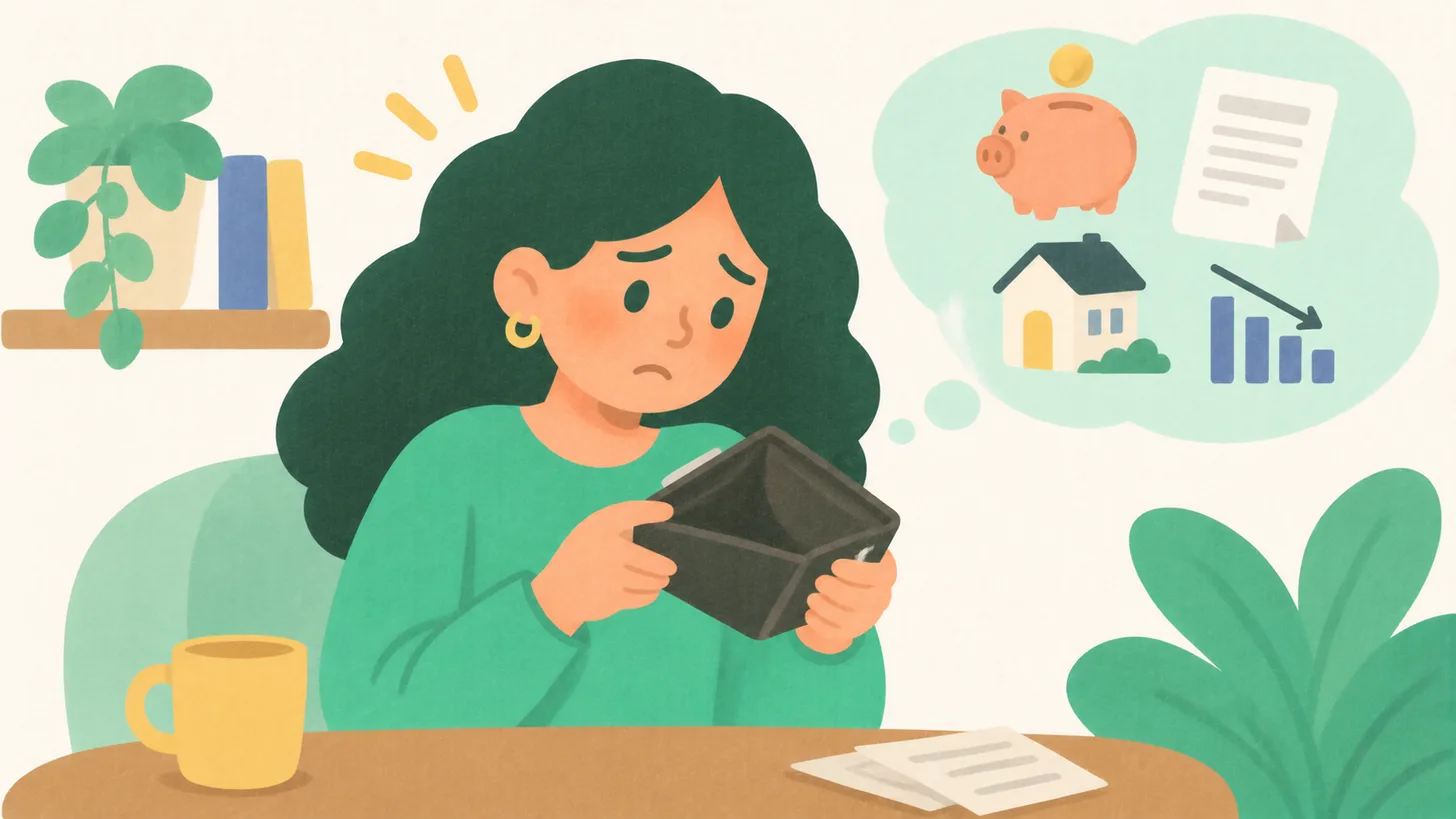
Peniaphobia is a word for a feeling many know too well. Trusted by 500K+ people on GoodLives, we hear this fear named often. The second check of a bill. The dread when a parent asks for help. The way one small spend can tilt a week. What you feel has a name, and many of us have been there.
Why does the fear of poverty feel so heavy today?
The fear is heavy because it is layered. Partly worry about this month’s rent. Partly a family memory from a time money was scarce. Partly a city where costs rise faster than salaries. When all three stack up, the body treats a bank balance like a threat.
For many Indian readers, this sits on top of real stories. A grandparent who moved cities after Partition with nothing. A parent who lost a job in a slowdown. A joint family where one earner carries five people. A first-generation professional whose paycheck already belongs to someone else.
These are not thinking errors. They are facts you grew up around.
In short: the heaviness is not weakness. It is history talking.
What is peniaphobia, in plain words?
Peniaphobia is an intense fear of poverty, strong enough to get in the way of ordinary life. The word comes from the Greek penia (poverty) and phobos (fear). It is not a formal DSM-5 diagnosis. Clinicians place it under specific phobia or anxiety-driven money worry.
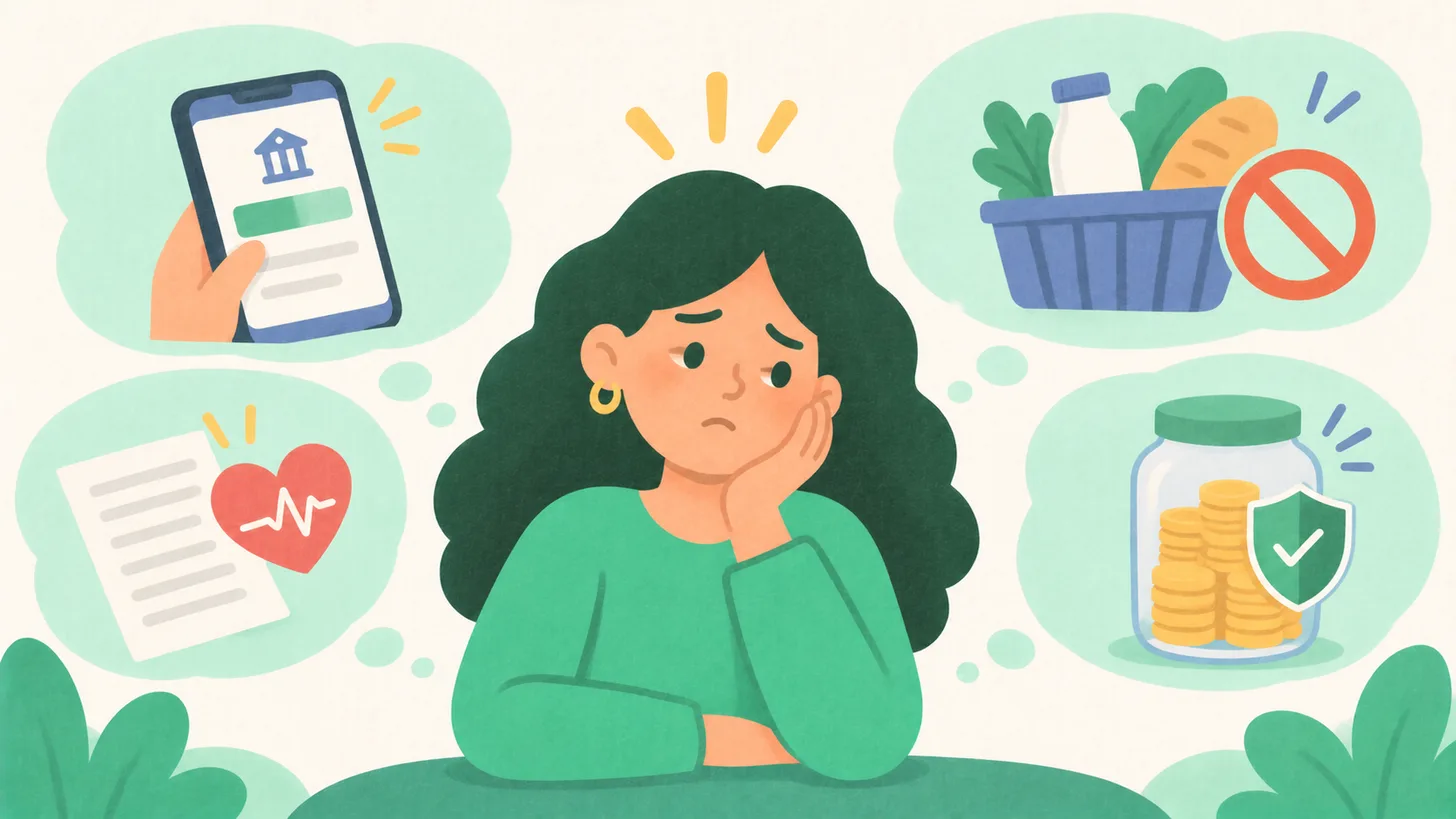
The peniaphobia meaning most useful for a reader is this: your mind has learned to treat money as danger. Checking your balance sets off the alarm of a close call in traffic. Opening a statement feels like reading a verdict. The numbers may be fine. The feeling still comes.
In short: this fear is not a verdict on how you handle money. It is anxiety’s reaction to money.
Where does this fear usually come from?
In Indian families, this fear rarely starts with the person feeling it. It is passed down in small sentences. “We do not touch savings.” “Ladki hai, extra kharcha.” A parent who hid bills. The alarm was useful then. The body kept it.
Three roots turn up most often. First, a scarcity story the family survived: Partition, migration, a business that failed. Second, a joint-family rule where one salary feeds five. Third, moving alone to a big city in your twenties.
Readers on r/IndianPersonalFinance ask whether this is normal. The honest answer is that this fear is widely shared and still worth looking at.
In short: the fear often has real history. Honouring it is the first step, not the whole treatment.
What are the common signs of peniaphobia?
The signs cluster across your body, your choices and your sleep. Any one of these alone is ordinary. Three or more, most weeks, is the pattern worth attention. The chinta (worry) about money has crossed from caution to something that runs your week.
Body and feelings:
- Chest tightness when you open your bank app.
- A sinking feeling at every payment-app notification.
- Trouble sleeping when a salary is late or an EMI is due.
Choices and habits:
- Avoiding bills, apps or statements for days.
- Hoarding small amounts even when it hurts your health.
- Over-saving in ways that cut into basic needs.
Thoughts and self-talk:
- A loop of “we will lose everything” on good months too.
- Guilt that lasts for days after an ordinary spend.
- A quiet script of “I will never have enough”.
In short: signs that cross into daily dread are the ones to bring to a therapist.
How do you tell this fear from healthy money sense?
Healthy money sense protects you and lets you live. This fear protects you and stops you from living. The difference is not in how much you save; it is in what the saving costs. If a careful habit lets you sleep, eat and see a doctor without guilt, it is healthy.
In short: the test is not what is in your savings. It is whether your relationship with money lets you rest.
How is money anxiety linked to work stress and burnout?
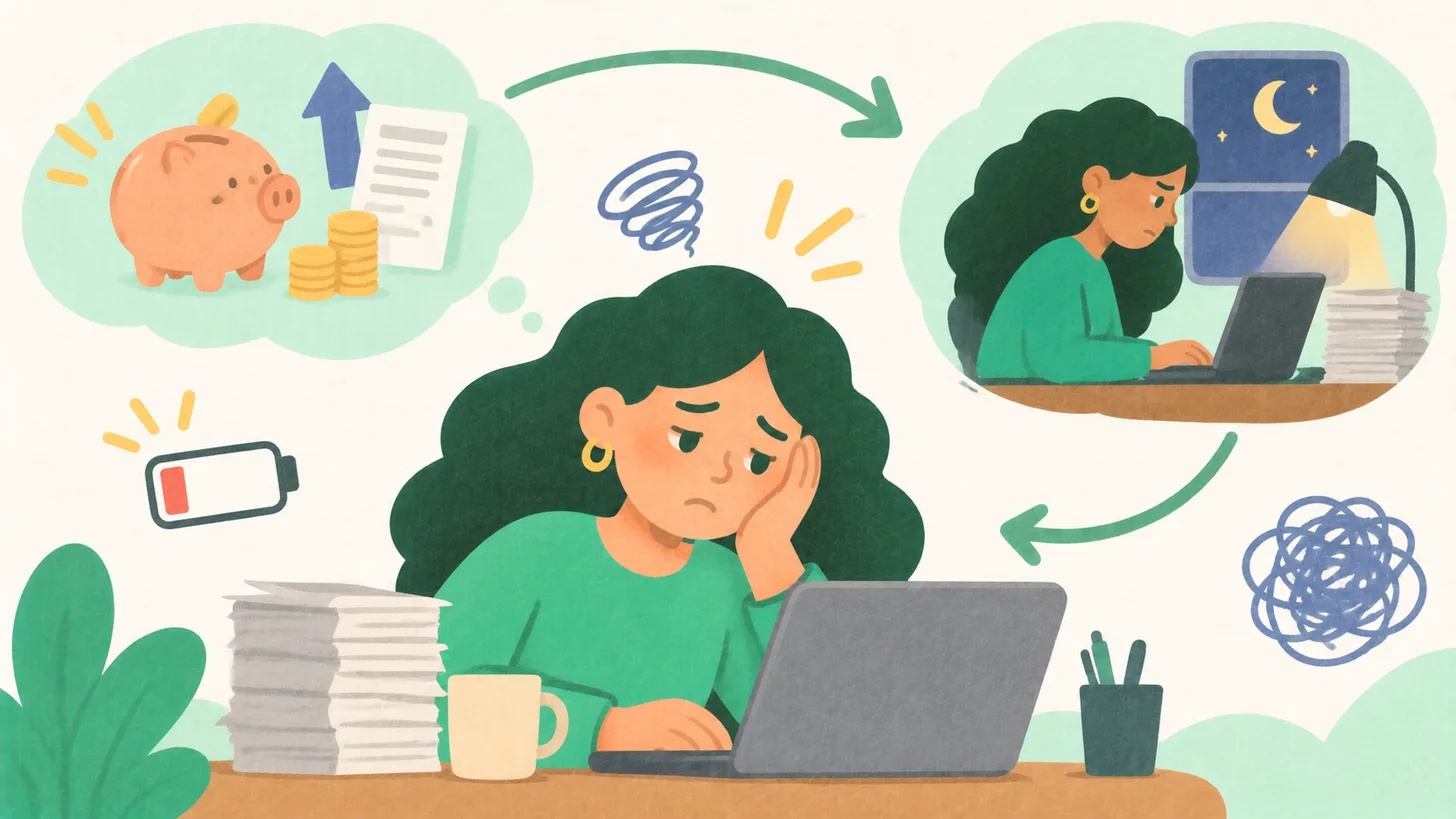
Money anxiety and work stress feed each other. If you fear losing money, you often cannot say no at work. If you cannot say no, you overwork. Sleep goes. Then every small spend feels bigger. Burnout becomes a question of when, not if.
This fear and work stress in India overlap most for young professionals. You may be the first in your family to earn rupees that match your rent. Admitting the fear is a clear move out of the loop.
In short: the fear and the overworking are one problem.
What helps right now, when the worry will not switch off?
In the next few minutes, two moves work. First, sort the worry on paper. List what you fear. Split it into what you can act on this week and what you cannot. Second, slow your exhale. A long out-breath tells your body the threat is lower than it feels.
If you want, take two minutes with this worry tree before you read on. It will not fix what scared you. It will help you set it down for the next hour.
What's on your mind?
Name the worry that keeps circling. Putting it into words is the first step out of the loop.
Is this something you can do something about, now or soon?
Be honest with yourself. Some worries point to a step you could take. Others are simply out of your hands.
What's one small thing you could do?
Not the whole solution. Just the next small, doable step. Small counts.
When?
Giving it a time turns an idea into a plan. Pick what feels realistic.
You've turned a worry into a step. You can park the rest for now.
This one isn't in your hands right now. Worrying won't change it, but it will wear you out. Let's set it down.
Picture the worry, then imagine placing it on a shelf, just for now. You can always pick it up again later.
You've set it down.
You've noticed it and set it down. If it drifts back later, that's normal. Just set it down again, as many times as you need.
This stays on your device. Nothing is saved or sent.
Not every money worry needs therapy. Some of this is a season you walk through, with a budget, some sleep and one honest conversation. If tonight you need a quiet Sunday with a budgeting app and a cup of chai, that is a real plan too.

In short: sort the worry first, then slow the body. Together they take about five minutes.
Two different helpers: therapist for the feeling, fee-only adviser for the facts
This fear often needs two helpers, not one. The fear and the facts live in different places. A therapist works with the alarm your body sends when money comes up. A financial adviser works with the plan under the alarm.
For the feeling, book a therapist who works with anxiety and, where family roots matter, with trauma-informed therapy. Online therapy for anxiety is a reasonable first step.
For the facts, ask only for a fee-only adviser. In India, this is a SEBI-registered Investment Adviser. They take a flat fee and earn zero commission.
Check the public list of SEBI Registered Investment Advisers. Anyone paid on commission has a conflict with your anxiety.
You might be worried that if you ask about money, someone will try to sell you a plan. That worry is correct. A fee-only SEBI RIA cannot sell you a plan. That is the whole point.
In short: two helpers, two jobs. Never pay the person managing the feeling to sell you the facts.
When is therapy a reasonable next step?
Therapy is a reasonable next step when the fear has crossed from caution into daily life. When it affects sleep, meals, work or close relationships. When self-help has not held for a few weeks. Cognitive behavioural therapy (CBT) often starts the work.
Breathwork lowers your heart rate in two minutes. Therapy lowers your money-anxiety baseline over months. The NIMHANS National Mental Health Survey 2015-16 found about 3.5% of Indians lived with an anxiety disorder; most were not in care.
In short: the right time is before the fear starts choosing your week. Phobias and the connection to psychology sits next door if you want to zoom out.




Share your thoughts