
What this blog includes
- A plain English mysophobia meaning and the signs most people miss
- How mysophobia and contamination OCD are different, and why that matters for treatment
- An honest medical rule-out before you assume the fear is purely in your head
- How exposure therapy and CBT help, and what a short course usually looks like
- How to raise this at home in an Indian family without a long argument
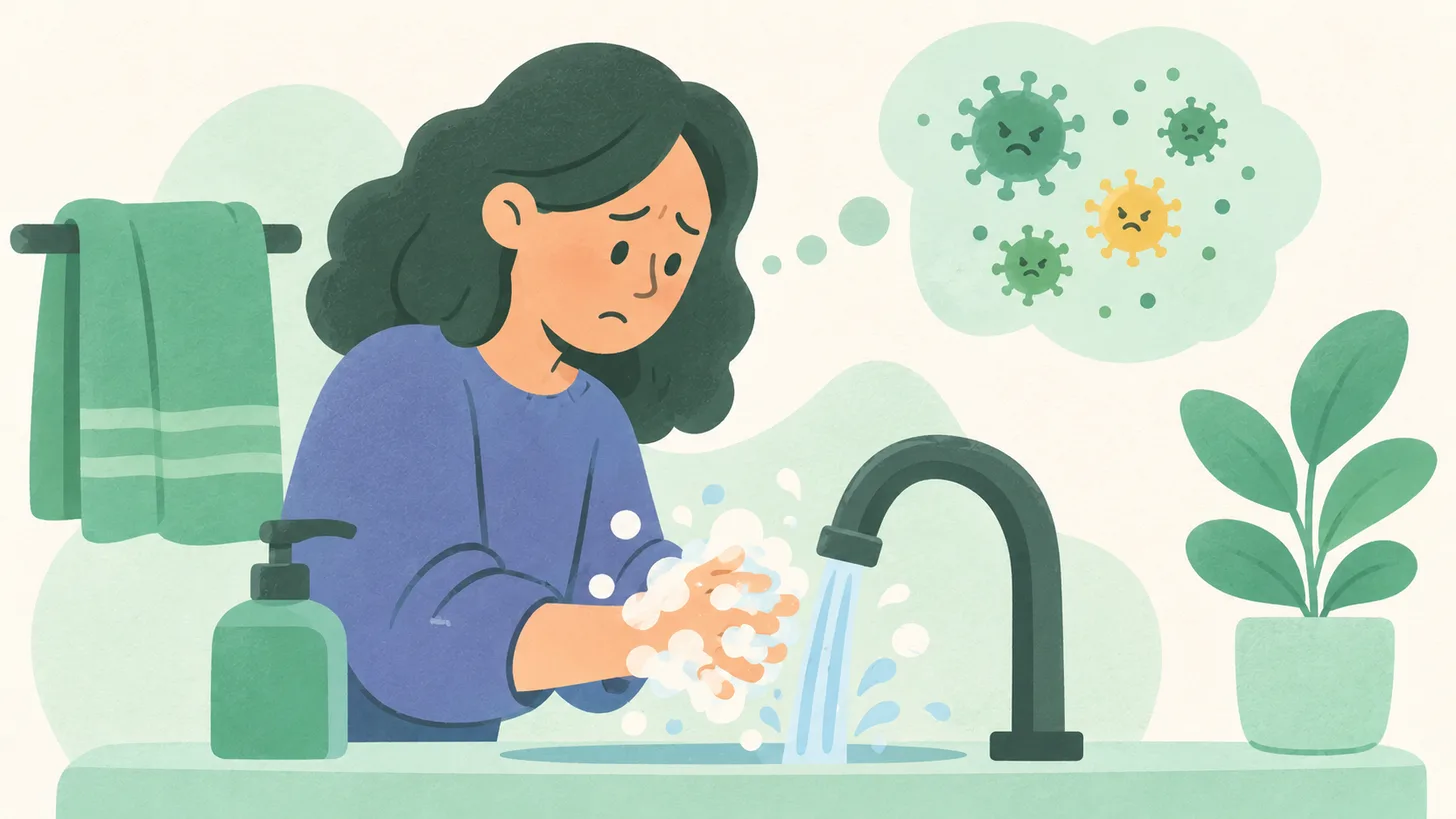
Somewhere between washing your hands four times before dinner and skipping a cousin’s wedding because the shared bathroom scares you is a line most people cannot name. Mysophobia, an intense fear of germs and contamination, often sits on that line.
You might not call it a phobia yet, and the loop still runs you. GoodLives is India’s online therapy platform, trusted by 500K+ people, and this is a question we hear more often after COVID than before it.
What is mysophobia, in plain language?
Mysophobia is an extreme fear of germs, dirt and contamination. It pushes you to avoid people, objects or places you worry are not clean. Cleveland Clinic calls it a specific phobia. The fear and the avoidance tend to grow over time (Cleveland Clinic).
The word comes from the Greek mysos, meaning uncleanness. Some people use germaphobia or germophobia for the same picture.
The DSM-5-TR is the clinical book used by Indian doctors and most others. It lists specific phobia when the fear is clear. When it is out of scale with the real risk. When it lasts six months or more.
The mysophobia meaning in daily life is more mundane than the word sounds. It can be refusing to touch the lift button. It can be a 20-minute hand-wash after the metro. It can be a quiet “no” to dinner at your mother-in-law’s house because the kitchen did not feel clean.
In short: mysophobia is a specific phobia built around germs. Length of time and how much it costs your week are what tell you it is not just a careful habit.
Why the fear of germs can take over, especially after COVID
The fear of germs starts rational for most people. The pandemic trained us to notice a cough across the room, to carry sanitiser, to flinch at a shared utensil. For some people, the dial never turned down.
A joint-family bathroom is a shared surface three times a day. Shared utensils at a Diwali lunch, a cousin’s hug after her Mumbai local commute, a baby held by five relatives in one hour. The triggers in Indian daily life are everyday, not rare.
Post-COVID, hygiene habits did not reset for everyone. The World Health Organization reported that global anxiety and depression rose by about 25% in the first year of the pandemic (WHO, March 2022).
The National Mental Health Survey of India found that phobic anxiety disorders ran higher in women than in men. Clinicians still see this today (NIMHANS, 2016).
In short: when carefulness about germs starts to pick your day for you, the fear of germs has stepped past hygiene into a pattern worth looking at.
Signs the fear of germs has quietly taken over your week
The signs sit in small decisions. You stop choosing the metro. You carry three sanitisers. You wash your hands past the point of visible clean. Someone close to you starts to notice that you flinch when they return from outside, and you cannot explain to them why.
Common patterns clinicians look for (Cleveland Clinic):
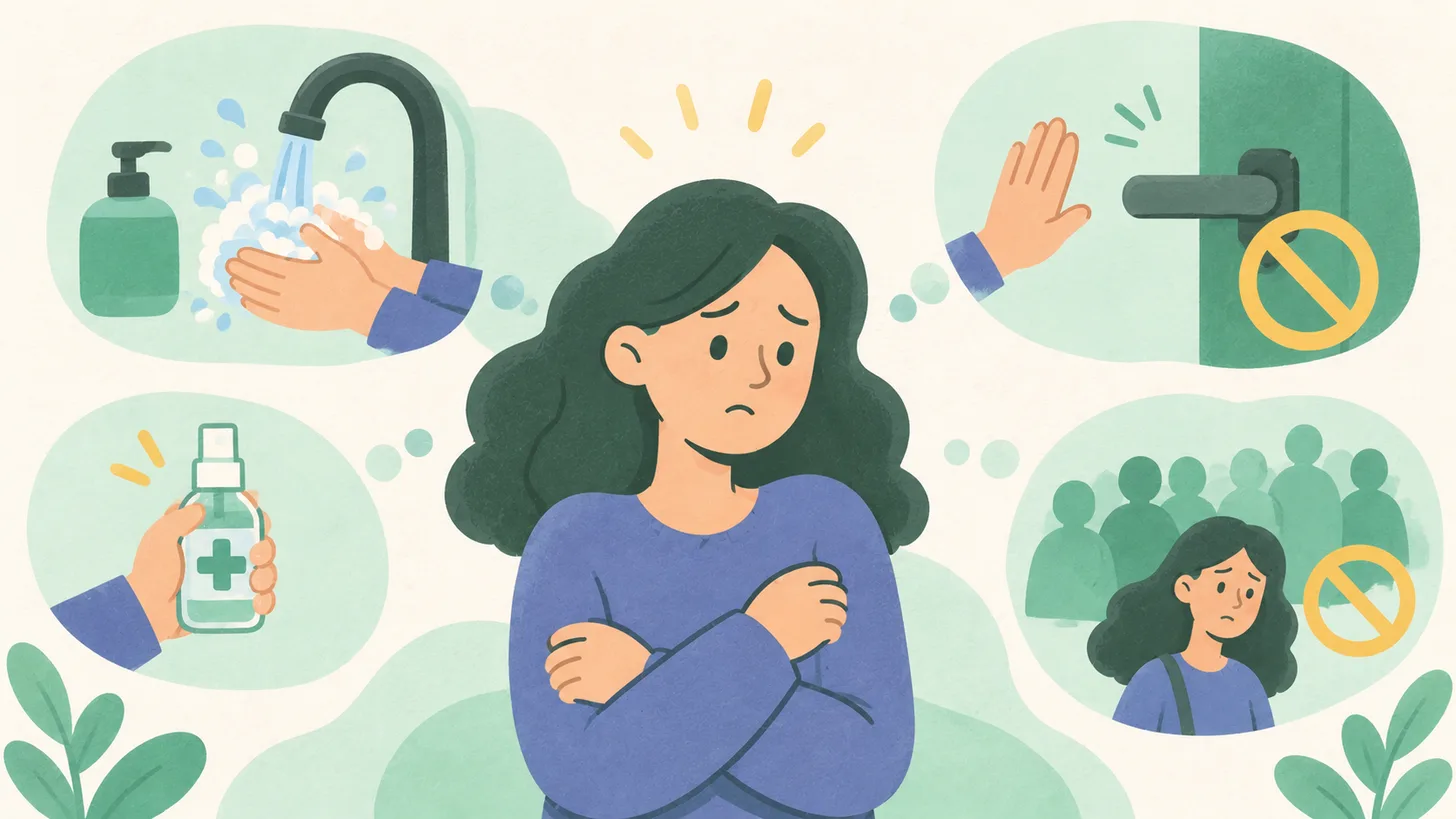
- Repeated hand-washing well past a reasonable minute
- Avoiding public transport, shared bathrooms, or crowded spaces
- Carrying extra gloves, sanitisers, or wipes everywhere
- Chest tightness, a racing heart, or a bechaini (restlessness) when you cannot clean
- Repeated clothes-washing after you return home, even if nothing visible is dirty
- Difficulty with everyday closeness like hugs, shared food, or shared utensils
The clinical clock is six months. If the fear has run your week for half a year or more, take it seriously. The clearer sign is cost: when avoiding what you fear starts to pull at your work, your sleep, or a close relationship. The wider picture of persistent anxiety sits in our longer read on anxiety neurosis.
In short: hygiene is a habit. Mysophobia is a habit that runs you. The clock a clinician will ask you about is six months and the cost of avoidance.
Mysophobia vs OCD: how do they really differ?
Mysophobia vs OCD is a top-searched question here, and the honest answer is that they overlap more than they oppose. Cleveland Clinic places the fear of germs in the specific-phobia bucket and notes that some people with it also live with OCD (Cleveland Clinic).
The simplest way to see the difference is shape. Mysophobia has a phobia shape: the fear is primary, and avoidance is the dominant response. You keep away from the thing that scares you.
Contamination OCD has an OCD shape: an intrusive, unwanted thought arrives, and a ritual (washing, cleaning, checking) is what briefly lowers the distress before it returns.
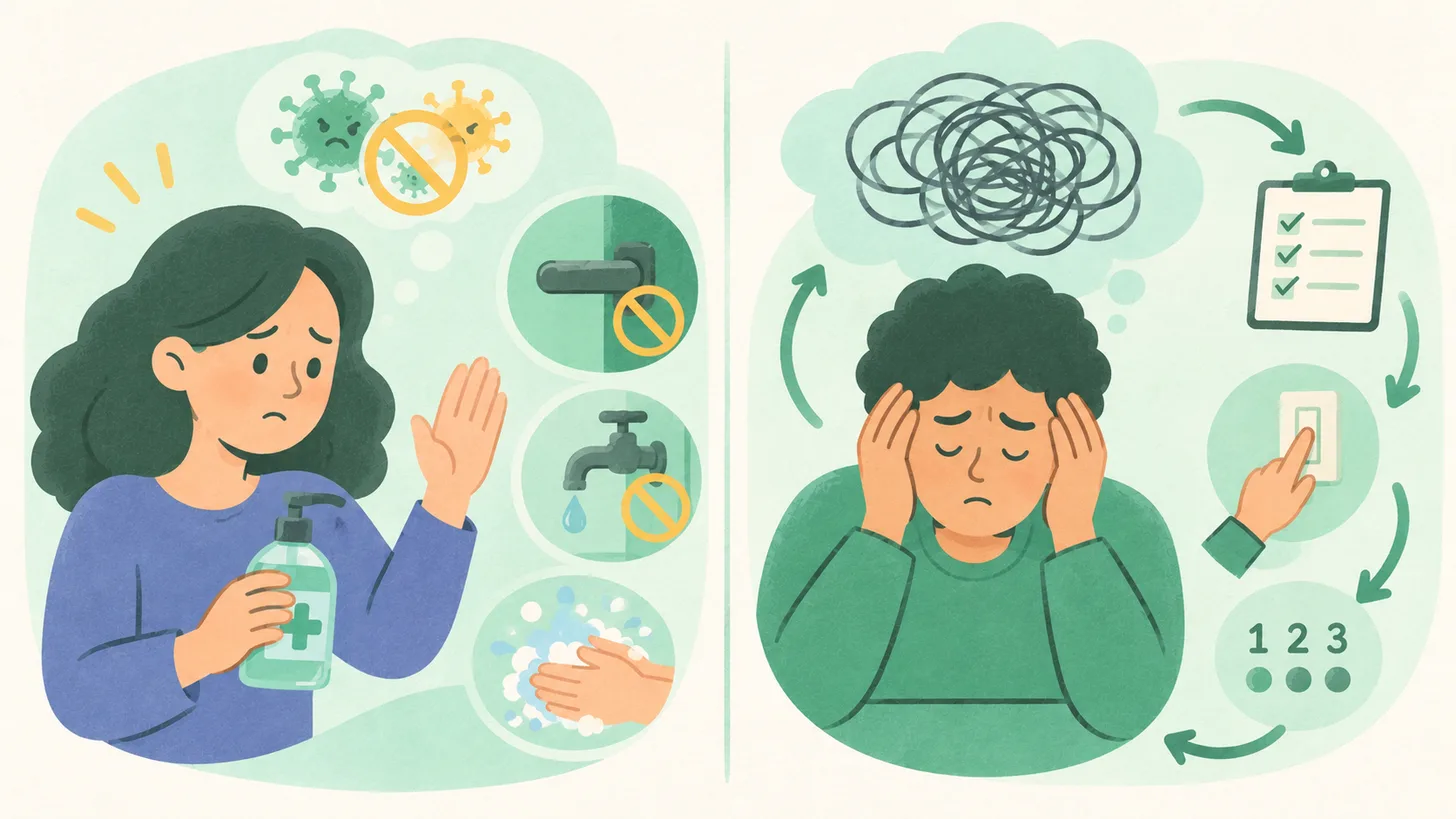
The gap matters for treatment. Both respond to exposure-based therapy. Both benefit from CBT. For contamination OCD, the specific plan is Exposure and Response Prevention (ERP). It keeps you from doing the ritual while you sit with the discomfort.
For specific phobia, graded exposure is often enough on its own. The wider pattern sits in our phobias and connection to psychology explainer, and the same mechanism shows up in sibling fears like our acrophobia piece.
In short: a phobia is a fear you avoid, OCD is a thought you ritualise around. The therapy they both need looks a lot like meeting the fear, slowly, with help.
Before you decide it is a phobia, rule out the medical first
A careful first step is to make sure the fear is not standing in for a real medical reason. Some people have real medical reasons for strict hygiene. Someone who is immunocompromised. Someone on chemotherapy, or with eczema, or with a known immune condition. The rest of us do not have those reasons.
Ask your GP or treating specialist one question: given my condition, what is the actual level of caution you want me to keep? Sometimes the answer is this careful. Sometimes it is more careful than I would ask you to be. Both answers are useful.
The same check applies after a long illness or a death from infection in the family. The fear may be mourning a real event, not an isolated phobia. A good therapist will ask about this early.
In short: a medical reason for strong hygiene is not a phobia, and treating one as the other wastes everybody’s time. Ask the question only a doctor can answer, first.
How exposure therapy and CBT help
Exposure therapy for mysophobia starts gentle. You might begin by thinking about a germ. Then look at an image. Then touch a doorknob. Then share a glass. Each step pairs with staying in the discomfort long enough for the fear to come down on its own (Cleveland Clinic).
Cognitive Behavioural Therapy, or CBT, is the thinking half of the work. A therapist helps you notice the thought that fires when a trigger appears, name the trap, and build a kinder alternative. Our piece on how CBT helps with social anxiety walks this mechanism for a different fear.
If you want, try one short thought-reframe before you read on. It will not fix mysophobia. It is a small exercise that shows what the thinking half of therapy looks like from the inside.
Catch the thought
What thought is weighing on you right now? Write it down just as it sounds in your head.
Name the trap
Does your thought fall into one of these common patterns? Pick any that fit. This part is optional.
Look again
Use these as nudges, not rules. Then write one line back to yourself.
Your reframe
Thoughts are not facts. You just practised stepping back.
This stays on your device. Nothing is saved or sent.
A typical course is 8 to 16 sessions of graded exposure plus CBT, sometimes framed as ERP where the OCD overlap is strong. Severe cases may be assessed for medication by a psychiatrist. SSRIs, a class of antidepressants, are the usual conversation. The decision is a psychiatrist’s call after assessment, not a self-help choice.

In short: exposure teaches your body the germ is not the emergency it keeps shouting about. CBT teaches your mind to notice the shout and answer it. Together they do more than either on their own.
How to raise this at home in an Indian family
Talking about mysophobia inside an Indian family is often harder than seeing a therapist. The person who hugs you after her commute is a cousin you love. The lunchbox a colleague offers is a kindness.
One line that lands with most families: this is a thing my brain is doing right now. It is not about you or your cooking. I am working on it with a therapist. You do not have to disclose the diagnosis. You do have to let the people around you stop guessing.
Practical arrangements help while therapy does its work. A separate hand-wash setup in a joint bathroom. A gentle not tonight for shared utensils at a big dinner. One honest sentence to a dating partner about why closeness feels difficult this month.
In short: families guess the worst when you do not explain. One honest sentence and a therapist’s name does more than six months of silent avoidance.
When self-help is not enough
A short, honest line: not every careful habit needs therapy. Washing your hands properly before meals is good. Avoiding one shared water bottle is sensible. The pattern that needs help is the one you cannot stop running when you want to.
When sleep goes, when work slips, when closeness feels unsafe, that is the point where self-help on its own stops being enough. Therapy can lower what the body does with the germ cue over three to six months.
A short grounding or breathing exercise can help you ride out the next ten minutes. A therapist helps you lower the baseline fear your body carries all week.
If you are reading this at 11 pm, worried that something is wrong with you, nothing is broken. Many of us have had a careful habit creep into a bigger pattern, and most people see real relief in a short course of therapy. You can start when you are ready, see how it feels, and stop.
In short: the test is time and cost. Months of avoidance that cost your sleep, your relationships, or your work is a time to call a professional, not try one more sanitiser bottle.
FAQ
Is mysophobia the same as OCD?
What is the main difference between mysophobia and contamination OCD?
Can mysophobia be fully treated?
Did COVID cause mysophobia?
What are the physical signs of mysophobia?
When should I see a therapist about my fear of germs?
Is there medication for mysophobia?
This post is for information only and is not a substitute for professional care.



Share your thoughts