
What this blog includes
- What this specific phobia is, and the common misspellings
- The symptoms it brings on, in body and mind
- The Indian places it shows up most, from lifts to the MRI scanner
- Why some people develop it, and others do not
- How exposure therapy helps, usually in 4 to 10 sessions
Trusted by 500K+ people. GoodLives sees claustrophobia often. A reader cancels an MRI. A job seeker skips a cabin interview. A student steps out of a crowded local.
You are not being dramatic. The fear of closed spaces has a name, a cause and a treatment.
What is claustrophobia?
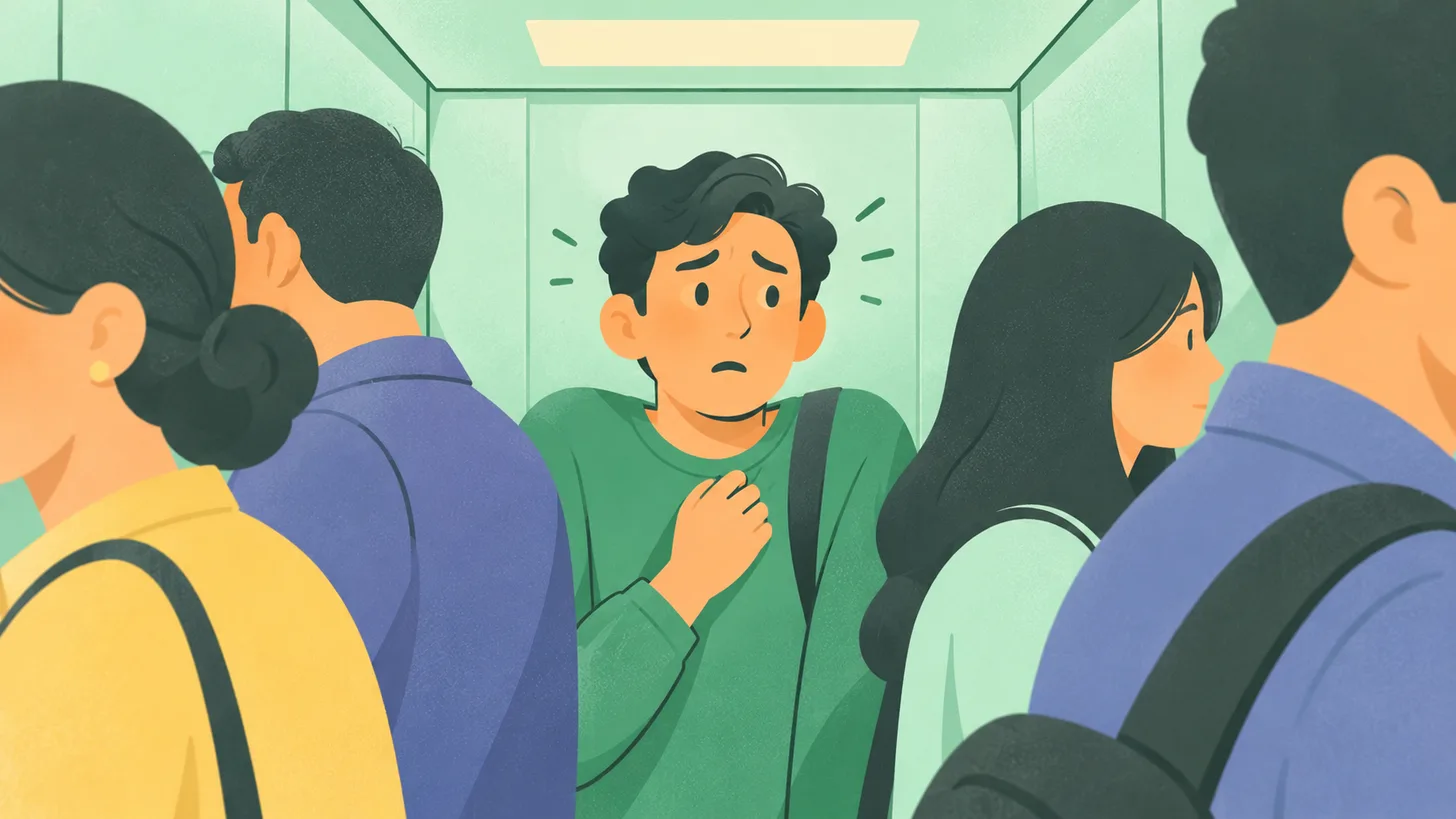
Claustrophobia is a specific phobia. It is a huge, out-of-place fear of closed or packed spaces. The body sets off a false alarm. The space is safe. The alarm feels real.
The meaning used by clinicians and in everyday Indian English is the same. It is a specific phobia, treatable with exposure therapy. The WHO lists specific phobias among the most common anxiety disorders (WHO: Mental Disorders).
In India, they are recognised under the Mental Healthcare Act 2017, with a right to care.
Common misspellings people search for include clostrophobia, clastrophobia and clostophobia. Each one is the same fear.
The word has two uses. Claustrophobic as a person is someone who feels the fear. Claustrophobic as a space is a lift or room that triggers it.
“Closed space phobia”, “phobia of small spaces” and “fear of narrow spaces” are everyday ways to say the same thing.
In short: the meaning of claustrophobia is both clinical and lived.
How does it show up in body and mind?
Claustrophobia symptoms mix body alarm and racing thoughts. The body reacts first, often in under a minute. The mind catches up and asks why. You have probably stepped out of a lift. Here is what the body is doing.
Body signs you may notice:
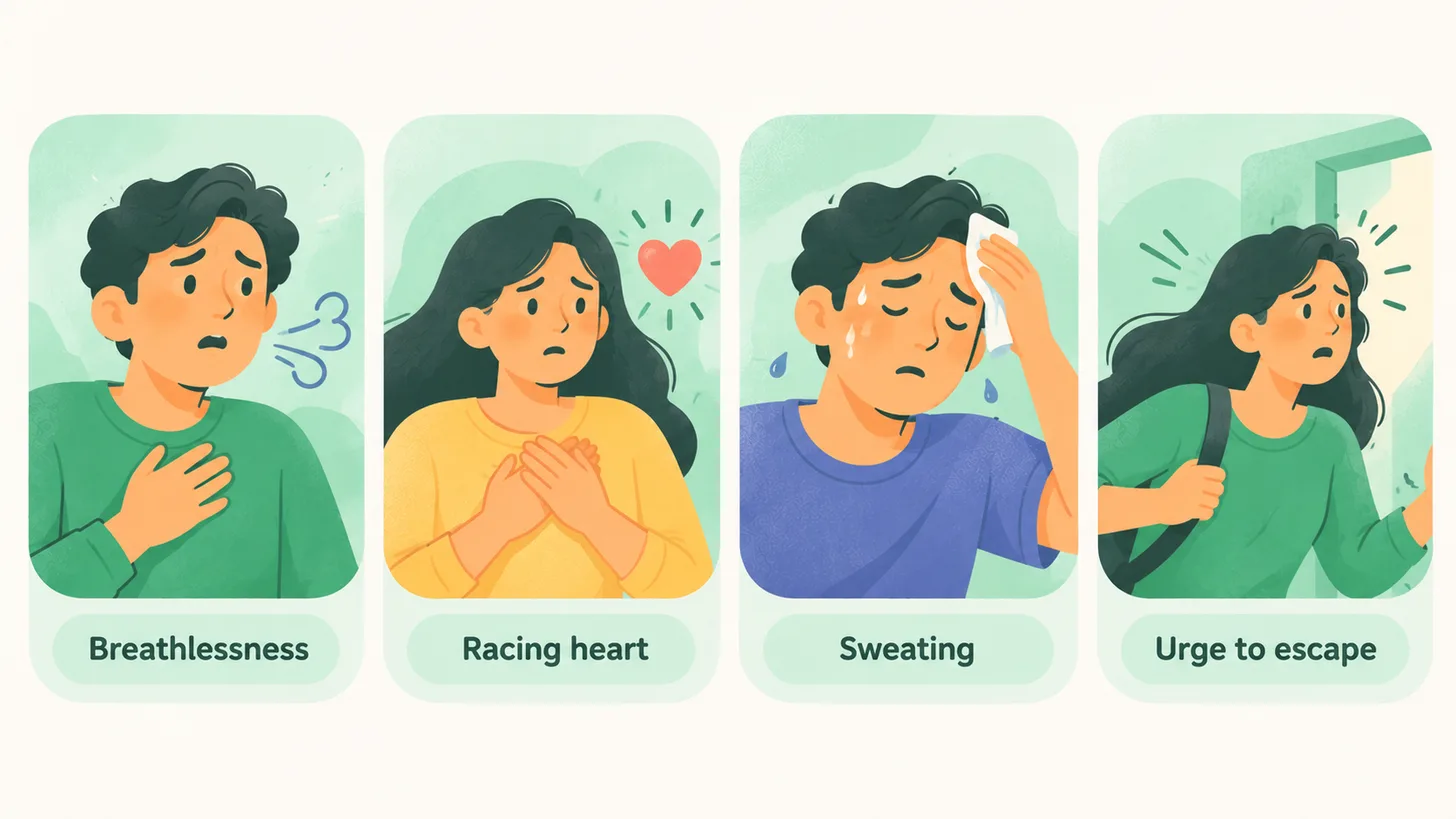
- Breathlessness or a choking feeling, sometimes called dam ghutna (a Hindi phrase for a squeezed breath)
- A racing heart, chest tightness, sweating
- Shaking, dizziness, a wave of nausea
- A strong urge to leave right now
Mind signs that come with it:
- Thoughts of “I will pass out” or “I cannot get out”
- Scanning for exits before you sit down
- Avoiding closed spaces for days
- Losing sleep the night before a flight or a scan
A claustrophobic person is not weak and not making it up. The alarm is real.
In short: the symptoms are a false alarm, with real breathlessness and a strong urge to leave.
Where this fear shows up in Indian life
Fear of enclosed spaces picks the places where Indian life packs us in. The trigger is a mix of three things. Not enough room. Not enough air. No quick way out.
Common Indian triggers:
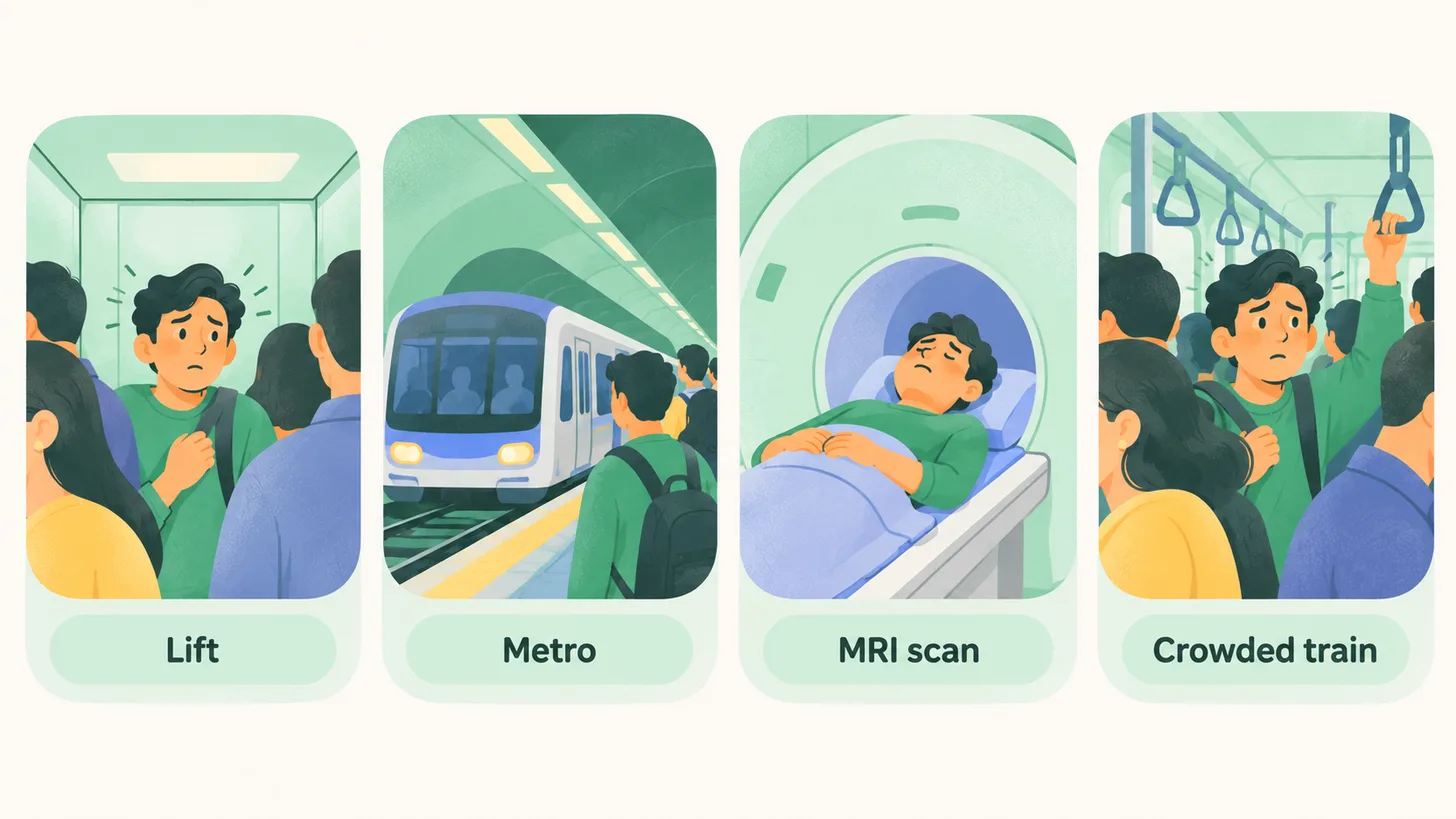
- Lifts in older buildings. Small, slow, sometimes with one blown bulb.
- Mumbai locals and the Delhi Metro. The 9am rush, when you cannot lift your arm.
- MRI scanners at scan centres. A scan can run 30 to 45 minutes.
- Darshan queues at busy temples, where crowds move through narrow lanes.
- Chawls and PG rooms with no window and shared bathrooms.
- Economy flights, car boots, the back seat of a hatchback in a Bengaluru jam.
Example: Picture a 27-year-old in a Bandra PG, climbing six floors every evening because the lift feels like it will stall. She is managing a fear that has not been named yet.
In short: the triggers are predictable. That also makes them something a therapist can work with.
What causes it
Specific phobias come from a mix of three sources. A learned fear. A sensitive nervous system. A specific memory.
Common contributors:
- A scary episode in a closed space: stuck in a lift, a crowd surge, a hard MRI
- A caregiver’s fear modelled early
- Family history of anxiety
- A high-stress season when the first episode hits
- Related conditions, especially panic disorder
The honest answer is this: for many Indian readers, the first panic in a lift sets off the loop. The brain stores “closed space equals danger”. Our page on panic attack symptoms covers the shared alarm.
In short: the cause is a mix of memory, nervous system and life stress.
A short self-check (not a diagnosis)
Over the last six months, how often did any of these happen in closed or packed spaces?
- Breathlessness, racing heart or sweating within a minute
- An urge to leave that overrode what you were doing
- Avoiding a lift, a train, a scan or a meeting room
- Spending extra time or money to avoid the space
- Loss of sleep before an event in a closed space
Three or more “often” answers suggest the fear is more than a passing dislike. For a longer check, try our anxiety self-check.
In short: if the fear is costing you time, money or sleep, it is worth treating.
What helps when a lift door closes right now
Two tools work in the next ten minutes. One slows the body. One brings the mind back. Pick what fits.
Try slow box breathing. Inhale 4, hold 4, exhale 4, hold 4. Three or four rounds. It lowers the heart rate in about two minutes.
If you want, take one slow minute with this before you read on.
A moment to breathe
Follow the circle. Breathe in, hold, breathe out, then hold. Four counts each. Stay as long as you like.
If thoughts are racing more than the body, try grounding. Name five things you see, four you touch, three you hear, two you smell, one you taste.
Box breathing will not fix the pattern. A therapist works with you on the next ten lifts.
In short: box breathing and the 5-4-3-2-1 ground are first aid, not a fix.
How therapy treats claustrophobia
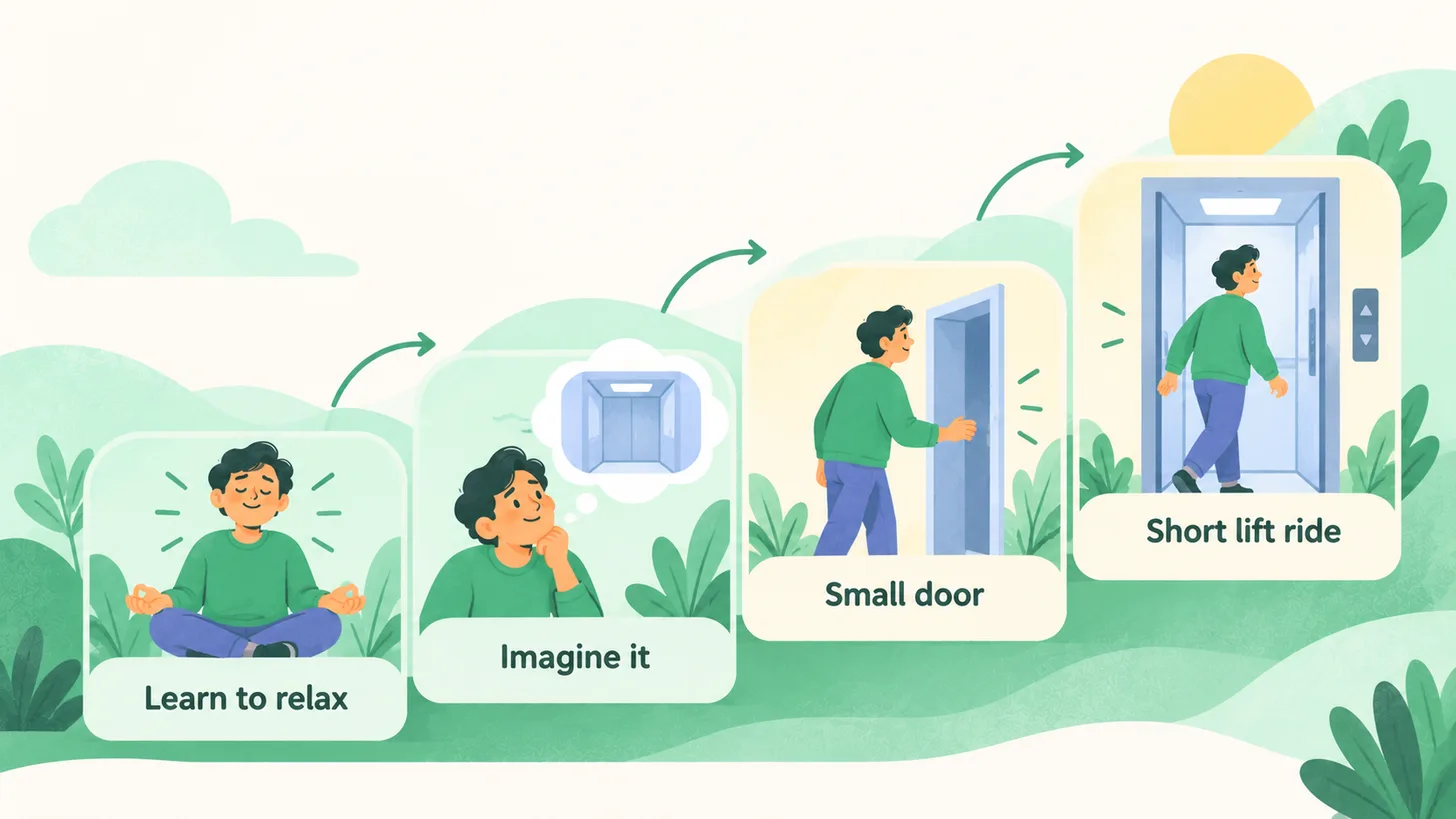
Exposure therapy is the main treatment for specific phobias (NHS: phobias). Many people see real change in 4 to 10 sessions. A therapist builds a ladder of situations. You walk up, one rung at a time.
What a therapist does with you:
- Builds a fear ladder with the lifts, trains or rooms that trigger you
- Teaches small, safe body drills so the brain learns the sensations are safe
- Walks you through real exposure, starting with a short lift ride on a video call
- Uses CBT (cognitive behavioural therapy) to reframe thoughts like “I will pass out”
- Adds breath and relaxation training for the first minutes
Virtual reality is a newer option. A headset recreates a lift or an MRI tube. Early research suggests it works about as well as in-person exposure. VR is still rare in India.
For a one-off scheduled MRI, a doctor may prescribe a short-term class of medicine for the scan day (benzodiazepines, a fast-acting anti-anxiety class, prescription only).
For the longer pattern, therapy is the tool. Online therapy for anxiety at GoodLives can match you to a therapist trained in exposure work.
In short: a short course of exposure therapy teaches your brain that the closed space is safe.
When to see a therapist, and the MRI question
Book a session if the fear is costing you something real. A cancelled scan. A job you did not interview for. A trip you did not take.
You might be worried that the alarm will peak in the tube. And that you will not be able to signal the tech. If a doctor has asked for a scan and you are avoiding it for weeks, two things are true. Your fear is real. And delaying a scan can cost more than the scan.
Talk to the doctor about an open MRI, a wider machine, or a short-acting prescription for the scan day. In parallel, start four to six sessions of exposure work. You can watch MRI videos and run a dry test at home.
If you want to read more first, our phobias and the psychology behind them hub covers the family of fears. Our anxiety guide for India covers the broader picture.
Not every fear needs therapy. A one-off bad lift ride is a story. If the pattern is new and your week is not being cancelled, give it a month. If the fear is costing you time, money or sleep, we are here. 5 Google rating.
In short: treat it when it starts to shape your week.
FAQ
What is the cause of claustrophobia?
What is a claustrophobic person?
How do you know if you are claustrophobic?
How do you calm down claustrophobia in the moment?
Fear of closed spaces is known as what?
What is the Telugu meaning of claustrophobic?
Can it be fully cured?
This post is for information only and is not a substitute for professional care. If you are struggling, please speak to a qualified mental health professional.


Share your thoughts