
What this blog includes
- A plain red flag and green flag meaning, in one line each
- Green flags you can look for from the first week
- Red flags that look normal in Indian families
- A pattern check for eight moments
- When a red flag means safety first
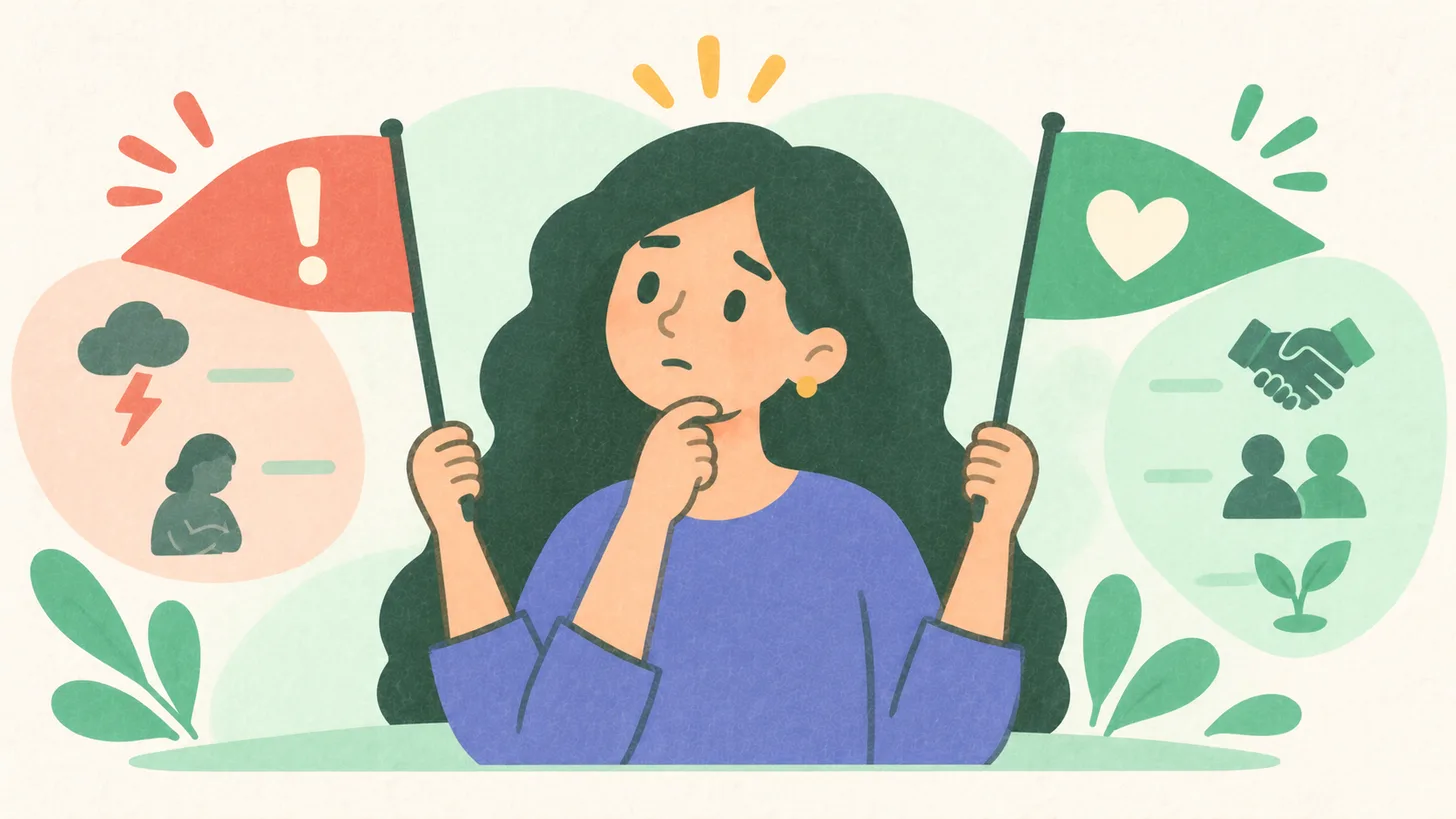
If something feels off and you have Googled this twice tonight, you are not being dramatic. The green flag meaning is simple. A green flag is a repeated behaviour that says this person is safe to invest in. A red flag says slow down. On goodlives.in, trusted by 500K+ people, readers reach us after one argument that felt bigger than the argument itself.
What do red flag and green flag mean, in one line each?
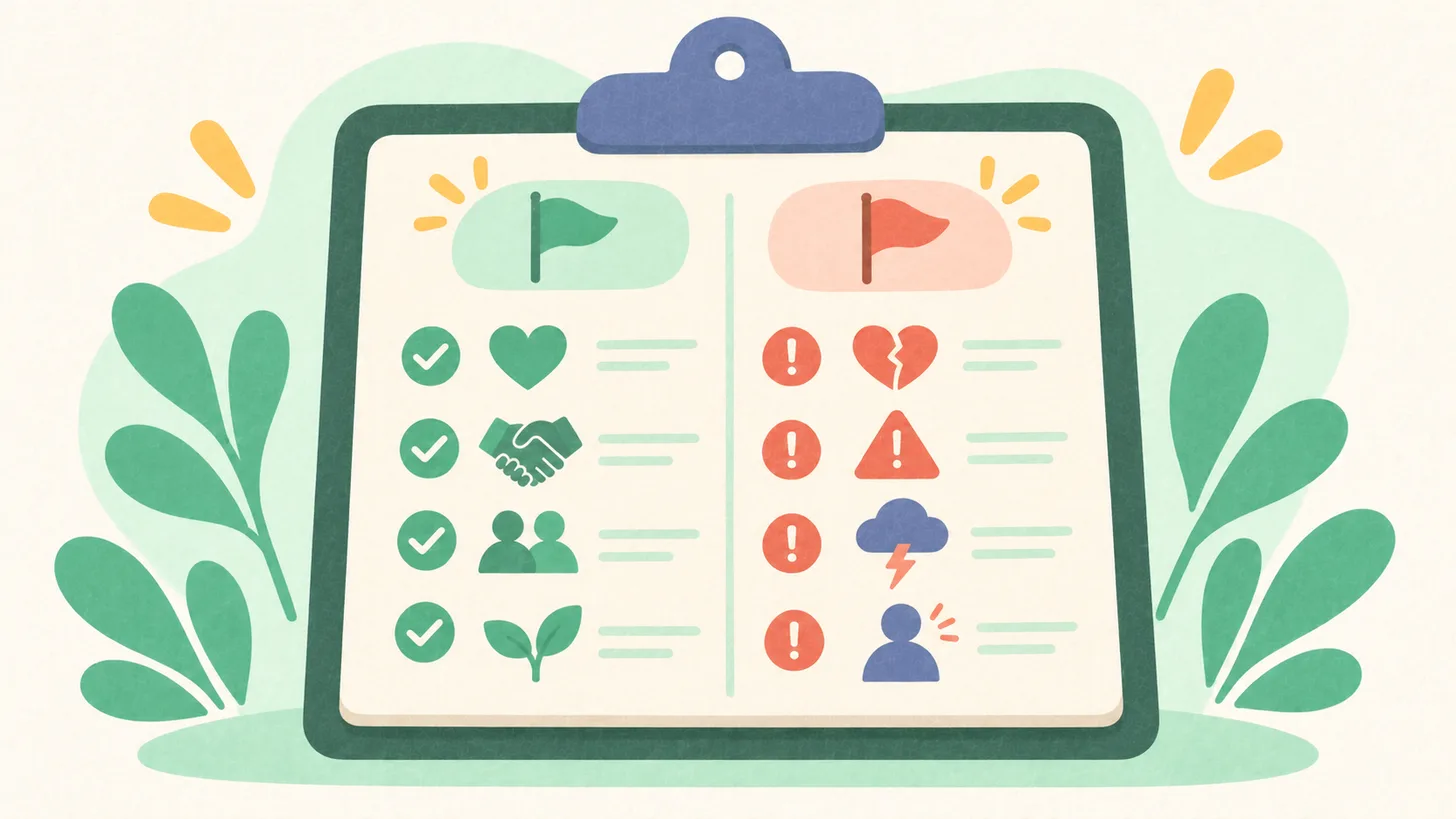
A red flag is a repeated behaviour that signals your partner is unsafe to trust, depend on, or grow with. A green flag signals they are. Both are patterns, not single moments. One bad day is a bad day. The same bad day every month is a pattern. The words came from motor racing and sailing warning codes.
Your partner raising their voice once in a hard month is a bad night. Raising their voice every time you ask about money is a pattern.
In short: a flag is a pattern, not a one off. If you cannot think of three times it happened, it is not a red flag yet.
Why “red flag” gets misused on social media
Not every imperfection is a red flag. The term now gets used for anything from “slow replies” to “shouts at me”. These are not the same, and treating them the same makes real red flags harder to spot. A viral list will not fix a specific relationship, it can only point. A useful filter: a red flag affects your safety, your respect, or your ability to be yourself. A pet peeve affects your mood for an afternoon.
You have probably been told online that one small habit is a walking red flag meaning the person is beyond help. Most of us can also think of a friend whose partner texts slowly and is otherwise kind.
In short: save the red flag label for behaviours that touch safety, respect, or self. The rest is a pet peeve.
Green flag meaning in a relationship: ten everyday signs
The green flag meaning in a relationship shows up in small, boring moments, not grand gestures. The people safest to love are the ones who do these things on a Wednesday evening when nothing is going wrong. Repeated choices, not personality traits. Here are ten worth looking for over the first few months, and the next ten years.
They disagree without raising their voice, and come back after a cool off. They are honest about money. They apologise clearly, name what they did, and change the behaviour. They are happy for your wins at work when their week is harder.
They remember what you told them last month about your parents. They have their own friends. They ask about your day before telling you about theirs. They say no to their own family when the family is unfair to you. They notice when you are quiet without making it a crisis, and they are the same person at home as they are in front of your friends.
In short: green flags are small, repeated and boring. They look like a safe adult being an adult.
Red flags that are easy to see, and five that are easy to miss
Some red flags are loud, and some are quiet, and the quiet ones cost the most time. The loud ones are shouting, name calling, hitting or threatening to hit, checking your phone, controlling your money, and lying before calling you paranoid for noticing.
The quiet ones are the five that build slowly. First, they apologise with “I am sorry you felt that way” instead of “I am sorry I did that”. That looks like an apology; it is not. Second, they are only kind to you in public, and the warmth switches off when the door closes.
Third, they tell you what you feel, which over months makes it hard to trust your own body. Fourth, they punish you with silence. Not a cool off, not a boundary. Days of nothing, and then it is on you to repair.
Fifth, they are jealous in ways they call “caring”: where you were, who you spoke to, why you took so long to reply. Journalling helps you spot the loop. A therapist helps you break it. For a longer read, see our page on recognising a toxic relationship.
In short: the loud ones are safety flags. The quiet five build slowly, and are what you take to a therapist.
What control looks like in Indian families
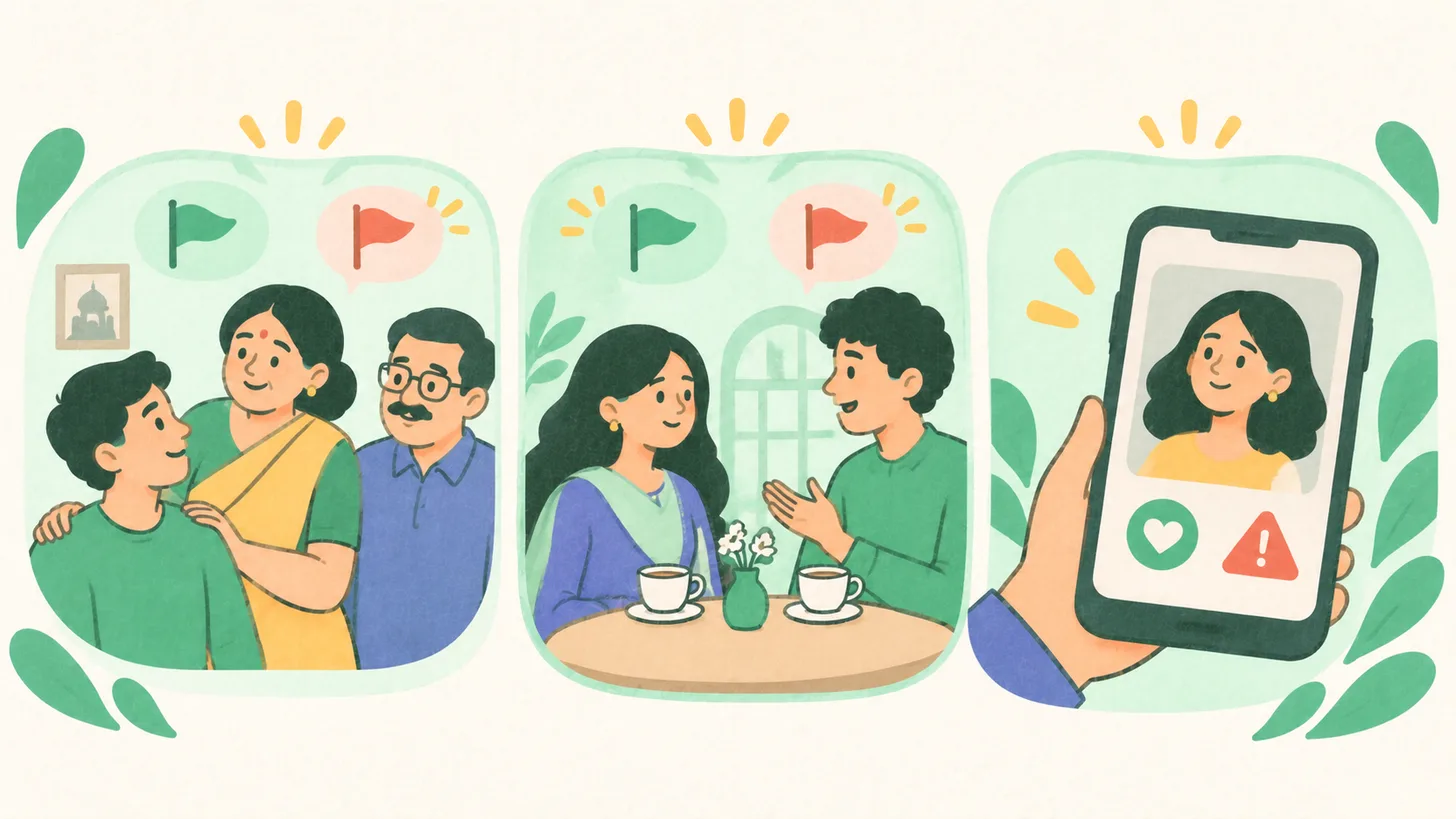
Some red flags are harder to see here because they are stitched into tradition. This section is the line between tradition and control. If you grew up watching one person in the home shrink to keep the peace, these can read as love. They are not.
Hints about dowry at any stage. Any mention of what your family will “give”, any complaint from his family about what was given, any pressure that frames a wedding gift as a right. Dowry is illegal under the Dowry Prohibition Act, 1961.
Caste or religion used to tell you who to meet, where to work, or what to wear is another flag. A healthy partner can hold their beliefs without using them to shrink yours.
Future in laws deciding your relationship before marriage is a third. If a mother in law is picking your career or when you will have a child, and your partner is not standing with you, that is the pattern you will live with. “We Indians” rhetoric used to limit a woman is a fourth. The phrase rarely applies to the man. Any physical punishment framed as discipline is the fifth.
In short: a tradition that only works if one person makes themselves smaller is not a tradition worth keeping.
Red flag or green flag? A quick pattern check for eight moments
A single moment is rarely the full story. If a moment happened once, it is a moment. If it has happened in roughly the same shape three times, it is a flag. The real work is to think of three times each thing has happened and ask what the pattern was.
What to do when you see red flags
Not every red flag means leave. Some mean name it and watch. Some mean talk about it, together or with a therapist. Some mean step back and plan. Which one depends on the flag, how often it shows up, and whether your partner is willing to look at themselves.
For a flag that is not about safety, a reasonable path has four steps. First, name the pattern to yourself. Write three times it happened and keep it factual. Second, say it to your partner once, calmly: “when X happens, I feel Y, and I want Z”.
Third, watch what they do over the next four weeks. Words are a start. Change is the proof. Fourth, if nothing changes, that is information. A pattern that stays is who they are, not what they are going through. The honest answer is that some weeks the conversation works and some weeks it does not.
In short: a flag is information, not a verdict. The verdict is what happens after you say what you saw.
When patterns cross into abuse, and why couples therapy is not the answer
Some red flags are not patterns to manage. They are safety issues. Hitting, threatening to hit, forced sex, controlling your money or movement, isolating you from your family, threatening to harm themselves if you leave. All of these are abuse under Indian law (the Protection of Women from Domestic Violence Act, 2005), and abuse is not a couples therapy question.
Couples therapy assumes two adults in roughly equal footing who both want the relationship to change. When one partner is afraid of the other, a joint session can make things worse. The person being hurt cannot be honest in the room, and often pays for that honesty at home. You might be worried that saying it out loud will make it worse that night. You may be afraid your family will say you are overreacting.
If this is where you are, two steps are more useful than a couples appointment this week. They can walk you through safety planning and local shelters. Second, see a therapist on your own first, not with your partner.
That restless bechaini (unease) you carry is normal. Fear for your safety is a signal, not a flaw.
In short: couples therapy needs two safe, willing adults. If one of you is not safe, individual support and safety planning come first.
My partner says I am their red flag. What does that usually mean?
If a partner has told you that you are their red flag, sit with it for a minute without taking it as a verdict on who you are. Three possibilities exist, in rough order. They may be naming a real pattern you do (you shut down, you blow up, you shame them) and want to talk about it.
They may be using the language of self help to end a conversation without doing their own work. Or they may be shifting blame off a bigger pattern of their own.
A useful next step is not to fight the label. Ask one specific question: “which thing I do are you talking about, and when did it last happen?” If they can answer with a specific moment, there is a conversation. If they cannot, the label is doing other work.
In short: a label is not a diagnosis. Ask for the moment behind the label, then listen.
When should you talk to a therapist about this?
Therapy is for the question before the question. Not just “should I leave”, but “why does this feel so familiar”, “why do I keep ending up here”, or “how do I say what I need without a fight”. If what you need right now is to sleep tonight, a therapy session on Friday is not the fastest tool.
For the longer conversation, a session is worth considering if you read a list of red flags and recognised your own relationship three times, if you can tell something is wrong but cannot explain it to yourself, if you plan what to say three days before you say it, or if you are tired in a way sleep does not fix.
GoodLives therapists are RCI registered where applicable, and we see people across arranged, love, and long distance relationships. Sessions are confidential, in English, Hindi and more Indian languages. You can start, see how one session feels, and stop.
For a joint pattern you both want to work on, see couples therapy online in India. For the end of something, breakup and heartbreak counselling is a gentler place to start. The psychology and relationship terms index covers the vocabulary.
In short: you do not have to be in crisis to see a therapist. One session, early, saves months of guessing.
FAQ
What is red flag and green flag in a relationship, in one sentence each?
What is the difference between red flag and green flag, in practice?
What does walking red flag mean?
Is being jealous a red flag or a green flag?
Can a relationship with red flags still be saved?
What is a green flag in a girl or a boy?
What are red flags and green flags on dating apps?
This post is for information only and is not a substitute for professional care.




Share your thoughts