
What this blog includes
- What mental peace actually is, and the myth it is not
- 7 evidence-based ways to calm your mind when it will not switch off
- The things that look like peace but turn out to be avoidance
- When these practices are not enough, and what to do next
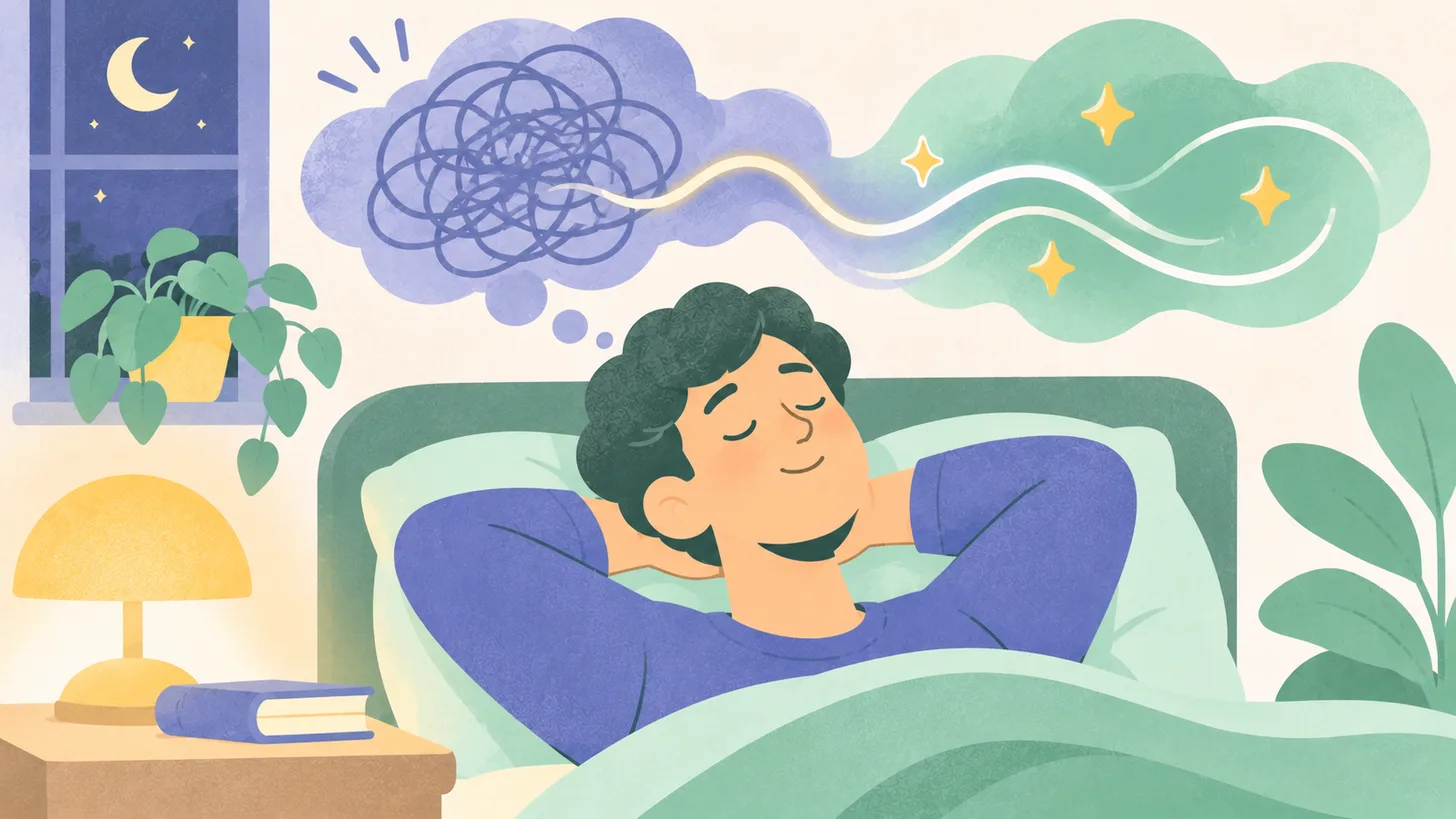
If you have ever been at a desk at 11 pm with four tabs open and none of them helping, that restlessness has a name. Mental peace is the question people type into Google at that hour. It is also one of the most misunderstood phrases in self-help.
The myth is that peace means silence. In real life, peace is what you build between the thoughts, not after them. The Hindi word for this specific restless unease is bechaini, and many of us know it well.
This blog is not a 10-step cure. GoodLives, trusted by 500K+ people, sees this exact loop every day. The job here is simple: understand what inner peace actually means, pick a few short practices that work in two minutes, and know when a technique is no longer the right tool.
What is mental peace, really?
Mental peace is not an empty head. It is the capacity to notice a thought, let it move through you, and keep going with your day. The ‘no thoughts, just vibes’ promise sells well on reels. In real life, peace is what you build between the thoughts, not after them.
The problem with chasing a silent mind is that the mind is not built for silence. It is built for prediction. A worrier becomes calmer by changing their response to each thought, not by subtracting thoughts. The thought still arrives at 11 pm. You can let it arrive, and still go to bed.
In short: Mental peace is a capacity, not an absence. The target is not silence; it is a slower response to the next thought.
Why your mind will not switch off at night
Your mind runs loudest at night because the lights are off. During the day, work and traffic drown the loop out. When those stop, the loop gets your full attention. The body reads ‘quiet room’ as ‘now is a good time to review every awkward thing you have said this year’.
If this has been your 11 pm for weeks, you are not the only person opening tabs about it. Nothing is wrong with you. The next sections are the practices that move the baseline, and the one honest line about when a practice is not the right tool.
In short: The loud mind at night is a feature of a quiet room, not evidence that something is broken.
Slow your exhale: the two-minute reset
If you have asked how to relax your mind in a hurry, breathing is the fastest tool. A longer exhale than inhale tells your vagus nerve to shift the body out of alarm. You do not need an app. Four seconds in, six to eight seconds out, for one slow minute.
The pattern most people have heard of is 4-7-8 breathing (inhale four, hold seven, exhale eight). It works. A simpler version is to stretch the out-breath on its own, repeated for a minute. This will not fix what triggered the anxiety. It will help you ride out the next ten minutes.
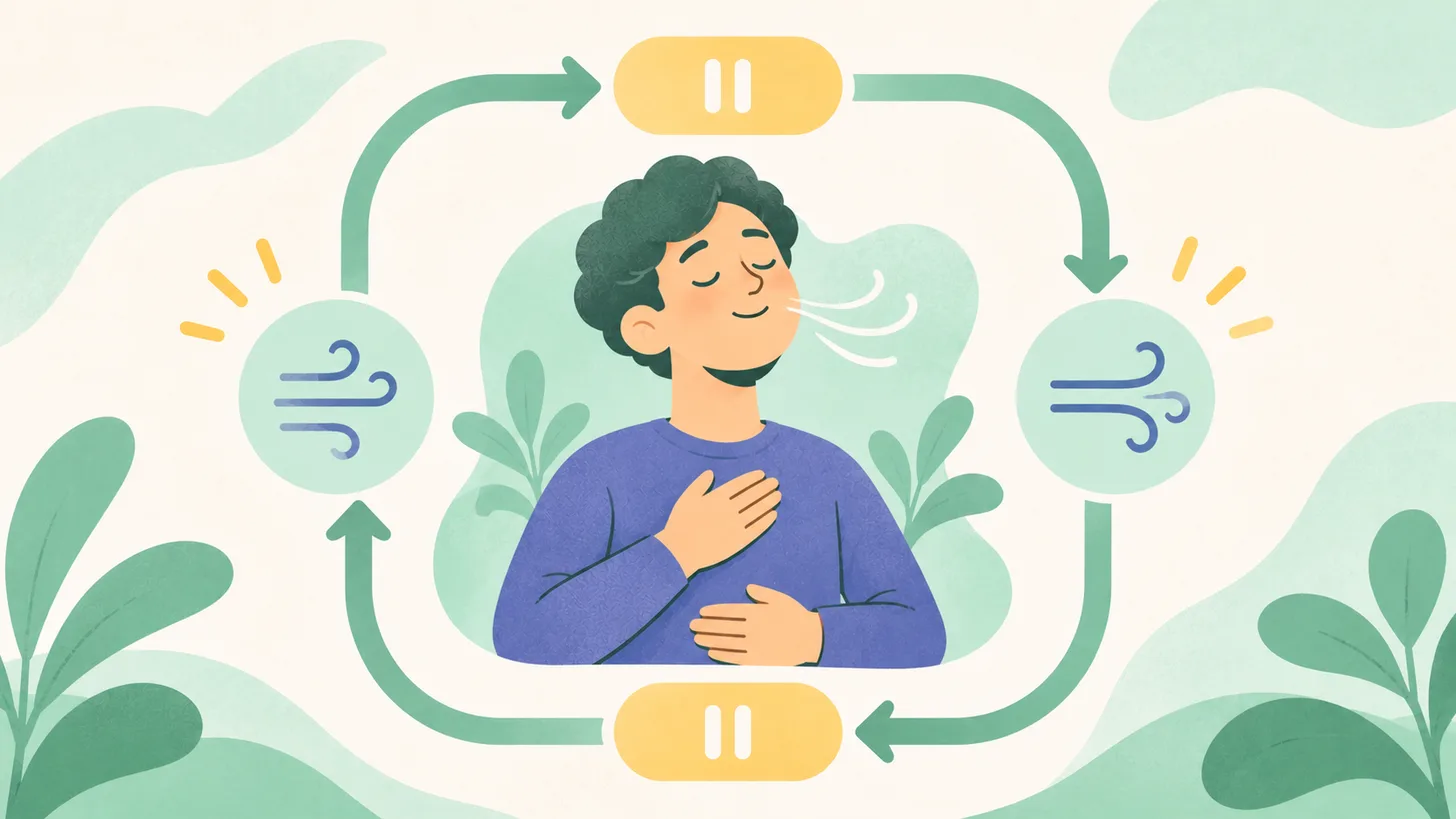
If you want, take one slow minute with this before you read on.
A moment to breathe
Follow the circle. Breathe in, hold, breathe out, then hold. Four counts each. Stay as long as you like.
In short: A longer exhale is the fastest handle you have. Two minutes, nothing fancy, nothing bought.
Move your body, even for ten minutes
Movement is the second-fastest tool. The thoughts have less to attach to when the body is doing something. The WHO recommends at least 150 minutes of moderate activity a week, because physical activity lowers the risk of depression and anxiety (WHO, 2022).
On a loud day, ten minutes of brisk walking around the block changes the chemistry. Yoga and pranayama are part of Indian life; WHO India names them as useful adjuncts to care. They are not a replacement for therapy when the mind is clinical.
See our yoga for anxiety walk-through if that is the door you want to open.
In short: A calmer mind comes partly through the body. Short is better than skipped.
Protect your sleep like it is the point
Sleep is where the brain files what happened during the day. When sleep is short, the files pile up and show up at 11 pm the next night. If you want a calmer week, protect sleep before you optimise anything else.
The main habit is boring, and it works. The same wake-up time, every day, including weekends. One slow hour before bed with low light and no doomscrolling. For a longer plan, see our how to fix your sleep schedule post.
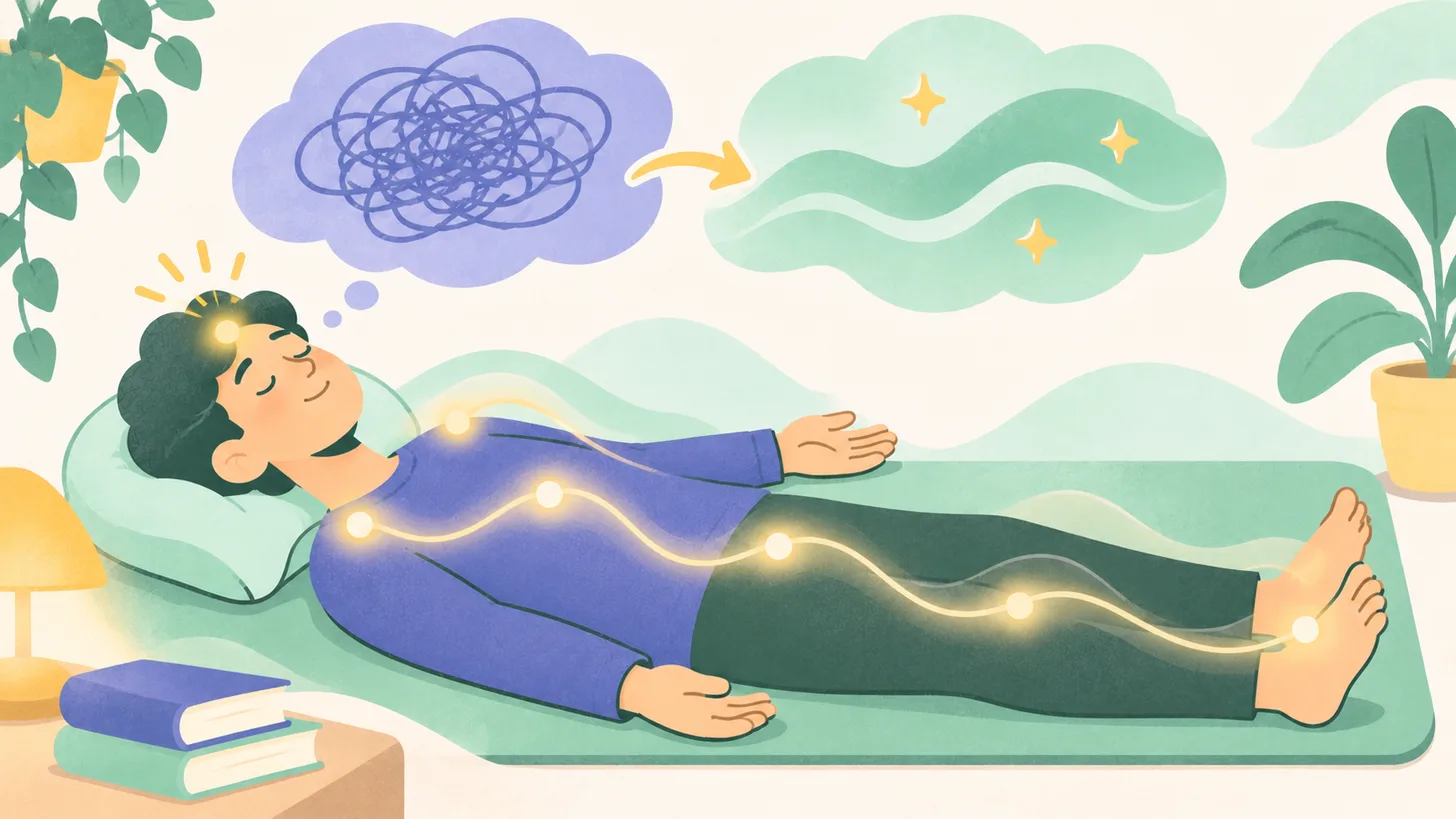
In short: Sleep is not a reward for a calm week. A calm week is often built on top of sleep.
The brain dump: get the loop out of your head
Writing the loop down takes it out of the body. This is one honest answer to how to calm the mind at bedtime. It is not clever journaling. It is a plain brain dump: a page, your handwriting, no reader. The paper carries what the head was holding.
Try this at night for ten minutes. Write every thought on the loop, including the small ones. When you are done, the page holds what the head was holding, and you can sleep. If you want a kinder structure, see our gratitude journal post.
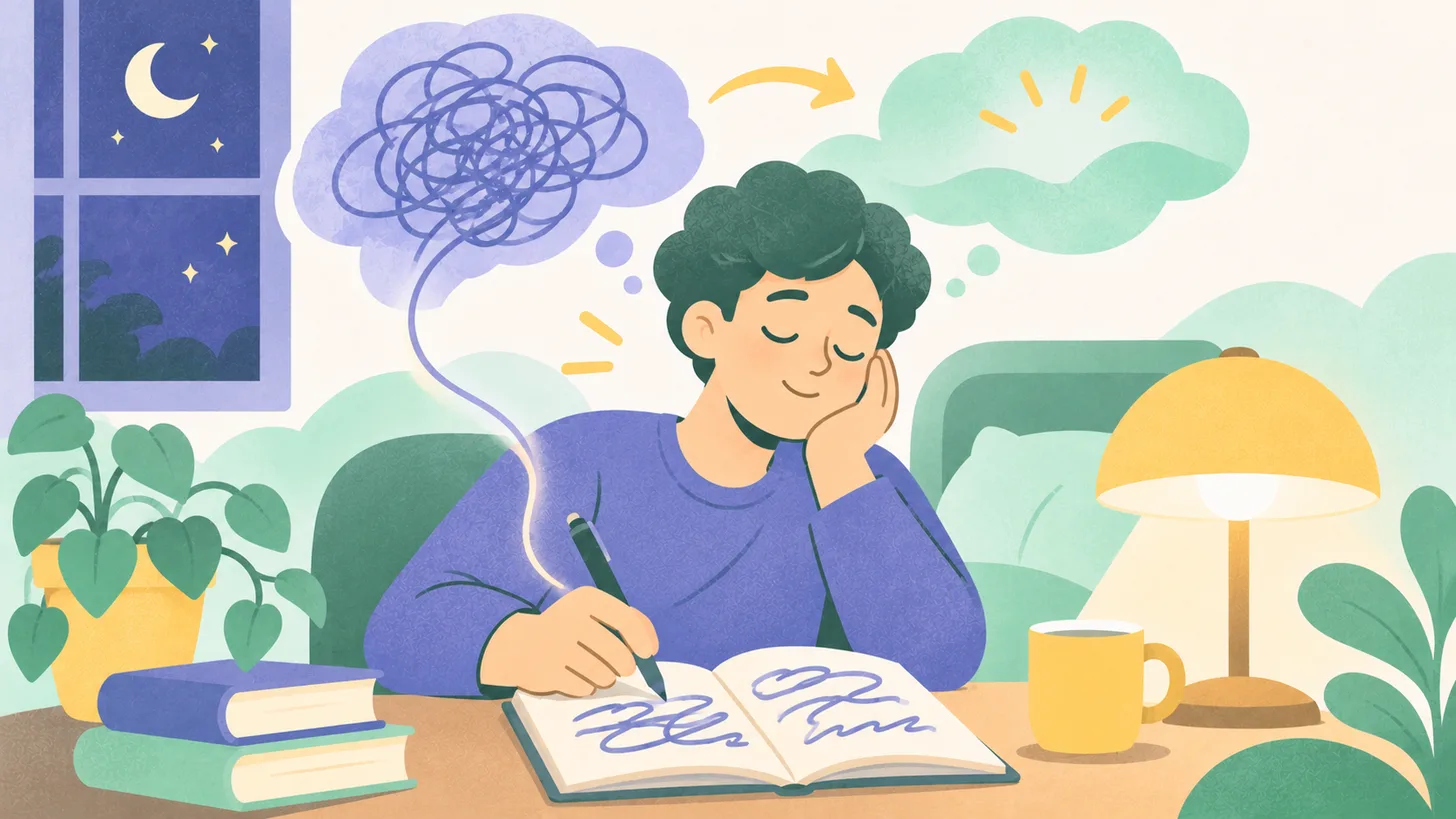
In short: The hand is a surprising door into a quieter mind. Ten minutes, a cheap notebook, no audience.
The social media pause (and why it is bigger than you think)
Social media is not the villain of your calm, and it is also not neutral. The feed is built to find the next hit. For many of us, that is the loudest voice in the room. Reducing it, even by thirty minutes a day, changes the baseline you work with.
Start with the smallest honest change. Keep your phone outside the bedroom. Turn off the badge on one app. Switch off suggested reels for one week. If you want to break the pull, see our how to break a bad habit post.
In short: Less feed is not a vibe. It is a measurable change in what your mind is handling.
Step outside, even for a few minutes
Being outside for a short time makes a difference, and it is not spiritual. Natural light sets your sleep-wake rhythm. Trees and sky offer the eye a longer focal distance than a laptop screen. The body unclenches a little. The mind follows.
If you have access to a park, walk through it. If you do not, step onto the balcony or the terrace. Fifteen minutes before 10 am helps your sleep tonight. Fifteen minutes after 5 pm helps your mood today.
In short: The simplest free tool for a calmer mind is already outside your door.
Talk to a human: the one tool self-help cannot replace
One honest conversation does what seven apps cannot. A friend who listens without fixing. A sibling you forgot to call. A professional, when the loop is louder than what a friend can hold. The quietest minds are partly built in company.
Breathwork lowers your heart rate in two minutes. A therapist lowers your baseline over three months. Both are real tools, and they do different jobs. If you want to see what therapy looks like before you commit, our hub on online therapy in India walks through session formats and pricing bands.
In short: Human company is not an upgrade over self-help. It is the other half.
What does not work for mental peace (the honest list)
Some advice is louder than it is useful, and we owe each other the truth. The honest answer is that five habits look like peace work and quietly turn into avoidance in a nicer sweater, and the next week disappears while they do.
Positive thinking as a strategy flattens the real reasons the mind is loud. The feelings are information. Trying to delete them does not work. Avoidance is the oldest friend of a worrier, and peace that comes from avoidance has a shelf life of about three days.
Social media wellness content, past a certain dose, becomes the problem it was describing. Weekend retreats as substitutes for a hard conversation at home are a classic trap. The mountains do not fix the office.
The trickiest one is spiritual bypassing, because it uses words you respect. Pranayama is real. Meditation is real. Prayer is real. When any of them sit on top of a fight you need to have, or a therapist you need to see, they become the way the fight does not happen. Honour the practice. Pick up the phone too.
In short: Peace work goes sideways when it becomes a way to stop looking at the thing.
When these practices are not enough: it may not be a mind problem
If you have tried breathing, movement, sleep and the brain dump honestly for a few weeks and the mind is still loud, the issue is often clinical, not spiritual. That is not a verdict. It is routing. A calmer baseline sometimes needs the right diagnosis before the right practice.
The signs that self-help is not the right tool anymore are plain. Sleep that does not return. Appetite that goes very low or very high. Thoughts that stop you from working or caring.
The National Mental Health Survey put the current prevalence of any mental morbidity in India at 10.6% in adults aged 18 and above (NIMHANS, 2015 to 2016).
Not every anxiety needs therapy. Some of this is a season you walk through, with a plan and sleep and one honest conversation. Some of it is longer than a season, and asks for a professional.

In short: If the practices are not landing, the next step is probably a conversation, not a tenth technique.
How to raise this with your family
In many Indian homes, ‘I think I need to talk to a therapist’ is not a casual sentence. You might be worried that saying it will worry them more, and that worry is often what keeps the sentence inside your head. The way you raise it decides how the next week goes.
A soft opener is a question, not an announcement. ‘I have been feeling tired for a while, and I want to talk to someone. Will you help me find the right person?’ lands differently to ‘I have an appointment on Friday’. Facts land where opinions bounce, so share the NIMHANS survey or the Mental Healthcare Act 2017 if the first response is dismissive.
In short: The first conversation at home is a door, not a courtroom.
FAQ
What is mental peace, in plain English?
How do I get mental peace when my mind will not switch off?
How to find peace of mind if I cannot afford therapy right now?
How to get inner peace through meditation?
Is it normal to never feel calm?
Can yoga alone give me mental peace?
How to calm your mind instantly before a meeting?
This post is for information only and is not a substitute for professional care.
> Ready to talk to someone? > A 50-minute session with a verified psychologist on GoodLives. > English, Hindi and more Indian languages. > button: Book a Session > subline: Trusted by 500K+ people



Share your thoughts