
What this blog includes
- The habit loop and the stages of change
- A step-by-step plan that fits your week
- When a habit is really something more
If you have Googled this at 11 pm after one more scroll, one more cigarette, one more hour on a reel you did not want to watch, you are not weak. You are human.
Learning how to break a bad habit is less about trying harder. It is more about what the habit is doing for you, and which stage of change you are in tonight. Many of us have been in that chair. GoodLives has worked with over 500K+ people on these loops.
What makes a bad habit stick: the habit loop
A bad habit is not a character flaw. It is a loop your brain learned on autopilot. The journalist Charles Duhigg named it in The Power of Habit. James Clear sharpened the shape in Atomic Habits. The four parts are cue, craving, response, reward. Together they are the habit loop.
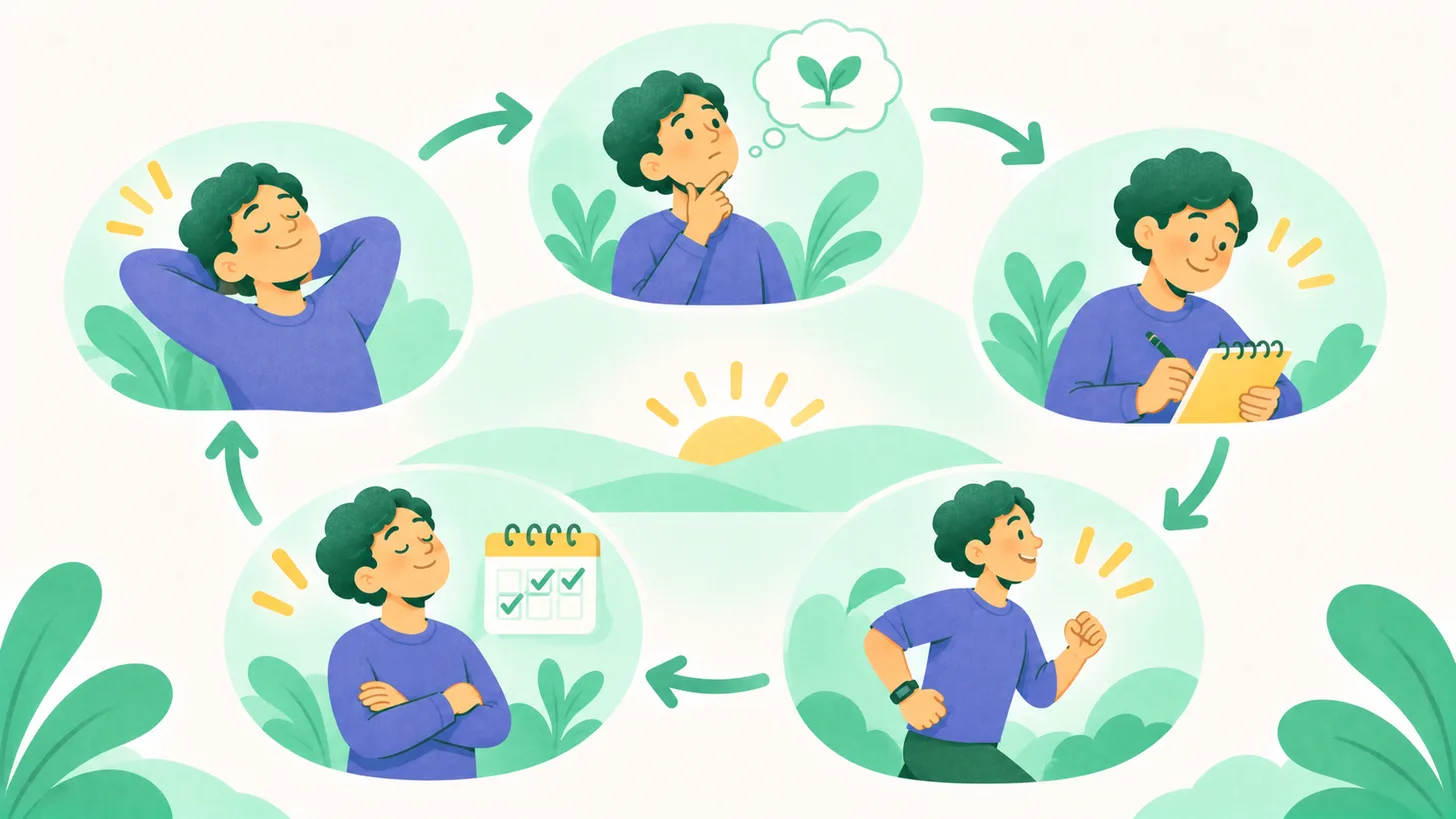
The cue is the trigger: a notification, a feeling, a time of day. The craving is the itch the cue sets off. The response is the behaviour. The reward is the small payoff that teaches the brain to do it again.
Every bad habit is paying you something. Numbing an awkward feeling. Filling a quiet five minutes. The honest answer is that the habit is a trade, not a glitch.
Research by Lally and Gardner in Health Psychology Review shows habits form through repetition in stable settings (Lally and Gardner, 2013).
In short: you are rewiring a loop, not fighting your character. Find what the habit is paying you, and the rest of the plan has somewhere to land.
The stages of change: a map for the long road
Behaviour change is a stage model, not a straight line. In 1983, psychologists James Prochaska and Carlo DiClemente mapped the stages of behaviour change in their Transtheoretical Model. It has held up across decades of research on quitting smoking, drinking and binge eating.
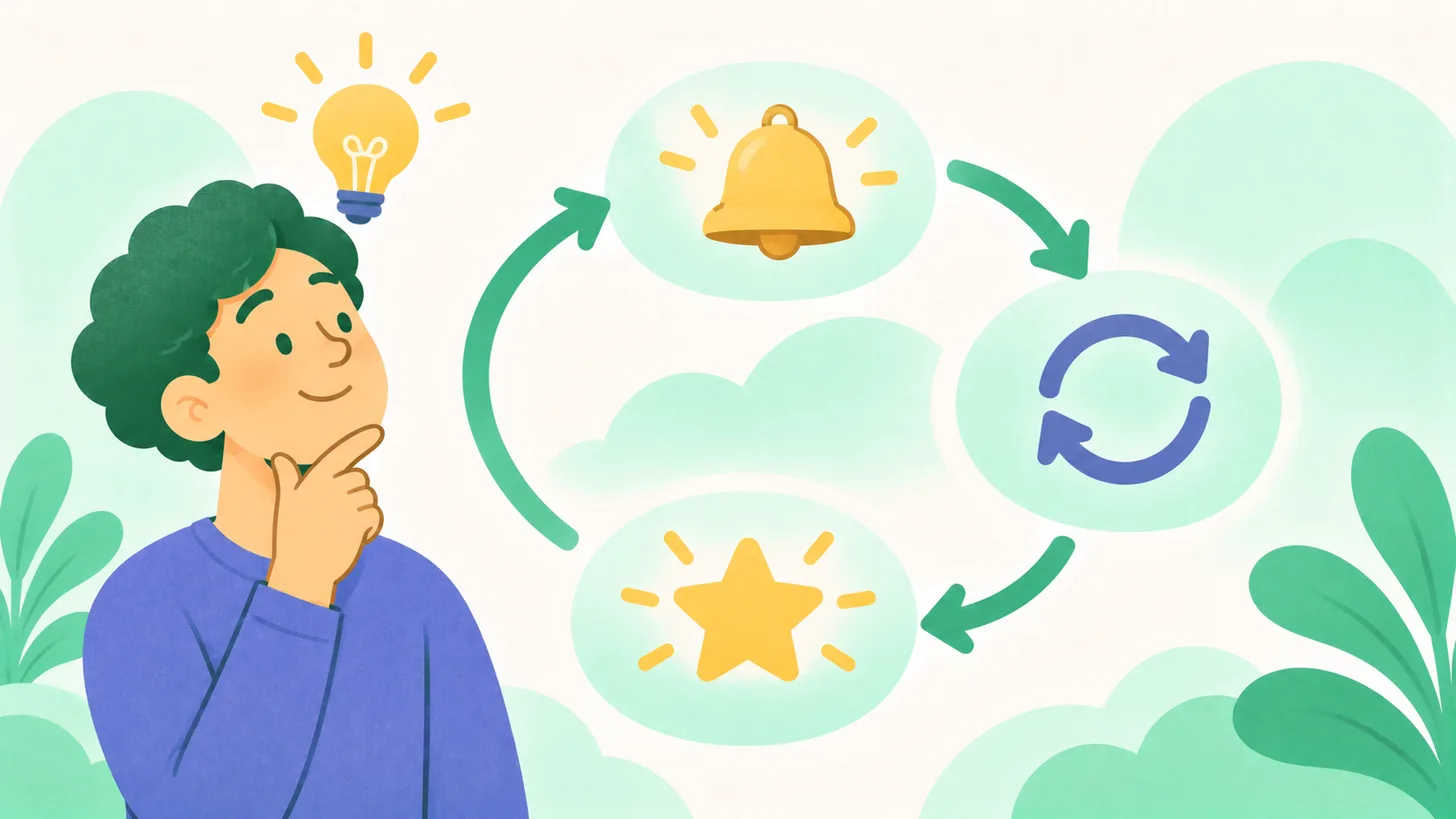
Precontemplation. You do not think the habit is a problem yet. Family may be nudging. You are not ready.
Contemplation. You know it costs you something. You weigh it. You open an article like this one. You might stay here for weeks.
Preparation. You decide. You pick a date, tell one person, delete the app, book the therapist.
Action. You do the new thing. The first 90 days are the loudest. The body misses the old reward.
Maintenance. The new behaviour is quieter now. The risk is forgetting why you started.
Relapse. Many of us cycle back. Prochaska’s research found most quitters pass through the stages three or four times before change settles. Relapse is data, not a verdict.
In short: figure out which stage you are in tonight. The plan that works in Action is the wrong plan for Contemplation. The hardest work in Maintenance is remembering you did it.
How to break a bad habit, step by step
The actual steps are small, specific and slightly boring. That is why they work. Pick one habit, not three. If you want to know how to break a bad habit without burning out, go narrow and go slow. One cue, one replacement, one check-in a week.
- Name the cue, the craving and the reward. For three days, write what happened just before the habit, what you felt, and what the habit gave you.
- Change the environment first. The cigarettes stay out of the house. The reel app goes off the home screen. Willpower is a thin shield. Environment is a thick wall.
- Use an implementation intention. Peter Gollwitzer’s research shows an if-then plan beats a general goal. “If I open Instagram on the metro, then I open my Kindle app.”
- Habit-stack a replacement. James Clear’s rule from Atomic Habits: after an existing habit (making chai, brushing teeth), do the new tiny one.
- Make the reward honest. The brain needs to be paid. A ten-minute walk after a work block. A message to a friend after a hard talk.
- Track in weeks, not days. A missed day is a bad day. A missed week is a signal to look at the plan.
Do not start six changes at once in January. The second month is a cemetery of resolutions. The problem was never discipline. The plan asked too much.
For more on the second habit that holds the new one, see extraordinary tips to stay disciplined and self-care routine ideas.
In short: one habit, one cue noticed, one replacement written as if-then, stacked onto something you already do.
When willpower fails, design for the slip
You will slip. Everyone slips. The slip is not the problem. The story you tell yourself after is. Some weeks it works on the first try. Some weeks you need five goes. That is how a loop learned over years lets go.
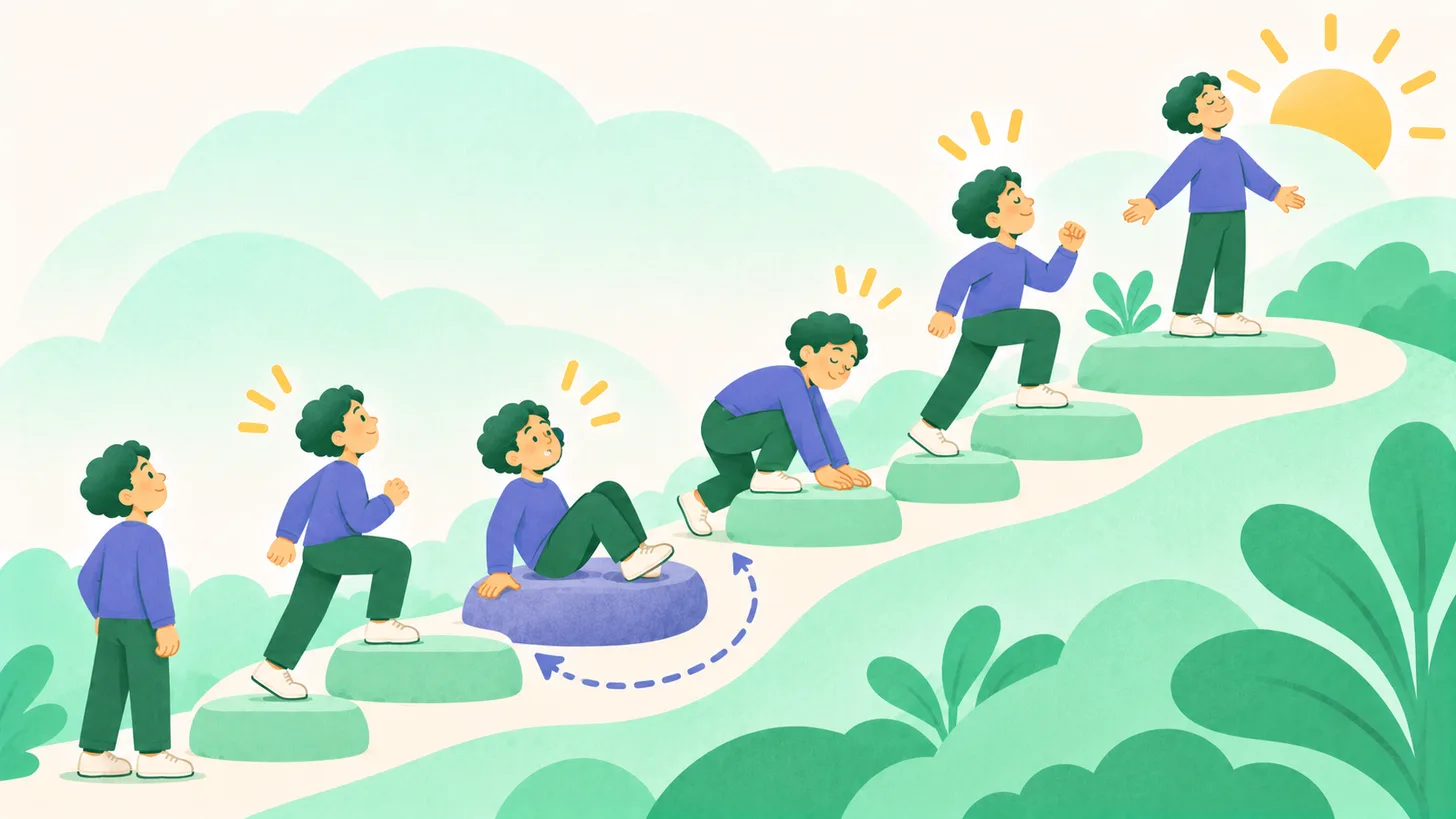
You might be thinking “I messed up, I am hopeless, I may as well order the whole pack again.” That has a name: permission-giving thinking. It is the most common reason one bad night becomes one bad month.
Catching that thought and softening it is a skill. A CBT-trained therapist practises it with clients until it is automatic.
If you want, take a minute with this before you read on. The widget will help you name the thinking trap and write a kinder, truer version.
Catch the thought
What thought is weighing on you right now? Write it down just as it sounds in your head.
Name the trap
Does your thought fall into one of these common patterns? Pick any that fit. This part is optional.
Look again
Use these as nudges, not rules. Then write one line back to yourself.
Your reframe
Thoughts are not facts. You just practised stepping back.
This stays on your device. Nothing is saved or sent.
Journalling the loop helps you spot the pattern. A therapist helps you break it when the pattern is older than one bad night. If you have been in the Action stage for six months and the habit keeps winning, that is a signal.
Not every bad habit needs therapy. Some of this is a season you walk through with a plan, sleep, and one honest conversation.
In short: design for the slip before it happens. A kinder story after a slip is the difference between a bad Tuesday and a bad year.
When a bad habit is really something more
The honest line we owe you is this: habit tricks will not fix addiction. Compulsive substance use, binge drinking, pornography or gambling eating money and sleep, an eating pattern that scares the people around you. These are health conditions, not failures of grit. The Hindi word lat carries this edge.
The Mental Healthcare Act 2017 of India protects your right to treatment for mental illness, including substance use disorders, with dignity and in your language (Mental Healthcare Act 2017).
The WHO’s India office lists these conditions among the leading causes of disability in Indians under 40 (WHO India).
Signs the habit has moved past habit: you have tried to stop more than three times and could not hold a month; it costs money or sleep; you hide it from people who love you; stopping for a day brings strong pullback; someone close has asked more than once for you to get help.
You do not have to be in crisis to see a therapist. You can start, see how it feels, and stop. A first session is not a commitment.
If what you need right now is help with addiction, a psychiatrist or addiction counsellor is the next step. For softer, stuck patterns, see how to meditate and ways to find inner peace.
In short: if the habit involves drinking, substances, gambling or compulsive use costing you money, sleep or relationships, call a therapist or a helpline tonight. The 2017 Act is on your side.
FAQ
How to stop a bad habit when you have tried many times?
How long does it take to break a habit?
What is the habit loop in simple words?
Does willpower work for breaking habits?
Can therapy help with everyday habits like scrolling or snacking?
What if a bad habit is actually an addiction?
Where can I begin tonight?
Where to begin tonight
If this piece has done its job, you are a little clearer about which stage you are in and which small thing to try first. Pick one habit. Name the cue. Change one thing in your environment. If the habit has grown teeth, call someone who can help.
In short: one small change tonight beats a perfect plan on Monday.
This post is for information only and is not a substitute for professional care.


Share your thoughts