
What this blog includes
- Insecurity meaning in plain English, in a relationship, and in Hindi.
- Common signs of insecurity in a relationship, and what each one is doing.
- How to tell insecurity from inferiority complex and low self-esteem.
- Gentle ways to work on it on your own.
- When individual therapy or couples therapy is the better next step.
At eleven at night, you re-read a message your partner sent at four. You check if they are online. You tell yourself you are being dramatic. You check once more.
The insecurity meaning most of us carry sits right there, in the small checks we cannot stop. This post says what insecurity is, how it looks in a relationship, where it comes from, and what gently helps.
GoodLives is trusted by 500K+ people across India. We wrote this to be the last tab you open tonight.
What does insecurity mean?
The simplest insecurity meaning is this. A steady feeling that you are not quite safe in your worth. Or in how much you matter to someone. It is not a weakness. It is an alarm your mind sends when something makes you doubt your place.
The APA Dictionary of Psychology names it as self-doubt and low self-confidence. You might know it as a flutter when a reply is late. Or a doubt when a project goes to someone else.
It gets misread as other things. Jealousy. Pettiness. Overthinking. Underneath, it is one quiet question. Do I still have a safe place here?
In short: insecurity is a signal, not a flaw. Naming it is the first help.
Insecurity meaning in a relationship
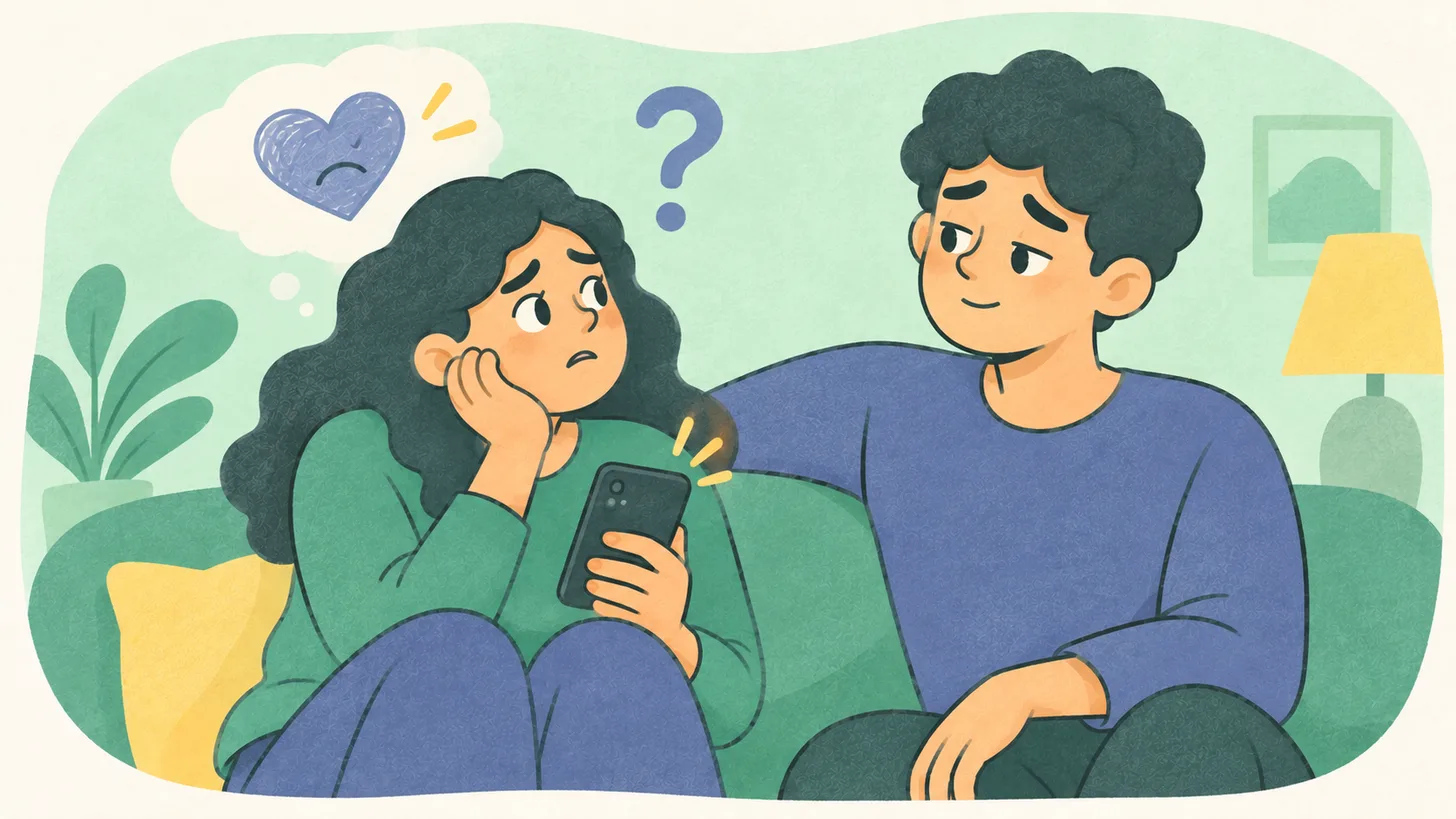
In a relationship, insecurity has its own shape. The insecure meaning in relationship context is less about doubting yourself in general. It is about doubting if you are enough for this one person. In this one love. The feelings are familiar. The checks are small. The toll builds slow.
Insecurity in a relationship does not always mean the love is wrong. It usually means something older is being touched by something new.
In short: a love can be good and still carry doubt. Both can be true.
The signs of insecurity most couples recognise
The signs of insecurity in a relationship are small on their own. Together, they form a pattern. You seek comfort you do not fully believe. You check their phone. You read tones. You compare. Each move tries to answer one quiet question. Am I still wanted?
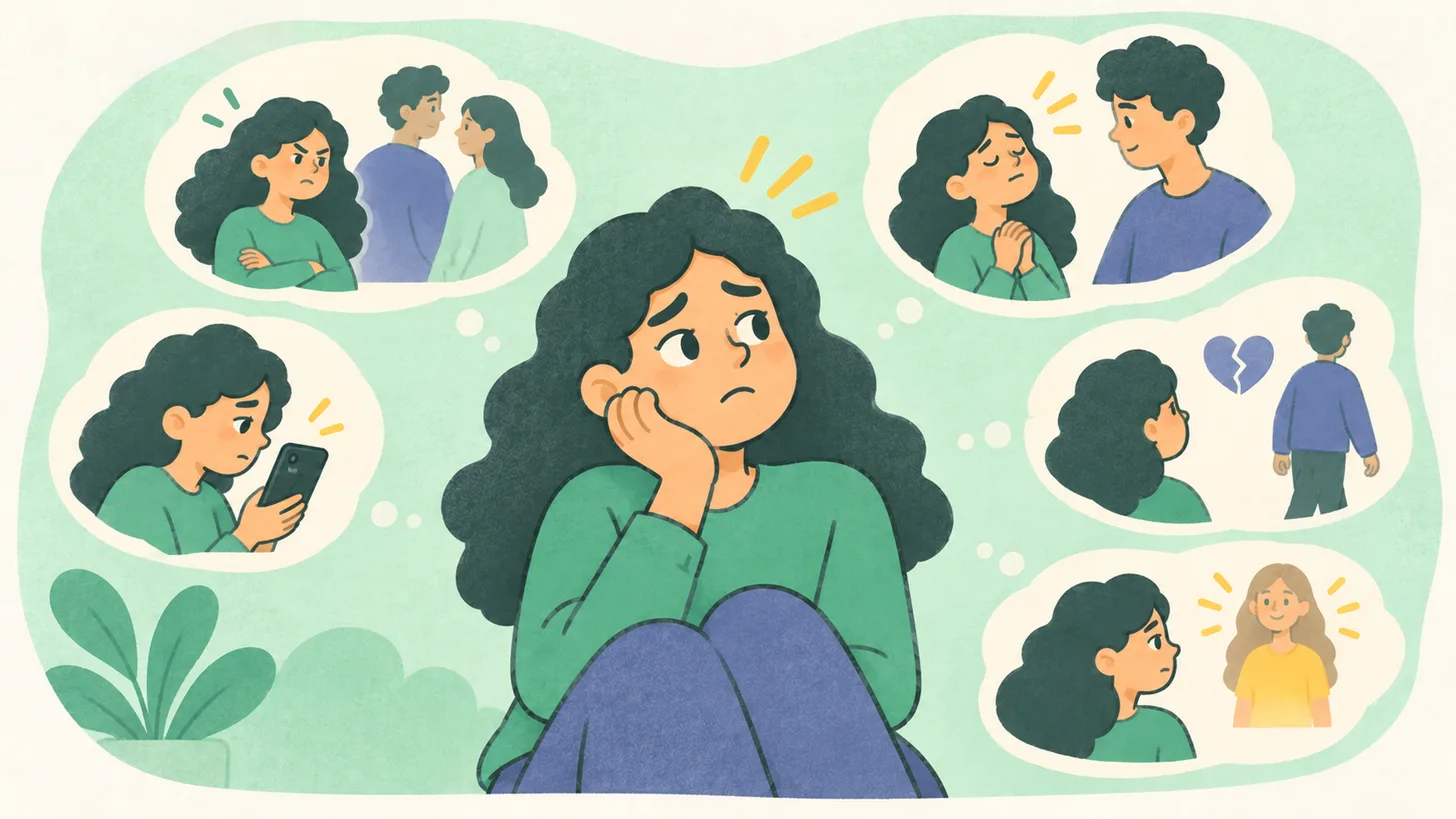
Reassurance seeking. You ask “do you still love me?” more than you would like. The answer helps for an hour.
Over-checking. You open their chats, their last seen, their likes. The relief is thin.
Jealousy that reaches. A small moment turns big when a friend of theirs posts a story.
Over-interpretation. A late reply becomes a cold reply. A short reply becomes a signal.
Testing. You pull away, hoping they chase. Or you ask the same thing in three ways.
Shrinking. You stop raising needs, afraid of being “too much”.
Many of us have one or two of these on a hard week. The real question is if they shape most of your days.
In short: one sign is a feeling. Four signs is a pattern that deserves a kinder look.
Where does insecurity come from?
Insecurity does not arrive out of nowhere. It is built, usually in three places. An early attachment that felt unsteady. Past relationships that broke trust. And the stories you carry from family, friends and work. The feeling is new tonight. The pattern underneath is often older than this partner.
Early attachment is the first. If caregivers were warm one day and distant the next, your body learned to scan. In adult love, the scan does not switch off. See the post on attachment issues and styles.
Past partners are the second. If someone lied or left with no warning, your mind filed a lesson. Even a kind new partner meets that old filter.
The third is quieter. You grew up hearing compare lines at family dinners. A cousin’s job. A sister’s wedding. You collect a small belief. I am rated. Love starts to feel like a rating too.
In short: insecurity is not a flaw you were born with. It is a learned pattern. Which means it can be unlearned too.
What if your partner is actually doing something?
Not every feeling of insecurity is about you. Sometimes a partner is on and off. They hide things. They flirt. They dismiss your worry. A fair alarm is a signal. Working alone will not fix a room that makes you feel unsafe.
This is the part most self-help posts skip. The honest view is that insecurity has two sources. Sorting them matters.
Insecurity, inferiority complex and low self-esteem
These three sit near each other and feel similar. Insecurity is a worry about your worth in a given moment. An inferiority complex is a deeper, often lifelong sense of being less than others. Low self-esteem is a quieter baseline of not valuing yourself. The treatment is different for each.
Insecurity is set off by context. A message. A person. A compare moment. Steady work on triggers and self-talk softens it over weeks.
Low self-esteem is the baseline. It is how you talk to yourself on a quiet Sunday with no one around. Work on evidence and voice helps.
Inferiority complex is a deeper story. A long-held belief that you rank below others. It needs longer work in therapy. See our piece on inferiority complex if that feels familiar.
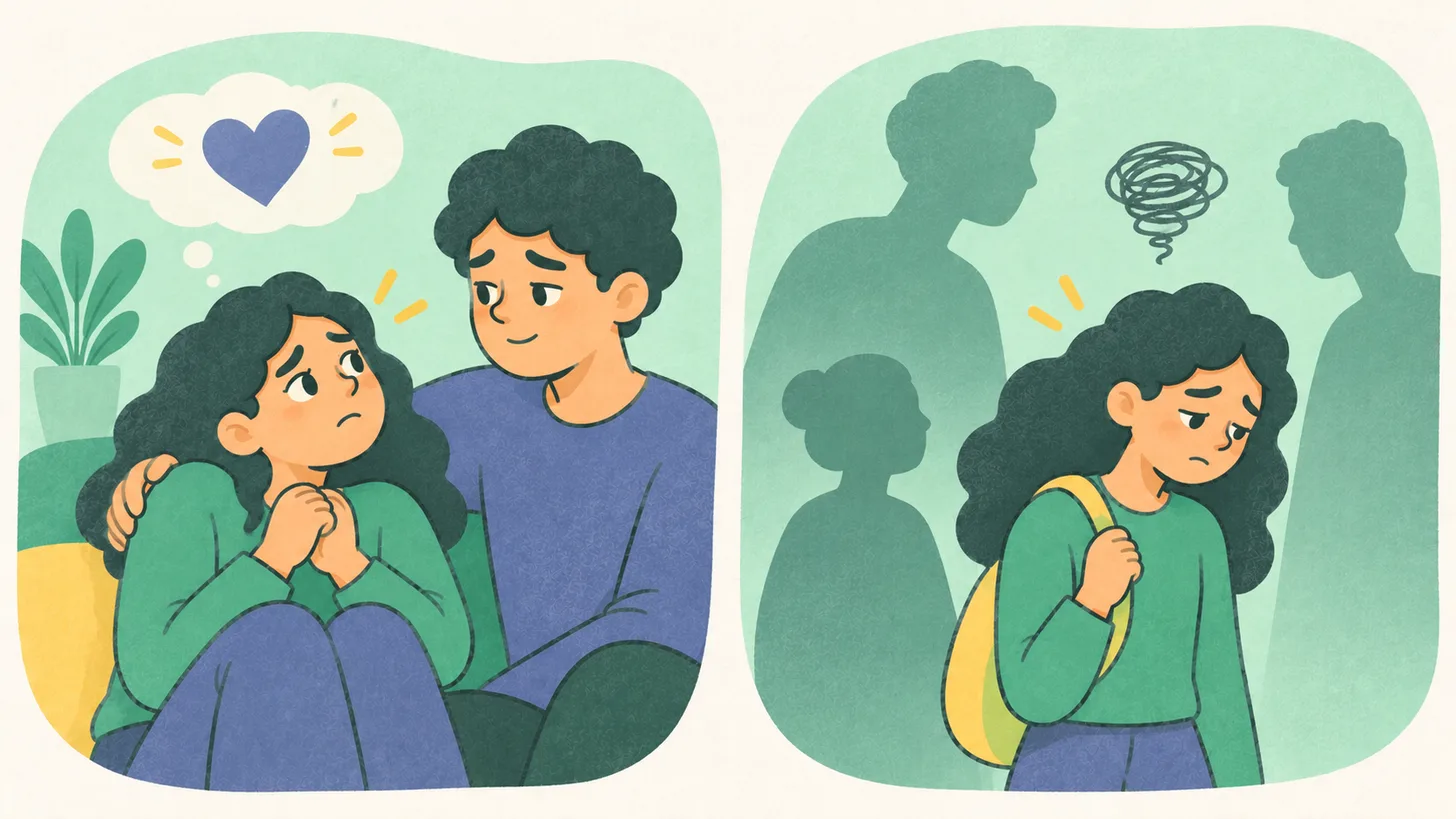
If you nod at all three, that is honest. Many of us carry a bit of each. The hub on psychology and relationship terms explained walks through linked ideas.
In short: these three share a street. They do not share an address.
Insecurity meaning in Hindi
In Hindi, this often shows up as bechaini, a restless unease that will not let the mind sit. It sits close to insecurity, especially in the body. You feel it in the chest, the hands, a night where sleep will not come. Naming it in your mother tongue sometimes makes it lighter.
In everyday Indian speech, people say “kuch set nahi lag raha” (nothing feels settled). The same lives in Gujarati, Telugu and other Indian languages. Many of us read in English and feel in another language. Both are real.
In short: this feeling has a name in every Indian language. Yours is the right place to start naming it.
A short self-reflection check
A short, honest check helps more than a long quiz. Try the five lines below with one specific worry in mind. A message you keep re-reading. A situation that will not settle. A doubt that returns at night. The last line often softens the loudest voice.
- What exactly am I worried about? Not the general fear. The specific one.
- What would make me feel okay? Would I trust it, for how long?
- Has this fear visited me in another love?
- Is there something they are doing that I have been quiet about?
- If a close friend felt this way, what would I say to her?
If a harsh thought keeps looping, try the short reframe below. It helps you name the trap and write a kinder line in your own words.
Catch the thought
What thought is weighing on you right now? Write it down just as it sounds in your head.
Name the trap
Does your thought fall into one of these common patterns? Pick any that fit. This part is optional.
Look again
Use these as nudges, not rules. Then write one line back to yourself.
Your reframe
Thoughts are not facts. You just practised stepping back.
This stays on your device. Nothing is saved or sent.
In short: a check-in is not a verdict. It is a gentle way to see what the feeling points at.
Gentle ways to work on insecurity, on your own
Working on insecurity is less about stopping the thought. It is more about changing what you do with it. These five small steps can be repeated often. They work slowly, which is honest, not disappointing. Pick one this week, not all five, and give it a week or two.
Name it, then move it. When the loop starts, say it out loud or write it. “I am feeling insecure that he is pulling away.” The naming is half the step.
One kind question at a time. Instead of “why am I like this”, try “what is my mind trying to protect me from?”. The second one answers more honestly.
Stop the midnight check once. For one week, pick one check you keep doing and skip it. One check, one week.
Collect the evidence. Keep a quiet note on your phone of three specific moments each week that show you are safe here.
Have the honest talk. With one true friend. With your partner on a calm Sunday. With yourself in a journal. One sentence that names the loop.
A tool can quiet the hour. Online counselling can help quiet the baseline over a few months.
In short: small steps, done often, change this more than one big break.
When to talk to a therapist
When the pattern keeps returning across months and partners, individual therapy is a good next step. The work on insecurity usually takes ten to sixteen sessions. Longer if the attachment story runs deep. CBT (cognitive behavioural therapy), attachment work and schema therapy are the common doors in.
If your partner is adding to it, couples therapy at the same time is often the move. Not to fix one person. To change the pattern you two are keeping going.
You might be worried that calling a therapist means something is wrong with you. It does not. Not every feeling of insecurity needs therapy. Some of it is a season that passes with sleep, one honest talk, and time.
If what you need tonight is sleep, a therapy call on Friday is not the fastest tool. A friend, a walk, your bed are. NIMHANS in Bengaluru studies how attachment and anxiety sit together.
GoodLives can match you with an RCI-registered psychologist in English, Hindi, or another Indian language.
In short: therapy is one option among several. It is there, waiting, no rush.
FAQ
What does insecurity mean in a person?
What is insecurity in a relationship?
Is it okay to check your partner’s phone?
Why do I feel so insecure in my relationship?
Can insecurity be fully resolved?
What are examples of insecurities in love?
How is insecurity different from an inferiority complex?
This post is for information only and is not a substitute for professional care.



Share your thoughts