
What this blog includes
- What online therapy for depression looks like, in plain words
- Who it fits, who needs more than therapy, and how severity decides
- Honest INR price ranges, red flags, and the questions to ask on a 15-minute call
- Free Indian helplines and when to use them first
You’re not being dramatic. If you’re reading this at 11pm, that feeling is worth taking seriously. You have probably tried a few things on your own.
Depression therapy online in India is one option. Helplines and in-person care are the others. This page explains each in plain words. GoodLives is trusted by 500K+ people across the globe with a 5 Google rating. We will try to make the next step feel like a door you can walk through.
Can depression therapy online really help, or do I need in-person?
For many people with mild to moderate depression, the honest answer is yes. A trained counsellor on a video call can teach you to spot thoughts and habits that keep low mood going. Depression therapy online is a real option in India. Most of us need a plan and a person, not a tip list.
The WHO’s mhGAP guidelines list talking therapies as a first care path for depression. The online version holds up well against in-person work in this range.
What online therapy won’t do is make the feeling vanish by Friday. Some weeks it works. Some weeks it doesn’t. That’s normal, not failure.
In short: Depression therapy online is a real option for mild and moderate low mood, not a quick fix.
How to tell if it’s depression and not just a hard week
A hard week lifts when the thing causing it passes. Depression stays. The clinical shape is low mood or loss of interest, most of the day, most days, for two weeks or more. If the ordinary parts of your week have started to feel pointless, that line is worth a note.
Common signs:
- A low, flat mood that doesn’t shift with good news
- Loss of interest in things you used to enjoy
- Sleep that’s too much or too little
- Thinking that’s slower, foggier, or sharper on self-blame
- Tiredness that rest doesn’t fix
- Thoughts about not wanting to be here
Many Indian readers call this udaasi, a low mood that sits on the chest and won’t go. If that word matches your week, a counsellor for depression can help you name what is underneath it.
You might be worried that calling a helpline will put your family in the loop. It won’t. The number doesn’t reach your home. The call is private.
In short: Two weeks is the honest line. Below it, you’re tired. At or past it, a real conversation is worth it.
What does online depression therapy actually look like?
A session is usually 50 minutes long, booked on a video call. The first session is mostly listening on the counsellor’s side. They ask about your sleep, work, relationships, family, and what you want to be different in your week.
From the second or third session on, you build small weekly experiments. One social meet-up. One half-hour walk. One piece of work finished and ticked off. The pattern is small and repeatable.
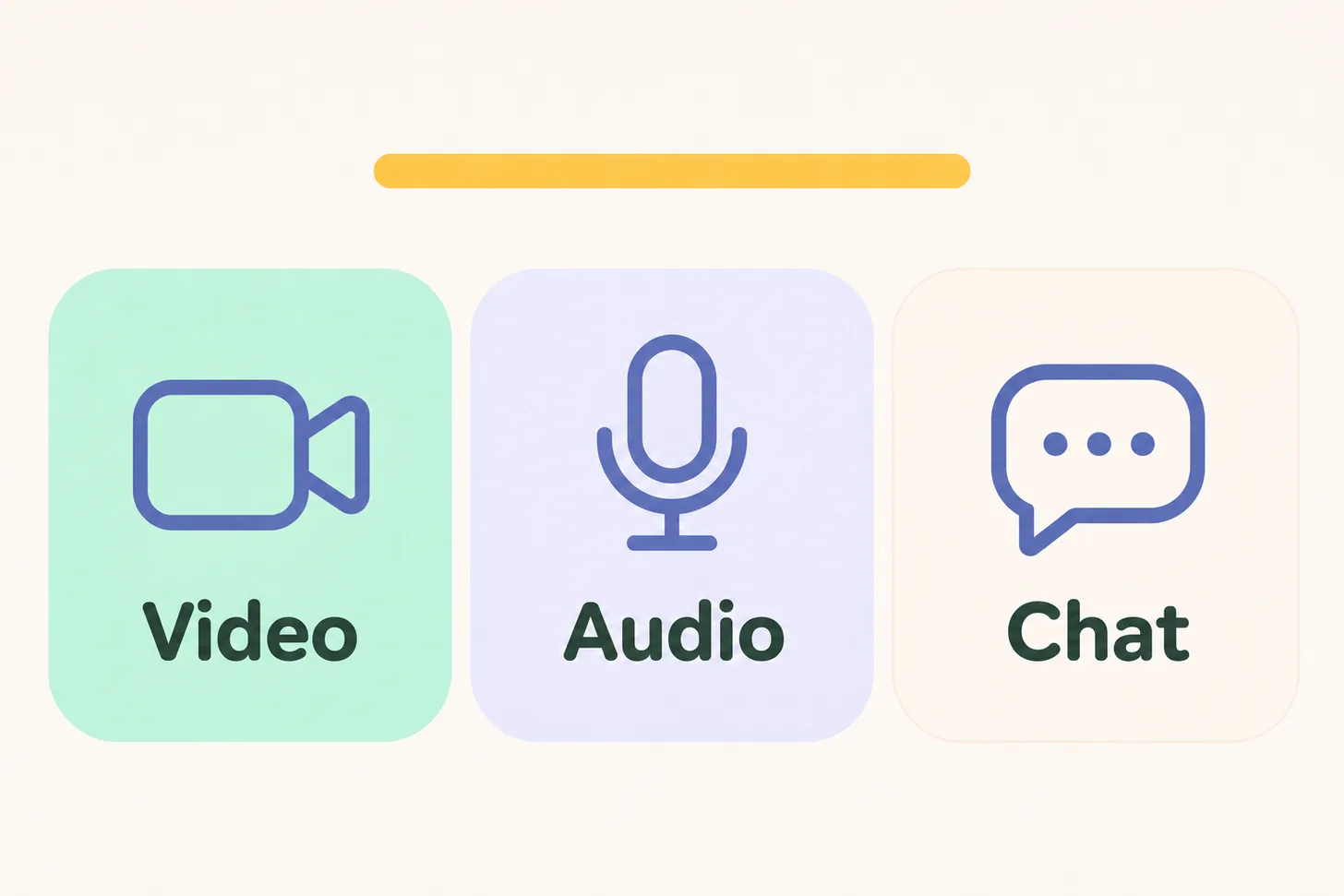
Session formats you can choose from:
- Video, where eye contact helps and most people start
- Audio only, easier on hard days
- Chat, text based sessions over a set hour
A session on GoodLives is 50 minutes with an RCI-registered psychologist. You can book in English, Hindi, or another Indian language you ask for. Online depression counselling across Indian platforms follows the same core shape, with small differences in app flow and matching.
In short: Online therapy is a trained person on a schedule, not a chatbot. The plan is small and weekly.
Therapy only, or therapy with medicine, and who decides?
Severity decides who leads your care. You shouldn’t have to work this out alone. A counsellor or psychiatrist can help you place yourself honestly. The picture may change over your first few sessions as you say more. The therapist sees the shape of your week over time.
Online vs in-person: which fits your week better?
Both are real. The question is which one you can sit through each week. Honesty with yourself matters more than the format. Many people start online for the ease. Some shift to in-person later. Others go the other way, as life changes and the therapist’s style settles.
Which therapy approach works best for depression?
Depression therapy isn’t one method. The three approaches with the strongest evidence are CBT, Behavioural Activation, and Interpersonal Therapy. Your counsellor may use one, or blend them to your week. Ask on the first call which one they lean on, and why.
CBT (Cognitive Behavioural Therapy) is a short, structured therapy. It teaches you to spot and reframe thoughts that keep low mood going.
Behavioural Activation gets you to do small, planned actions, even when you don’t feel like them. Action often moves mood more reliably than motivation.
Interpersonal Therapy (IPT) is a 12 to 16 week approach. It works on how your relationships affect your mood, and the other way round.
GoodLives counsellors are trained in these approaches. If you want a wider view of what depression is, see our depression guide for India.
For how CBT helps in a related area, we cover social anxiety in a sister piece. MBCT is a mindfulness-based version. It’s used mainly to prevent a return of depression.
In short: CBT, Behavioural Activation, and IPT have the strongest research backing. A good counsellor names which one they use, and why.
How much does online depression therapy cost in India?
Prices in India sit in bands, mostly driven by the therapist’s training. The ranges below reflect common Indian platforms as of October 2026. Rates shift. Check the platform’s own pricing page before you book. Counselling for depression is often more affordable than most people fear.
| Experience tier | INR range per session | Session length | Best for |
|---|---|---|---|
| Supervised novice counsellor | ₹299 to ₹799 | 45 to 50 min | Someone starting out, low-stakes conversation, early mild symptoms |
| M.A. in Counselling Psychology | ₹800 to ₹1,500 | 50 min | Mild to moderate depression, the most common tier |
| Practicing clinical psychologist | ₹1,500 to ₹2,500 | 50 min | Moderate to severe depression, trauma-informed work |
| M.Phil in Clinical Psychology | ₹2,500 to ₹4,000 | 50 min | Severe depression, complex cases, psychiatric coordination |
GoodLives: see our pricing page.
The Mental Healthcare Act 2017 (full text here) gives you the right to seek insurance for mental illness. Section 21(4) is the clause to quote. Use it if your insurer resists.
Many corporate health plans now cover a set number of sessions. Ask your HR team.
If what you need right now is a free option, three things help today. Book one session at the supervised tier before paying for the senior tier.
In short: Online depression therapy in India runs from ₹299 to ₹4,000 per session, by training. Free help is real.
How we match you with a counsellor at GoodLives
Online depression counselling works only when the counsellor fits you. We treat matching as the first piece of care, not a form you fill. You tell us one or two things about what you want help with. Sleep. Work. A loss. A flat month. We suggest a counsellor whose training and language match.
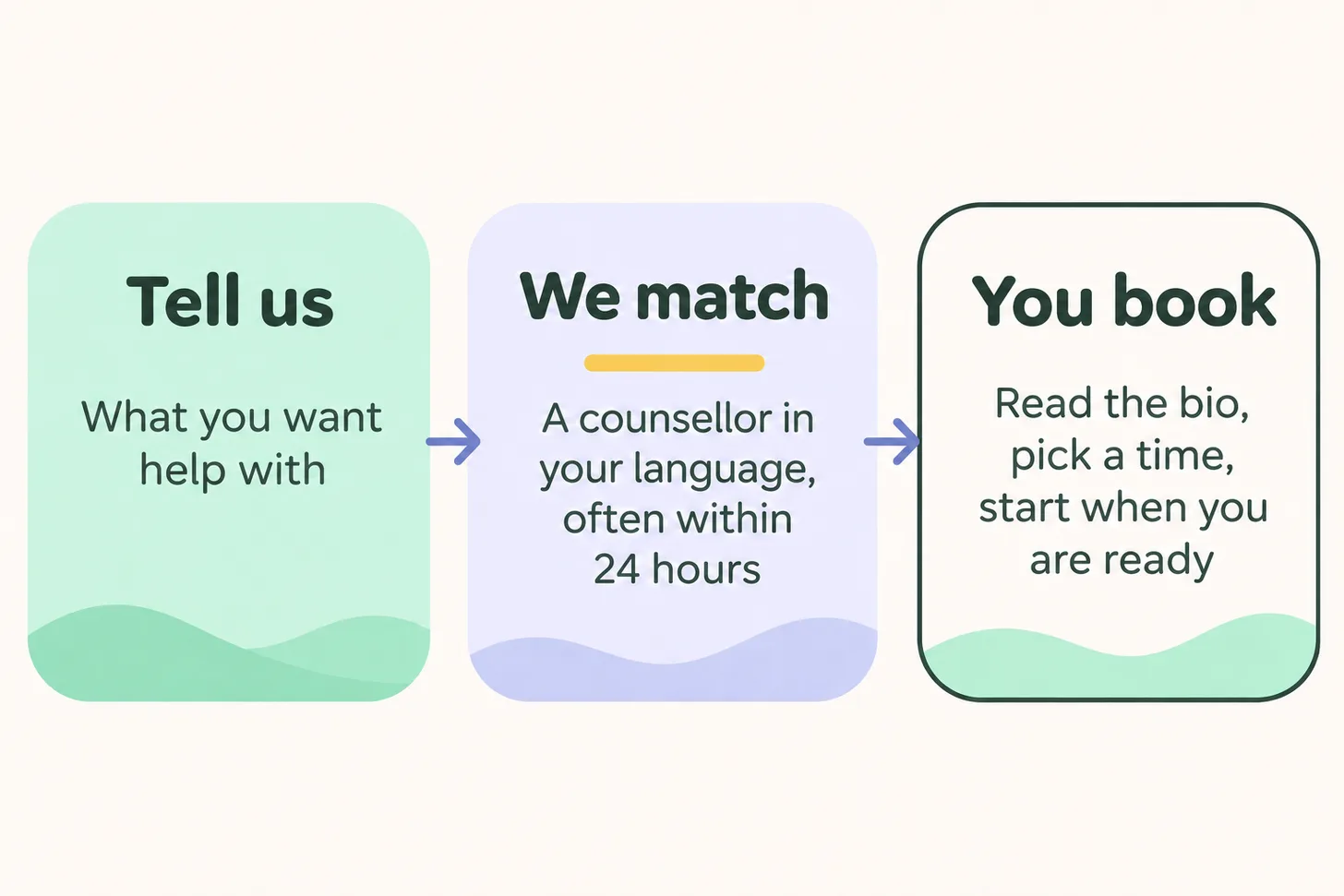
You read their short bio before you book. Most matches land within 24 hours. If the first session doesn’t feel right, you can switch. No questions. A depression counsellor who doesn’t fit isn’t a verdict on therapy. It’s a bad match. Bad matches are common early.
“The sessions from GoodLives have helped me to let go of a bag of emotions, I was carrying around as a burden. At present I am midway through my care, I am already noticing positive changes in my mood and energy level.” A GoodLives user
In short: You get a human, not a dashboard. If the first fit is off, say so and switch.
Red flags when choosing an online therapist for depression
Not every person offering online therapy in India is trained to treat depression well. These five signals are the easiest to spot in a short intake call. They’re also the most useful to walk away from. A good counsellor will welcome your questions on each of them.
In short: Credentials, honest timelines, data privacy, pace, and plain-English answers. Those five tell you most of what you need.
Questions to ask on your first 15-minute call
Many Indian platforms, including GoodLives, offer a short intake call before you book a full session. Use it. These seven questions do more work than any review. An online therapist for depression who answers them in plain words is worth a first session.
Intake-call questions
- What is your training, and your RCI registration number?
- How many clients with depression have you worked with in the last year?
- Which approach do you use most often for depression, and why?
- How do we decide if medicine should also be considered?
- What does a typical first six weeks of our work look like?
- How do you keep my session notes private?
- What happens if I need to pause, cancel, or switch therapists?
A counsellor who hedges on any of these is worth skipping.
In short: Fifteen minutes with the right questions saves weeks with the wrong therapist.
What you can do today while you decide
Therapy takes a few weeks to start moving your baseline. The things you can do today aren’t a replacement for care. They do take the edge off. The first one is small enough to try before you close this tab. We aren’t sure why some weeks they work better than others.
Three good things is a short daily practice. At the end of the day, write down three specific things that went well. Add one line on why. Low mood tilts attention toward what went wrong. This tilts it back. It won’t fix depression. It’s a counterweight.
If you want, take one minute with this before you read on.
Even on hard days, a few small things hold up.
Let's find three. It takes about a minute, and it never leaves your device.
Three good things
Take them one at a time. Small really counts here. If a prompt doesn't fit, swap it for another.
Your good list for today
Noticing good things doesn't cancel the hard parts. It just gives them some company.
Come back tomorrow and add three more.
This stays on your device. Nothing is saved or sent.
The other three that help:
- Move your body for 20 minutes. A walk counts.
- Sleep and wake at roughly the same time. Depression breaks this first.
- Message one person tonight. Even a one-line “thinking of you” is a thread back.
If you have tried all of this and nothing is shifting after a few weeks, that’s useful too. It’s a sign that the next step belongs with a counsellor, not another self-help list. Not every low mood needs therapy. Some of it’s a season you walk through. The test is whether the season is lifting on its own.
In short: Small daily counterweights help. They won’t fix depression. Both are true.
When to see a psychiatrist, not a therapist
A therapist can hold most mild and moderate depression well. There are five cases where a psychiatrist should be the first call. If any of these is true for you, please see one soon. Keep your counsellor on the side for the talking work.
- Thoughts of ending your life, or a specific plan to do so
- A long stretch where you can’t eat, sleep, or work
- Depression that has not shifted after three to six months of therapy
- A pattern of highs that follow the lows (possibly bipolar)
- Any symptoms that feel out of touch with reality (hearing or seeing things others don’t)
Only a psychiatrist can diagnose and prescribe medicine. The NIMHANS National Mental Health Survey (2015 to 2016 report) found that nearly 1 in 20 Indian adults has lived with a depressive disorder. Many don’t reach care. If you’re reading this, you’re closer than you think.
In India, people are sometimes lost to suicide. Those deaths are a sign that the care system reached them too late, not a failure of character. Help works, and so does time.
In short: A psychiatrist leads when medicine, severity, bipolarity, or psychosis are on the table. A therapist works alongside.
FAQ
Where can I find free online help for depression in India?
How do I check my mental health before booking a therapist?
How long does recovery from depression take?
Is online therapy as effective as in-person therapy for depression?
Can I switch therapists if my first match isn’t working?
Will my family or employer find out that I am in therapy?
Can I do therapy for depression without medicine?
This post is for information only and isn’t a substitute for professional care.

Share your thoughts