
What this blog includes
- What “playing the victim card” means in psychology, and what it isn’t
- When the label is a slur used to silence real harm
- Karpman’s Drama Triangle and the roles people rotate through
- How the pattern plays out in Indian families, workplaces and online
- Honest next steps, in yourself and with someone you love
You have probably heard someone say it. “Stop playing the victim card.” Maybe about a cousin who tells the same story at every family dinner. Maybe about an ex-partner. Maybe about you. The phrase stings whether it is fair or not.
If it is fair, it points at something hard to look at. If it is not fair, it dismisses real pain and asks you to be smaller than what happened to you. Victim card meaning, honestly, is this: a pattern of staying inside the role of the wronged one, so that accountability, change and discomfort can be pushed away.
That is different from being hurt. That is different from naming abuse. At GoodLives, where we support 500K+ people through therapy, workshops and community, we see this phrase land in two very different kinds of rooms, and the harm shows up in both.
What playing the victim card actually means
In psychology, playing the victim card is a long-running coping style where a person stays in the role of the wronged one, even when they share responsibility for the situation. It is not a one-off vent. It is a pattern that avoids accountability, change and the discomfort of growing.
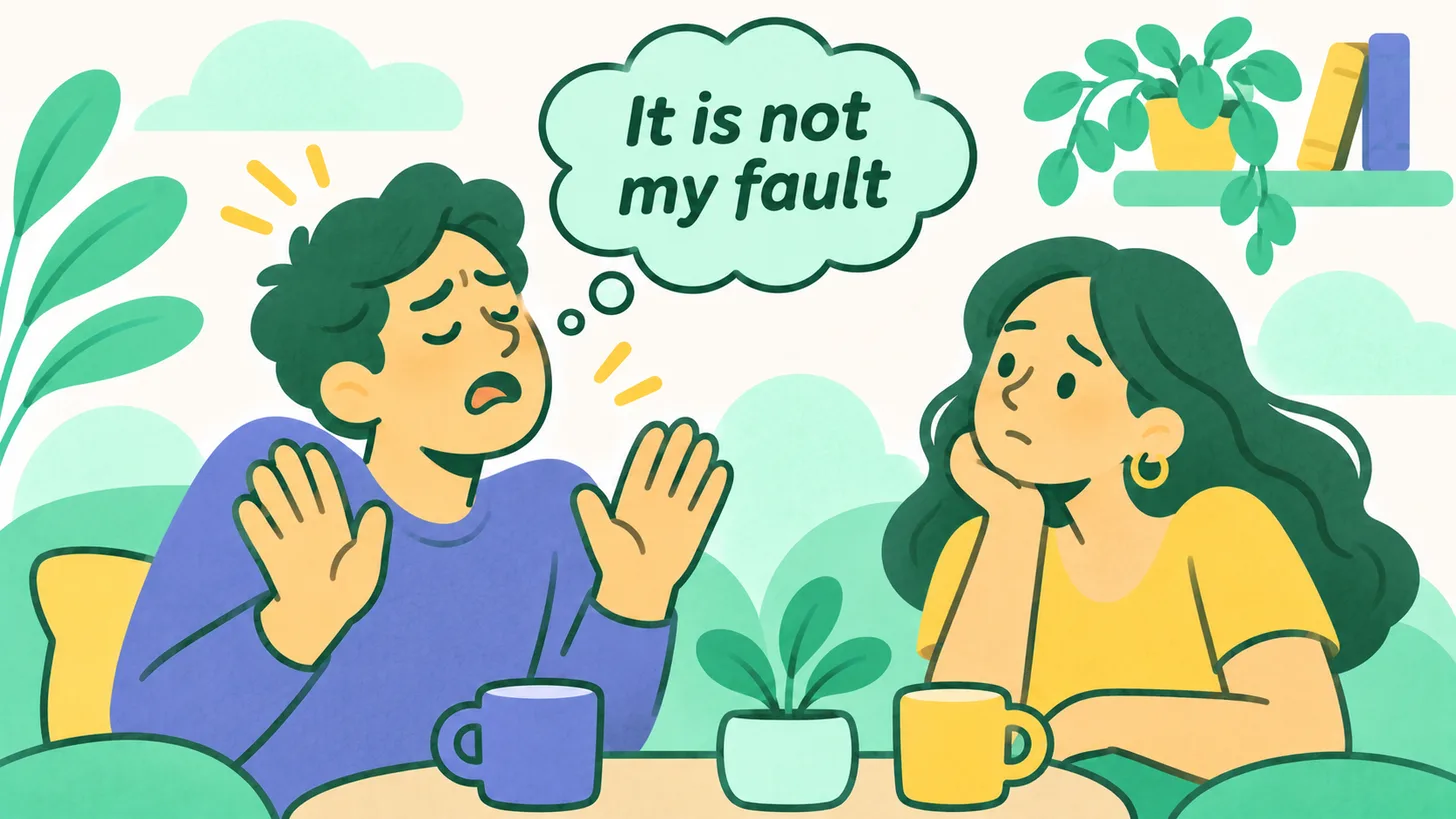
The phrase comes from informal English, not a clinical manual. There is no DSM-5 diagnosis called “victim card syndrome.”
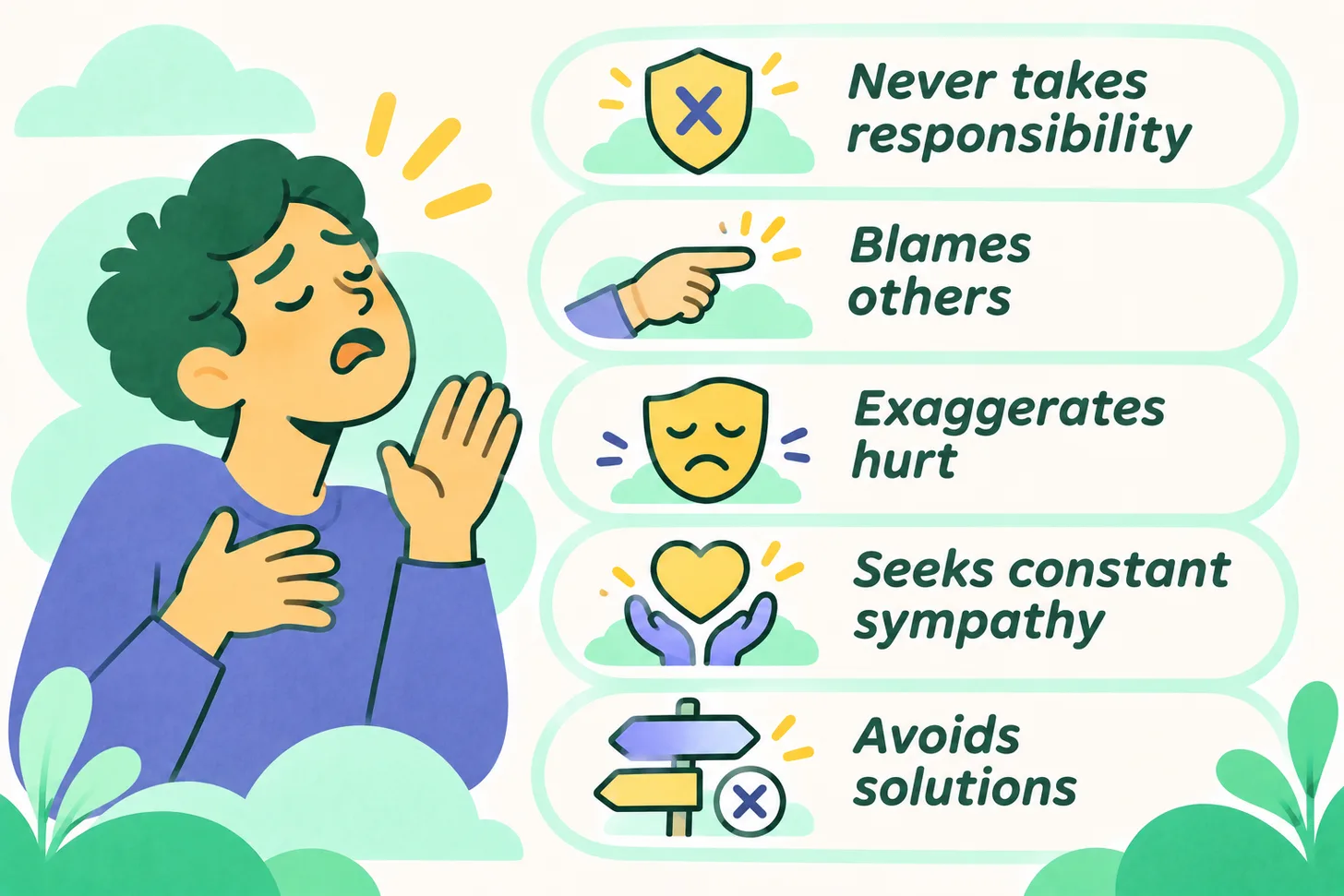
What clinicians describe instead is a cluster of behaviours: habitual blame-shifting, selective memory of past hurts, resistance to problem-solving offers, and framing every setback as something done to the person rather than something they can do something about.
Think of it as a coat someone keeps putting on. The weather may or may not call for it. The coat gets heavier the longer it stays on.
In short: Playing the victim card is a coping pattern, not a diagnosis. It is about where someone stays, not about whether they were hurt.
When “victim card” is a slur, not a pattern
Before we talk about the pattern, we have to be honest. The phrase “victim card” is often used to shut people up. Trauma survivors naming trauma are not playing a card. A person naming abuse is not playing a card. The label gets weaponised against people who have been genuinely wronged, especially when their truth is inconvenient.
In India, the phrase shows up most sharply where power is uneven. A daughter-in-law who names mistreatment is told she is “playing the victim card.” A junior employee who flags harassment hears it. Someone from a marginalised caste or community naming structural harm hears it on social media every day.
If calling out pain is a card, so is pretending it did not happen. One honest test: if the phrase is being used to end a conversation about something painful rather than to open one, it is probably a slur, not a diagnosis.
In short: Naming harm is not playing a victim. Dismissing someone’s harm by calling it a victim card is its own kind of harm.
The Karpman Drama Triangle: three roles people rotate through
Dr. Stephen Karpman, a psychiatrist, described the Drama Triangle in 1968 to map how three roles pass a conflict around between them: Victim, Rescuer and Persecutor. People do not stay in one role; they rotate. The Victim role is only one corner of the triangle, and it is the one most of us step into first.
The three roles sound like this inside a difficult conversation:
- Victim: “Poor me. Nothing works. Why does this keep happening?”
- Rescuer: “Let me help you. I will fix this. Don’t worry.”
- Persecutor: “It’s your fault. You always do this.”
The pattern is self-reinforcing. A Victim invites a Rescuer. The Rescuer eventually gets tired, snaps, and becomes a Persecutor. The Victim then feels wronged again, and the cycle restarts, often with the roles swapped.
The way out is to step off the triangle entirely, which Acey Choy reframed in 1990 as moving to Creator, Coach and Challenger roles. You can read Karpman’s own account at karpmandramatriangle.com {rel=”nofollow”}.
In short: The victim card is not just an individual habit. It is one corner of a three-sided dance that two or three people keep rebuilding together.
Healthy processing vs. the victim-card pattern
The clearest test between a hurt person and a victim-card pattern is not what they say. It is what they do next. Healthy processing names the pain, grieves it, and eventually finds some agency forward. The pattern names the pain, stops there, and uses it to avoid the next hard thing.
In short: You can be a real victim of real harm and still, slowly, become something more than that moment. That is not denial. That is survival turning into a life.
How this pattern plays out in Indian families, workplaces and online
In Indian family systems, the victim role gets rewarded in some corners and punished in others. A mother who talks about her sacrifices often gets care. A daughter-in-law who talks about hers often gets scolded for playing a card.
The pattern is cultural, gendered and generational, and it leaves many people confused about when their pain is “allowed.”
A few shapes it takes here:
- Patriarchy and survival. For some women, being seen as suffering has been the only way to receive care or safety from a family that otherwise ignored them. That is not manipulation. That is survival inside a system that only responds to visible hardship, and it often starts in childhood with toxic family dynamics.
- Caste and class injustice. Caste and class harm in India is structural and real. Someone naming that is not playing a card. Social media often treats both the same way, which is lazy and unkind.
- Spiritual bypass. “It is your karma” is one of the most common ways real complaints get dismissed in Indian spiritual culture. Karma is a philosophical frame, not a reason to stop a conversation about a harm that is happening right now.
- Attention loops online. On Instagram and X, visible suffering gets likes and reach. For a brain that learned early that suffering is how it earns care, the algorithm feels like home, and the pattern gets rewarded in a loop few people can see clearly from inside.
Honest line: you can grow up in a system that trained you to use suffering as currency, and still, as an adult, choose a different relationship with your pain. That is not disloyal to the version of you that needed the currency. That is kind to her.
In short: The pattern is often not a personal failing. It is a survival strategy from a specific family, workplace or online environment that paid you for staying stuck.
If you notice the pattern in yourself: a kinder way forward
Noticing this pattern in yourself takes a kind of courage most people do not get credit for. You are not a bad person for having coped the way you had to cope. The question is only what you want to do with the pattern now that you can see it.
A gentler route forward usually has five parts:
- Honest self-inquiry. How often do I share the old story? What am I hoping it does?
- Grief work. Yes, it happened. And you do not live inside that moment anymore.
- Agency inventory. What is one small thing I could do today, even a 1% version?
- Thought work. Catch the automatic blame; ask what else could be true.
- Therapy, when you are ready. For the root, not the symptom.
When a story starts to loop, try catching it mid-sentence. Ask yourself: “What am I hoping happens if I tell this again?” Sometimes it is comfort. Sometimes a kind of relief. Sometimes it is a way to avoid a decision sitting in front of you. The answer is information, not a verdict.
If you want, take one slow minute with this reframe before you keep reading.
Catch the thought
What thought is weighing on you right now? Write it down just as it sounds in your head.
Name the trap
Does your thought fall into one of these common patterns? Pick any that fit. This part is optional.
Look again
Use these as nudges, not rules. Then write one line back to yourself.
Your reframe
Thoughts are not facts. You just practised stepping back.
This stays on your device. Nothing is saved or sent.
A good next move is one small thing you can do today that your past self would not have been able to do. Not “fix the whole thing.” Not “forgive everyone.” Just one thing: a text sent, a decision made, a boundary stated, a question asked out loud. Journalling helps you spot the loop; a therapist helps you break it.
In short: You do not have to perform forgiveness or move on. You only have to find one next step your pain is not deciding for you.
If someone you love is stuck in it: care without self-abandonment
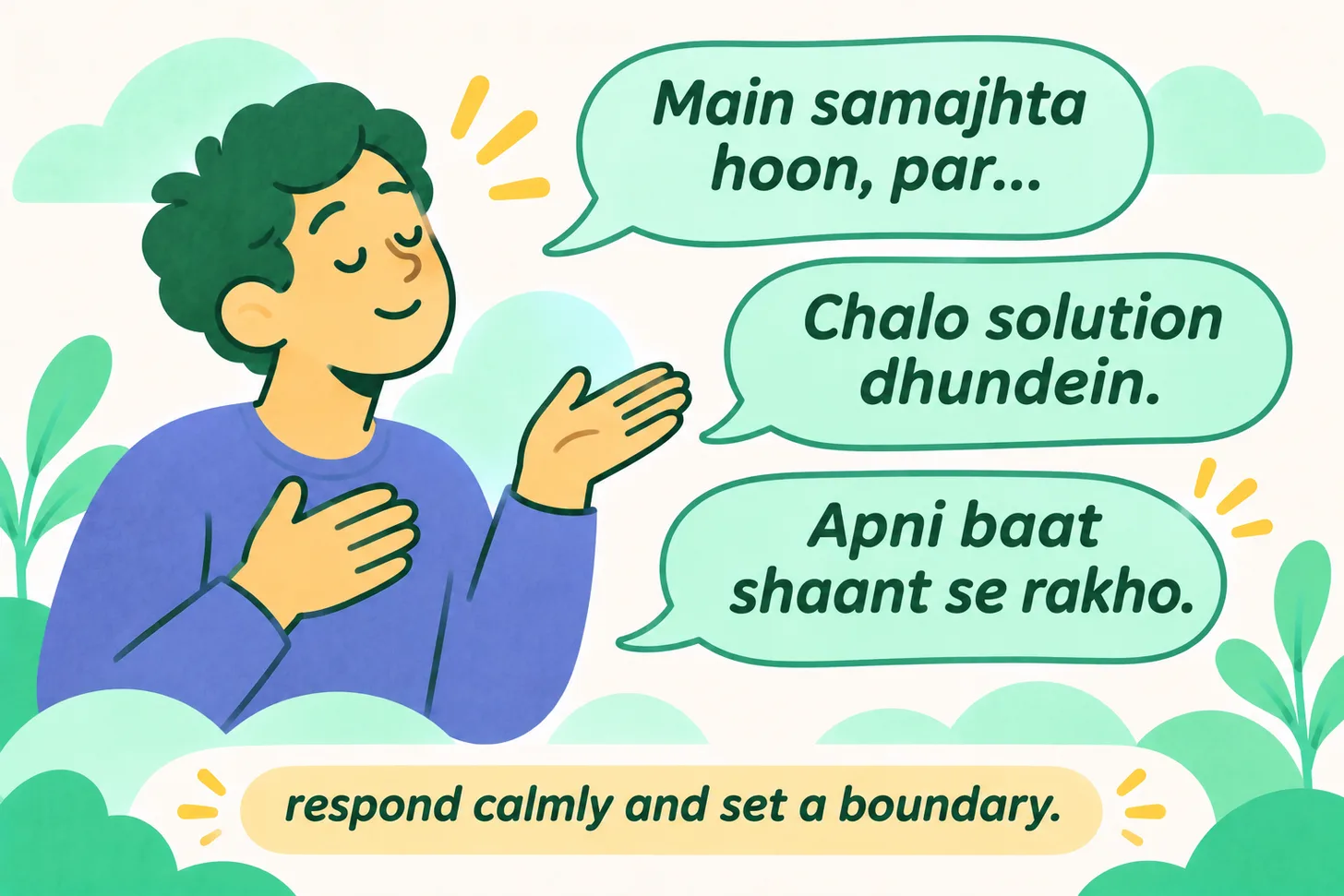
You cannot pull someone off a stuck spot by force. People leave the victim role when staying costs more than leaving, and when they have help that does not shame them. Your job is not to rescue them, which is the Drama Triangle again. Your job is to stay human, with limits that protect both of you.
A few things that help:
- Compassion first. Something is driving the pattern, even when it is hard to be around.
- Boundaries, kindly held. “I love you, and I cannot keep having this conversation at midnight.”
- Stay off the triangle. Do not rescue, do not persecute, do not play along with a role.
- Suggest, do not push. You can mention therapy once. You cannot drag anyone there.
- Watch your own tank. You cannot be the only safe person someone has.
One careful note: in some situations, especially covert narcissistic abuse and intimate partner harm, the person positioning themselves as the victim is also the one causing the harm.
If you are the actual target of someone’s cruelty while they tell everyone you are the problem, that is a different situation. Trust what you see over what you are told, and look at the fuller picture in our post on recognising toxic relationships.
In short: You can keep caring for someone who is stuck, without climbing in with them.
When this is clinical, and when therapy actually helps
Sometimes what looks like a victim-card pattern is a symptom of something a professional should be looking at. Several conditions produce versions of this shape, and each responds to different kinds of therapy. If the pattern is this old and this heavy, it is worth not going it alone.
- Covert narcissism and NPD. Perpetual victim framing is a documented feature; relational therapy over time can help.
- Complex PTSD and post-traumatic stress. When identity has formed around a trauma, EMDR, IFS and trauma-focused CBT often help.
- Depression. Learned helplessness overlaps closely; CBT and behavioural activation are usual first-line options.
- Codependency. Care that becomes self-abandonment; relational and schema therapy support change.
These patterns are discussed in Indian clinical literature in journals like the Indian Journal of Psychiatry, and most of them respond to the right kind of help over time.
Honestly, therapy is not the fastest tool for this, and it is not free. If you cannot access it this month, naming the pattern out loud to one safe person is a reasonable first step. Reading about the pattern can show you the shape. A therapist can help you tell which flavour it is for you, and work with you on that specific one.
In short: The point of therapy here is not to prove you were wrong to feel what you felt. It is to give you back the next move.
Disclaimer This article is for general information and is not a substitute for professional medical advice, diagnosis or treatment. If you need support, please speak with a qualified mental-health professional.


Share your thoughts