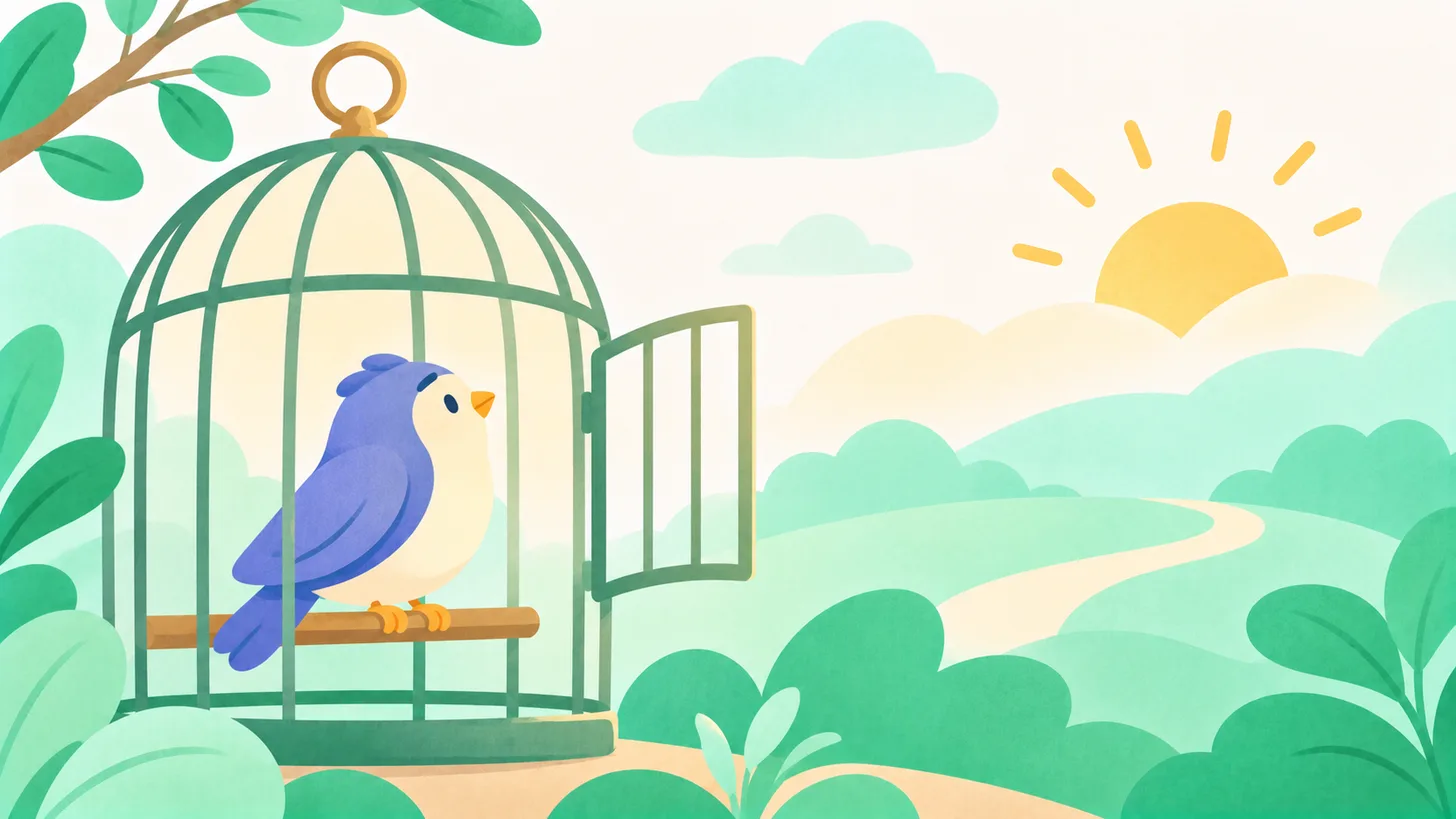

What this blog includes
- What learned helplessness means, in plain words
- Common examples at home, at work and in long stress
- The three P’s that keep the thinking sticky
- When it is the situation, not the thought
- Gentle ways to unlearn it
You tried to fix the thing. Twice. Maybe seven times. One day the trying stopped. You did not notice at first.
Learned helplessness is the quiet click when your brain decides, “the switch is not linked to anything.” It can look like low mood, delay, or a flat shrug when a friend asks what you want for dinner.
If this sounds like your week, you are not being dramatic. The feeling has a name. Therapists on GoodLives, trusted by 500K+ people, see it every day. The good news is that your brain learns the other way.
What is learned helplessness, in plain words?
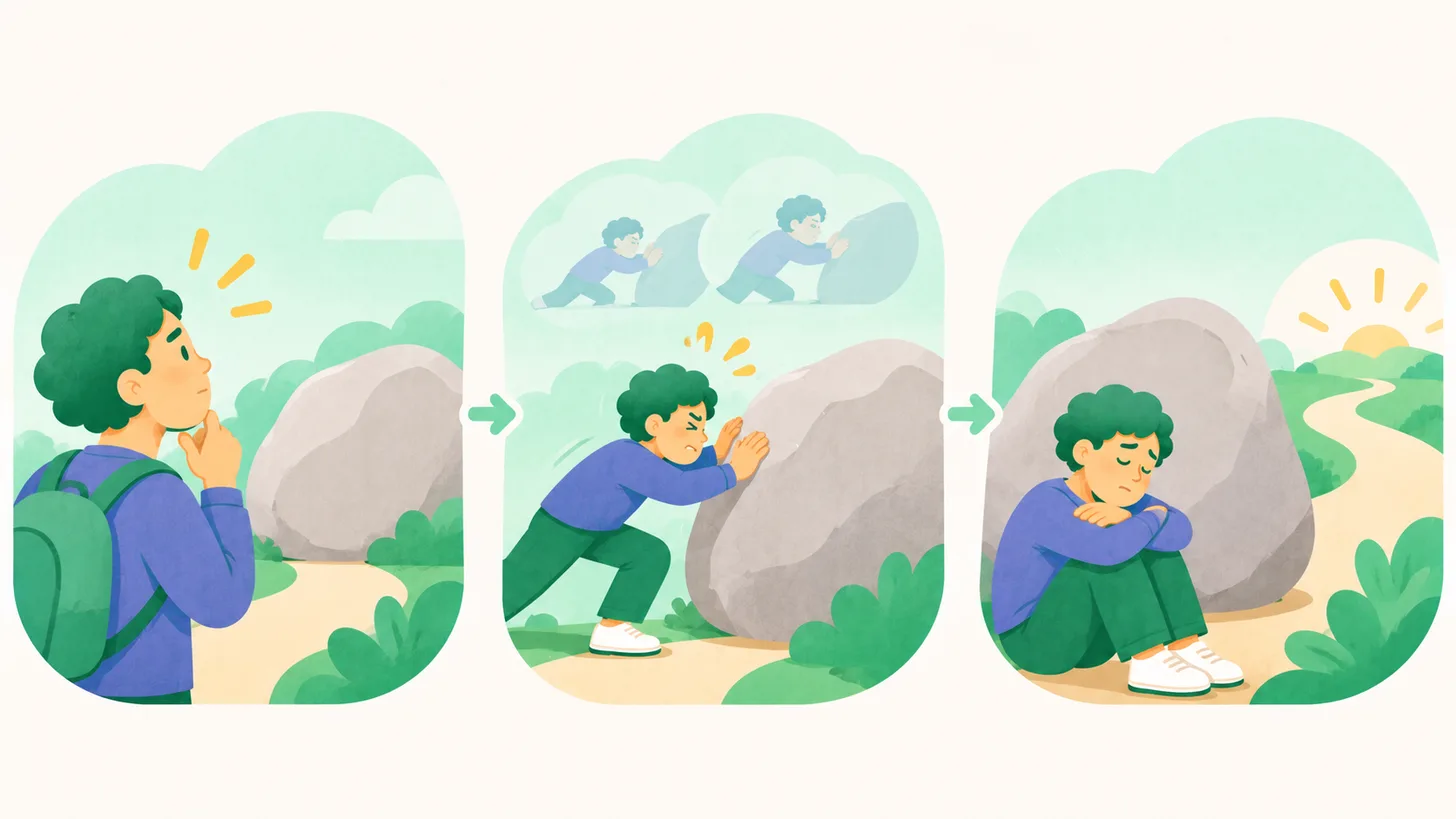
Learned helplessness is a state. Repeated “nothing I do matters” moments teach your brain to stop trying. The brain keeps this rule even when the situation changes. It is a response to history, not a verdict about you. In plain words, it is giving up because the past said giving up was the sensible move.
Steven Maier and Martin Seligman first described it in 1967. In 2016 they revisited the work in Psychological Review. Passivity is the brain’s default. What we learn is control (Maier and Seligman, 2016).
Your brain over-rides the default when effort is linked to outcomes.
In short: this is a response built from your past, not a flaw in you.
What does it look like in a normal week?
The examples below do not look dramatic. The pattern is a hundred small shutdowns a week. You might be worried that you are lazy. You are not. You are tired. The feeling behind it, a kind of udaasi (a low, flat mood), is common.
Common everyday scenes:
- At home: you stop suggesting dinner. The answer is always “anything”.
- At work: you put less effort into a project. The last three were cancelled.
- In chronic illness: you skip the specialist appointment. The last five ended in “more tests”.
- In long stress: you stop making plans. Something has to be cancelled anyway.
- In studies: you stop revising a subject. Last year’s effort did not show.
Many of us have been through at least one of these. Not every tired evening is a problem. The shape deserves a closer look when it spreads from one area into others.
In short: these shutdowns look like effort quietly leaving the building.
What are the three P’s, and how do they keep you stuck?
Seligman named the thinking style that holds this in place. He called it the three P’s. The letters stand for permanence, pervasiveness and personalisation. Each one stretches a bad event until it fills the picture. Spotting which P is talking is often the first useful move.
- Permanence: “this will always be this way.” The exam went badly, so you will never be good at it.
- Pervasiveness: “this ruins everything.” A fight with your boss means your whole career is in trouble.
- Personalisation: “it is all my fault.” A friend cancels twice and you decide you are hard to be around.
You can hear the three P’s in your own sentences on a bad evening. Each has a bit of truth and much that is not. A hard month is real. “Forever” is almost never real.
In short: the three P’s turn one disappointment into a story about forever, everywhere and you.
When it is the situation, not the thought
Not every heavy feeling is a thinking error. Some situations are, right now, hard to change on your own. In those weeks, do not reframe your thoughts first.
If you are in a home where someone is being hurt. If a job pays below what the city costs. If a caregiver is unwell and no one else helps. If caste, class, gender or place has shut doors.
The honest answer is that your thinking may be reading reality well. Reality is what has to shift. If what you need right now is a bed tonight, a therapy session next week is not the fastest tool.
A therapist helps. So does a social worker, a lawyer, a trusted elder, a women’s cell helpline, or a friend with a spare room. Reframing cannot fix a wall.
In short: when the walls are real, naming the wall comes before changing the thought.
How do you begin to unlearn this pattern, gently?
Unlearning is possible. It is slow in the way physiotherapy is slow. The brain is not flipping a switch. It is building a new path. The old one gets overgrown.
Two approaches have the best evidence here. One is CBT, or cognitive behavioural therapy. The other is behavioural activation.
CBT teaches you to spot and shift stuck thoughts. Behavioural activation starts with one small chosen action, done before the mood changes. These tools will not fix a hard situation on their own. They help your brain update its “effort does not count” rule.
A few small moves most therapists support:
- Start with one small action that has a visible outcome. Water a plant. Reply to one message.
- Separate the thought from the fact. When “I always fail” shows up, write what actually happened last time.
- Push back on one of the three P’s for the next week. Just one.
- Rebuild the control feeling in a safe area: a new recipe, a walk, a hobby with no stakes.
- Protect sleep and food. A tired brain gives up faster.

If you want a small try-this moment, this guided reframe walks you through swapping one helpless thought for a kinder one in about two minutes.
Catch the thought
What thought is weighing on you right now? Write it down just as it sounds in your head.
Name the trap
Does your thought fall into one of these common patterns? Pick any that fit. This part is optional.
Look again
Use these as nudges, not rules. Then write one line back to yourself.
Your reframe
Thoughts are not facts. You just practised stepping back.
This stays on your device. Nothing is saved or sent.
Reframing one thought gives you a minute of relief. A therapist helps you spot the whole pattern across weeks. Both are useful; they do different work.
In short: unlearning is many small acts of noticed effort, not one big breakthrough.
When should you see a therapist about this?
Self-help is enough for some seasons. For others it is not, and that is not a failure. Talk to a therapist when the pattern has lasted a few weeks. Or when it has spread into most of your life. Or when sleep, appetite or interest in people has shifted. These overlap with depression.
In India, close to 1 in 20 adults lives with current depression, per NIMHANS (NMHS summary, MoHFW). If a shrugging-off has lasted a fortnight, read the depression guide for India and take the depression self-check. The piece on ways to treat depression covers your options next.
If the heaviness feels like a weight in your language, depression meaning in Hindi names it. When days feel flat and interests fall away, apathy meaning covers that.
The Mental Healthcare Act 2017 also gives you the right to care without stigma, and sessions stay confidential. Many readers do not know this.
In short: a professional pair of eyes helps when the pattern is long, wide or touching sleep.
FAQ
What is a learned helplessness example?
How do you heal learned helplessness?
What are the three P’s of learned helplessness?
What is learned helplessness in psychology?
Is learned helplessness the same as depression?
Can it be unlearned at any age?
This post is for information only and is not a substitute for professional care.



Share your thoughts