
What this blog includes
- What thalassophobia means in plain English
- How it feels in the body and the mind
- How it differs from aquaphobia and hydrophobia
- Why it starts, and what shifts it
- When a child needs a specialist, not a general therapist
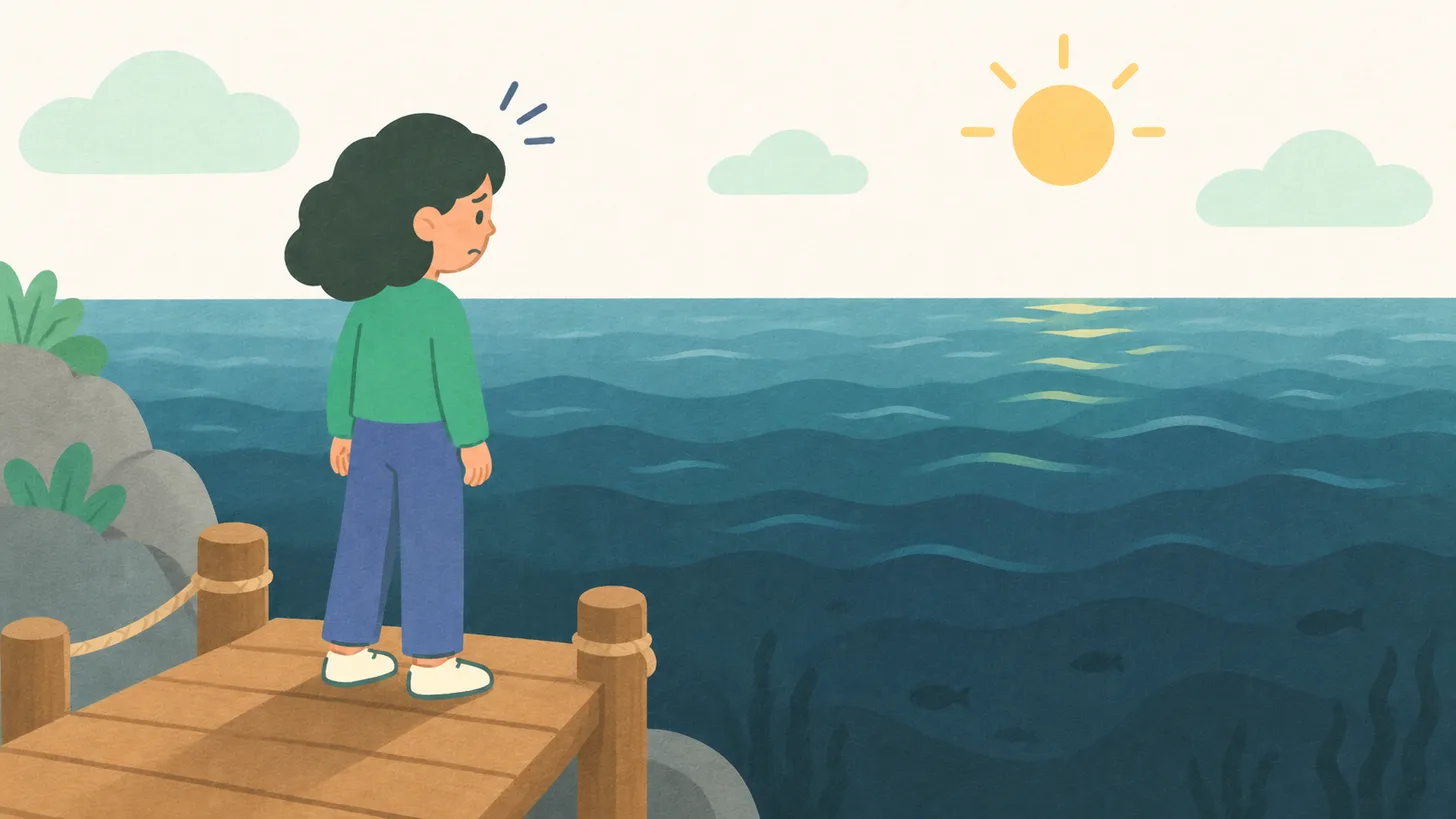
You know the feeling. You are on the Elephanta ferry and someone leans over the railing, and your stomach does a slow turn. Or your friends wade into Baga Beach up to their shoulders, and you cannot follow. Thalassophobia is a persistent fear of the sea and deep water, strong enough that you plan around it. GoodLives has helped 500K+ people take an honest first look at fears like this.
What does thalassophobia actually mean?
Thalassophobia meaning, in plain English: a persistent fear of large or deep water, especially where you cannot see the bottom. It is a specific phobia. The WHO lists specific phobias among the common anxiety disorders treated with cognitive behavioural therapy and exposure.
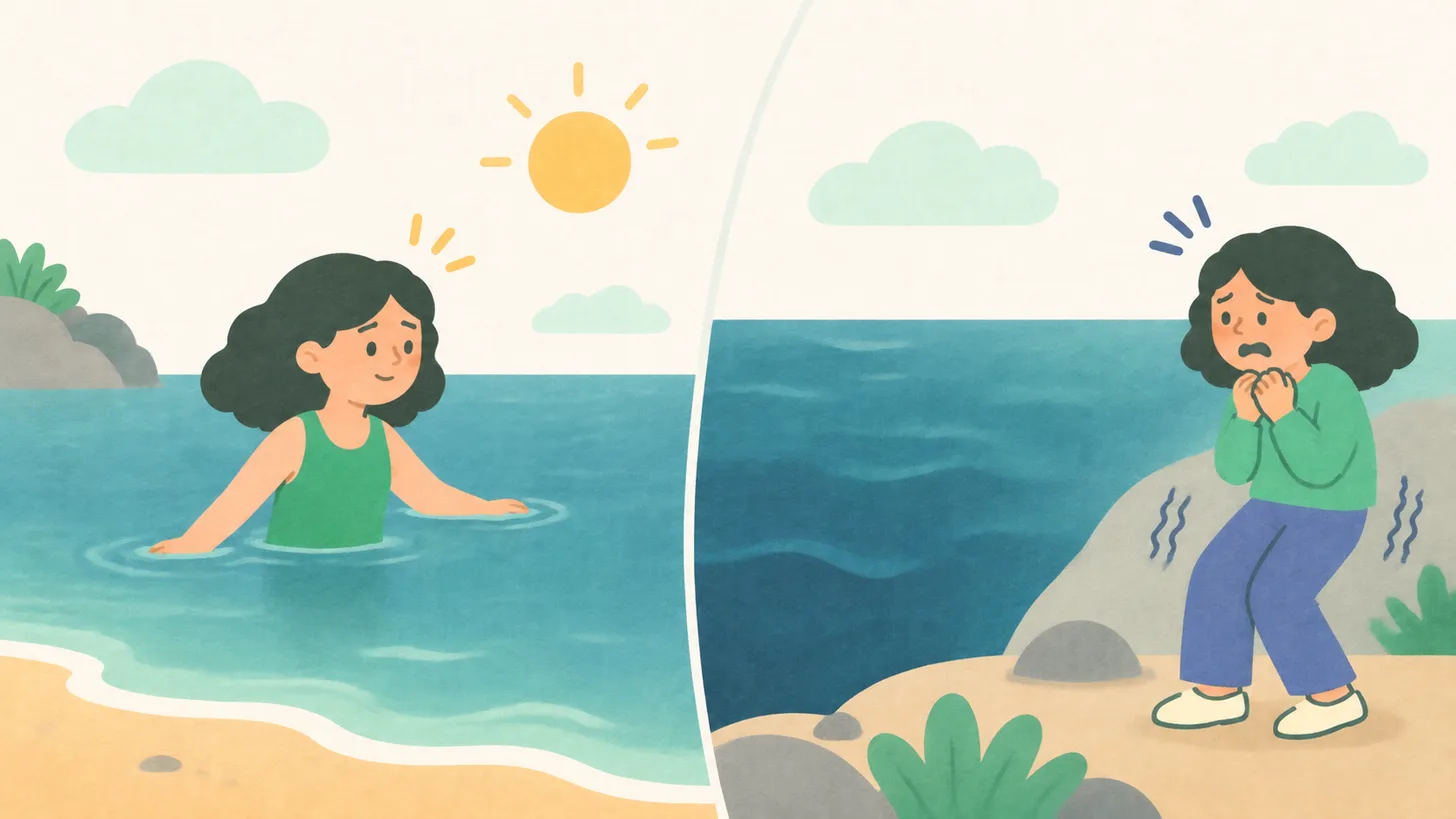
The word comes from the Greek thalassa, meaning sea. A phobia is not the same as being cautious. Caution says, “I will wear a life jacket.” A phobia says, “I will cancel the Goa trip two days before, and lie about why.” The fear is bigger than the real risk. Most people know this. That knowing does not make it stop.
In short: Thalassophobia is a specific fear of the sea and deep water. The feeling is real. The risk is usually not.
How does the fear of deep water feel in your body?
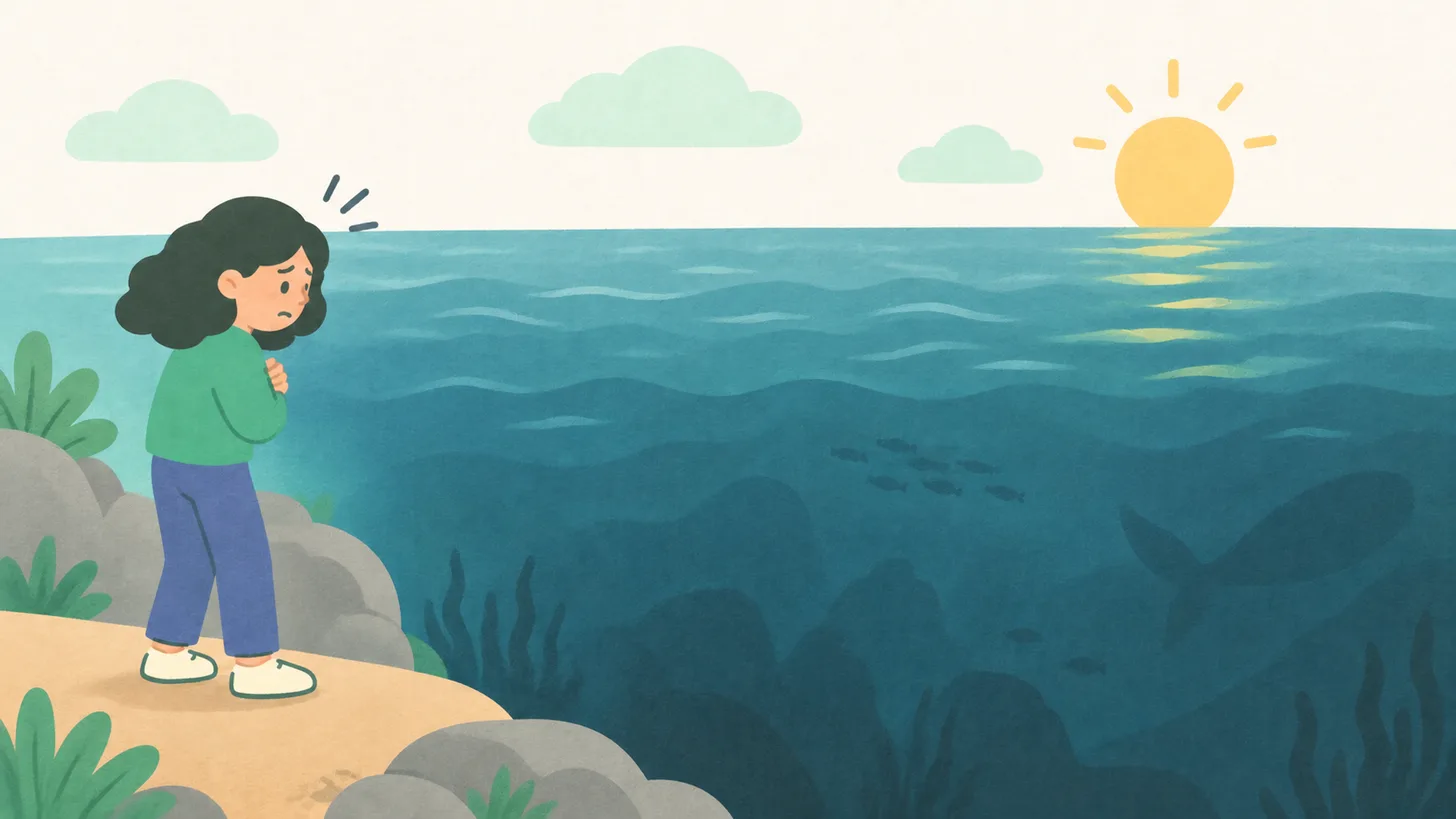
Your heart speeds up. Palms go cold. Your legs feel strange, as if the ground has moved. If you look down into dark water, there is sometimes a pull, a vertigo, a sense that something is below. This is not weakness. It is a false alarm your body sends when nothing is actually wrong.
Common signs people describe:
- Racing heart, tight chest, held breath near deep water
- Dizziness or wobbly legs on a boat, ferry or dam wall
- Vivid intrusive images of what might be under the surface
- Avoiding beaches, pools, cruises, backwaters, even ocean photos
- Panic that spikes before you reach the water, not only in it
Some people only react in the sea. Others react to a Kerala backwater, a reservoir behind a dam, a flooded road in monsoon, or a wide river. All of these count.
In short: The signs are physical, mental and behavioural. The avoidance pattern is often louder than the panic itself.
Thalassophobia vs aquaphobia vs hydrophobia
These three words get mixed up often. The difference matters when you look for help. Aquaphobia is a fear of water itself. Thalassophobia is a fear of depth and size. Hydrophobia is not a phobia; it is a sign of rabies, treated at a hospital.
Where does this fear come from?
The honest answer is that we are not fully sure for any one person. Specific phobias usually come from more than one source stacked up. Most readers can see at least one of these in their own story, and often two or three together.
- A frightening memory with water. A near drowning. A monsoon flood that took furniture. A ferry that pitched hard. A cousin pulled by a current at Kovalam.
- A fear you learned from a parent. If your mother tensed every time you went near a pool, your body quietly recorded water as danger. This is called vicarious learning.
- A story, a film or a news report. Shark films. The news from Chennai in 2015. Viral deep sea videos. The brain stores “deep water, bad” without any event of your own.
- A biological lean. Anxiety runs in families. Some bodies are quicker to fire the alarm.
- A healthy fear that grew too loud. All humans have some caution near deep water. In some people, the signal gets amplified.
You might be worried that this is a sign something is wrong with you. It is not. The alarm bell in your body is louder than it needs to be, and alarm bells can be re-set.
In short: Specific phobias usually have more than one cause. A frightening event, a parent’s reaction, and a nervous system that leans anxious can all stack up.
What helps in the moment?
When panic arrives, the goal is not to be brave. It is to let the alarm settle. A 5-4-3-2-1 grounding pulls you out of “what if” and into “what is here right now”. It will not fix the phobia. It will help you ride out the next ten minutes.
If you want, take one slow minute with this before you read on.
A few other things readers tell us help:
- Keep your feet on something solid. Sit on sand, not on a rock near the edge.
- Look at the horizon. Name three things on the shore. Keep your eyes off the water.
- Breathe out longer than you breathe in. A four count out, two count in, four times.
- Tell the person next to you: “My body is panicking. Give me a minute.”
In short: Aim for settled, not brave. Grounding and a longer out breath buy you ten minutes.
What is the treatment?
For a specific phobia, the strongest evidence sits with exposure therapy, usually inside a cognitive behavioural frame. The WHO names it a first line anxiety treatment. It is not about forcing yourself into the sea. It is a careful ladder, climbed step by step.
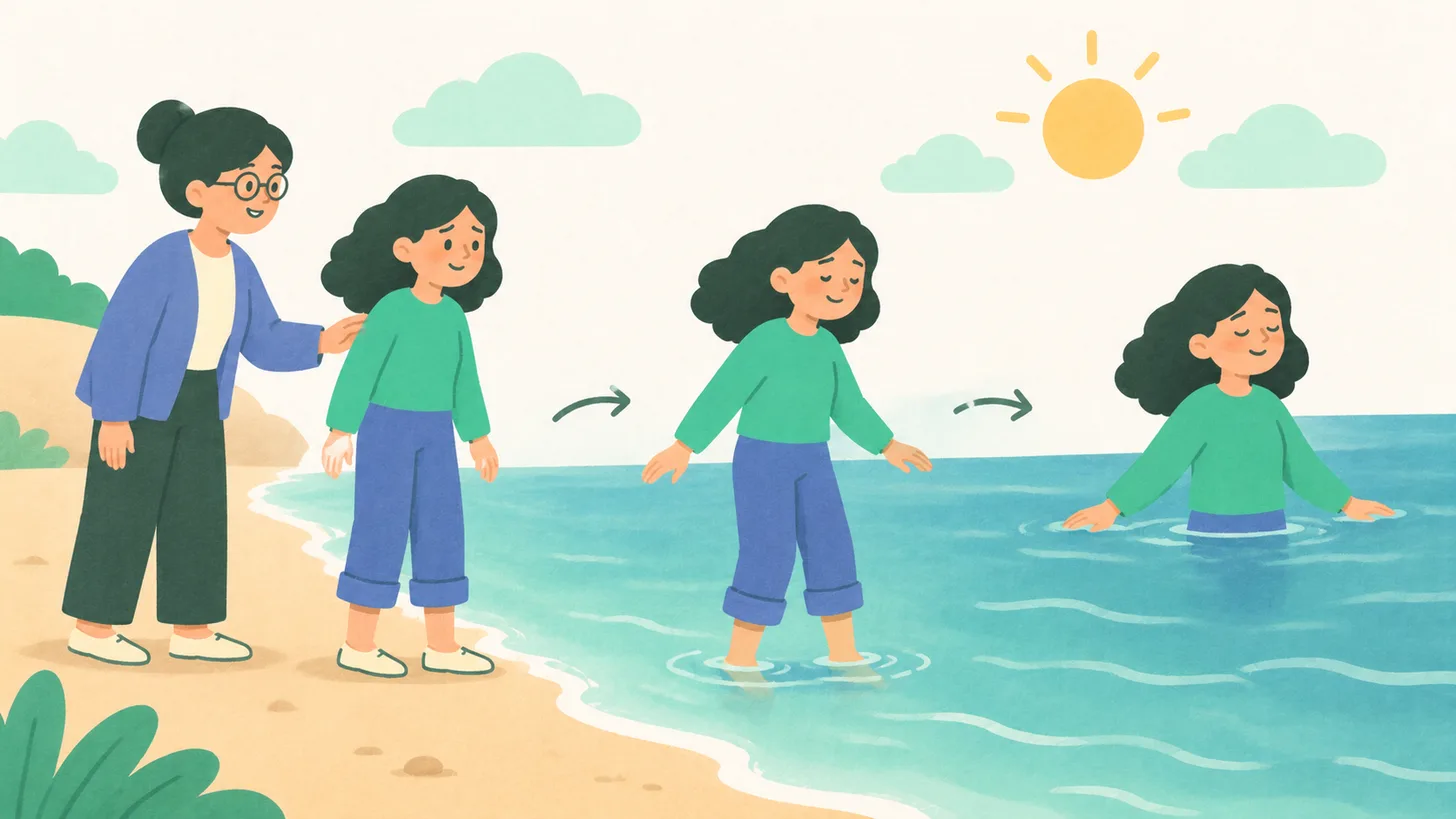
A typical ladder, built with your therapist:
- Looking at photos of the ocean until the discomfort drops
- Watching videos of waves, then of swimmers in deep water
- Visiting a beach, feet on dry sand, far from the waves
- Walking to the water line at low tide, feet in two inches of water
- Standing waist deep in a shallow calm bay, with support
- A guided swim in a pool, then a backwater, then the sea
Two newer tools fit well alongside this ladder.
A gentle swim coach. Many Indian cities now have adult only “learn to swim” classes. The coach starts in a four foot pool, uses a float, and does not splash. For people whose fear layers on top of never having learned, a kind coach often shifts things fast.
Virtual reality exposure. A few Indian clinics now offer VR headsets that simulate pools and the open sea at adjustable depths. You climb the ladder on a sofa, with a therapist watching your face.
A good therapist in India is usually an RCI registered psychologist (Rehabilitation Council of India). Ask for the registration number before you book.
In short: Strong evidence sits with exposure therapy. A swim coach and VR exposure often help in parallel.
What does working with a therapist look like?
A therapist helps in three ways you cannot easily do alone. They build the ladder with you. They stay with you when panic shows up, so your nervous system learns the panic passes. They help you spot the thoughts that keep the fear in place and test them one by one.
A first session is a warm intake chat. A map of where the fear started, with no pressure to remember hard things. A plan with two or three next steps you choose. No one puts you in a pool in week one.
In short: Therapy adds structure, calm company and a plan. Those three things turn self help into something that moves.
What about children under 15?
If the person with the fear is a child under 15, this blog is for the parent. Children’s brains, bodies and words are different. A general adult therapist is not the right fit. The best route is a child psychologist, who uses play, drawing and parent led exposure.
See a child psychologist (not a general one) when:
- The fear stops normal activities, like a school swim day or a bath
- Your child cannot sleep after a scary ocean film or flood news
- There is a frightening memory of water you suspect but your child cannot name
- A relative is “teaching” by pushing the child into the deep end
In short: Under 15, see a child psychologist. Pushing a child into the deep end makes the fear worse, not better.
When is it fine to leave this fear alone?
Not every fear of the sea needs therapy. If you have never learned to swim, dislike cruises, and your life is otherwise fine, you can leave it be. A specific phobia is a problem when it changes what you do, not when it is a line on a self-check.
Therapy earns its place when the fear costs you something you want. A family holiday. A school activity for your child. A job on an offshore rig. The chance to swim with your kids one day.
Many of us have had a fear like this and never did anything about it. That is a reasonable choice. If you decide the cost is now too high, there is a careful way through, and you do not have to do it alone.
In short: A phobia is a problem when it changes what you do. If it does not, you are allowed to leave it alone.
FAQ
What is thalassophobia caused by?
What is the difference between thalassophobia and aquaphobia?
What is the difference between thalassophobia and hydrophobia?
What is megalohydrothalassophobia?
Can I treat thalassophobia on my own?
Does GoodLives work with specific phobias like thalassophobia?
Is there a Hindi word for this fear?
This post is for information only and is not a substitute for professional care.


Share your thoughts