

It is free, confidential, in Hindi and 20 Indian languages, 24/7.
What this blog includes
- A plain definition of parental pressure on students and where it comes from
- How it shows up in Indian students’ bodies, minds and futures
- Five short scripts a student can use at home this week
- An honest section for parents who are reading this too
- When family therapy helps, and when to see a therapist on your own
A hand that shakes before you open the WhatsApp from home. The way “beta, let’s talk about your marks” lands like a slow drop in the chest.
If this is your week, you are in the right place. Parental pressure on students in India is one of the quiet mental-health crises of our time, and it has honest names, honest tools and a point where a therapist helps. It overlaps with academic stress in India, but it is its own thing: the pressure follows you home. Trusted by 500K+ people, GoodLives sits with students and parents through this.
What parental pressure on students actually is
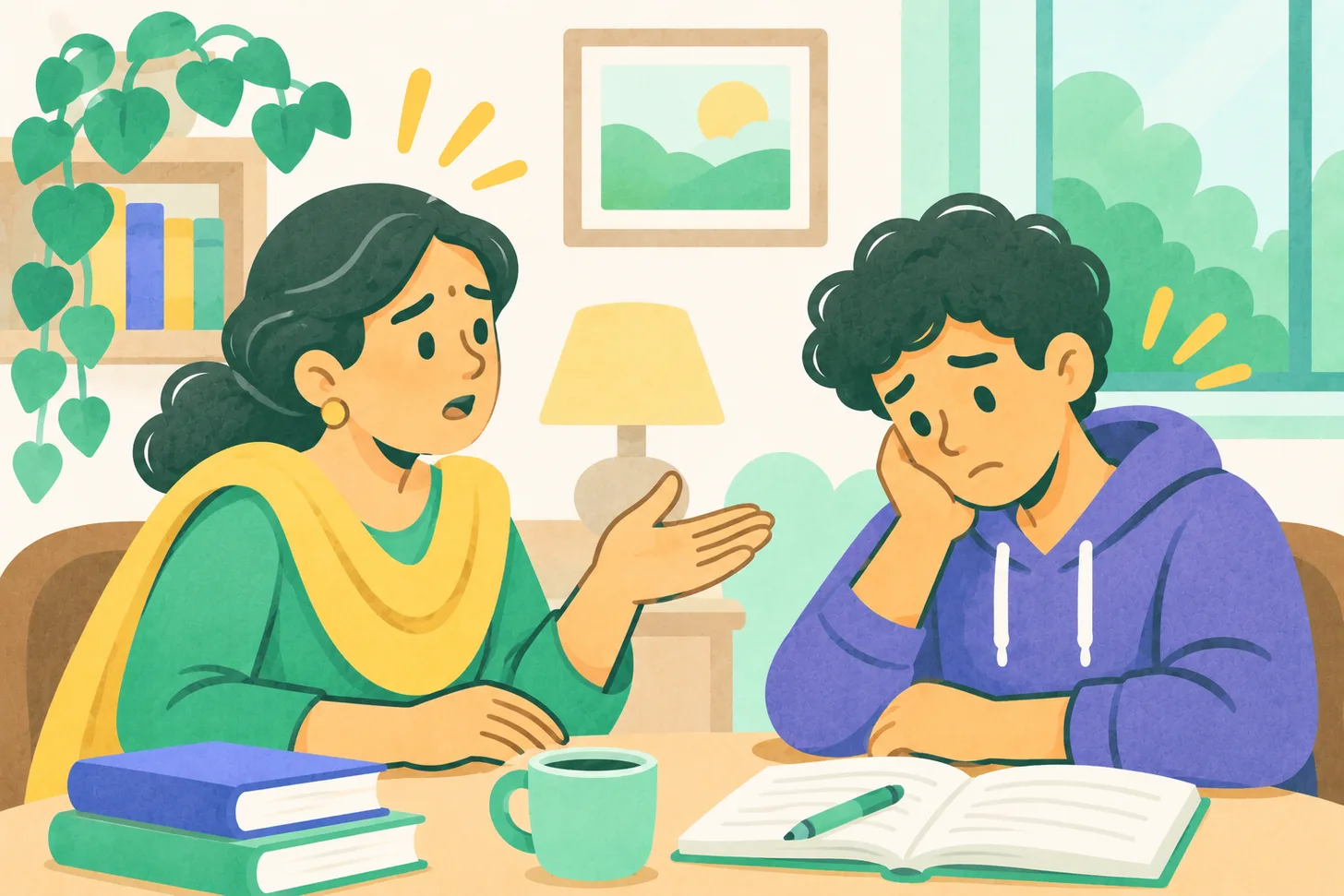
Parental pressure on students is the long, steady weight of expectation from parents that shapes what a student studies, how they rest, who they become, and how they feel about themselves on an ordinary Tuesday. Short pressure can sharpen you. A long one changes you.
It is not always loud. The silence after bad marks, the sigh at a result, the “we sacrificed everything for you” line at dinner. Those count too. If this is landing close to exam-time stress, both are honest to name.
In short: pressure is not just shouting; often it is the room going quiet.
Why parents pressure Indian students the way they do
Parents pressure in Indian students rarely starts as cruelty. It starts as fear wearing love’s clothes. Many Indian parents are the first in their family to be salaried professionals. Scarcity is close in their memory. They project survival anxiety onto a child who has never known it.
A few patterns show up again and again:
- First-generation survival anxiety : the parent who climbed one rung and cannot imagine their child slipping
- The dowry-market calculation : in some communities, marks are still read as marriage value
- Caste and class mobility pressure : one child carrying the hopes of three generations
- Comparison culture : “Sharma ji ka beta” and the WhatsApp group of cousins’ ranks
- Media glorification : IIT, IIM, MBBS and USA as the only real paths
- Unprocessed parental regret : a father who never became an engineer pushing his daughter into one
None of this makes the pressure okay. It makes it a human thing with a cause, which means it can be understood and spoken about.
In short: your parents’ pressure usually comes from fear, not from a wish to hurt you.
How parental pressure shows up in your body and mind
Research on Indian adolescents is thin, but what exists is sobering. The National Mental Health Survey 2015 to 2016, led by NIMHANS, found a 7.3 percent prevalence of mental-health concerns in the 13 to 17 age group. The pattern on the ground is heavier than that number.
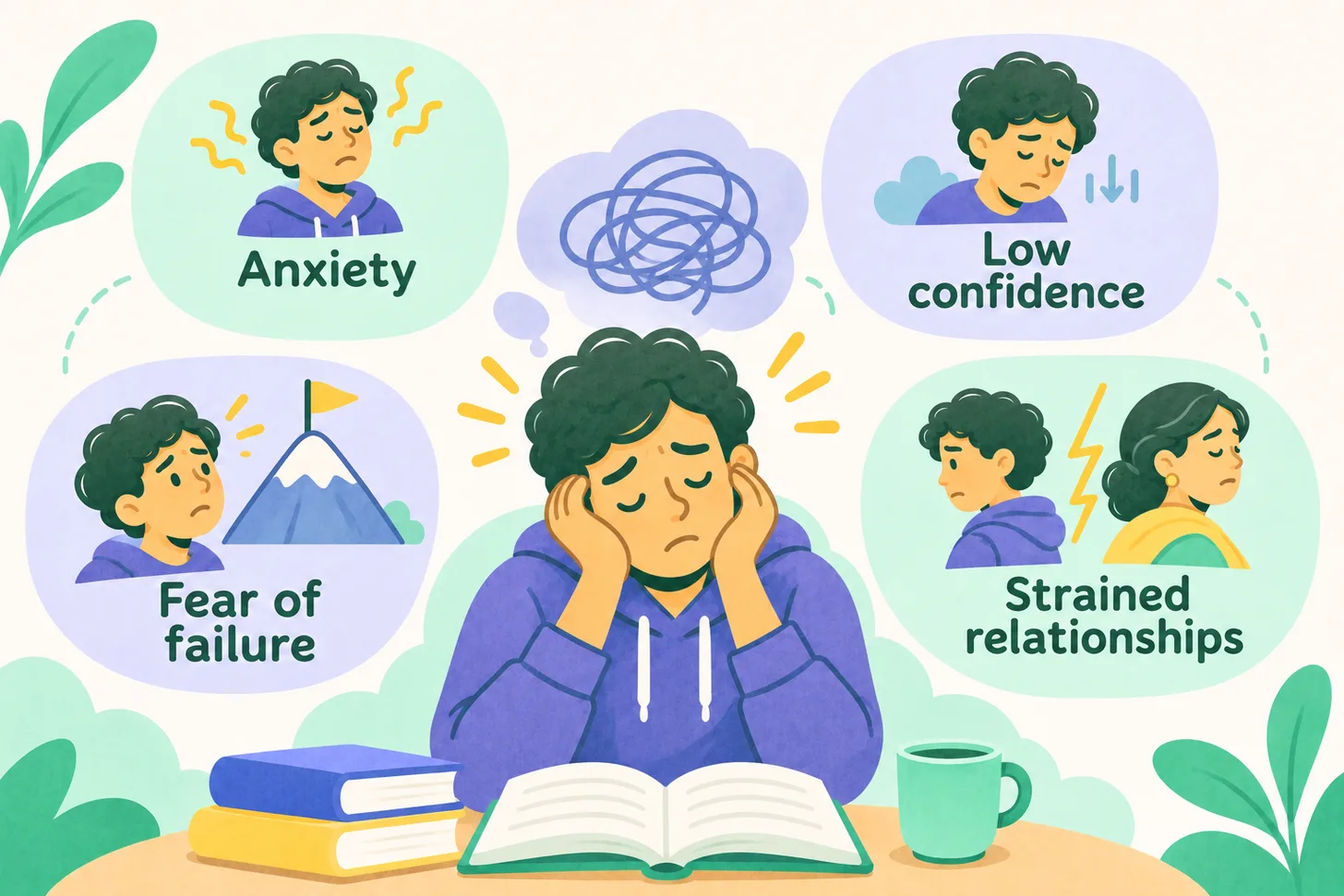
Pressure at home tends to settle in a few places:
- Chronic anxiety that will not switch off even on holidays
- Depression : long low mood, loss of interest, “nothing matters” days
- Impostor loops in those who do succeed : “they will find out I am not that smart”
- Identity erasure : the quiet realisation that you do not know what you want
- Perfectionism as survival : because an imperfect you is unsafe at home
- Suicidal thoughts in the hardest cases
That last point is not a scare line. In 2022, the National Crime Records Bureau recorded 13,044 student suicides in India, the highest number since records began. Behind every one is a family that did not get a chance to have a different conversation.
In short: this is not weakness. It is a cost the body and mind pay for a long alarm.
The honest talk: you are not your marks
You are allowed to read this part slowly.
You are not a return on investment. Your parents’ sacrifice is real and so is your worth outside what you produce. Love and expectation are not the same thing, even when they come from the same mouth. A score is information about one paper on one day. It is not a verdict on you.
If right now you are reading this with a tight throat, pause for one minute with the tool below. It is a thought-reframe exercise used in CBT, and it will not solve your parents, but it will loosen the loop in your chest.
Catch the thought
What thought is weighing on you right now? Write it down just as it sounds in your head.
Name the trap
Does your thought fall into one of these common patterns? Pick any that fit. This part is optional.
Look again
Use these as nudges, not rules. Then write one line back to yourself.
Your reframe
Thoughts are not facts. You just practised stepping back.
This stays on your device. Nothing is saved or sent.
In short: your worth is not your rank. Keep that sentence close this week.
Five short scripts you can use with your parents
Scripts are not magic. They are a way to say the hard thing without losing the words. Pick one, change the Hindi or English to what fits your home, and try it in a quiet moment, not after a result.
- “I know you want the best for me. I need to tell you how this pressure is affecting my sleep and my mood.”
- “I love you both. I am asking for your trust to make this one decision about my course.”
- “Can we talk about expectations for ten minutes without talking about marks?”
- “I want to see a counsellor. It is not failing. It is me asking for help early.”
- If it is heavier: “If this keeps going the way it is, I don’t know how I will keep going. I need us to try something different.”
That last one is a serious sentence. Say it to one safe adult if your parent is not that person yet.
In short: a short, true line often opens more than a long argument.
A section for parents who are reading this
If you are a parent reading this with a sinking feeling, please stay. Your anxiety for your child is love wearing a mask. That does not make the mask harmless.
Three honest shifts help more than any lecture:
- Comparison destroys; connection builds. The cousin’s rank was never the point.
- Non-coercive involvement works better long-term. Ask what help your child wants, instead of planning it for them.
- When your worth is tied to your child’s success, both of you suffer. Therapy for yourself is not weakness. It lightens what you pass on.
You do not have to get this perfect. You have to be willing to hear the sentence your child has been afraid to say.
In short: the child who feels safe telling you the truth will tell you more of it.
Family therapy, and therapy on your own
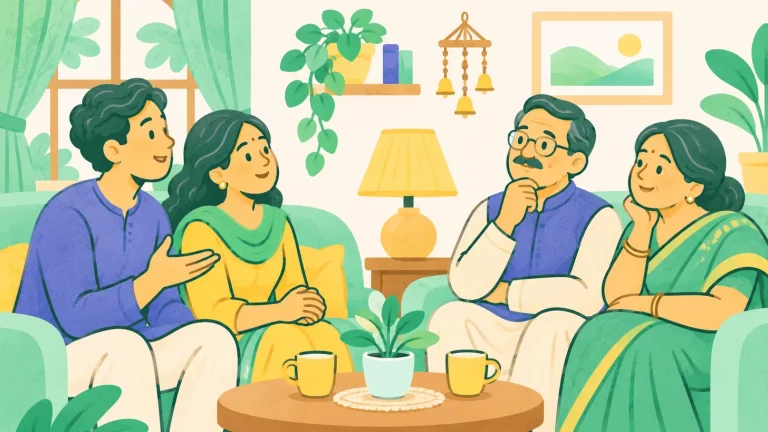
Family therapy is not a Western idea bolted onto an Indian home. Celia Falicov’s multicultural family therapy framework, taught in Indian psychology programmes, works with migration, caste and the specific weight of South Asian family systems. Minuchin’s structural family therapy helps with boundaries that have gone unspoken for years. A trained family therapist does not take a side.
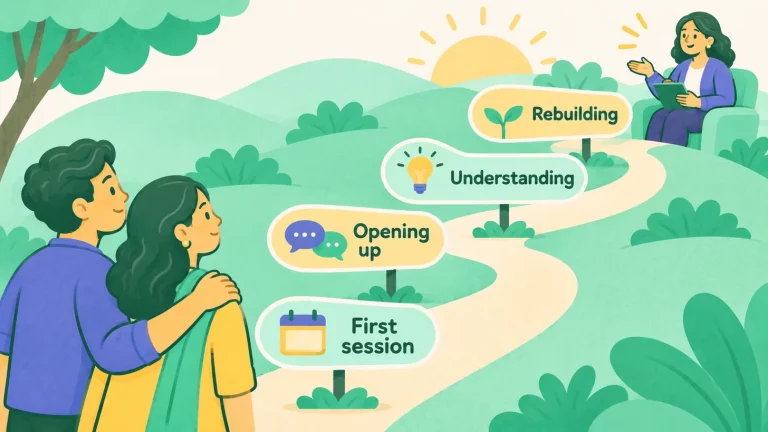
Sometimes a student needs their own therapist first, so they can bring the family in later with a steadier voice. Online counselling for students is a quiet option when the parent is in the next room. Both paths are okay.
When to see a therapist urgently
See a therapist this week, not next month, if any of these are true: thoughts of self-harm or ending your life, panic attacks more than once a week, cutting or hitting yourself, drinking or substance use to cope, sleep broken for more than ten nights, pulling away from everyone you used to speak to.
It is free, in your language, and your parents do not have to know.
In short: urgency is a reason to reach out, not to wait.
FAQ
What is parental pressure on students?
How does parents pressure in Indian students affect mental health?
Is it disrespectful to tell my parents I want to see a therapist?
What should I say if my parents are forcing a career on me?
Can parental pressure cause suicidal thoughts?
Is family therapy really a thing in India?
What can parents do differently without feeling they are failing?
Not medical advice Information only, not a substitute for professional care.


Share your thoughts