
What this blog includes
- Why exam and academic stress in India hits differently from everyday study pressure
- The specific weight of JEE, NEET, UPSC and the boards, and the Kota reality
- Signs the pressure is tipping into something clinical
- What actually helps in a hard exam month
- Scripts for the parent conversation, and when to see a therapist
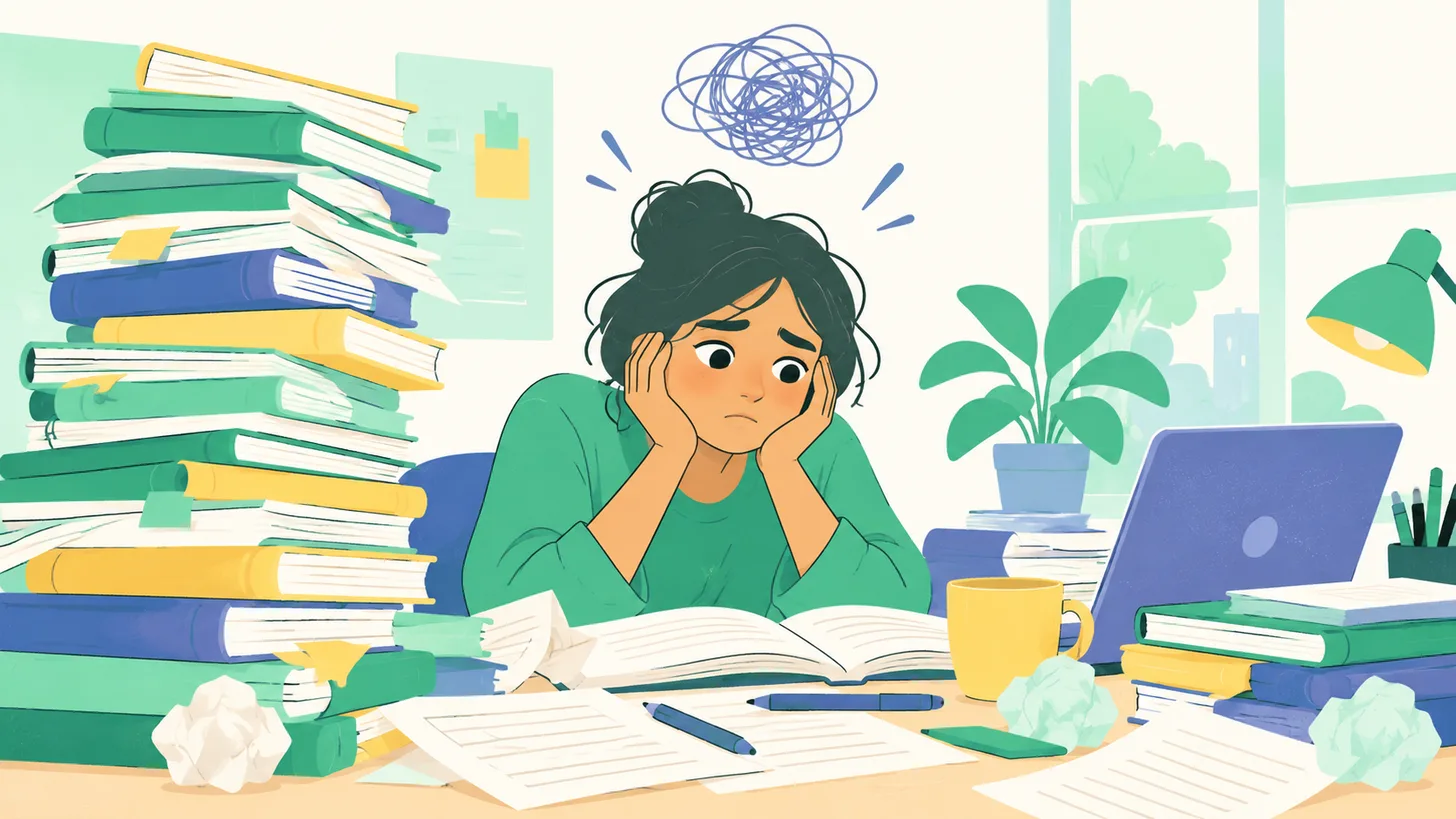
A loop that will not switch off at 2 am. A cousin who scored one mark more. The feeling that one paper on one Sunday will decide whether you were worth the sacrifice your parents made. If any of that is your week, you are reading the right page.
Exam and academic stress in India is a real body response to a real system. It is not weakness, and it is not something you can read your way out of in one night.
GoodLives sits with 500K+ people through weeks like this, students and parents both. The honest thing we have learned is that a sustainable plan beats a motivational speech every time.
Why exam and academic stress in India hits differently
Exam and academic stress in India carries a weight that most countries do not meet in the same shape. Boards gate college seats. JEE and NEET turn one year into one score. UPSC asks for three.
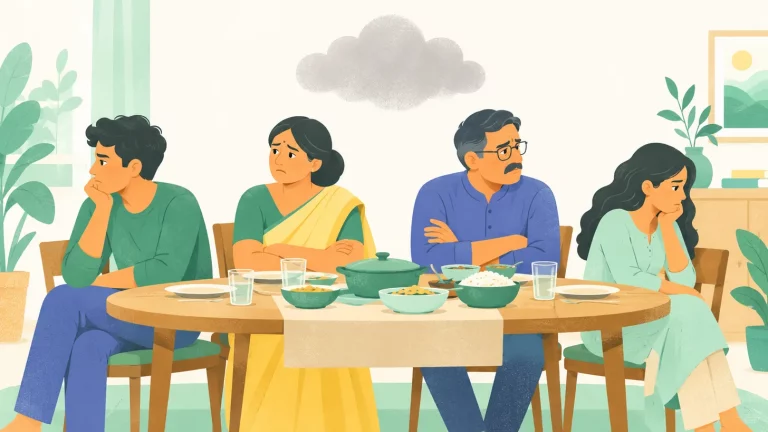
Family dinners carry ranks and cousins. The restlessness many students feel in the evenings has a name in Hindi, bechaini, a chest-tight uneasiness that lives in the body before it reaches the mind.
In 2022, the National Crime Records Bureau recorded 13,044 student suicides in India, the highest ever recorded in the country. Behind that number sit many more students who are quietly unwell and never counted.
The National Mental Health Survey led by NIMHANS found that about 7.3 percent of young Indians aged 13 to 17 are already living with a mental-health condition, most of it unseen.
In short: Indian exam pressure is not in your head. It sits in a system that stakes a lot on one score.
The specific weight of JEE, NEET, UPSC and the boards
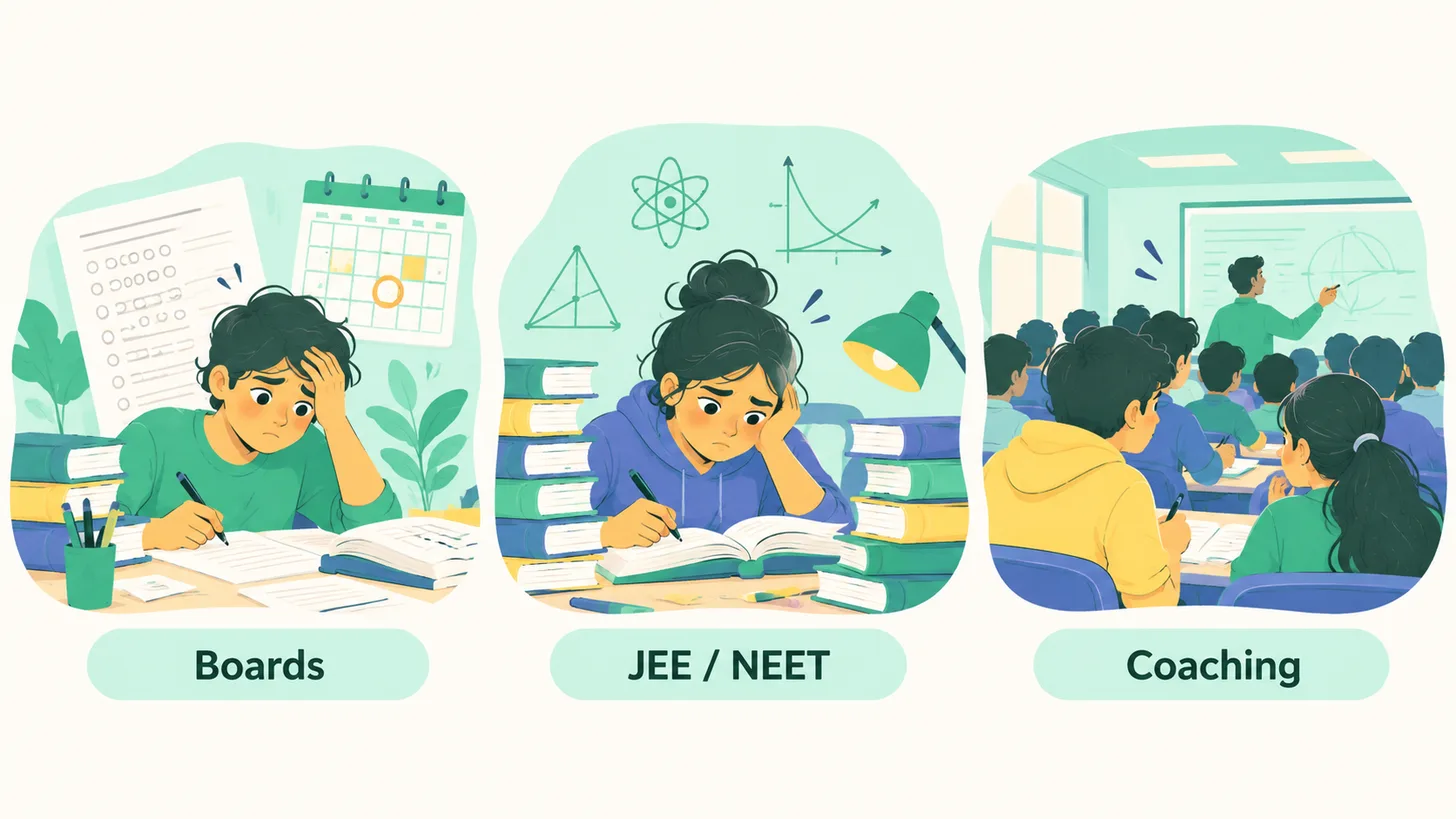
Each major exam in India carries its own kind of stress, and recognising which one you are carrying helps you plan for it. A plan built for a board student rarely fits a UPSC aspirant, and a UPSC plan is too heavy for a Class 10 student.
- Class 10 and 12 boards compress a two-year syllabus into a three-hour paper, with the added pressure that marks here decide stream choices, college admissions and sometimes marriage conversations later.
- JEE Main and JEE Advanced ask a student to be in the top 1 percent of about 1.1 million candidates, usually after two years at a coaching institute.
- NEET asks the same of about 2.3 million medical aspirants for roughly 1 lakh MBBS seats, which is a one-in-twenty shot even for strong students.
- UPSC Civil Services runs over a year with prelims, mains and interview, and most serious aspirants attempt it two or three times before clearing or stepping away.
- CAT, CLAT, GATE, SAT and GRE carry their own narrower pressures, often with placement season or a visa window layered on top.
Kota deserves honest naming here. The Union Ministry of Education and the Rajasthan government have both acknowledged that student suicides in Kota reached at least 26 in 2023, the highest number the city has ever reported, with ongoing cases in 2024 and 2025.
The coaching ecosystem there is now the subject of court-mandated reforms. If you or your child is in Kota and the loop is loud, that is not personal weakness. That is a system under strain, and tools exist.
In short: every entrance exam in India carries a specific weight. Naming it is the first step to carrying it.
Signs the pressure is tipping into something clinical
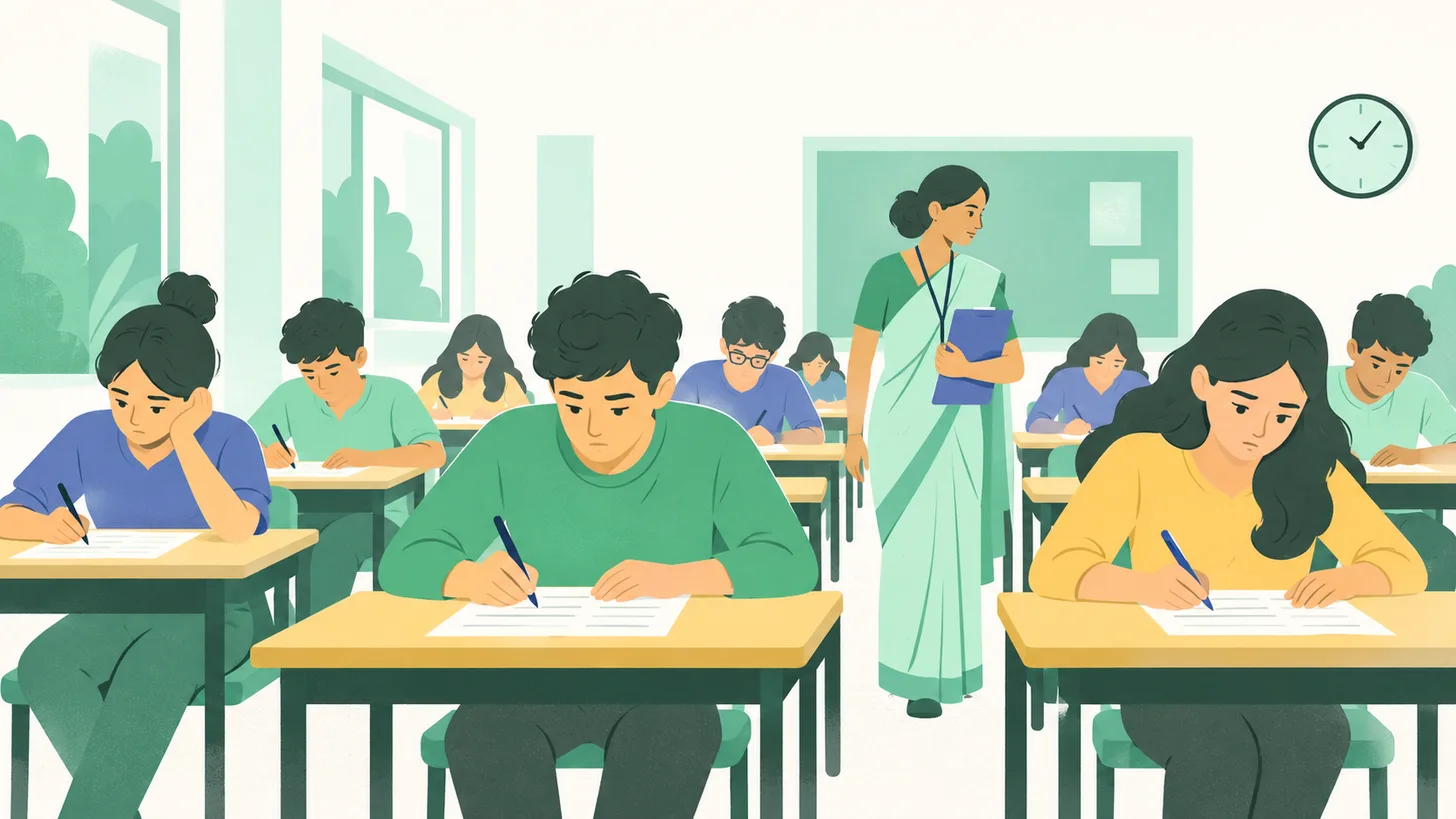
Most exam weeks come with butterflies, late nights and a short temper. That is pressure, and it eases when the paper ends. Something else is going on if the signs stay after the paper, or if they stack on top of each other.
Watch for these over two weeks or more, not a bad Monday:
- Sleep under five hours a night for most of the fortnight, even when you try
- Panic attacks before class, exams or results, like a racing heart, dizziness, a sense that you cannot breathe
- Thoughts of self-harm or of not wanting to be here, even once
- Appetite collapse or binge-eating, and clothes that fit differently inside a month
- Pulling away from friends you used to study with, or from a sibling you were close to
- An impostor-loop that keeps running after a good score, not just a bad one
- Family-rupture risk, meaning rows with parents getting physical, or long silences at home
If three or more of these are true for two weeks, this is no longer only exam stress. It is worth a conversation with a therapist. The World Health Organization’s adolescent mental-health page says the same, in plainer terms.
In short: butterflies before an exam are normal. A loop that stays after the paper is a signal to talk to someone.
What actually helps in a hard exam month
Honest tools for a student in a hard month look nothing like the “14-hour grind” videos on YouTube. The nervous system does not run on willpower; it runs on sleep, movement, food and a few steady habits.
- Protect a 7 to 9 hour sleep window for most nights, especially before mocks. One late-night cram usually costs you more than it buys.
- Study in 50 to 90 minute focused blocks, with a 10 minute off-screen break between them. Pomodoro is one version of this; your own rhythm works too.
- Move for 20 minutes a day, like a walk around the block, a staircase set, or a sport you used to play.
- Eat something warm first thing, and keep real meals during the week.
- Write down the loop for ten minutes before bed. Journalling externalises worry and often shortens it.
- Keep one friend in your week who is not studying for the same exam, so your identity is not only your rank.
A grounding minute helps when the chest tightens before a paper. Try one slow minute now, if you want.
A moment to breathe
Follow the circle. Breathe in, hold, breathe out, then hold. Four counts each. Stay as long as you like.
For a longer plan around a specific exam, our walkthrough on how to handle exam stress sits alongside this page.
In short: small habits held for three weeks beat big habits held for three days.
How to talk to parents when the pressure is at home
In many Indian homes, the person asking “is one more mock test really necessary tonight?” is also the person offering to drive you to the exam centre at 6 am. Love and pressure often come from the same direction, and sorting one from the other is hard to do in a fight.
A short script lands better than a long explanation. Try one of these:
- “I am not sleeping well, and it is making studying harder. Can we talk to someone who does this for a living?”
- “I know how much you have put into this. I want to protect that. The way I am going right now, I will not reach the exam standing.”
- “Can we talk about one Sunday afternoon that is only ours, not about marks?”
You can love your parents and set a boundary. These are not opposites. And some conversations are easier with a third person in the room; a therapist who works with families can help translate between two generations that mean well and sound different.
Match Me with a Therapist → https://app.goodlives.in/signin
If your family is reading beside you, our page on parental pressure on students is written for both of you.
In short: a short honest script works better than a long explanation. You can love your parents and set a boundary.
When to see a therapist, and what help in India looks like
See a therapist when the loop has lasted two weeks or more, when sleep or appetite have shifted for ten days, when thoughts of self-harm appear even once, or when a family relationship is rupturing over marks. You might be worried that therapy means something is broken. It does not. A conversation is often the fastest route back.
Help in India has grown in the last few years, and most of it is free or low-cost:
- NIMHANS Youth Online Counselling offers free counselling for young Indians through its Project YUVA stream.
- School and college counsellors exist in most CBSE schools and in many Indian universities now; many students never use theirs. If your institution has one, that is a free first stop.
- A GoodLives counsellor with experience in student mental health is a paid, private option when you want continuity and choice of therapist. Sessions run in English, Hindi and more Indian languages. See our pricing page for current ranges.
- Family therapy can be the right fit when the pressure is coming from home more than from the paper itself.
Breathwork lowers your heart rate in two minutes. Therapy lowers your baseline over three months.
In short: help in India exists on a sliding scale from free government helplines to paid private therapists. Pick what fits your week and your budget.
The gap year, the drop year and the honest third option
Not every exam needs to be cleared on the first attempt. A drop year, a gap year or a changed course is no longer the career-ending choice it was a decade ago. Honest employers and good universities read a reflective gap year as a sign of maturity, not failure.
If you have given a paper everything and the result is still not what you needed, you have three real options:
- Repeat the attempt with a different plan, not the same plan louder, and ideally with a therapist and a mentor who have seen this cycle before.
- Change the goal, with time to grieve the old one. There are good careers that do not come through IIT, AIIMS or UPSC. Many of them did not exist five years ago.
- Take a gap year to work, volunteer, intern or recover. Six honest months often beat another twelve of running on empty.
Your worth is not a rank. The sustainable life is the goal; the exam is one chapter inside it.
In short: a drop year is a plan, not a verdict. The honest third option exists, and good people have taken it.
—
This post is for information only and is not a substitute for professional care. If you are struggling, please speak to a qualified mental health professional.


Share your thoughts