

What this blog includes
- Why procrastination is a mood problem, not a time problem
- The 5 patterns most of us fall into
- 9 fixes that work in the next 10 minutes and the next 10 days
- When procrastination is really ADHD, anxiety or depression
If you Googled this at 11 pm with a report still open, you are in the right tab. You have probably tried the apps, the lists, the Pomodoros. One worked for a week. Then it did not. GoodLives is trusted by 500K+ people across India for therapy and everyday wellness. Here is the honest version.
Why procrastination is not laziness or poor time management
The research keeps landing in the same place. Putting things off is not a flaw and it is not a scheduling glitch. Procrastination is a mood-management problem. You avoid the feeling the task brings up, not the task.
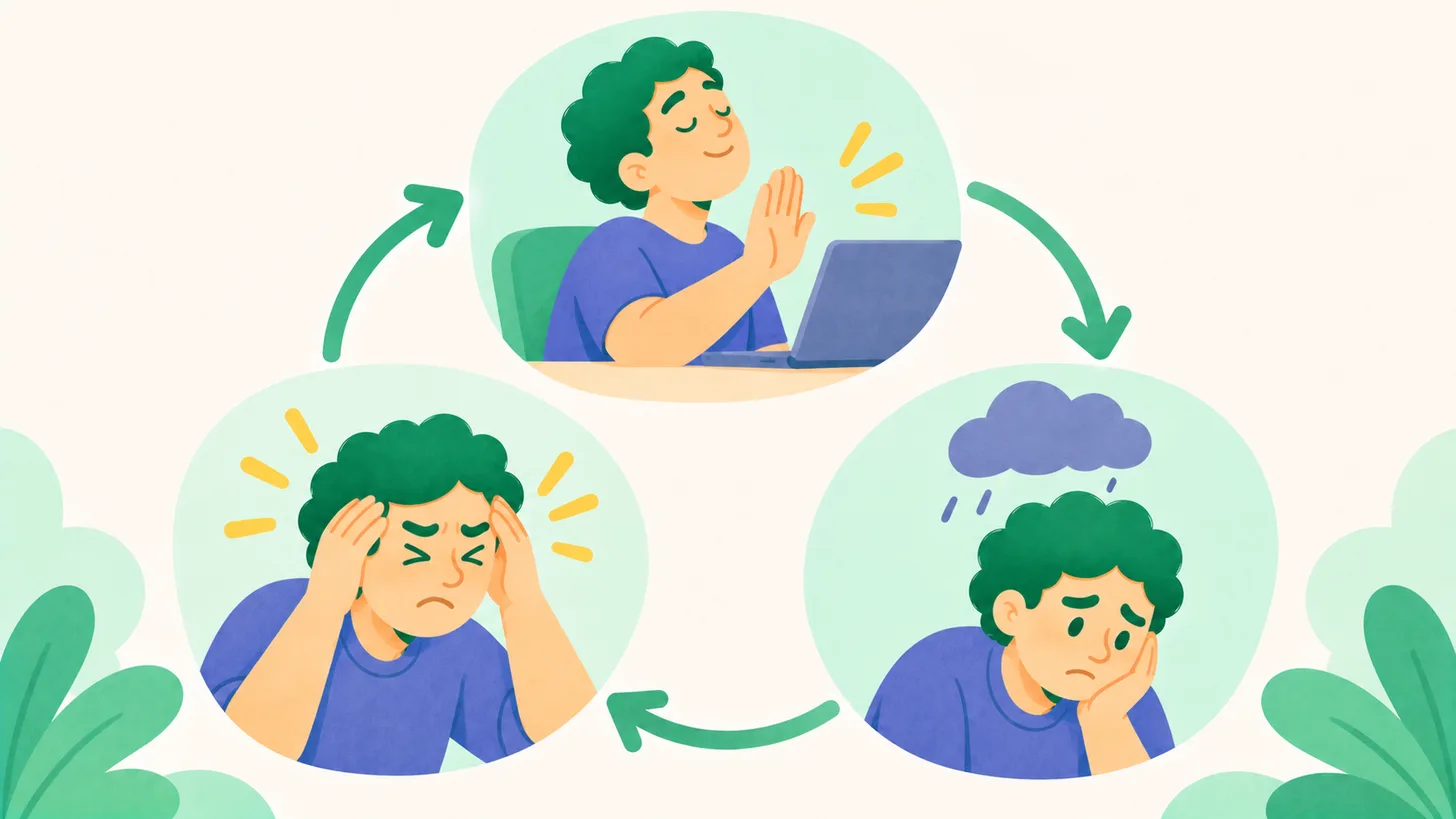
The feeling can be fear of failing, boredom, perfectionism, or a task too vague to start. The scroll gives quick relief. The task sits there. Your future self pays.
Dr Timothy Pychyl and Dr Fuschia Sirois call it “emotion regulation, not time management” in their paper in Social and Personality Psychology Compass. It is a voluntary delay of something you meant to do, knowing you will be worse off.
The laziness story is the shame layer, not the problem. Laziness means you do not want to do it. Procrastination means you want to and you are stuck. If you are reading this, you are not lazy.
You might be worried the fix is to push harder. The honest answer is that pushing harder is what has not been working. A pause works better. If the shame is loud, take one slow minute with this before you read on.
In short: Procrastination is your brain avoiding a feeling, not avoiding work. A fix that skips that layer will not last.
The 5 types of procrastinators and which one you are today
Dr Linda Sapadin groups procrastinators into five patterns in her book It’s About Time. Most of us are a mix. Knowing which one is loud today changes which fix will land. Some days it is one; some days all five.

In short: You are not one fixed type. You are the one that is loud for this task today. Name it before you fix it.
How to stop procrastinating: 9 fixes that work
The fastest way to break the loop is to work the feeling first, then the task. These nine have the most research behind them, from self-forgiveness to the “if-then” plan. Some weeks they land. Some weeks they do not. That is normal, not a verdict.

1. Forgive yourself for the last time you put it off
A 2010 study by Wohl, Pychyl and Bennett found that students who forgave themselves after missing a deadline put off less on the next one. Guilt made it worse. This reads strange and is the most important. Shame is the fuel.
2. Use the 2-minute rule honestly
If a task takes under 2 minutes, do it now. If it is longer, do the 2-minute version. Open the file. Write the first sentence. Send one line to the person you are avoiding. Lower the cost of starting.
3. Break the task to ridiculously small
Not “write report”. That is a project. “Open the doc and type the title” is a task. If your brain says “that is silly, I can do more”, good. If it says “even that feels heavy”, you have found your starting line.
4. Make an “if-then” plan
Peter Gollwitzer’s work on implementation intentions shows that writing “if X, then Y” roughly doubles follow-through. If it is 9:30 am Tuesday, then I open the pitch deck for 25 minutes. Be that specific.
5. Bundle the task with something you like
Katy Milkman calls this temptation bundling. You only watch the show while you fold laundry. You only drink the good coffee while you draft the proposal. Dopamine goes with the task.
6. Design the room, not just the willpower
Put the phone in another room, not face-down on the desk. Open the doc before you open the browser. Willpower is the smallest tool. Environment is the biggest.
7. Show up for 5 minutes
Set a timer. Promise yourself you only have to work for 5 minutes. You can stop after. Most of the time, starting is the whole problem. You keep going because the body is in the chair.
8. Try Pomodoros honestly
25 minutes on, 5 minutes off is a classic. It works for some and not for others. People with ADHD often need shorter bursts (10 and 5) or longer flow blocks (90 and 15). If the standard has failed you three times, it is not your fault.
9. End the day with tomorrow’s first move
Before you shut the laptop, write one sentence naming the exact next step. “Tomorrow 10 am: open the pricing sheet and update row 4.” Starting is the hard part. This hands your future self a running start.
In short: Pick two from this list and run them for a week. Not nine. If you cannot pick two, pick 1 and 7 and start today.
When procrastination is ADHD, anxiety or depression
Sometimes the loop is not just a loop; it is a symptom. For many Indian adults, especially women, the real driver is ADHD, generalised anxiety or depression, and nobody has named it yet. Work from NIMHANS and the Indian Journal of Psychiatry flags adult ADHD in India as under-recognised.

The symptoms look like “being scattered” or “being too sensitive”. They are neither.
The grounding exercise above will not fix any of this. It helps you ride out the next ten minutes. If three or more of these show up most days for over six months, bring it to a professional.
- You start many tasks, finish few, and have since school
- Sleep is wrecked, you wake tired, focus is worse by afternoon
- A loud critical voice runs with the procrastination
- The usual fixes slip within days
- You have lost interest in things you used to like
Not every procrastination needs therapy. Some weeks you are just tired; the fix is sleep.
If this has been months, not weeks, that is a different conversation. A psychologist on GoodLives can help you figure out whether it is habit, anxiety, self-doubt or something else.
In short: Habit-level procrastination responds to the 9 fixes. Clinical procrastination needs a longer, kinder conversation.
How to stay disciplined without yelling at yourself
The research on how to stay disciplined keeps surprising people. Self-criticism makes you less consistent, not more. Self-compassion makes you more consistent. Harsh self-talk gives you a one-day spike and a three-day crash. If you want to get things done over months, voice matters as much as plan.
Discipline is the muscle of doing the small thing on the day it did not feel like doing. A few ways to build it without shouting at yourself:
- Keep the bar low enough to clear on a bad week
- Attach the new habit to one that is already automatic
- Reset without guilt when a two-week streak breaks
- Treat the gap between plan and action as a feeling, not a flaw
If attention keeps slipping, see our guide to improving your attention span. If you dread one task because you are afraid you cannot pull it off, imposter syndrome is a better frame.
Sometimes it is a planning problem; the planning fallacy guide helps. At work, it can sit inside a wider pattern of work stress and burnout.
That restless, chest-tight bechaini (restlessness) when you sit down to work is a signal, not a verdict. It says your brain thinks this task is heavier than it looks. Less friction, not more pressure.
In short: Discipline is kinder than Instagram makes it look. The consistent people are not the harshest. They are the quickest to forgive and start again.
FAQ
What are the 7 steps to cure procrastination?
Why am I such a bad procrastinator?
What is procrastination disorder?
How can students overcome procrastination?
Is procrastination linked to ADHD?
How do I stop procrastinating when I feel lazy?
This post is for information only and is not a substitute for professional care. If you are struggling, please speak to a qualified mental health professional.


Share your thoughts