
What this blog includes
- A plain reframe of what mental strength really is in 2026
- 10 habits of mentally healthy people you can start this week
- Where therapy fits, told as strength practice not weakness confession
- A short reframe tool to try while reading, plus helplines at the end
If you have Googled how to be mentally strong twice this month, you have probably been told to toughen up and just handle it. That advice has not worked, because it was never strength. Trusted by 500K+ people, GoodLives writes this for the version of you who is tired of pretending.
What does it really mean to be mentally strong?
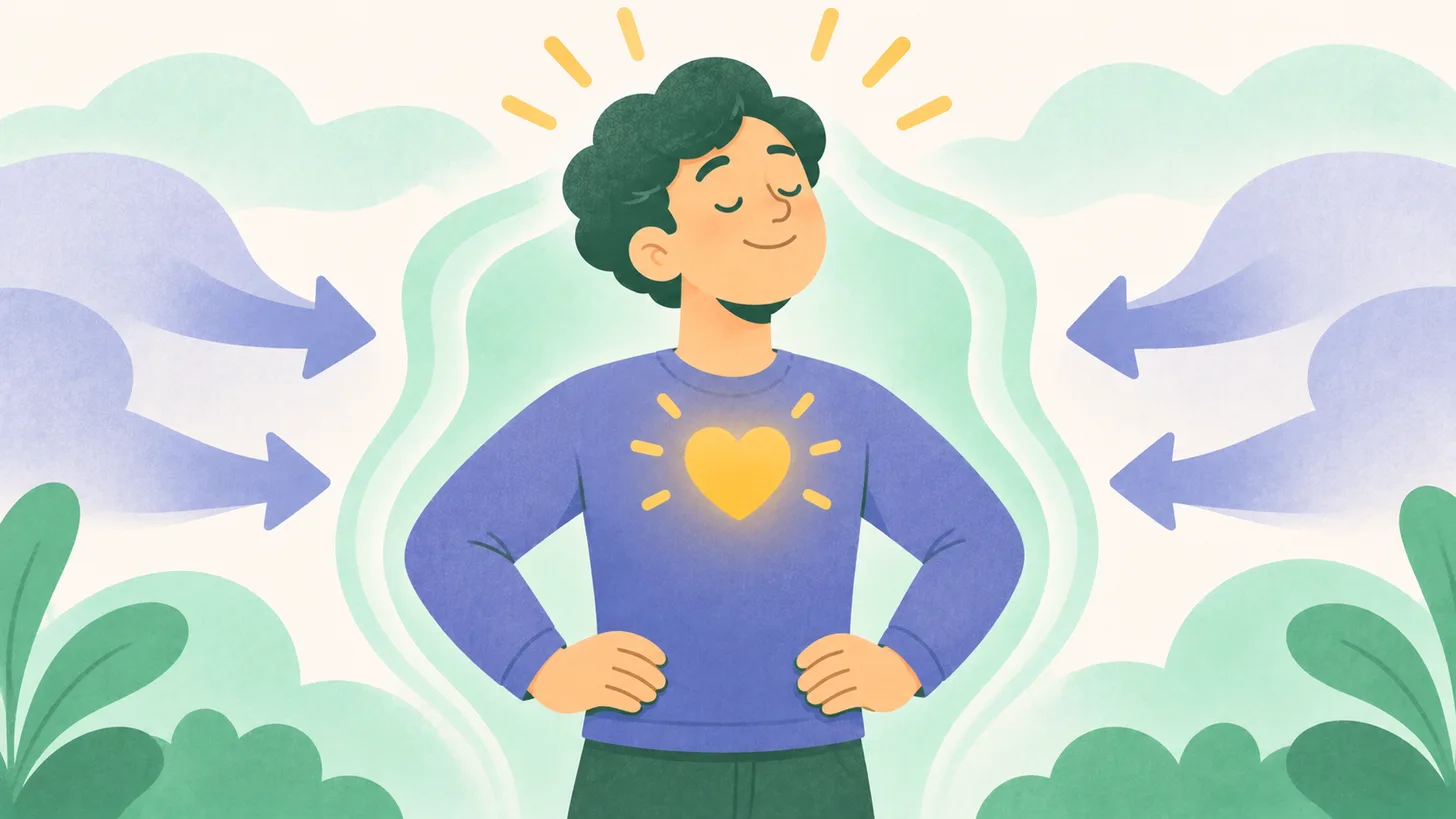
Being mentally strong is not about being hard. It is about having room inside you to feel a hard thing, name it, and still choose your next action. That is capacity, not armour. Strength is the room to feel, not the trick of not feeling.
A mentally strong person is not someone who feels nothing. They are someone who can hold a feeling long enough to understand it. They cry when a thing is sad. They say no when a thing costs too much. The WHO describes mental health in a similar frame.
In short: strength is the room to feel, not the trick to not feeling.
Why “be strong” became such a loaded phrase for us
Many of us grew up hearing “be strong” as “do not cry, do not complain, do not disturb anyone”. Indian men were told not to break. Indian women were told not to be angry or make a scene. Both lessons were about silence, not strength.
The NIMHANS National Mental Health Survey 2015 to 2016 found that nearly 150 million Indians need mental-health care, and most never seek it. The exact “be strong, do not disturb anyone” conditioning is one of the reasons.
Real strength lets you say the thing. The small thing to your partner. The hard thing to your parent. The honest thing to yourself at 11 pm.
In short: the “be strong” we were taught often meant “stay quiet”. Mental strength asks you to speak when something matters.
10 habits of mentally healthy people
Characteristics of a mentally healthy person are small and repeatable. Nothing on this list needs an app, a retreat or a new personality. Pick one habit this week, not ten. The list below is the daily version of mental strength.

- Feel your feelings before you fix them. Sadness has information; anger has information. Push them down and they come up as a headache, a short temper or a 2 am scroll. Give the feeling five minutes before the solution.
- Set honest boundaries, in your own words. A boundary is one sentence, not a lecture: “I cannot talk about this today.” Say it, bear the small discomfort and move on.
- Keep three or four people close. You do not need a wide circle. You need a few humans who know what is really going on in your week. Text one of them today.
- Have at least one real confidant. Someone you can be undefended with. The person you can tell the ugly thought to. If you do not have one, a therapist is a safe place to start.
- Protect your sleep like it is medicine. Mental strength drops first when sleep goes. Phone out of the bedroom. Same wake time, even on weekends. Seven hours before you optimise anything else.
- Move your body most days. Not for abs; for your nervous system. A twenty minute brisk walk lowers your baseline stress. A long run is not required. Move the way your knees allow.
- Build a work and rest rhythm. Mentally healthy people do not grind without pause. Work in focused blocks. No laptop at lunch, no email after dinner, one full day off a week.
- Ask for help early, not at the end. The strongest move is the small ask you make before the breakdown. “Can you take this call?” “Can we move the deadline?” “Can you sit with me for ten minutes?”
- Know your own patterns. You have a 3 pm slump, a Sunday night dread, a certain person who leaves you drained. Writing these down for a week is more useful than any personality test. Our post on the benefits of journaling has a simple format.
- Do the inner work, slowly. Inner work is not a project with a deadline. It is one honest conversation with yourself a week, often with help. Therapy, journaling and long walks all count.
In short: these are small daily practices, not an identity. Mentally strong is a Tuesday afternoon, not a mountain summit.
Is a mentally strong person someone who never cries?
No. Never crying is armour, not strength. If a sad thing cannot make you sad, something is pressed down, not healed. Holding back feelings is not free. It costs your body in cortisol, sleep and heart rate, not just your mood. The honest answer is this: tears are a signal, not a verdict.
A mentally strong person cries when something is sad, and then goes back to the day. The crying is not the break; the pretending was.
Example: picture a 32 year old in Pune who has not cried since his father’s funeral two years ago. He is “handling it well”. He is also not sleeping. The strong move is not more handling. It is one honest cry, often with a therapist in the room.
In short: a mentally strong person cries when a sad thing is sad. The absence of tears, sometimes, is the signal to watch.
Mental toughness vs real strength: what the difference does for you
Mental toughness is the ability to push through. It has a place for an exam, a sprint, a hard month. The problem is when toughness becomes the only mode. You push through year three of a job that is making you ill. You push through a marriage that stopped feeling safe.
Real strength knows when to push and when to pause. It can hold the long view: this is not an exam I need to finish by Friday; this is a life I need to be in on Monday.
Finding that long view is often what therapy or honest reflection does. If toughness has been your only tool, our post on self doubt and how to deal with it is a gentle next read.
In short: mental toughness is a tool, not the whole toolkit. Strength asks you to pick the right tool for the week.
How to be mentally strong when you feel brittle today
If you woke up thin skinned and the inbox is already full, do not take on the full list above. Pick the smallest habit. Drink water. Message one person. Walk around the block. You might be worried that one brittle day is proof of something broken. It is not.

A quick practice while you read: pick one thought that has been looping, and gently rewrite it with the tool below. This reframe will not fix the thing that made you feel brittle. It will help you look at the thought with less heat.
If you want, take two slow minutes with this.
Catch the thought
What thought is weighing on you right now? Write it down just as it sounds in your head.
Name the trap
Does your thought fall into one of these common patterns? Pick any that fit. This part is optional.
Look again
Use these as nudges, not rules. Then write one line back to yourself.
Your reframe
Thoughts are not facts. You just practised stepping back.
This stays on your device. Nothing is saved or sent.
That tight restless feeling, what some of us call bechaini (restlessness that sits in the chest), responds to small specific moves, not big ones. You are not being dramatic for feeling it. You are being honest.
In short: pick one small thing today. One brittle morning does not undo a habit.
When therapy becomes strength practice, not weakness confession
Many of us were taught that therapy is for people who have fallen apart. That is still the quietest reason people wait too long. Therapy is strength practice. It is where you learn to feel without acting on the feeling, to set boundaries without guilt and to know your own patterns.
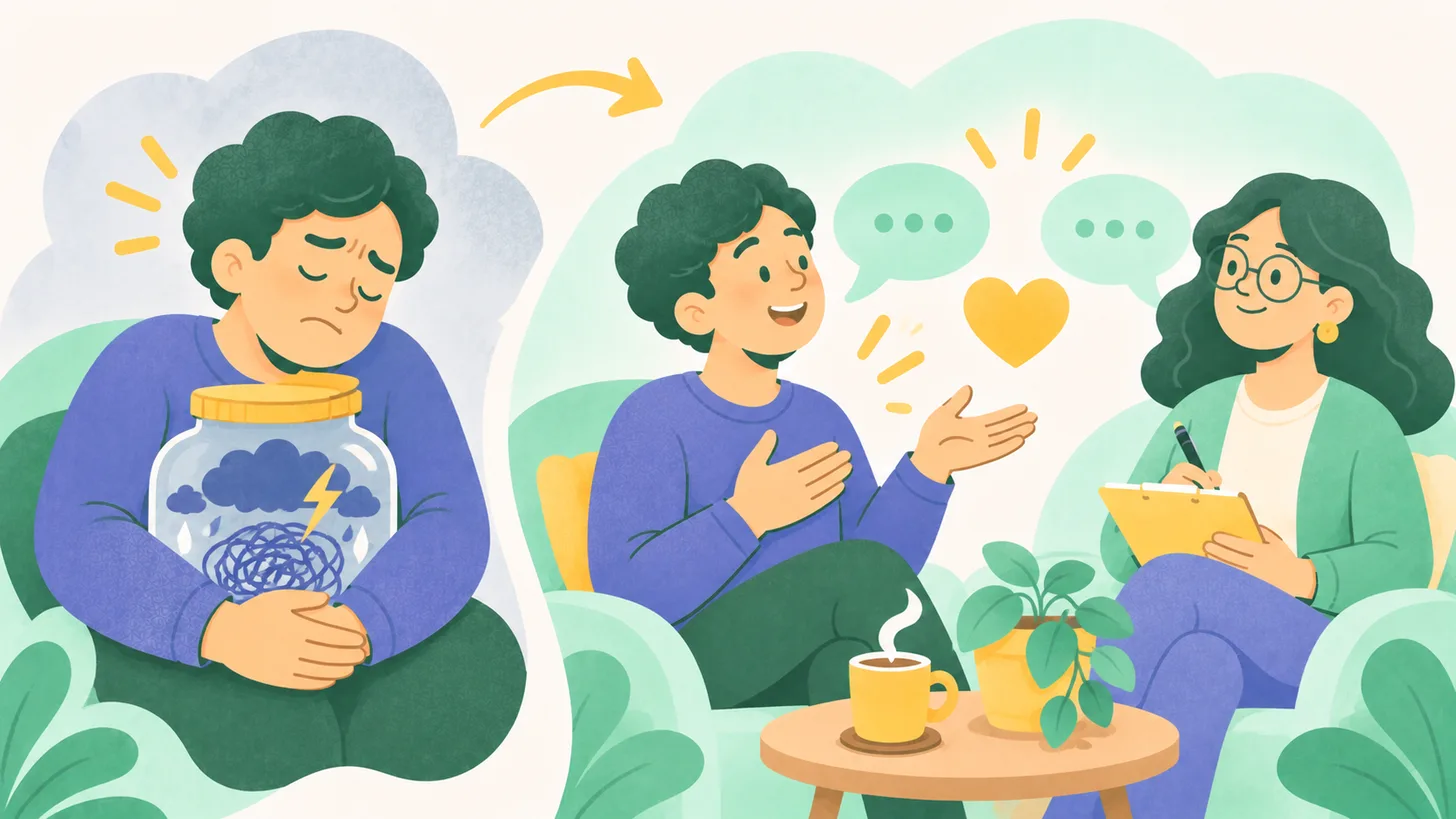
A good therapist does not solve you. They sit with you while you solve yourself. The Mental Healthcare Act 2017 made this access a right in India, not a favour.
Our page on online therapy in India walks through what a first session actually looks like.
Not every anxious week needs therapy. Some weeks it is a season you walk through, with sleep and one honest conversation. If the same loop has been running for three months, it is reasonable to want a trained human in the room.
In short: therapy is where you train the skills these habits need. You can start, see how it feels, and stop.
FAQ
How do I train myself to be mentally strong?
What are the signs of a mentally strong person?
Can you be mentally strong and still cry?
What are the 5 signs of good mental health?
How do I become mentally strong in India where “be strong” means something harsh?
Is mental toughness the same as mental strength?
What should I do if I cannot feel strong today?
This post is for information only and is not a substitute for professional care. If you are struggling, please speak to a qualified mental health professional.




Share your thoughts