

What this blog includes
- What laughter therapy really is, who started it, and why it is practised in Indian parks
- 7 benefits of laughter therapy, each with the honest state of the evidence
- Simple laughter exercises you can try alone or in a group
- Who laughter therapy fits, and when it is not the right tool
- How to find a laughter club in India, and what a first session feels like
If you have felt flat or stuck in your head for weeks, you are not being dramatic. A 20-minute silly session in a park can loosen that heavy, numb state more than a self-help video.
Laughter therapy is not a cure. Nobody serious says it is. It is a small, warm tool. Trusted by 500K+ people, GoodLives wrote this for the reader who has Googled “benefits of laughter therapy” at midnight and wants an honest answer.
What is laughter therapy, and how does it actually work?
Laughter therapy is a group practice built from playful laughter, eye contact, and breathing. You do not need a joke or a reason. You start with simple cues (“Ha ha ha, ho ho ho”), add clapping and silly play. Within a few minutes, fake laughter often turns real.
The modern version is called laughter yoga. Dr Madan Kataria, a family doctor, began it in a Mumbai park on 13 March 1995 with five people and one idea: the body does not know the difference between fake and real laughter. Thirty years on, laughter clubs run in over 100 countries, most free and run by locals.
A session runs 20 to 45 minutes. It mixes slow belly breaths, clapping, light stretching, play, and a short “laughter meditation”. It is not stand-up comedy or group therapy.
In short: a short group practice built from breathing and play, started in Mumbai in 1995, now in over 100 countries.
The 7 benefits of laughter therapy, backed by evidence
Studies on laughter therapy are a mix of small promising ones and larger ones still catching up. The 7 benefits below are real but small. Many of us have Googled “does laughter actually help?” at 2 am, often alongside our note on the role of humour in mental health.
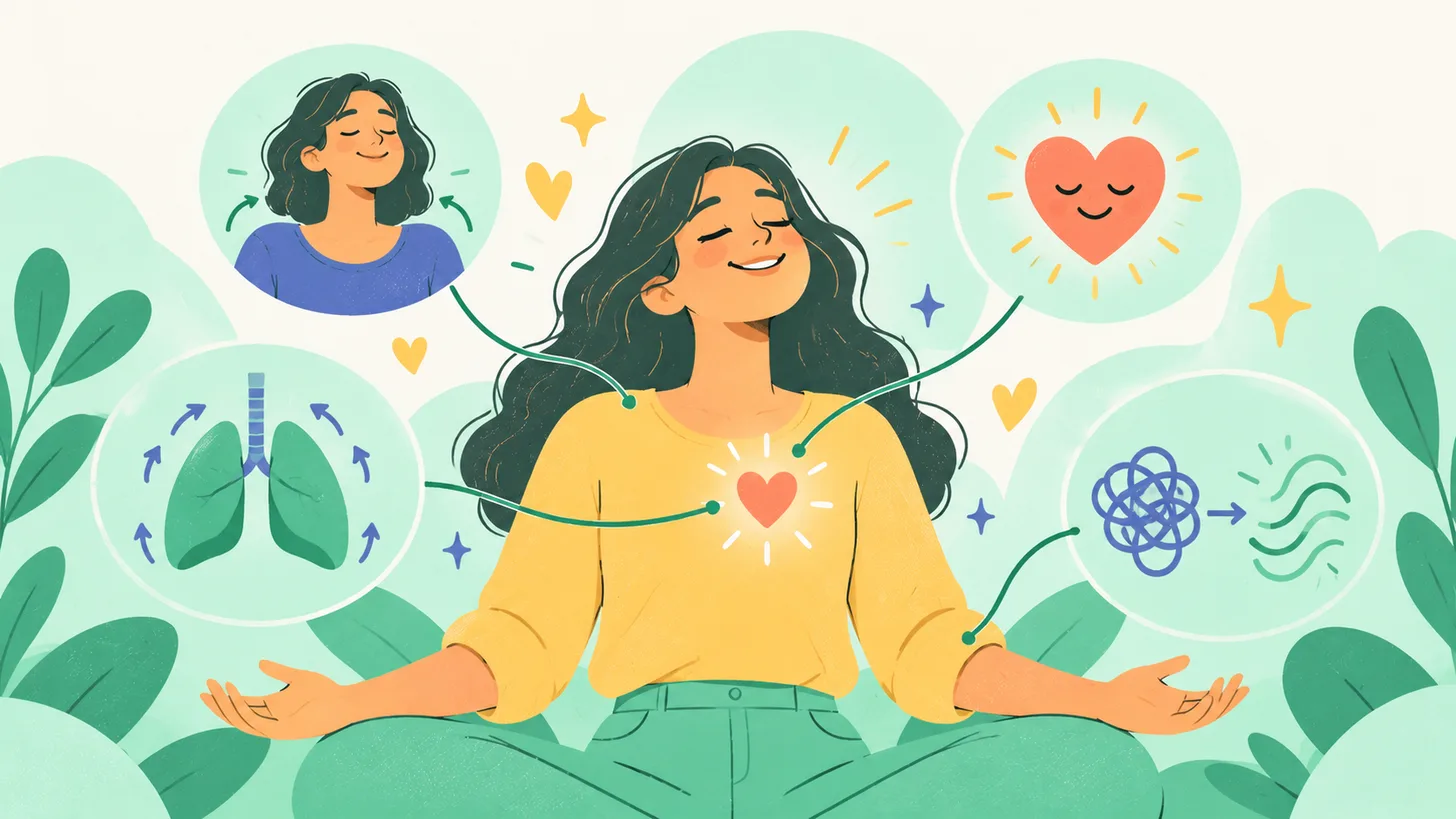
1. A drop in stress hormones. In work starting with Berk and colleagues in 1989, “mirthful laughter” was linked to a brief drop in serum cortisol, the body’s main stress hormone. The effect is quick and short. It will not cure long-term stress, but it can reset a bad hour.
2. A quick mood lift. Playful laughter sets off endorphins, the body’s own feel-good chemicals. Most people feel the lift for a few hours after a good session. Think of it like a brisk walk, not medicine.
3. Small bumps in some immune markers. Small studies from the early 2000s found short-term rises in natural killer (NK) cell activity after laughter. Samples were small, and we don’t fully know how strong this is yet. The honest line: “some sign of a boost, not enough to call laughter an immune tool”.
4. A higher pain threshold. Work led by Robin Dunbar at Oxford, in Proceedings of the Royal Society B (2011), found that group laughter raised pain thresholds, likely through endorphins. If a back ache has ever eased for an hour while you laughed, this is why.
5. Less loneliness in groups. Laughter clubs in Indian parks are a quietly good buffer against loneliness, mainly for older adults. A free weekly session with a known group hits the three things the studies keep pointing to: rhythm, familiar faces, and a low bar.
6. Deeper belly breathing. A long laugh is a slow, controlled breath out. It works the belly, nudges your nervous system into its calm “rest and digest” mode, and feels a little like gentle cardio. One slow minute of long-exhale breathing covers part of the same ground.
If you want, take one slow minute with this before you read on.
A moment to breathe
Follow the circle. Breathe in, hold, breathe out, then hold. Four counts each. Stay as long as you like.
7. A shame-breaker in groups where feelings stay quiet. Less studied, but reported again and again in Indian laughter clubs. Where big shows of emotion feel awkward, 10 minutes of silly group laughter lets people be loud without shame. For many first-time members, that is the real win.
In short: the benefits of laughter therapy are real but small. Think of them as short mood and body resets, plus a steady social dose when you keep showing up.
Simple laughter therapy exercises you can try
You do not need a trained leader to try the basics at home or with a friend. Treat these as warm-ups, not therapy. Each takes under a minute, and you can do them before a stressful meeting or after a long call.
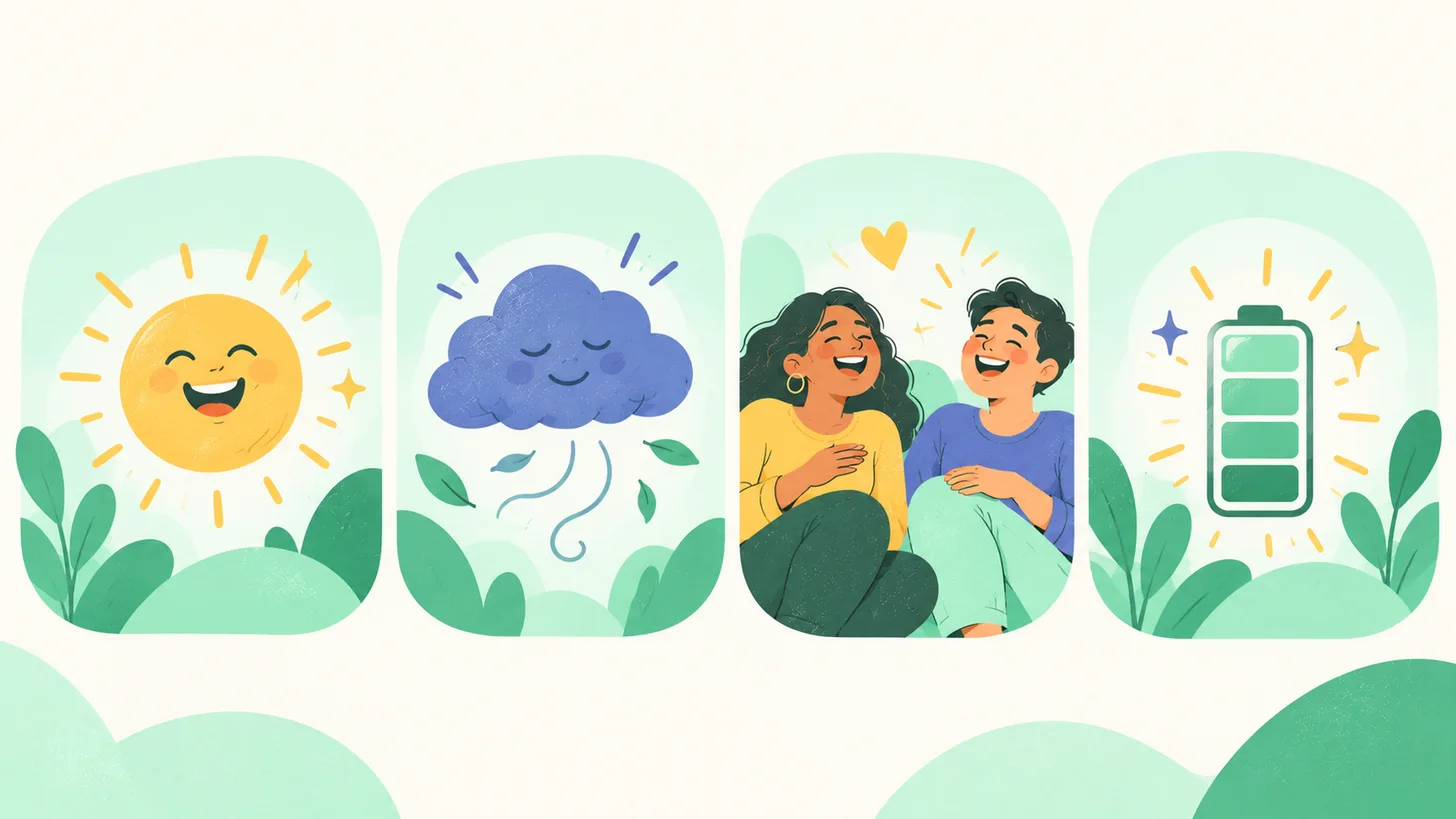
- The “ha ha ho ho”. Clap slowly and say “Ha ha ha, ho ho ho” out loud for a minute.
- The pretend-phone laugh. Hold your palm to your ear and laugh into the “phone” for 30 seconds.
- The silent belly laugh. Shake your belly as if laughing, but make no sound. Try 20 seconds, then release into real laughter.
- The lion laugh. Stretch your mouth wide, stick your tongue out, and laugh from the belly. Frees up jaw tension you did not know you had.
- The gradient laugh. Build from a chuckle to a full belly laugh, then back down.
Pair any one with slow, long-exhale breathing afterwards. For a quieter route, simple hacks to remain positive covers more small tools.
In short: five short exercises; keep it under five minutes and finish with slow breathing.
Who laughter therapy fits, and who it does not
Laughter therapy has a low bar to try. You might be worried about looking silly in a park full of strangers. That worry fades within one session for most people. For a smaller group, fake laughter lands wrong, and that is worth saying out loud.
For a softer start, ways to relax after a stressful day covers quieter tools.
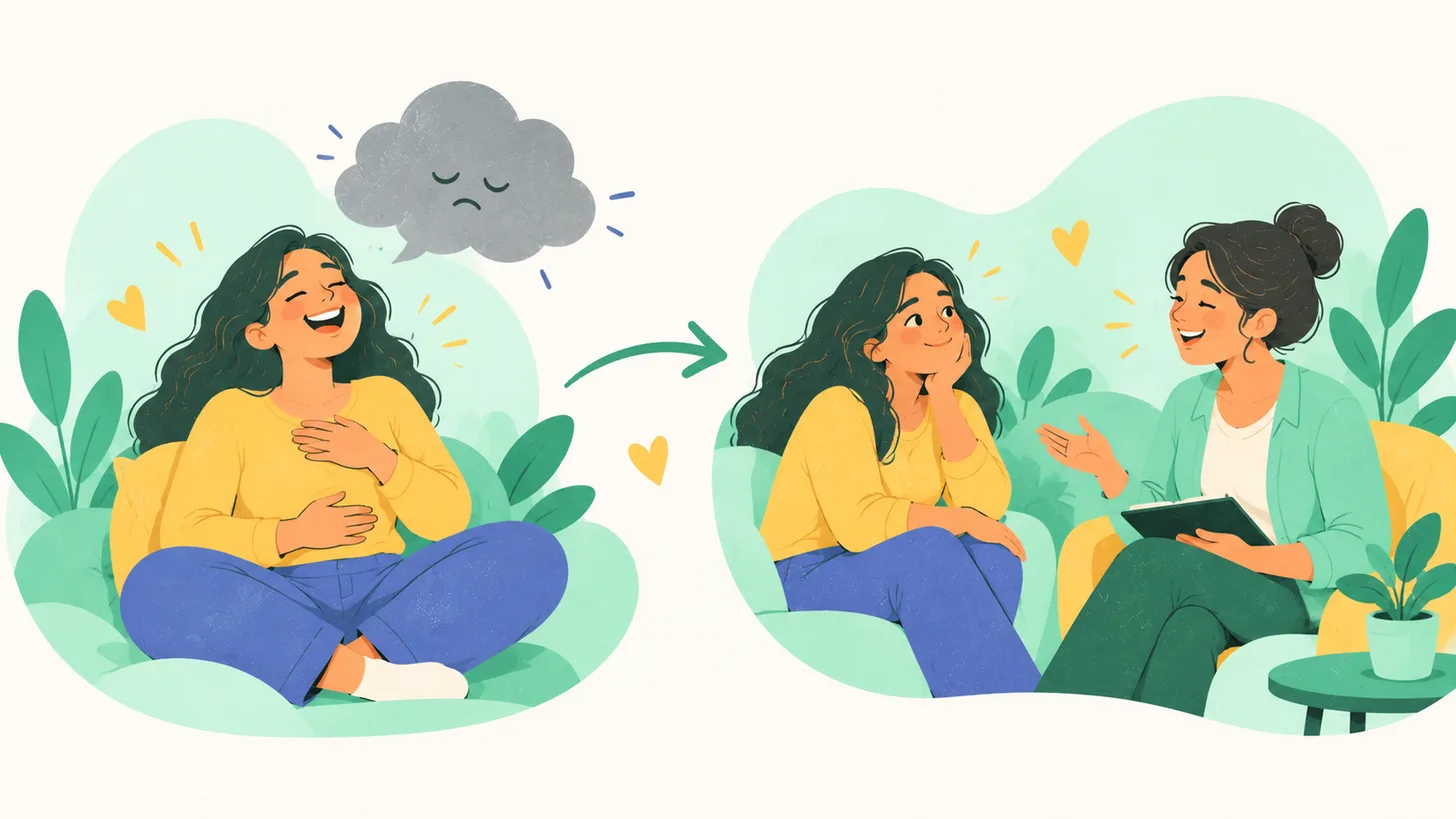
In short: laughter therapy is a kind add-on when the mood is flat; it is not a stand-alone fix for depression, trauma, or active grief, and that is a known limit.
When laughter is not enough: the kinder next step
The honest answer is that there are weeks a laughter club will not touch. If what you need right now is to sleep tonight, a park session on Sunday is not the fastest tool. If heaviness has lasted more than two weeks, a laughter session is a pleasant hour; it is not a plan.
That is not a verdict on you. It is a signal the next step is a talk with a professional. If loneliness is the piece that will not shift, practical ways to deal with loneliness sits next to this one.
A single laughter session is good for your Sunday morning. A therapist, when you are ready, is good for a longer story.
In short: keep laughter clubs in your toolkit, and consider a therapist for the parts of the story a Saturday session cannot reach.
FAQ
What exactly is laughter therapy?
What are the main benefits of laughter therapy?
Is laughter therapy a swap for therapy or medication?
Where can I find a laughter club in India?
How often should I do laughter therapy?
Is laughter therapy safe for everyone?
This post is for information only and is not a substitute for professional care. If you are struggling, please speak to a qualified mental health professional.

Share your thoughts