
What this blog includes
- What anger management therapy really is, and what it is not
- The four main approaches used in India, with real names you can ask for
- Who it fits, and when another therapy or a psychiatrist comes first
- Honest fees in rupees, how long it usually takes and how to find a therapist
Anger is one of the healthiest emotions a human has. It flags unfairness, it protects a child, it tells you a line was crossed. The problem is not the feeling itself. The problem is when the heat is too hot, too often, or lands on the people you love.
Anger management therapy teaches you to feel the full force of the emotion and still choose what you do next. It is not about becoming numb or a quieter version of yourself. It is about having a few seconds between the spark and the thing you say.
Dr. Raymond Novaco built one of the first full models of anger treatment in 1975 at Indiana University. Dr. Jerry Deffenbacher’s CBT protocols have been tested across more than thirty trials since.
The core idea has held up for fifty years. You can learn to notice the heat earlier, think about it differently, and act on it with more skill.
GoodLives matches you with a verified psychologist, often in English, Hindi and more Indian languages. Trusted by 500K+ people, with a 5 Google rating on our homepage.
You do not have to have hit anyone to want this work. If anger is quietly costing you a relationship, a job, a parent you no longer call, or your own sleep, that is reason enough.
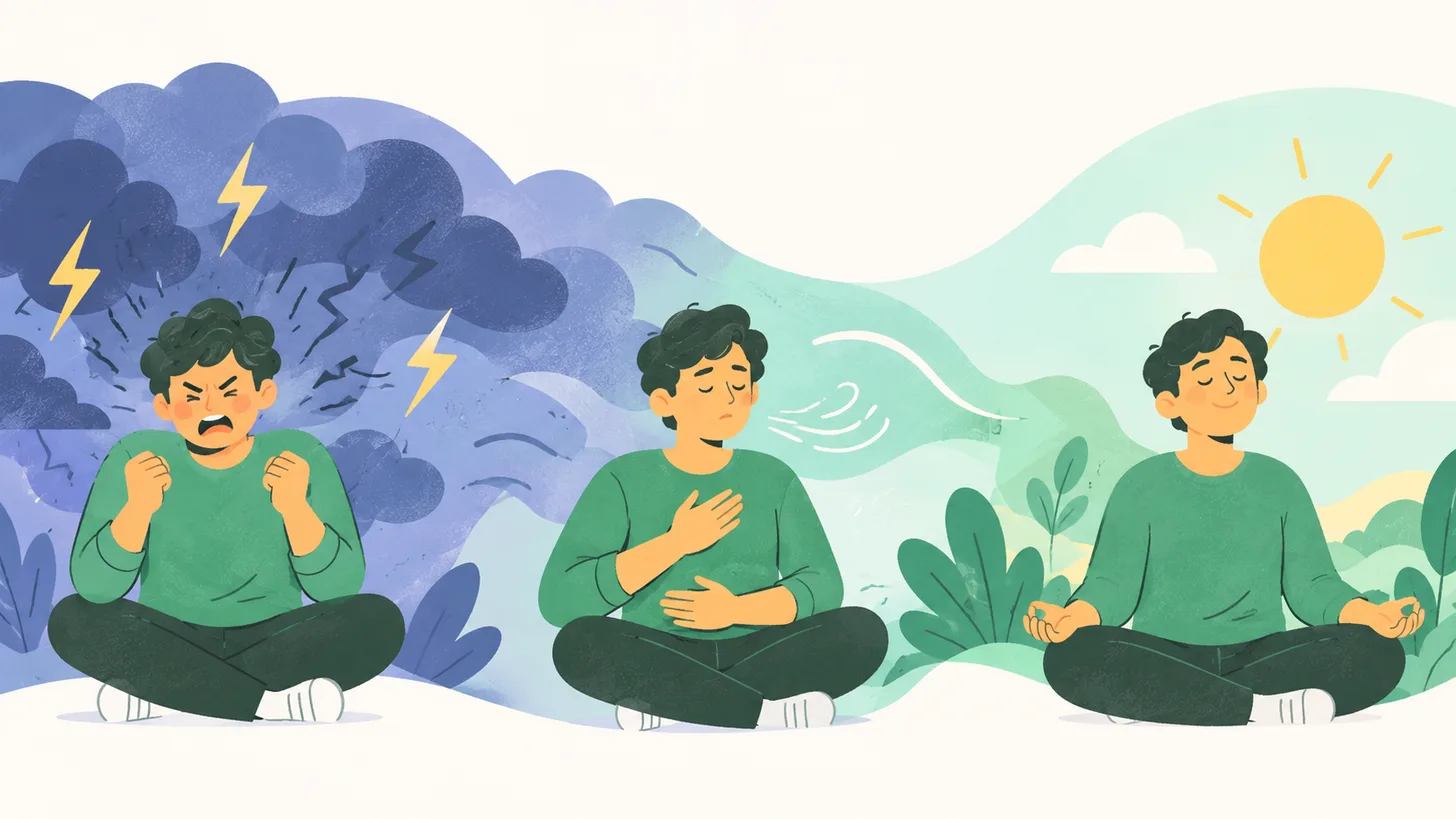
What is anger management therapy, in plain words
Anger management therapy is a short course of structured therapy that helps you recognise anger early, understand what it is really telling you, and respond without blowing up or shutting down. It is not suppression. It is anger with choice.
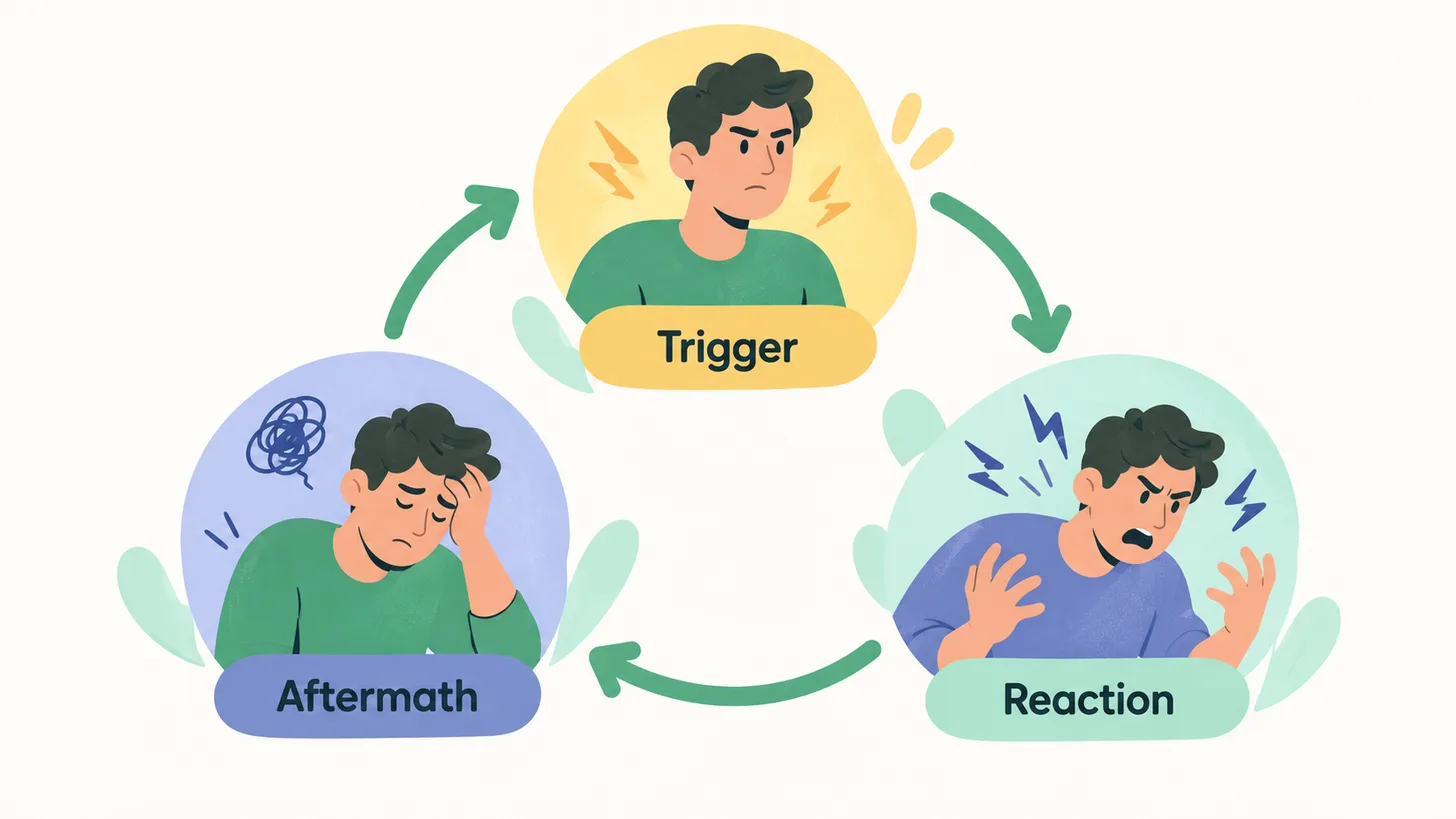
Most Indian therapists use a cognitive-behavioural model as the backbone. You map your trigger, the thought that followed, the body sensation, the behaviour, and the cost. Over eight to sixteen sessions, the gap between trigger and reaction gets longer. In that gap, a different choice becomes possible.
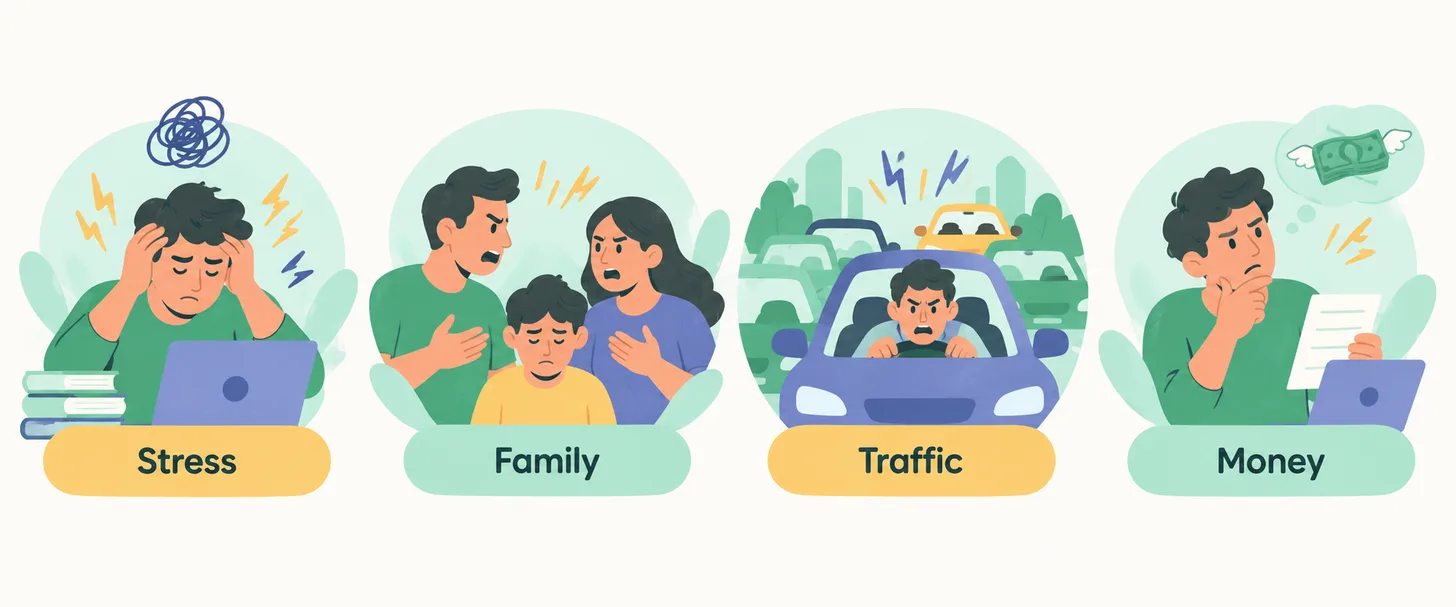
A short, labelled scenario helps. Picture a software engineer in Pune who has not slept well, whose mother called about dowry at breakfast, and whose junior sends a late Slack message at 7 pm. The sentence that forms is “nobody respects me”. The shout that follows lands on his wife.
Therapy slows that chain down and names each link.
In short: this is CBT-rooted work that puts seconds, then minutes, between a trigger and a reaction. The feeling stays. The reaction becomes yours.
The four main approaches used in India
Different therapists work in different models. All four below are used, often blended, and all four have research behind them.
In short: CBT, DBT, mindfulness and narrative-parts work are the four main models used for anger in India. Most Indian therapists blend two of them, and the right blend depends on the pattern you came in with.
Who anger management therapy is for
This work fits the person whose anger has started to cost them something they value, and who is willing to look at it honestly. It is not only for people who have hit someone. Most of the people in these sessions have never been violent.
It usually helps when:
- Your anger has cost you a relationship, a job or a legal consequence
- Your pattern is silence for a week and then an explosion that scares your partner
- You are a parent who worries you are repeating something you grew up with
- Road rage shows up more than once a month
- Workplace conflict follows you across jobs
- Alcohol or cannabis is in the picture when the anger is loudest
A short scenario, labelled as one. Picture a 34-year-old new father in Bengaluru who has never raised his voice at work but shouts at his wife twice a week. He is not a violent man. He is a tired man carrying thirty years of swallowed anger at his own father.
His two-month-old has pulled the floor out from under him. Therapy for that man usually starts with sleep, then CBT, then the family-of-origin work.
This therapy on its own is not the first tool when the anger is a symptom of something else. If your rage is one face of untreated depression, bipolar mania, PTSD or chronic substance use, the primary condition needs attention first.
- Severe irritability is a listed DSM-5-TR depression criterion. Many men in India show depression as anger, not sadness.
- In bipolar mania or hypomania, the heat and the impulse have a biological driver. A psychiatrist comes in before the therapy work.
- PTSD-anger, especially from childhood trauma or combat, usually needs trauma-focused therapy as the main work, with anger skills as a side-track.
In short: the fit is chronic irritability, silence-explodes patterns, road-rage, parenting cycles and workplace conflict. When depression, bipolar or PTSD sits underneath, treat that first and work on anger alongside.
The red flags that mean professional help right now
Some patterns are not a signal that anger therapy would be helpful one day. They are a signal that it is needed now, and that a psychiatrist should be in the room too.
If any of these are true, the next click is not a longer post.
In short: physical violence, dangerous driving, workplace incidents, substance-fuelled rage and post-episode self-harm thoughts need urgent clinical input. A phone helpline comes first and a therapist comes next, this week.
The India context nobody says out loud
Anger does not look the same in every culture, and the Indian context has three honest patterns worth naming.
The first is the masculinity script. Anger is often read as “manly” in India, while sadness, fear and shame are not. Men learn it is the socially approved way to say “I am hurt” or “I am scared”.
That makes it harder for a man to walk into a therapist’s office, because the help itself feels like a loss of face. Doing this work is strength, not weakness. It is the choice to stop handing the people you love your worst moments.
The second is hierarchy. In most Indian homes and workplaces, anger moves one way. You swallow it with a senior, a parent, an in-law or a boss. It comes out at the people below you, usually a partner, a child or a junior.
The reader is often both the person who was hurt and the person who then hurt someone else. A good therapist makes space for both to be true, without using one as a cover for the other.
The third is harder. Some anger in Indian families is culturally approved as discipline. A slap at a child, a slammed door at a wife, a shouted sentence at a daily help.
Honest naming matters. When it hurts a person who cannot leave, it is abuse, even if a generation around you called it love. Changing that pattern is one of the hardest things a parent can do, and one of the most important.
In short: this work in India has to engage the masculinity script, the hierarchy pattern and culturally approved domestic anger. A good therapist names all three without blaming you for the generation that handed them to you.
How long it takes, and what it costs in India in 2026
Most individual anger work in India runs eight to sixteen weekly sessions. Many readers feel a small shift inside four to six weeks, and the pattern itself usually takes three to six months of consistent work to move.
Group programmes are also effective. The research base, including Deffenbacher’s work, is strong for group CBT-anger. In India, group work is more common inside hospitals and some corporate EAPs than in private practice.
Court-mandated anger programmes are rare in India, unlike the United States, so most readers find their way into therapy on their own.
In short: budget eight to sixteen sessions, 1,500 to 3,500 rupees for individual private work, 500 to 1,500 for group and hospital care, and three to six months for the pattern itself to shift. Pair with a psychiatrist when depression or bipolar is underneath.
How to find an anger therapist in India, honestly
A short vetting checklist that keeps you from paying for a soft, pat-you-on-the-head version of this work.
- Ask what model they use. CBT for anger, DBT skills, mindfulness-based, parts work, or an honest blend. “I just help you calm down” is not a model.
- Ask about their experience with your specific pattern. Road-rage, parental anger, partner-directed anger and workplace anger are each slightly different. A therapist who has sat with the same shape before will land faster.
- Ask about session structure. Eight to sixteen sessions is a reasonable arc for CBT-anger. If the therapist says “we will see”, that is fine too, as long as the first six sessions have targets you can measure.
- Ask what the homework looks like. A short diary of triggers, thoughts and reactions is standard. If there is no homework, the pattern will not move between sessions.
- Ask who they refer to for psychiatric care. A therapist with no psychiatrist on speed-dial is a therapist who will struggle when depression or bipolar sits underneath the anger.
- Trust the first two sessions. If you leave feeling smaller, more ashamed or more labelled, say so. A good anger therapist is warm, direct and will not call you dangerous.
- If online fits your life, say so. Many Indian therapists work online now, which widens your choices beyond your pin code. Online therapy in India is a reasonable starting point when the local directory feels thin.
Not every therapist is right for every reader. If the first fit is not the one, pausing is reasonable, not a verdict on therapy. A bad fit is a real thing. It does not mean the work does not work.
If a different therapy sits closer to the real root, go there first. For many readers, a short course of CBT or a season of DBT skills is the right first step, and anger work rides inside it.
In short: vet the therapist on model, your specific pattern, structure, homework, psychiatric referral and your own first-session gut. A good one is warm, direct and clear about the arc of the work.
FAQ
Does anger management therapy actually work?
Is this therapy only for people who have been violent?
How many sessions will I need?
Can I do anger therapy online in India?
Will my therapist tell my family what we discuss?
Is medication part of this work?
What is the difference between anger therapy and couples therapy?
Your next step
Anger is not the enemy. It is a feeling that keeps the people you love safe when it is used well, and that hurts the people you love when it is used badly. The work is learning the difference.
A first conversation with a therapist is not a commitment to a sixteen-session programme. It is a chance to find out whether this is the right next step for you, or whether a different piece of work comes first.
In short: one honest conversation with an anger-trained therapist is the smallest useful step. Decide the week after whether to go further.
If anger in your home has turned physical, or if you are thinking about hurting yourself after an episode, you do not have to wait for a therapist. These lines are free, confidential and run by trained listeners.
This post is for information only and is not a substitute for professional care.




Share your thoughts