
What this blog includes
- What “mommy issues” really means, and what it isn’t
- The attachment theory behind the phrase, in plain English
- Six common sub-patterns, from enmeshment to parentification
- How the pattern shows up in adult dating, boundaries and self-worth
- The India layer: joint family, mother worship, mother-son and mother-daughter dynamics
- Therapy that works, and honest reframes for the healing journey
You have probably heard the phrase thrown around. In a Netflix show. In a group chat about an ex. Maybe in therapy, said carefully. Mommy issues has become a kind of shorthand, often used to tease, sometimes used to diagnose, almost never used with care.
Here is the honest version. Mommy issues meaning, in plain English, is this: adult relationship patterns that trace back to the bond you had with your mother in your first few years of life. The patterns are real. The phrase is pop culture. The two are not the same thing.
One more honest thing before we go further. Blaming your mother for everything will not heal you. Mothers were children once too. Many had their own unmet needs and heavy cultural pressure. And at the same time, something you did not get can still have shaped how you love today. Both can be true.
What “mommy issues” actually means (and what it is not)
Mommy issues is not a clinical term. There is no entry for it in the DSM-5. No psychologist will write it in a report. The phrase comes from pop culture and self-help, mostly as a shortcut for grown-up patterns that mirror an early attachment wound with the maternal figure.
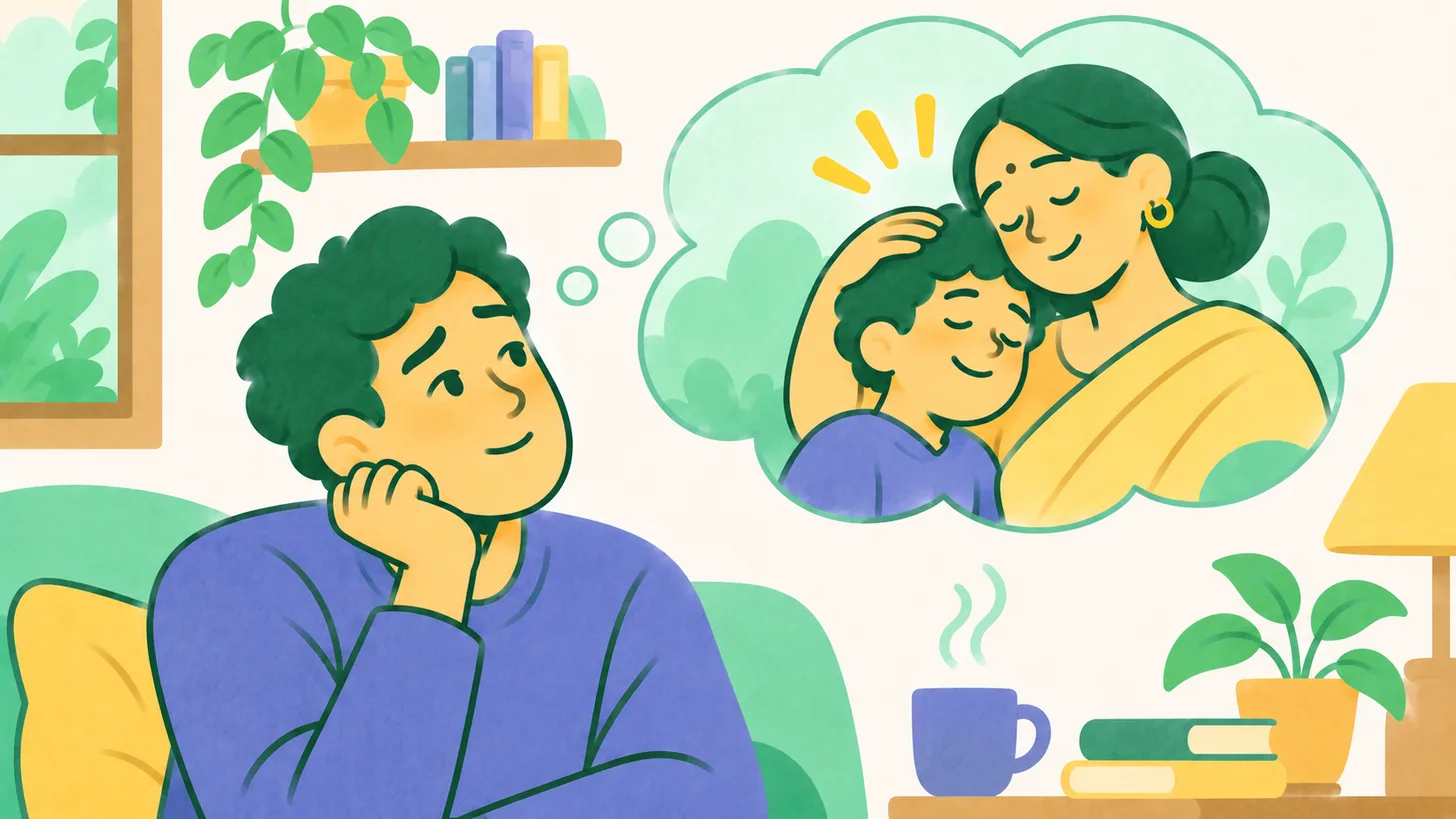
What clinicians do describe is attachment. That is the quality of the first bond between a child and their main caregivers, usually mother in a traditional home. That bond becomes a kind of template for later closeness. The template can be warm and steady. It can also be anxious, cold, or unsure. The shape it took shows up in adult love years later.
So when someone says a friend “has mommy issues,” what is often meant is one of a few adult patterns. Struggling to trust. Choosing unavailable partners. Over-pleasing. Going cold when love gets close. Needing constant reassurance. Caretaking at the cost of the self. The phrase flattens all of that into one lazy label.
In short: Mommy issues is a pop phrase, not a diagnosis. It usually points to a specific attachment pattern underneath, and the specific pattern is what matters.
The attachment theory that sits underneath the phrase
The idea that early bonds shape adult love is not new. In the 1950s and 60s, British psychiatrist John Bowlby built attachment theory on one plain idea. Children need a steady base to come back to.
His colleague Mary Ainsworth later ran the famous “strange situation” studies in Uganda and the US. She watched what happens when that base is or is not steady. You can read the American Psychological Association’s summary of attachment theory {rel=”nofollow”} for the formal version.
From that work came four broad attachment styles that adults also tend to fall into:
- Secure. Comfortable with closeness and with distance. Can say what they feel. Can hear the other person. A fight does not read as the end.
- Anxious. Reads tiny shifts in tone as danger. Needs constant reassurance. Underneath is a belief that love is unreliable.
- Avoidant. Pulls back when love gets close. Prizes independence. Underneath is an early lesson that depending on someone was not safe.
- Disorganised (fearful-avoidant). Wants and fears closeness at once. Often follows frightening or chaotic early experiences.
The first three to five years do most of the shaping. The brain still stays open to change later. There is also a quiet, hopeful phrase in the research: earned secure attachment. It names people who did not start secure and got there anyway. Usually through therapy, a steady relationship, or both.
In short: Attachment theory does not say your mother was good or bad. It says how predictable comfort was in your early years shaped your internal template for closeness, and that template can be edited.
Six sub-patterns people call “mommy issues”
The phrase is one word for at least six very different shapes. Naming yours matters, because what helps for one is not what helps for another.
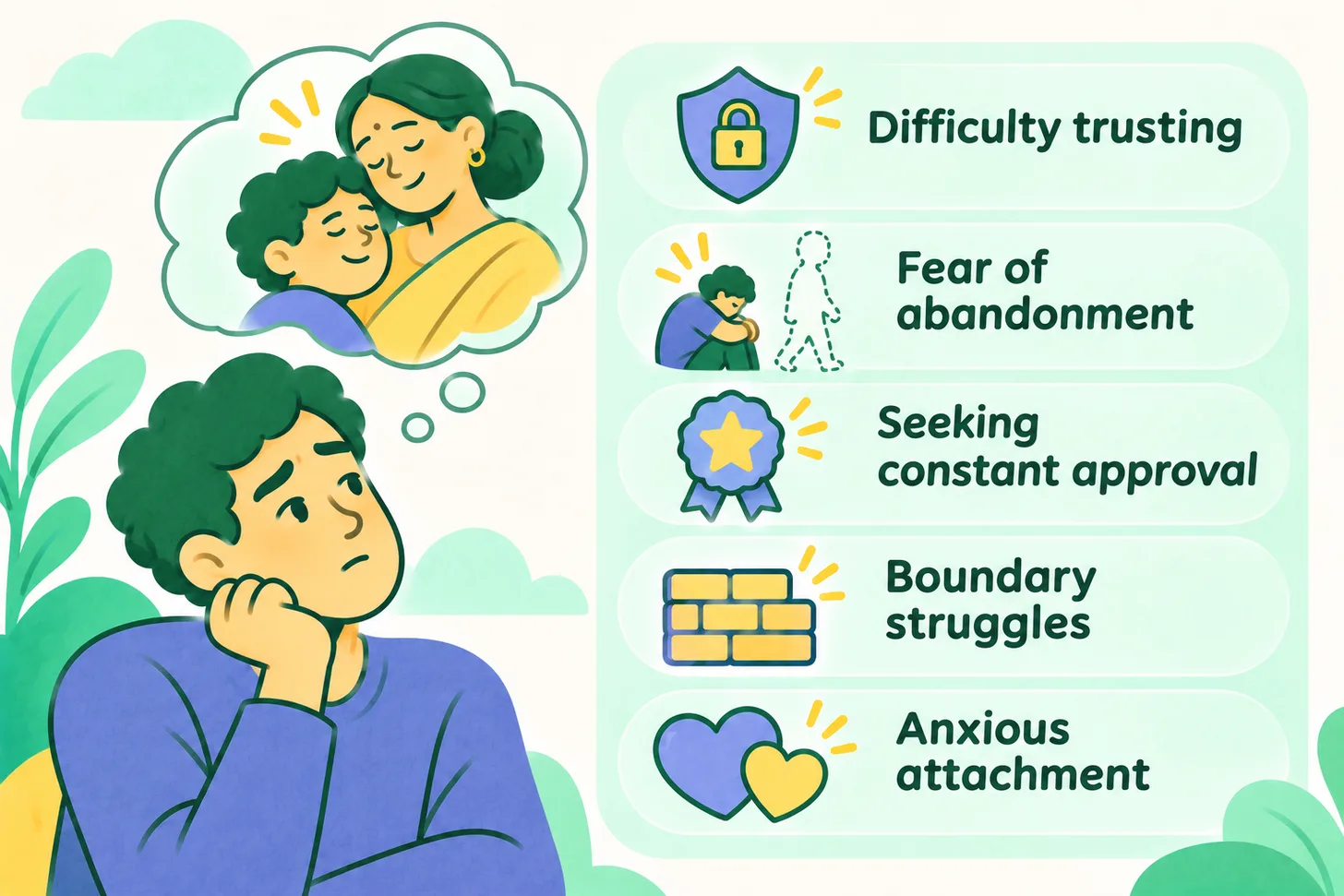
Here are the common sub-patterns, each with the usual adult echo.
- Enmeshment. The mother treats the child as fused with her. No real line between what she feels and what the child feels. The grown-up struggles with autonomy, people-pleases, finds it hard to say no to anyone.
- Emotional neglect. The mother is present in body, not in mood. The child learns their inner weather does not count. The grown-up feels unseen, numb, over-independent, slow to let anyone in.
- Narcissistic mother. The mother sits at the centre of the family’s emotional world. The child becomes a mirror, a scapegoat, or a golden child. The grown-up struggles with self-worth and often falls into narcissistic relationship dynamics later.
- Hyper-critical mother. Nothing the child does is ever quite enough. Love is tied to performance. The grown-up carries impostor feelings, perfectionism, and a loud inner critic.
- Parentification. The child becomes the emotional caretaker of the mother, long before they can hold their own weight. The grown-up over-gives, feels resentful underneath, cannot rest.
- Abandonment or absence. The mother is away. Through death, divorce, work, migration, or an untreated mental-health or addiction struggle. The grown-up carries abandonment fears and often picks partners who confirm them.
Many people carry a blend. A mother can be both critical and enmeshed. She can love you and still have been unavailable in a way that cost you. Both can be true at once.
In short: “Mommy issues” is not one pattern. Finding your specific shape is the first real step out of the shame of the phrase.
How the pattern shows up in adult life
The sub-pattern is upstream. The adult signs are what most people actually notice. If any of these sound familiar, it is a signal, not a verdict.
In dating and closeness, the pattern shows up as chasing unavailable people. Going cold when things get warm. Clinging when a partner takes a day of space. The nervous system is replaying an old story, dressed as “chemistry.”
In boundaries, it looks like trouble saying no to a partner, a boss, a parent, or a friend. The old template said love means merging. Adult you is still waiting to be allowed a line.
In self-worth, it looks like needing outside praise to feel okay. One good day at work and you float. One cold text and you spiral. The inner thermostat was never built.
In reactive patterns, you can feel too triggered by a partner’s criticism, silence, or even their warmth. Affection can feel scary when the first version of it came with strings.
In relationship choice, it looks like picking people who feel familiar, even when they are not good for you. Familiar is not the same as safe. Many of us learned that early.
In caretaking, it looks like giving and giving, then feeling resentful. The giving is not the problem. The way it was wired to earn love is.
In short: These signs are information, not identity. They tell you what the old template was. They do not have to be what the next ten years look like.
The India layer: joint family, mother worship, mother-son and mother-daughter dynamics
Most of the writing on “mommy issues” online is Western. The pattern is universal; the shape it takes here is specific. Three things make the Indian version its own.
Joint family means more attachment figures. In many Indian homes a child is also bonded to a grandmother, a bua, a mausi. The mother is not the only template-maker. For some that is a safe net. For others it adds a second layer of pressure, a second critical voice, or a second absence.
Mother worship as a cultural frame. Phrases like maa toh maa hoti hai (a mother is always a mother) carry real love. They also make it feel like a sin to say your mother hurt you. Many people stay silent for years because naming the hurt feels like a betrayal.
Mother-son and mother-daughter patterns carry weight here. Indian mother-son bonds often come with a quiet rule of loyalty. The son will stay close. He will pick family over partner. He will carry his mother’s emotional life into his marriage. His wife inherits that triangle.
Mother-daughter bonds often come with marriage, respect, and “what will people say”. The daughter is shaped to be acceptable, not to be herself. Both patterns are rarely named out loud at home.
A fourth, quieter piece. Most Indian mothers of the last two generations grew up with their own trauma. Dowry pressure. Patriarchal control. In-law conflict. Limited schooling. No therapy. Many had their own childhood trauma that never got looked at. Many were loving the best way they knew how. They still passed down what nobody helped them put down. That is not an excuse. It is context.
In short: Growing up in India adds its own weight. Loving your mother and naming the pattern are not opposites. They are, usually, part of the same honest conversation.
“Not my mother’s fault” and “it still hurt”: both can be true
One of the hardest parts of this work is holding two things at once. The pattern shaped you. Your mother was also shaped. Neither sentence cancels the other.
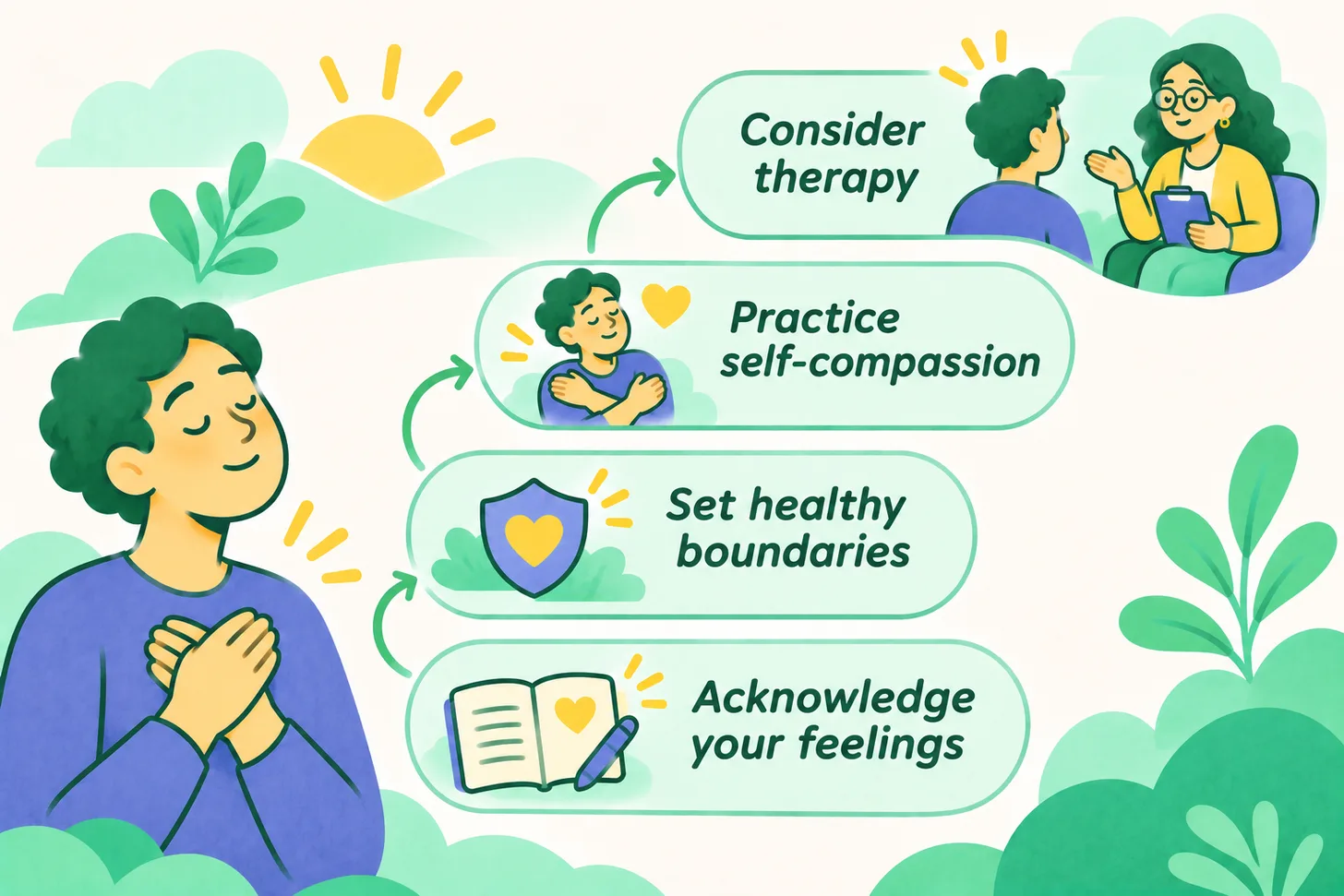
A few reframes that help a lot of people:
- You can love her and still name what hurt.
- Her story explains the pattern. It does not erase its cost.
- Healing does not require her to apologise, change, or even know.
- Setting adult boundaries is not disrespect. It is the opposite of resentment.
- The pattern lives in you now. That is painful. It is also the reason you are the one who gets to do something about it.
If this feels close to a bigger pattern of being hurt by family, our post on toxic parents and mental health might be a next read.
Before we go into what helps, take a slow minute with this. The way you talk to yourself about this part of your life is part of the pattern or the healing.
Catch the thought
What thought is weighing on you right now? Write it down just as it sounds in your head.
Name the trap
Does your thought fall into one of these common patterns? Pick any that fit. This part is optional.
Look again
Use these as nudges, not rules. Then write one line back to yourself.
Your reframe
Thoughts are not facts. You just practised stepping back.
This stays on your device. Nothing is saved or sent.
In short: Healing is not deciding who to blame. It is deciding what you will do with what you now see.
What actually helps: the therapy approaches that fit this work
Attachment-pattern work is slow, relational and real. It is not the fastest tool, and it is some of the most freeing work people describe. A few approaches that come up most for this exact shape:
- Attachment-based therapy, including Emotionally Focused Therapy (EFT) for the pattern in current relationships. Built by Dr. Sue Johnson {rel=”nofollow”}, EFT is one of the best-studied options for adult attachment pain.
- Internal Family Systems (IFS). Parts work with the young parts of you that still carry the wound. The teenager who learned to go cold. The six-year-old who still waits for approval. IFS is kind to all of them.
- Schema therapy. Looks at early patterns like abandonment, defectiveness, dependence, or emotional need, and helps you update them. A strong fit when the pattern is deep and old.
- EMDR and trauma therapy, where the roots include neglect, abuse, or a scary early home.
- Grief work. Grieving what you did not get is part of this work. It is quiet and needed.
- Family therapy, when your mother is willing, safe, and both of you want a new bond.
Alongside therapy, a steady relationship can be a slow second mother in the best sense. A partner. A close friend. A chosen family. The old pattern was built in a bond. It gets rewritten in one.
Honest timeline. Most people see real change around twenty to forty sessions, over six to twelve months. Six sessions is a start, not a finish. The first session only tells you if this is a therapist you can keep showing up to. If you want a sense of how the work feels, our post on attachment issues walks through it in more detail.
Honestly, therapy is not free. It is not always there in the week you need it. If this is your season to begin, start when you can. If it is not, naming the sub-pattern out loud to one safe person is a kind first move. Writing down the moments the pattern shows up builds the awareness therapy will later use.
In short: Attachment work is slow and real. Twenty to forty sessions with the right person, in one of these approaches, is the usual shape of change.
Disclaimer This article is for general information and is not a substitute for professional medical advice, diagnosis or treatment. If you need support, please speak with a qualified mental-health professional.


Share your thoughts