

You deserve to be heard tonight.
What this blog includes
- What the ACE test is and who built it
- The 10 ACE questions, exactly as written
- How to read your score in four honest bands
- What the test misses (and it misses a lot)
- Why your score is not your destiny
- What to do next, and who to see in India
You searched for the ACE test tonight for a reason. Maybe a therapist mentioned it. Maybe a reel claimed your adult anxiety was really a 7-year-old self still waiting to be told it was okay. That weight has a name, and plenty of us have been there.
Trusted by 500K+ people with a 5 Google rating, GoodLives is where many Indians come when a questionnaire opens up more questions than it answers. This is not medical advice. It is one honest reading of a widely used screener, for Indian readers who want to understand their own story without feeling smaller afterwards.
What is the ACE test, really?
The ACE test is a 10-question self-screener for Adverse Childhood Experiences before the age of 18. Each “yes” adds one point, giving a score between 0 and 10. It was built in 1998 by Dr Vincent Felitti and Dr Robert Anda in the Kaiser Permanente-CDC study of over 17,000 adults in California.
The paper found something simple and heavy. The more kinds of adversity a child lived through, the higher their adult risk for depression, suicide attempts, heart disease, autoimmune illness, substance use and early death. It was published in the American Journal of Preventive Medicine00017-8/abstract) and is one of the most cited public-health papers of the last 30 years.
The ACE score measures cumulative exposure. It does not diagnose PTSD, complex trauma or depression. It is a flag that says, “the ground you grew up on was uneven in these ways.” Across many studies that flag predicts risk in a dose-response way: more types of ACE, more risk.
In short: the ACE test counts how many categories of early-life adversity you were exposed to. It is a risk signal, not a diagnosis.
The 10 ACE questions, exactly as written
Read each one slowly. If a question stirs something, step away for a minute. You can also do this with a therapist beside you; many Indians do, and there is no rule saying you must do it alone.
For each question, answer yes or no about your life before you turned 18. Each “yes” is one point.
- Did a parent or adult in your household often swear at you, insult you, humiliate you, or put you down?
- Did a parent or adult often push, grab, slap, throw something at you, or hit you so hard you had marks or injuries?
- Did an adult or older person touch you sexually, or try to make you touch them sexually, or have oral, anal or vaginal sex with you?
- Did you often feel that no one in your family loved you, or thought you were important or special?
- Did you often feel you did not have enough to eat, had to wear dirty clothes, had no one to protect you, or that your parents were too drunk or high to take care of you?
- Were your parents ever separated or divorced?
- Was your mother or stepmother often pushed, grabbed, slapped, had something thrown at her, or hit?
- Did you live with anyone who was a problem drinker or alcoholic, or who used street drugs?
- Was a household member depressed or mentally ill, or did a household member attempt suicide?
- Did a household member go to prison?
Count your yeses. That is your ACE score.
In short: 10 questions, one point per yes, score 0 to 10. The questions ask about categories, not frequency.
How to read your ACE score honestly
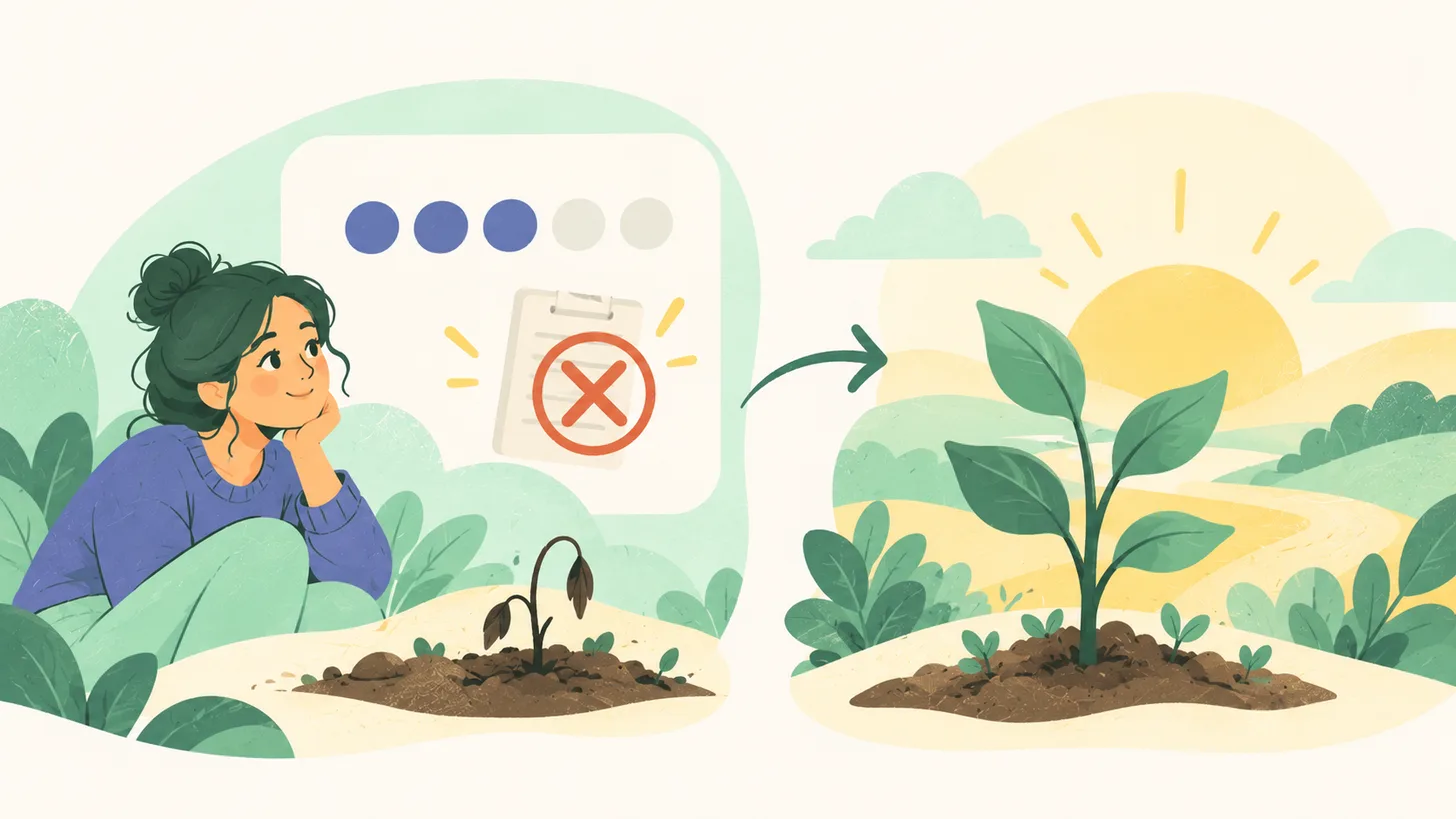
Many Indian readers finish this test with a number and no map. Here is a plain-English reading of each band, written as a guide, not a verdict.
Score 0, protected on these categories. These 10 categories did not show up in your home. It does not mean your childhood had zero pain. It does not mean adult struggles are not valid. Keep an eye on your sleep, your mood and your closest relationships.
Score 1 to 3, common range. Most adults who take this test land here. The research links this range to a moderate increase in risk for depression, anxiety and some physical health issues, usually balanced by stable adult relationships, meaning and support. Therapy helps if symptoms are getting in the way of your week. It is not required just because of a score.
Score 4 to 6, high. The US CDC notes that at 4 or more ACEs the risk of adult depression and suicide attempts rises many times above baseline. Trauma-informed therapy is strongly recommended. You deserve a professional in your corner.
Score 7 to 10, very high. This range is linked to significant long-term physical and mental health risks. Please do not read it as a prediction of your life. Read it as a reason to ask for sustained, specialised help: an RCI-registered trauma-specialist, therapy longer than six sessions, and a safety plan if any of the hard stuff is live right now.
Your score is a weather report, not a weather forecast. People with 7+ ACEs recover and thrive every day. People with 0 ACEs sometimes struggle for reasons the test cannot see. The number is a starting line, not a sentence.
When you are ready, this is what therapy looks like
If reading the questions pulled something up, you do not have to do anything about it tonight. You can sit with it, close the laptop, come back tomorrow. When you are ready, a trauma-trained psychologist is the person to see.
When you are ready, book a 50-minute session with a therapist on GoodLives. English, Hindi and more Indian languages. Start when it feels right.
Button: Book a Session
A good trauma therapist does not open with the ACE questions on day one. They build safety first. Approaches with evidence for adult survivors include trauma-focused CBT, EMDR (Eye Movement Desensitisation and Reprocessing) and somatic (body-based) therapy. The right fit matters more than the brand of therapy.
What the ACE test misses
The ACE test was built in 1990s California, in a largely white, insured, adult-recall sample. It is a strong screener for the 10 categories it names. It cannot see many kinds of harm Indian readers live through and know by name.
What a 10-question yes/no does not capture:
- Discrimination by caste, religion, class, gender, sexual orientation or disability
- Community violence and communal riots
- Medical trauma, long hospital stays as a child, chronic illness
- War, displacement, migration
- Bullying at school, cyberbullying, extended academic humiliation
- Dowry pressure, early marriage, forced engagement
- Institutional abuse in hostels, orphanages, religious institutions
- Loss of a parent to death or long absence (not divorce)
- Neglect that looked like plenty of food and school fees, but no one who ever asked how you were
The WHO’s ACE-IQ) is a longer international version that includes community violence, peer bullying and other categories. It is more honest about global childhoods, Indian ones included.
If your “no” to a classic ACE question still feels like a half-truth, trust that feeling. The score is a map; the territory is yours.
In short: a low ACE score does not mean no trauma. Caste, religion, bullying, medical pain, migration and grief are not on this list. Your experience counts whether the test ticked it or not.
Why your score is not your destiny
Felitti and Anda’s paper is often quoted as if it predicts the worst. It does not. It links categories of childhood adversity to statistical risk, averaged across thousands of adults. You are not an average.
Three things buffer the ACE effect in the research:
- One stable, caring adult in childhood (a grandparent, a teacher, a sibling)
- Access to therapy at any point as an adult, especially trauma-informed therapy
- Agency and meaning: work, friendships, art, service, faith, movement, something that is yours
You might be reading this at 2 am, worried that an eight-score means your relationships are doomed. They are not. You might also feel relief that something is finally named. Both are allowed. It is okay to feel both at once.
What to do next with your score
A score alone does nothing. What you do next does. A reasonable sequence for an Indian adult who just read their number:
- Pause before you share. Scores land hard with family. Share only when you have decided why and with whom.
- Write down one thing you noticed while reading. Not a plan, just a sentence.
- If your score is 4 or above and the last month has been hard, book a first session with a trauma-trained psychologist in the next two weeks.
- If your score is 0 to 3 and you feel fine, keep the number. If you feel worse than fine, book a first session anyway. Scores are not the gatekeeper.
Honest line: not every ACE score needs therapy. Some of what the test flags is a season you walked through with sleep, one honest conversation, and time. You get to decide. We are here when you are ready.
Button: Book a Session
Who to see for ACE-informed therapy in India
Look for an RCI-registered clinical psychologist with explicit training in a trauma modality. Trauma-focused CBT, EMDR, or somatic therapy (sometimes called body-based therapy) are good options.
On an intake call you can ask directly: “What is your training in trauma therapy?” “How many clients with ACE scores above 4 have you worked with?” “What does your first session look like?” A good therapist will answer plainly.
Some weeks a trauma-informed psychiatrist is also useful, especially if sleep, panic or depressive symptoms are getting in the way. Psychiatry and therapy work well together; a referral is not failure, it is thorough care. Visit the GoodLives therapist directory to see Indian trauma-trained therapists in one place.
In short: RCI number, trauma-specific training, honest answers on an intake call. The best therapist makes the first session feel safe, not impressive.



Share your thoughts