
Safety first If physical or sexual violence, threats, or coercive control are part of your marriage, couples counselling is not the first step. The person being hurt needs their own counsellor and a safety plan first.
What this blog includes
- When pre-marital counselling helps and what it is not
- What couples bring to a marriage counsellor in India
- How a session works online, and what the first one feels like
- Honest price bands and how to pick a counsellor you both trust
Most Indian couples who book marriage counselling online wait a year longer than they should. One of you brings it up after a bad week. The other hears “something is wrong with us”, and the idea goes quiet.
By the time you both agree, the fight has three sub-fights under it. Online marriage counseling in India is a 50-minute talk with a verified marriage counsellor you join from home. English, Hindi or more Indian languages. GoodLives runs this, trusted by 500K+ people. You don’t have to be in crisis to book.
What online marriage counseling is, and what it is not
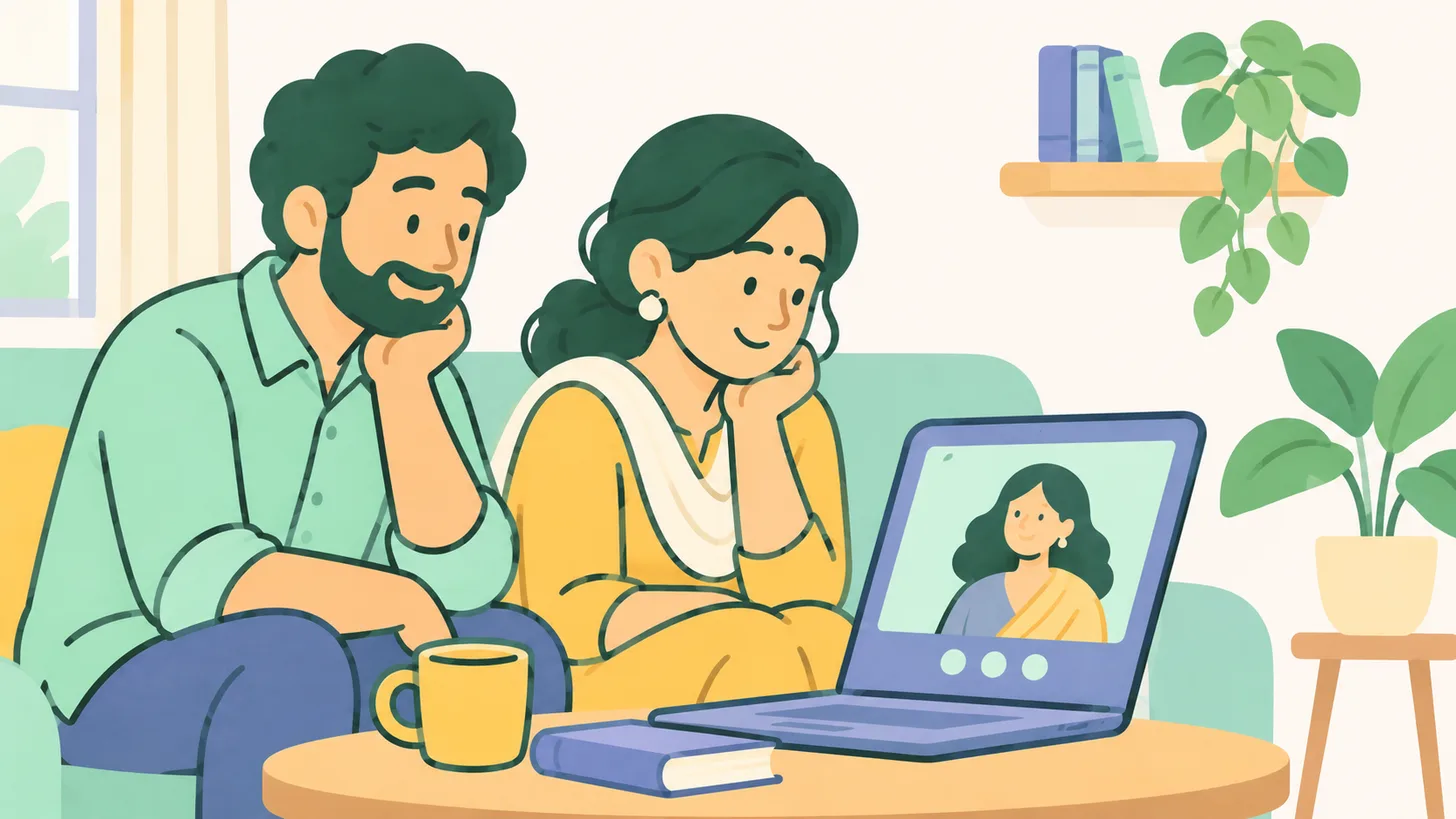
Online marriage counseling is a set talk between you both and a trained marriage therapist. It is held over secure video. The counsellor sets ground rules. They slow the talk down. One session is 50 minutes. Most couples do six to twelve.
A marriage psychologist, a marriage counsellor and a marriage therapist mean the same thing in India in 2026. They are pros trained to work with two, not one. On GoodLives, the counsellor is a verified psychologist, often with the Rehabilitation Council of India (RCI). The Mental Healthcare Act 2017 sets this as a right.
It is not a referee match. The counsellor will not pick who is right. It is also not a quick fix. One tool will not fix a marriage that has hurt in silence for three years. Six sessions will often change what the two of you can talk about.
In short: online marriage counseling is a steady, confidential space to talk, not a verdict on who is wrong.
Pre-marital or married: which path fits you?
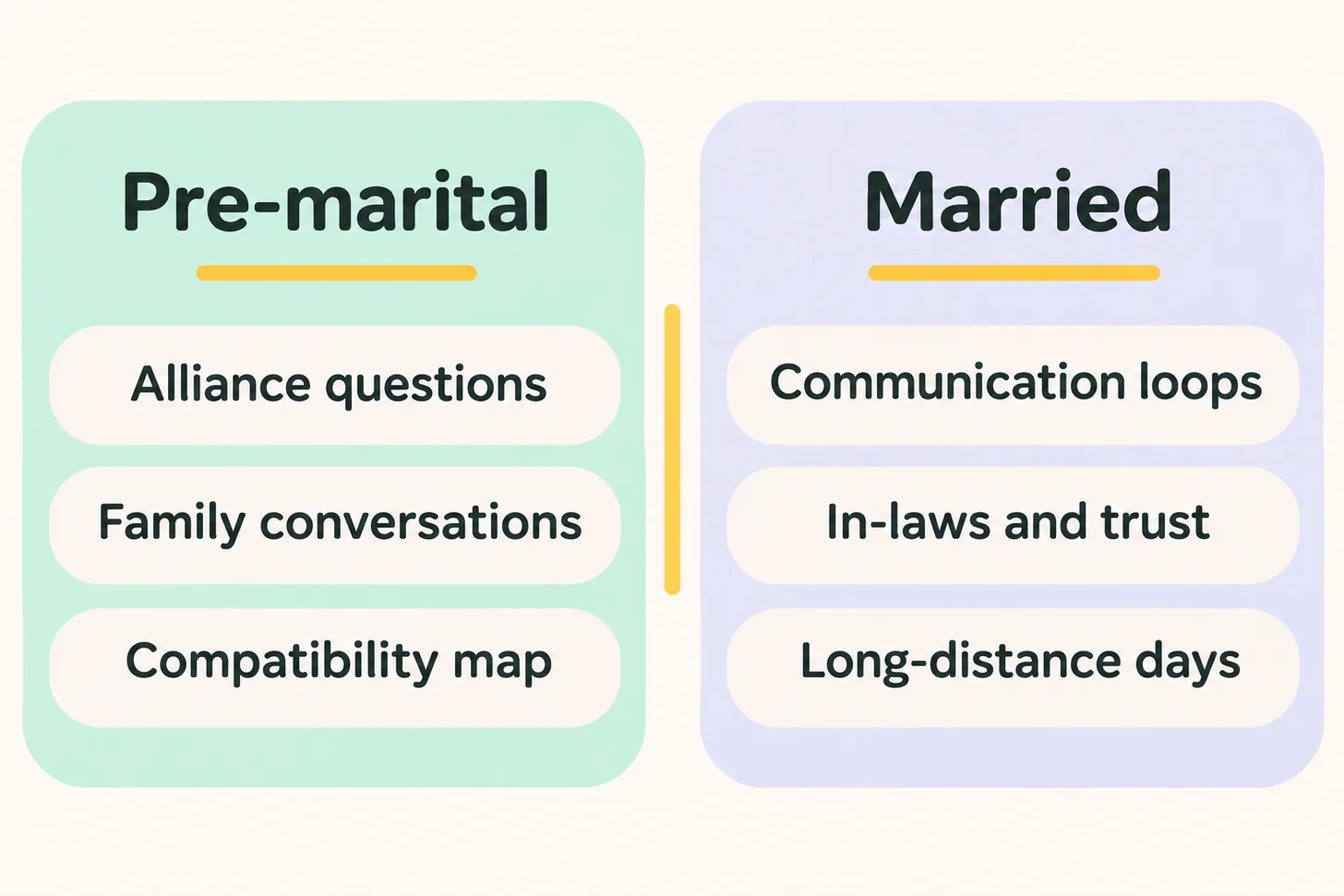
Most couples arrive from one of two doors. The first is pre-marital, in the months before a wedding or soon after a ring. The second is married, between year one and year fifteen. The tools are the same. The questions change.
Pre-marital counselling for arranged, love and intercaste couples
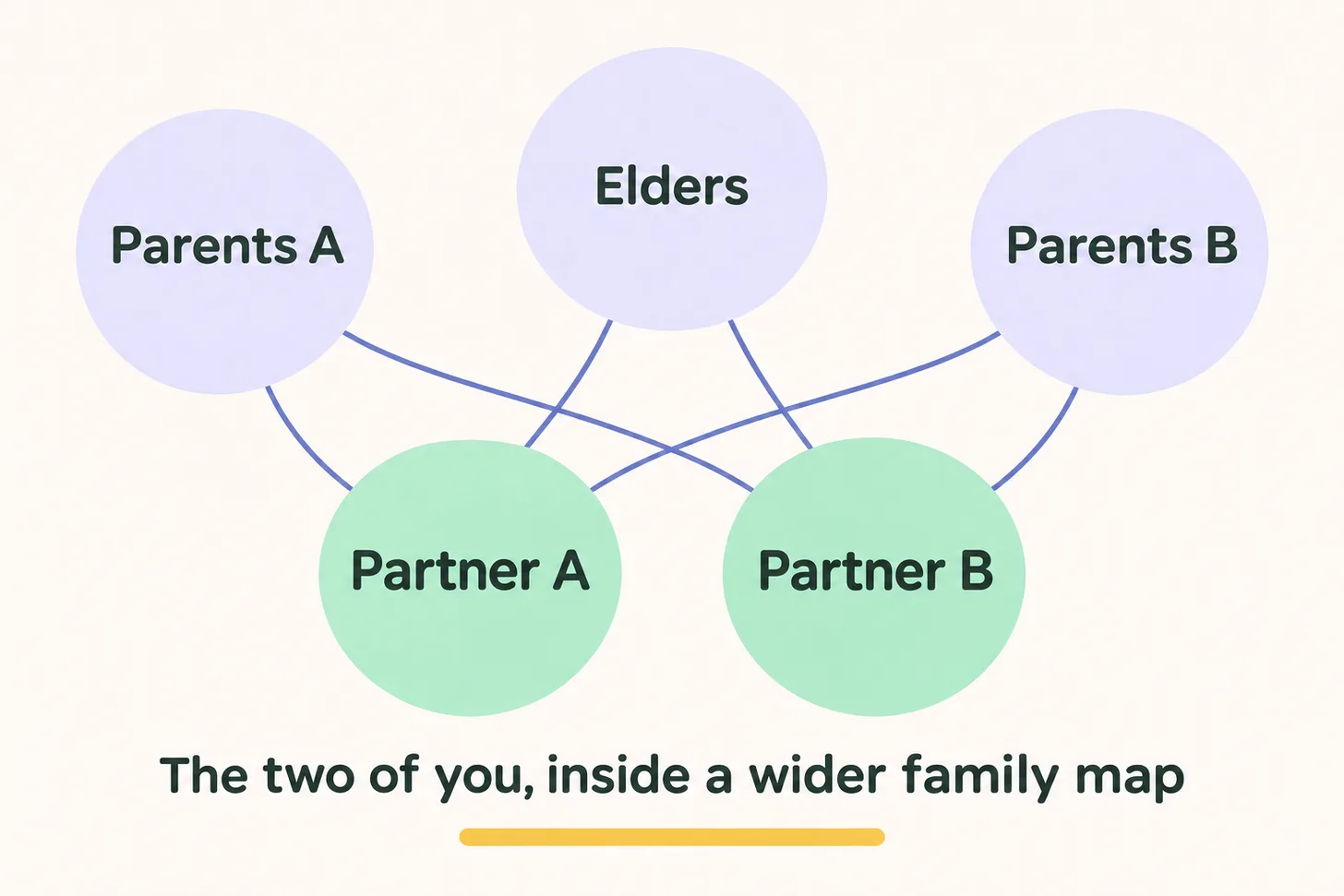
Pre-marital talks in India carry weight global templates miss. Arranged alliances, love marriages, intercaste or interfaith unions, and NRI matches each have their own hard version of the same talk. Many of us know this feeling well, even if we have never named it out loud.
For arranged alliances, the knot is time. You have met twice. Your parents have met twice. A date is being set.
A good counsellor slows this to a few clear asks. How will money be managed, in whose name? Where will you live for the first two years? What does “working after the wedding” mean in each family?
For love marriages, the talk often moves to parents. You have known each other for years. You have not sat with the fact that one side does not approve. Counselling is not about talking anyone round. It is about deciding what you will do if parents say yes with doubt, no in private, or yes with hard terms.
Intercaste and interfaith couples carry a third layer. Festivals, food, future kids’ names, whose rituals the first naming follows.
Dowry pressure, when it shows up as gifts, is a real topic the counsellor will name openly. None of this is a reason not to marry. It is a reason to have each talk once, well, before the wedding week makes it smaller.
In short: pre-marital counselling for Indian couples is for the specific talks the family dinner cannot hold.
What married couples bring to a marriage therapist
The patterns a marriage therapist sees are quiet, not dramatic. A first year nobody warned you would feel like this. A fight that broke one Tuesday and never came back. An in-law comment that lives in your head for years. A long-distance posting that turned the marriage into a Sunday call.
Looping talks. The topic is not the problem. The pattern is. You start on who left the gas on. You end on who never listens. A counsellor names the loop so you both see it.
Trust that broke. An affair. A lie about money. A drip of small holdbacks. Trust comes back as a run of small, agreed, visible acts over months. See trust issues in a relationship for more.
In-laws and joint families. It is rarely one comment. It is whose hopes you are building your life around. A counsellor helps you draw the line. Read how to deal with toxic parents.
Long-distance spouses. NRI couples, inter-city postings, work-away shifts. Love is not the issue. The daily contact is thin. Online sessions help, since two cities is just two tabs.
Newlywed year. The first year is often the hardest and nobody says so. Hopes clash. Small hurts stack. A marriage therapist here is a tune-up, not a crisis move.
In short: most married couples come in with one named issue and leave with a better map of the three underneath it.
When counselling is not the right first step
The honest answer is that couples counselling is not safe when one partner is being hurt. Violence, sexual force, or controlling acts can turn a joint session into more harm. What is said in the room can be used outside it.
If what you need right now is safety, not couples work, start with a counsellor for you alone. They will take the call. They can walk you through a safety plan step by step.
Not every marriage needs therapy either. Active addiction, untreated severe illness, or risk to a child need their own care first. That work comes before couples sessions. A good counsellor will say so on day one. See toxic relationships and their signs.
In short: when there is active harm, individual safety and support come first, and couples work waits.
How a session actually works online
A GoodLives marriage counselling session is 50 minutes on secure video. Both of you join from home. Most couples meet weekly at first, then move to a slower rhythm. The format is simple. Nothing is rushed. Nothing leaves the room.
Before day one, each of you fills a short form in the app. The counsellor already knows the basics. In session, ground rules come first. One speaks. The other listens.
They ask each of you what you want from the next six weeks. They give one small task for the week. A 10-minute talk on one topic. A short daily note. A pause before a reply when a known fight starts.
If a talk gets heated between sessions, slow down for a minute before you reply. The breathing below is one your counsellor often teaches. It keeps your body still enough to say what you mean.
A moment to breathe
Follow the circle. Breathe in, hold, breathe out, then hold. Four counts each. Stay as long as you like.
In short: the session is 50 minutes a week; the real work is the week itself.
Online or in-person: when each fits
Online works for most couples, but not every couple. The honest split below is the one we would say at a dinner. One of you may prefer online. The other may prefer in-person. Pick the one you both can show up to.
What marriage counselling in India typically costs
Online marriage counselling in India sits in a wide band in 2026. The band tells you about who you are talking to. For GoodLives rates, see our pricing page. The ranges below are market context, not our prices, so you can read them with open eyes.
| Experience tier | INR range per session | Session length | Best for |
|---|---|---|---|
| Supervised novice (M.A., under supervision) | 500 to 999 | 50 minutes | Early communication work, lighter pre-marital questions |
| Counsellor (M.A. in Counselling Psychology) | 1,000 to 1,699 | 50 minutes | Most married-couple work, pre-marital in most contexts |
| Practicing psychologist (M.A. plus 3 or more years) | 1,700 to 2,499 | 50 minutes | Trust ruptures, in-law dynamics, longer loops |
| M.Phil Clinical Psychologist | 2,500 to 3,500 | 50 to 60 minutes | Severe trust rupture, overlap with trauma or mood |
Method note: ranges are market context in India as of October 2026, from publicly listed per-session prices across named Indian platforms.
A ₹999 counsellor is not worse than a ₹2,499 psychologist for every case. For most talk-focused work, the counsellor tier is enough. For a trust break that touches trauma, the senior tier earns its price. Many Indian firms now offer therapy through an EAP. Ask HR before you pay out of pocket.
In short: match the tier to the weight of what you bring, not to the brand of the platform.
How to pick a marriage counsellor you both trust
The two of you may not agree on the first counsellor you meet. That is normal. Pick together, with the right questions. You might be worried about saying the wrong thing on an intake call. There is no wrong thing. The call is for you.
Intake-call questions
- What is your training, and how many years with couples?
- Do you work with pre-marital, married, or both?
- How do you handle it when we disagree in session?
- How do you work with in-laws or joint-family topics?
- What is your rough plan for the first six sessions?
- How do you handle a session where one of us feels shut down?
- What happens if we decide the marriage is not working?
A good therapist will answer these in 15 minutes without a defence. If an answer feels set up, or if either of you leaves feeling smaller, pick someone else. On GoodLives, you can switch counsellors at no extra cost. Most Indian platforms do the same.
In short: the right fit is the one both of you can speak honestly in; the counsellor you pick matters less than one you can be real with.
What a first session looks like
The first session is quieter than most couples expect. The counsellor opens with intros. Their training, how they work, what privacy means in a video call. Then they ask each of you, in turn, what you hope the next few weeks give you. Nothing is rushed.
They do not ask for a history of every fight. They ask for the shape of the week. They ask for the kind of talk that keeps looping. By the last ten minutes, you have a small, agreed next step.
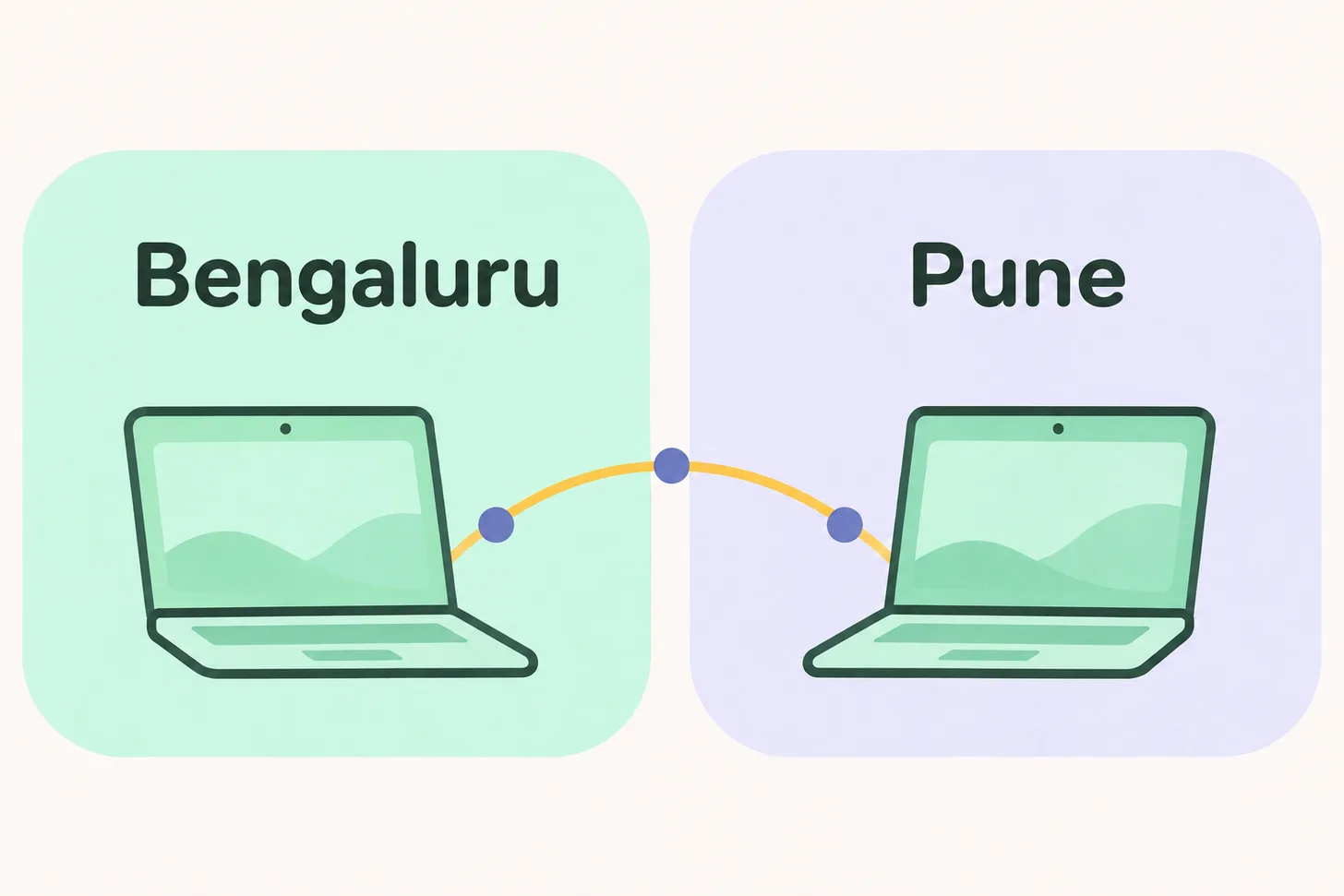
Example: Picture a couple in their early thirties, in Bengaluru and Pune for work, fighting about the move. The counsellor spends the first session hearing what each is afraid of. He of giving up a role he worked for. She of being the one who always moves.
They leave with one small plan. No decision for ten days, and one 20-minute call each evening about something else. They come back lighter.
In short: the first session is a shape-finder, not a solution.
If you decide to pause or stop
Not every couple finishes a planned run of sessions, and that is fine. Sometimes, five sessions in, you decide what you came to say has been said. You want to live with the smaller changes for a while. Pause. See how a month feels. Come back if the loop starts up again.
Sometimes sessions make the picture clearer. One or both of you decide the marriage is not what you want. A marriage counsellor is not a divorce counsellor. They can still help you leave with less damage, mainly where there are children or shared duties. We would rather you stop sessions honestly than keep booking out of politeness.
In short: counselling earns its place even when the outcome is not the one you came in planning.
FAQ
Where can I get free marriage counseling online in India?
Is it possible to do couples therapy online?
What is the 5-5-5 rule for marriage?
What is the 3-3-3 rule for marriage?
How many sessions does online marriage counseling in India usually take?
Will the counsellor tell us to stay together or divorce?
Can one of us join and the other refuse?
This post is for information only and is not a substitute for professional care.


Share your thoughts