
Have you felt “too much” with one partner and “too distant” with the next? Something older is being replayed. Attachment issues are patterns we learned about closeness. Many of us carry them quietly.
The theory came from Bowlby and Ainsworth. They watched how babies seek safety with caregivers. Adults do a grown-up version. The American Psychological Association calls it a durable framework. There is also a hopeful phrase: earned secure attachment. It names people who did not start secure and got there anyway.
What are attachment issues, really?
Attachment issues are patterns that make closeness feel unsafe. The nervous system, trained by early life with caregivers, mistakes love for danger. You want connection. You push it away. Then you read the push-away as proof you were right to worry.
They are not a diagnosis the way anxiety is. There is no code in the DSM-5. Your therapist will not hand you a prescription. They are a map. They overlap with insecurity in relationships and abandonment fears.
Common signs in adults look ordinary. Checking a last-seen too often. Starting a fight right before a holiday. Going cold after a good date because the good felt scary. Picking people who are a little unavailable, so you never risk being chosen.
In short: attachment issues are not a flaw in you. They are a pattern your younger self made to stay safe. It is still running in a life that no longer needs it.
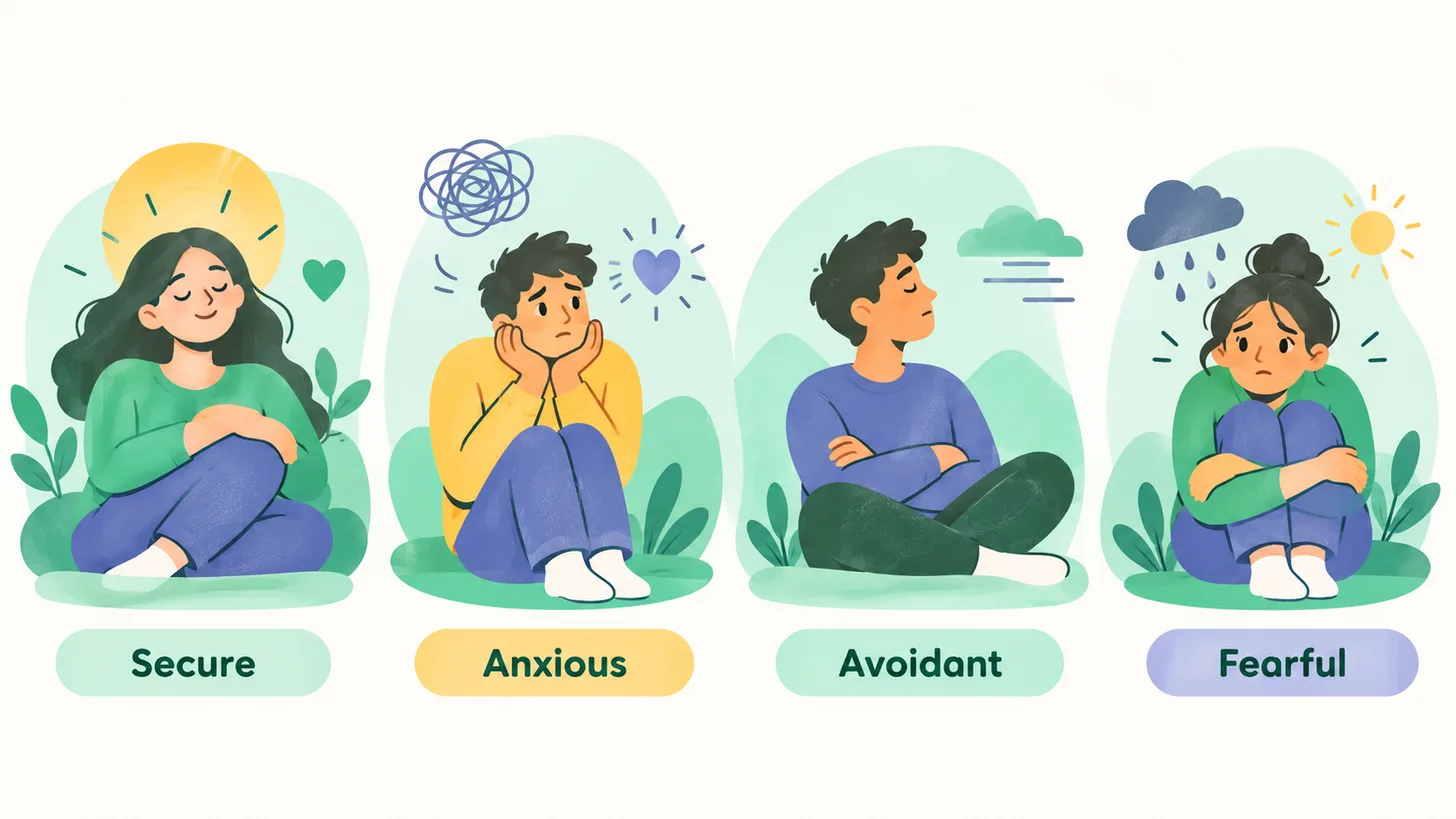
The four styles, and what each looks like
Researchers describe four broad patterns. Rough adult shares from decades of research look like this. Secure around 55%. Anxious (anxious-preoccupied) around 20%. Avoidant (dismissive) around 22%. Fearful-avoidant (also called disorganised) around 3 to 5%. Your style can shift across relationships and over time.
Secure is the plain version. You say what you feel. You hear what the other person feels. You apologise and move on. A fight does not feel like proof the bond is ending.
Anxious is the one that over-worries. You read tiny shifts in tone as danger. A late reply becomes a story about losing them. You feel calm only in constant contact. The gap feels loud. Underneath is a belief that love is unreliable.
Avoidant is the one that goes quiet. Closeness feels like being swallowed. When things get serious, you pull back. Or focus on work. From outside you look fine. Underneath, you learned early that depending on someone was not safe.
Fearful-avoidant wants and fears closeness at once. You crave love and run from it, often in the same week. This pattern often follows scary early experiences.
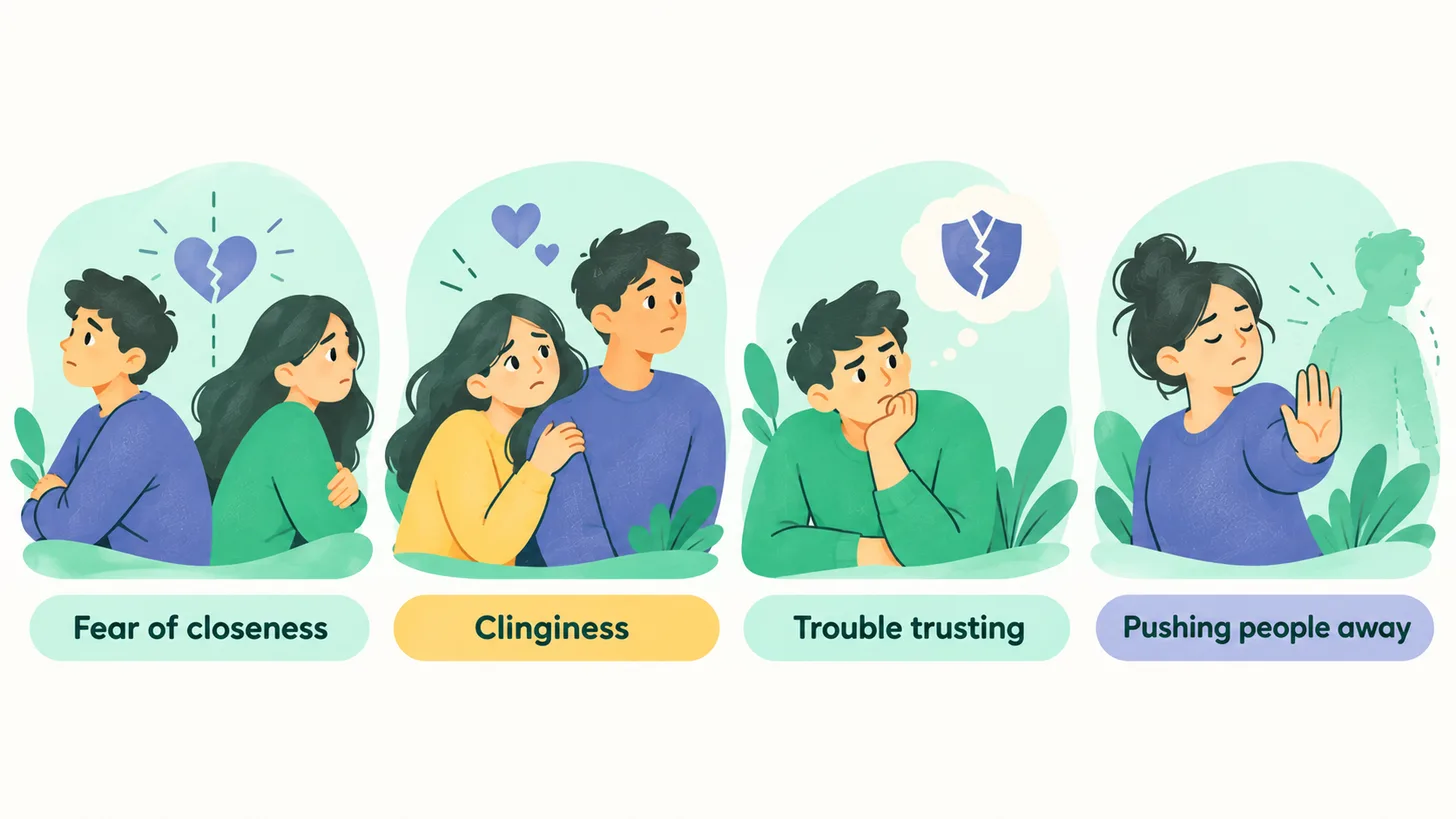
In short: most of us carry a mix. Secure is a direction, not a destination. Your style can look different with a partner, a parent and a close friend.
Love or attachment: what is the real difference?
Love and attachment are not the same thing. Love is a choice. It cares about another person as they are. Attachment is a set of rules for staying close enough to feel safe. You can be attached to someone you do not love. You can love someone and still be too anxious to stay.
Movies mix the two on purpose. Chest tightness when they go quiet. A sleepless night after one fight. In the script that reads as “love”. Often it is not. If a feeling makes you smaller, ask if it is love or an alarm.
A plain test. Love asks what the other person needs today. Attachment asks if you are still wanted. When attachment is the only engine, the bond feels like a problem to manage.
In short: love is a choice. Attachment is a reflex. The work is to notice which one is driving a moment.
Take two minutes with this before you read on. One kinder way to look at “I am too much” or “no one stays” is a reframe.
Catch the thought
What thought is weighing on you right now? Write it down just as it sounds in your head.
Name the trap
Does your thought fall into one of these common patterns? Pick any that fit. This part is optional.
Look again
Use these as nudges, not rules. Then write one line back to yourself.
Your reframe
Thoughts are not facts. You just practised stepping back.
This stays on your device. Nothing is saved or sent.
How do I know what my style is?
Behaviour tells you more than a quiz does. You can take an attachment style test on a Sunday evening. MindTalk and a few others publish decent ones. The honest reading comes from a few weeks of noticing. Watch three moments and your style will show up.
- A delayed reply. If a two-hour gap makes your stomach drop, that is anxious. If you notice nothing or feel relieved, that leans avoidant. If you cycle through both in an hour, you are closer to fearful-avoidant.
- A disagreement. Secure asks “what are you feeling?” and stays. Anxious tries to resolve at once, often by over-apologising. Avoidant goes quiet or leaves. Fearful-avoidant does both.
- After good closeness. A warm date, a vulnerable talk. If you want more the next day, you are secure or anxious. If you want air, that leans avoidant. If you want a fight to break the warmth, that reads disorganised.
A proper attachment styles questionnaire does not replace this noticing. It gives you words. The noticing gives you a pattern. Neither is a diagnosis on its own.
In short: your style is not what a quiz says. It is what you do in the three moments above over the next few weeks.
Where does the pattern come from?
Short answer: how steady the adults around you were. Not whether they loved you. Many loving parents are not steady for all kinds of reasons. Work shifts. Their own mental health. A sibling with a long illness. The pattern forms around whether comfort arrived.
The Indian joint family adds a wrinkle. More adults means more chances for a steady one. In practice, it depends on who you got. A grandmother who always made breakfast can be a secure base. A rotating set of relatives can do the opposite.
Research in India is thin. The Indian Journal of Psychiatry suggests both patterns are common here.
Later experiences shape attachment too. A controlling first relationship. A bad breakup in your twenties. The pattern is not fixed at age two. The honest answer is that we do not fully know how much shifts and when.
In short: attachment is built from steadiness, not love. The adults you got may have loved you very much. And still left your nervous system reading closeness as a risk.
The anxious-avoidant dance, and why it hurts
Have you ever run toward someone backing away? Or tried to breathe while someone kept checking on you? That is the dance. Anxious and avoidant pair up often. Each sets off the other’s deepest fear. It feels, at first, like chemistry.
The anxious partner’s deepest fear is being left. So they lean in. More texts. More plans. The avoidant partner’s deepest fear is being swallowed. So they pull back. A weekend alone. A cooler tone.
The pull-back confirms the anxious fear. They lean harder. The lean-in confirms the avoidant fear. They pull further. The couple reads this as “chemistry”. Many of us have been there. It can look like a situationship or long on-off cycles.
In short: the dance is not chemistry. It is two patterns protecting themselves. Once you can see it, you can step out.
Can this actually be healed?
Yes. The research word is earned secure attachment. A person who did not start secure can get there through therapy, through steady relationships, or through both. It does not mean you forget the old pattern. It means the pattern stops running the show. You still feel the old pull. Now you have more choices.
Earned security is not a mood you catch. It is built slowly. By staying when you want to run. By speaking when you want to vanish. By being loved in a new way. Most people who get there work on it for a year or more.
In short: this is not a diagnosis you treat and clear. It is a pattern you know. You know it so well that you can finally choose something new.
How therapy helps, and an honest timeline
Therapy works for this because the pattern was built in a relationship. It is relearned in one. The therapist’s job is to be a steady, kind other person. Your nervous system practises something new. A therapist you trust matters more than a famous name.
The approaches that come up most often:
- Emotionally Focused Therapy (EFT), developed by Dr. Sue Johnson, maps the anxious-avoidant dance.
- Schema Therapy looks at early patterns you repeat and helps you update them.
- AEDP and trauma-informed approaches help where fearful-avoidant attachment meets early trauma.
Many good counsellors in India blend these with CBT.
Honest timeline. Most people see real movement around 20 to 40 sessions, over 6 to 12 months. Six sessions will not fix it. A first session only tells you if this is someone you can keep showing up to.
You might be worried that therapy is only for a crisis. Or that you are not “bad enough” to go. You are not. If what you need right now is a steady conversation, that is enough.
If what you need right now is to sleep tonight, a session on Friday is not the fastest tool. Call Tele-MANAS and go to bed. Not every pattern needs therapy to shift. Some of this is a season you walk through with sleep and one honest talk.
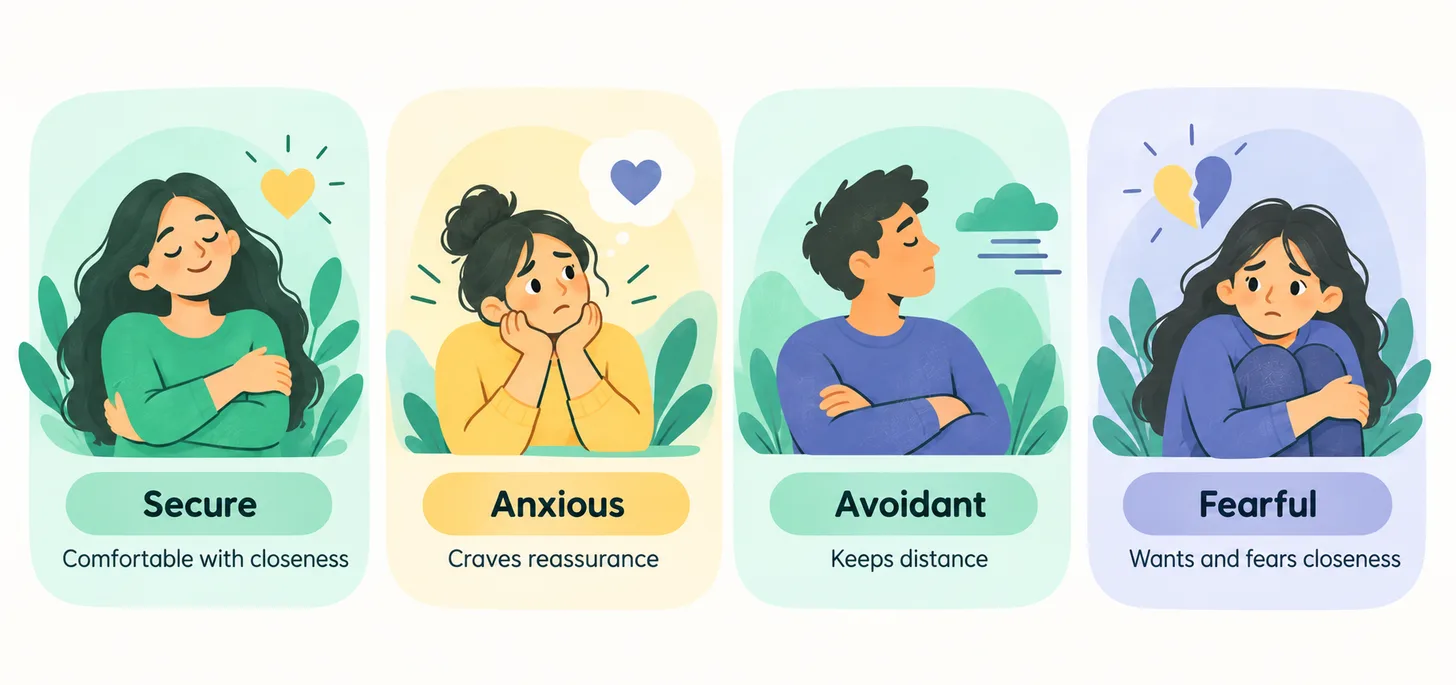
If therapy is not possible this season, three things help. Journal the three moments weekly. Read Sue Johnson’s Hold Me Tight. Tell one trusted person. These make a bridge, not a replacement.

In short: this work is slow, relational and real. Twenty to forty sessions with the right person is the usual shape of change.
FAQ
What does having attachment issues mean?
It means closeness in a relationship feels unsafe in a repeating pattern. The pull to seek connection fights with a learned alarm about depending on someone. It is not a diagnosis. It is a map that explains your reactions.
Does having attachment issues mean I am clingy?
Not necessarily. Clinginess is one shape of anxious attachment. Avoidant looks like the opposite: distance, cool detachment, late replies. “Clingy” is a label the world puts on anxious behaviour, not the whole story.
How do I break my attachment issues?
You do not break them. You understand them well enough to choose differently. That means noticing your pattern in real time and getting steady help from a therapist or a safe partner. Most people need 20 to 40 sessions.
Can attachment disorder be cured?
Attachment issues are not a formal disorder for most adults. So “cure” is the wrong word. People do change their pattern through earned secure attachment. Reactive Attachment Disorder (a child diagnosis) is different and needs a specialist.
What is the difference between love and attachment?
Love is a choice to care about another person as they are. Attachment is a set of rules for staying close enough to feel safe. When attachment is doing all the work, the bond feels like a problem to manage.
Is an attachment style test accurate?
It can give you useful words, but it is not a diagnosis. A test is a snapshot of one Sunday. Your real pattern shows up over weeks, in the three moments in this blog. Use a quiz as a starting point.
Can I change my attachment style?
Yes. Styles are learned, so they can be relearned. Most adults who shift do so through therapy and at least one steady relationship. Six months to two years is typical. Secure is a direction, not a finish line.



Share your thoughts