

What this blog includes
- Why your therapist, not your screen, does the work
- The “I feel worse” phase and when it stops being normal
- Why fit with a therapist beats any one method
- The quiet hours between sessions, where change lives
- The legal and clinical weight of online therapy in India
- How to pause therapy and come back without guilt
[Image 1]
You keep opening a tab that asks whether online therapy actually works. You read a page. You close it. You open it again a week later. The questions sit heavier than the answers, and the honest ones are not in the first ten blog posts you tried.
GoodLives is India’s online therapy and counselling platform, trusted by 500K+ people, with a 5 Google rating. This post is for you. Six genuine insights into online therapy that most first-timers in India only hear from a therapist after a few sessions. No sales. No miracle. Just the truth about online therapy from the inside of the room.
Insight 1: The therapist is the therapy, not the medium
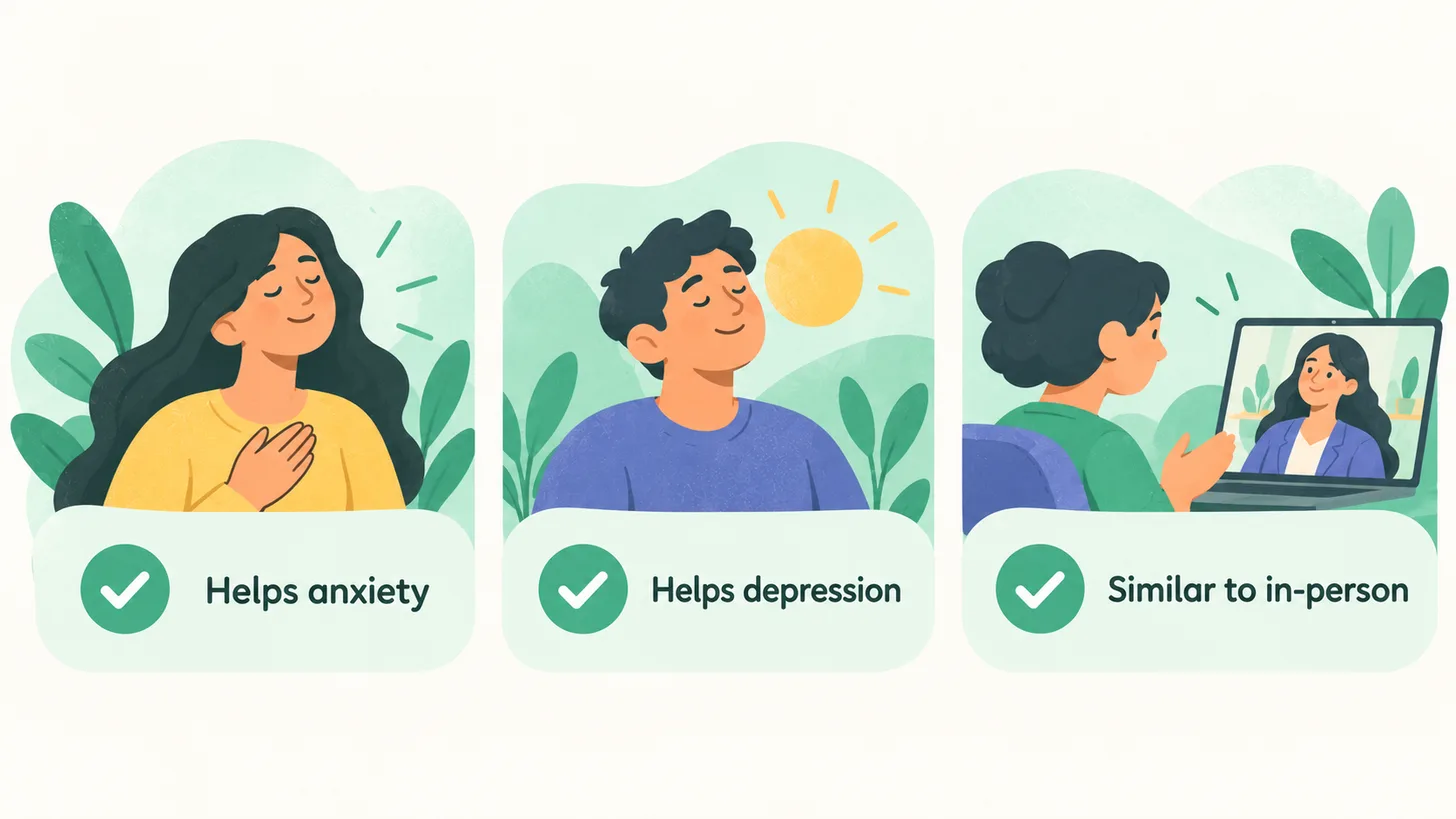
The thing that heals in therapy is the person on the other side of the call, not the camera. A warm, trained psychologist on video does the same work a warm, trained psychologist does in a clinic. The screen is only a door the two of you walk through.
[Image 2]
A long-running meta-analysis by Horvath and colleagues in Psychotherapy (2011) found that the therapeutic alliance, the bond and shared sense of purpose between you and your therapist, is a reliable predictor of whether therapy helps.
The alliance effect holds across every major method the review studied. More recent work on video therapy, including a 2021 meta-analysis in Clinical Psychology & Psychotherapy, shows outcomes comparable to in-person work for most common adult concerns.
What this means for you is simple. When you shortlist platforms, you are really shortlisting people. A sleek app with a therapist who feels distant will do less for you than a plain video call with a therapist who makes you feel heard.
In short: Pick the person, not the product. The medium carries the work; it does not do the work.
Insight 2: You might feel worse before you feel better
Early sessions often surface what you have been quietly carrying for months. A memory from childhood. A pattern at work. A grief you set aside. That is the start of healing, not therapy failing. You have probably not had space to feel these things in a long time.
[Image 3]
So weeks two to four can feel heavier than weeks one or five. You may cry more. You may sleep worse for a few nights. You may feel raw after a session and avoid your phone for an hour. Many of us have been there. This is the work moving, not falling apart.
If you notice this heaviness, name it in your next session. A good therapist will slow down, teach you one tool to steady yourself between sessions, and keep walking with you. If the words are catastrophic, work through them gently with this short reframe before your call.
If you want, try this before you read on.
Catch the thought
What thought is weighing on you right now? Write it down just as it sounds in your head.
Name the trap
Does your thought fall into one of these common patterns? Pick any that fit. This part is optional.
Look again
Use these as nudges, not rules. Then write one line back to yourself.
Your reframe
Thoughts are not facts. You just practised stepping back.
This stays on your device. Nothing is saved or sent.
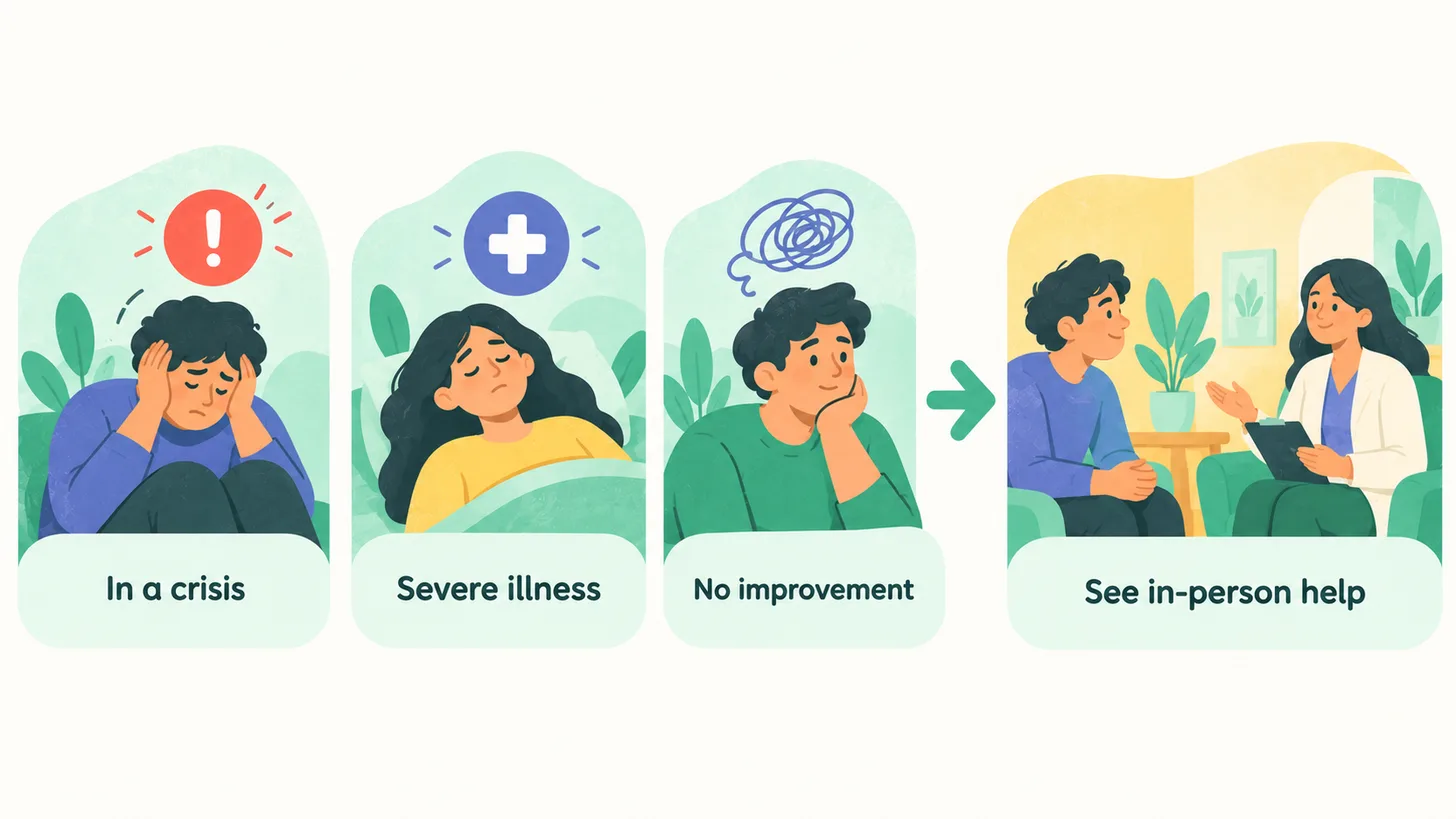
That said, there is a line. If the heaviness keeps growing for weeks with no softer days at all, or if thoughts of harming yourself begin to appear, that is not a normal dip.
Tell your therapist in your very next session, or sooner by message. Online therapy can hold a lot. It is not meant to hold acute crisis alone.
In short: Feeling worse at first is often the thaw. A longer, deeper worsening with no shift at all is a signal, not a verdict, and your therapist needs to know.
Insight 3: Fit matters more than modality
CBT, DBT, psychodynamic therapy, humanistic therapy, somatic work, and other types of therapy all help, when the right person uses them with the right reader.
The method label on the therapist’s bio is not what moves you. The quiet question of whether this person gets you, in your language, with your life, is.
[Image 4]
Research on alliance, including the Horvath review above, places the therapist-client fit above any single method as a predictor of outcome. In plain words, a less fashionable method with a therapist you trust usually beats a trendy method with one you do not.
A practical test, three to four sessions in. Ask yourself three questions. Do I feel slightly more honest in this room than I am with my closest friend? Do I leave sessions with something I can actually use this week? Does this person remember what I said last time? If two of the three are a soft no, it is reasonable to switch.
Switching is not failure. It is you doing therapy on therapy. When you are ready, GoodLives can suggest two therapists in your language and style, free, so the second attempt is informed.
When you are ready, tell us one thing about what you want help with. We will suggest two therapists, free. button: Match Me with a Therapist
In short: Fit is the real variable. If three or four sessions feel flat, change therapist, not method.
Insight 4: Homework is where the change happens
A session is 50 minutes once a week. The other 10,030 minutes are where the new patterns actually form. Therapy that leaves you with nothing to notice, write or try between sessions can feel kind and still move slowly.
[Image 5]
Good therapists give you a small, specific thing to practise between sessions. It might be a two-line thought record when a work message spikes your pulse. A ten-minute walk at 6 pm, without a podcast. One honest sentence to a parent on Sunday. A sleep window. Not a worksheet, not a chore, something sized to your week.
If three sessions pass and your therapist never names a small thing to try outside the call, ask for one. A simple sentence works. “What can I pay attention to this week that would help us go deeper next time.” A thoughtful therapist welcomes that question.
That is also the honest limit of self-help apps and journals. They are useful. They can carry you a long way on their own.
A therapist can help you figure out which specific between-session practice fits your week, and change it when your week changes. For a wider map of how online counselling moves across weeks, read how online therapy works.
In short: The real change lives between sessions. If no between-session work shows up, ask for it.
Insight 5: Online is not “lite” therapy
Online therapy in India is held to the same clinical standards and the same laws as in-person work. The couch in the room was never the therapy. The hour of trained attention was. That hour does not thin because it travels over Wi-Fi.

[Image 6]
In India, counsellors and clinical psychologists sit under the Rehabilitation Council of India and the ethics code it enforces. Psychiatrists sit under the Medical Council of India.
Your rights as a client, including confidentiality and informed consent, are protected by the Mental Healthcare Act 2017. Your personal data is covered by India’s Digital Personal Data Protection Act 2023.
What this looks like on your side. A verified therapist will share their registration number if you ask. A verified platform will use an encrypted call, store notes securely, and tell you upfront what they do with your data.
For a longer look at verification, pricing and the concerns that fit the format, read our wider post on online therapy in India.
The honest caveat: online therapy is not a smaller version of real therapy, but it is also not the right fit for every situation. Active suicidal thoughts, severe eating disorders in medical risk, or acute psychotic episodes usually need in-person or hospital-based care first.
Insight 6: You can leave therapy and come back
Not every life season needs weekly therapy. Being “discharged” by a therapist does not mean cured. It means equipped for now, with tools you have learned to use, and a door you can open again. Many people see a therapist for three months, pause for a year, and return for a tune-up when life throws a new thing.
That is not relapse. It is health. We go for a dental check-up without feeling like dentistry has failed us. Therapy can work the same way. A booster session six months after your last one is a normal, kind thing to do.
Reasons people return without shame: a bereavement, a job change that hits harder than expected, a wedding that stirs old family patterns, a new baby, a breakup, a diagnosis in the family, a quiet patch of low mood that reminds you of two years ago. The second time around is usually shorter, because you already know how the room works.
If what you need right now is to pause and sleep well for a month, that is a complete decision. When something returns, so can therapy. When you are ready, a 50-minute session with a verified psychologist on GoodLives is one message away, in English, Hindi and more Indian languages.
When you are ready, book a 50-minute session with a verified psychologist on GoodLives. Start when it feels right. button: Book a Session
In short: Therapy is not a one-way door. Leaving when you are steady, and returning when you are not, is how most people use it.
When you are ready
Six insights do not make a decision for you, and they are not meant to. If one of them softened a worry you had about online therapy, that is enough for today. When something in your week keeps asking for more space, you can come back.
When you are ready, book a 50-minute session with a verified psychologist on GoodLives. English, Hindi and more Indian languages. Start when it feels right. button: Book a Session
For a wider map of starting out, read online therapy for anxiety and therapy cost in India.
—



Share your thoughts