
What this blog includes
- What nyctophobia means, and how it is more than a normal fear of the dark
- How the fear shows up in adults, and how it looks in children
- Why Indian homes, horror films, hostels and power cuts can make it louder
- Simple things to try tonight, and when to speak to a therapist
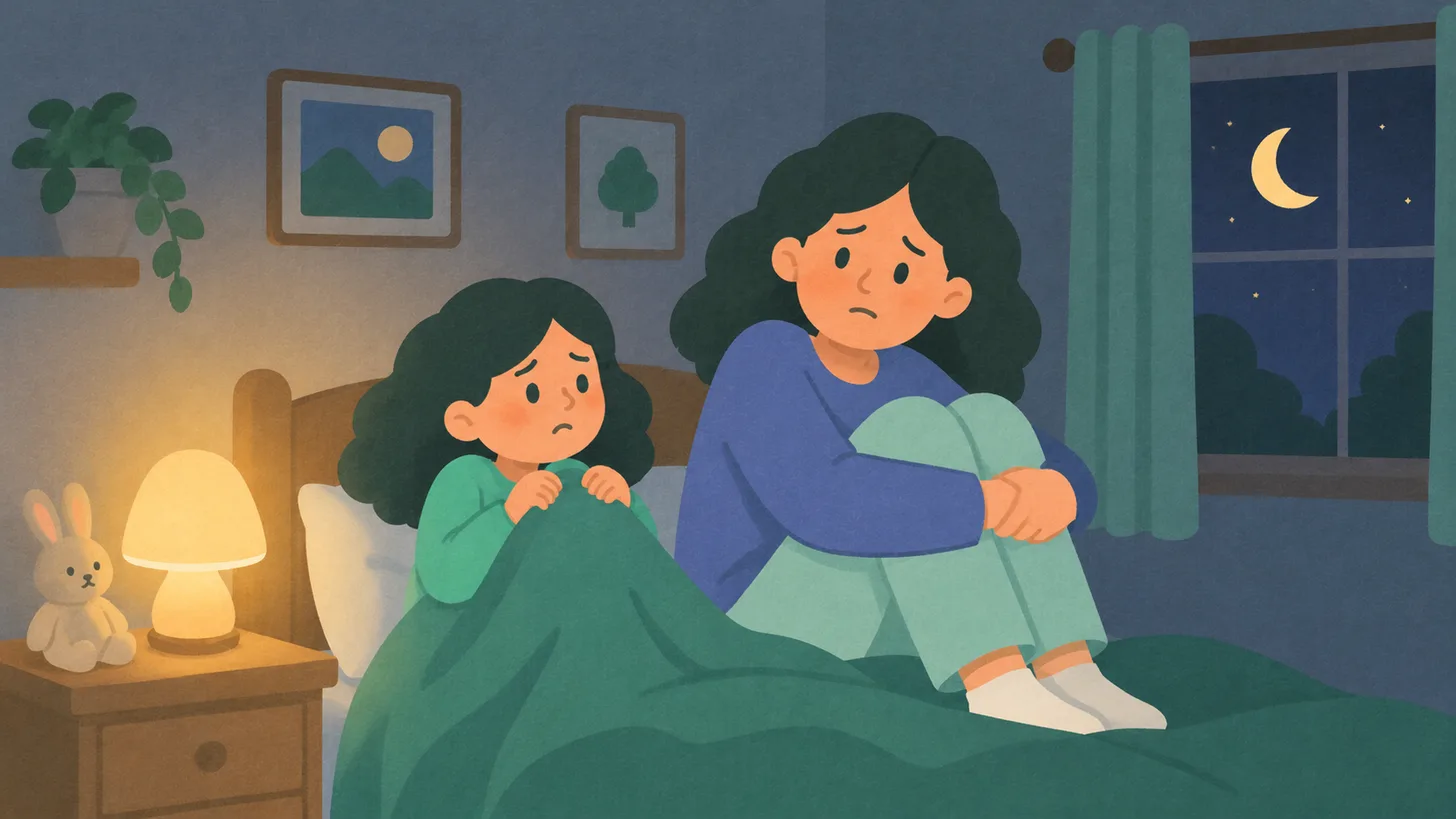
If you keep a lamp on even though your partner would rather sleep in full dark, or your child is still waking up every night, you are not being dramatic. The clinical name is nyctophobia, and plenty of us have been there. The fear responds well to the right help. GoodLives is trusted by 500K+ people, with a 5 Google rating from our users.
What does nyctophobia mean, and how is it different from a normal fear?
Nyctophobia is a specific phobia of darkness. The nyctophobia meaning, in plain English, is a fear of the dark that is strong, lasts for months, and gets in the way of sleep, work or home life. Clinicians also call it a fear of darkness phobia. It is a real anxiety condition, not a personality flaw.
Mental health classifications describe a specific phobia as an intense, out-of-proportion fear of a particular situation that lasts for six months or more, as the American Psychiatric Association sets out. It also has to cause real impairment in your daily life.
This is not the same as being uneasy walking from the bathroom to the bedroom at midnight.
Most of us had some fear of the dark as children, and most of us grew out of it. A big review of child studies suggests this fear is one of the most common fears in early childhood. When it stays past the early school years, or returns in adulthood, and when it starts changing how you sleep, it has crossed into phobia territory.
You might be worried that this means something is deeply wrong with you. It does not. It means your brain picked up a pattern that is now worth unlearning.
In short: A short worry is normal. The long-running kind that costs you sleep is what the clinical name describes.
Why does the dark feel so threatening at night?
The dark is not scary because of what is in it. It is scary because your brain cannot see what is in it. When you lose visual information, the oldest part of your brain reads that as a danger signal and keeps the body on alert. You are being guarded by a very old system.
Your heart speeds up, your breathing shallows, and your ears sharpen. This threat response is well described by the UK’s NHS overview of anxiety and the body.
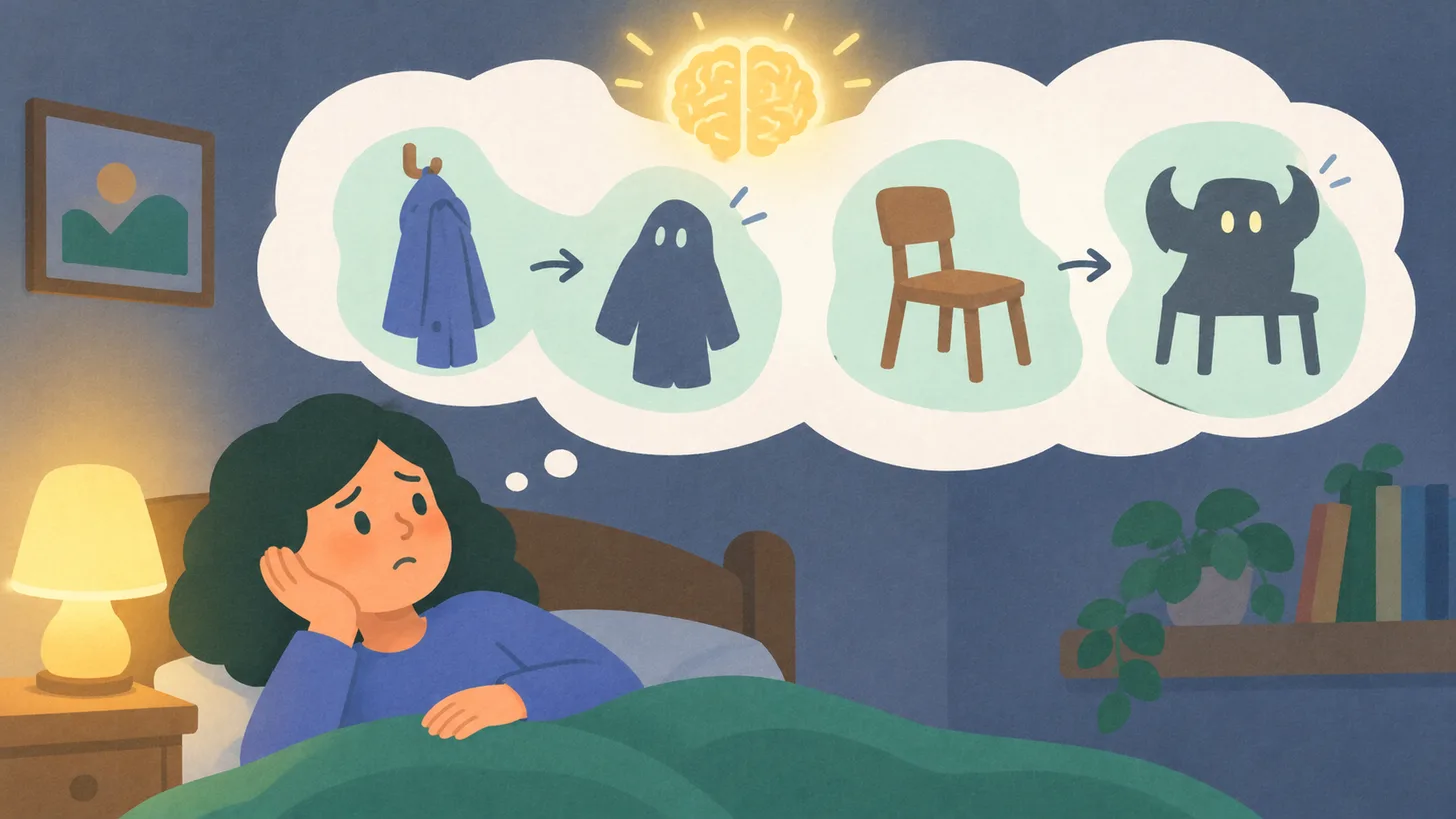
Three things usually feed this. One, your brain fills in the gaps with imagination, and imagination at midnight is far more creative than at 2 pm. Two, the body is already a little tired, so emotions sit closer to the surface.
Three, if you have ever had a bad experience linked to darkness, a power cut as a child, a scary film, a break-in story in the family, your brain tagged “dark” with a warning sticker. It now treats every dark room as the one from that night.
In children, there is also a developmental piece. Up to about age eight, a child’s imagination can produce a convincing monster from an ordinary cupboard shadow. This is normal, not a disorder.
For adults, the common pattern is a childhood fear that was never fully worked through, now paired with adult life stress like a demanding job, poor sleep, or a recent loss.
In short: The dark reduces information. Your brain fills the gap, usually with the worst thing it can picture, and your body follows.
How does it show up in adults, and how does it look in children?
The core fear is the same. The way it looks on the outside is not. An adult will often hide the fear because it feels childish to admit. A child cannot hide it, and their body spells it out at bedtime. The lists below look different, even for the same underlying fear.
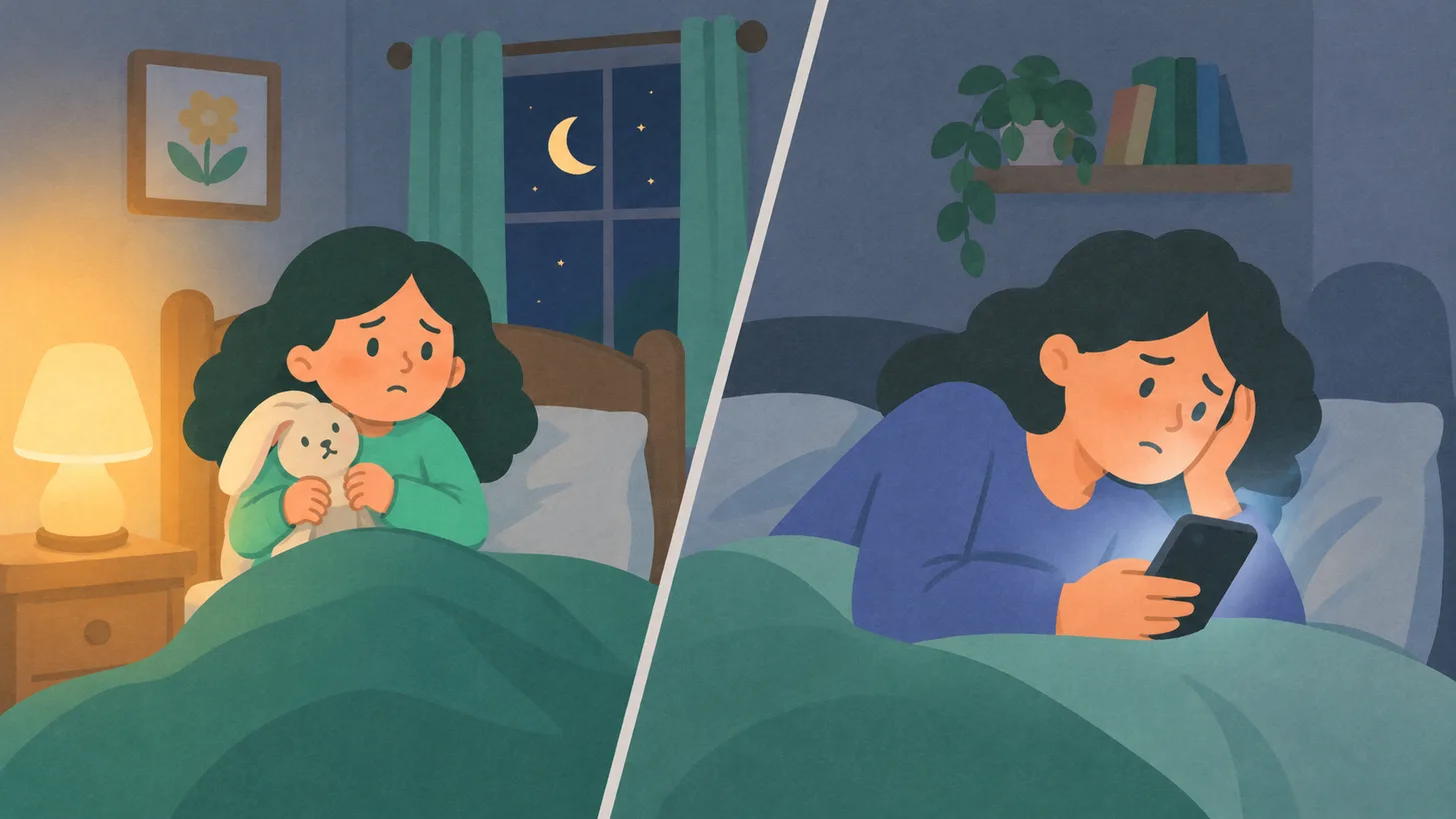
In adults, the fear often shows up as:
- Sleeping with a lamp, a television, or the phone screen on all night
- Avoiding films, books or news that mention dark places
- Needing someone to walk you to the kitchen for water at night
- Checking under the bed or behind curtains even at 32
- Trouble falling asleep because you are listening for sounds
- Daytime tiredness from the lost sleep
In children under 12, the fear often looks like:
- Long bedtime routines that keep getting longer
- Nightmares with themes that stick
- Physical complaints at bedtime: stomach aches, one more loo trip
- Climbing into the parents’ bed in the second half of the night
- Refusing to be alone in any dark room, including the loo
A child who grew out of a mild bedtime fear by age five or six is not a child with a phobia. A nine-year-old who is still waking the house every night, missing school because of exhaustion, and refusing sleepovers, is one it is worth taking to a child psychologist.
In short: Adults quietly build their lives around the lamp. Children tell you with their bodies. Both are worth listening to.
What makes it worse in Indian homes?
A lot of what we grew up with reinforced the fear of the dark, honestly. Three threads tend to run through this for Indian readers: the stories we were told, the films we watched, and the first unfamiliar room many of us slept in. All three were mostly delivered with love. The effect lingered anyway.
Each thread can quietly set the tone for how the body treats a dark corridor at 24. The honest answer is that some of us carry the mix for years without naming it.
One, ghost stories. Most Indian families carry a few, told at Diwali, in a dark hostel room, or by an aunt who swears. For a child whose imagination is already working overtime at bedtime, hearing bhoot (ghost) builds a scaffolding the fear can climb for years.
The story is affection. The after-effect can be a decade of sleeping with a lamp.
Two, horror films and the algorithm. A frightening film in your late teens, watched once in a hostel in 2017, can quietly set the tone for how your body treats a dark corridor at 24. The horror genre is designed to make dark spaces feel unsafe.
If you are a sensitive sleeper, horror as entertainment often costs more than it is worth. You do not have to swear off scary cinema forever. Just noticing that your sleep gets worse after a horror weekend is enough.
Three, hostels, PG rooms, and shared flats. The first year of sleeping in an unfamiliar room, with corridors you do not know, people you do not fully trust, and power cuts you cannot predict, is the single most common moment adults tell us the fear came back. A room you cannot read in the dark is a room your body treats as a threat all night.
There is also the “evil eye” belief many of us grew up with, and the quiet background sense that something unseen can harm you. For a reader who holds this belief, no article is going to argue you out of it.
The point is only this. If the belief is interrupting your sleep every night, both a therapist and a trusted elder can be part of settling it.
In short: You are not weak for still being afraid of the dark. You are responding to a childhood dense with stories, a youth dense with horror films, and a hostel year with no night light.
Which steps help settle your body at bedtime?
You have probably tried breathing. The question is which tool fits what the dark is doing to you tonight. Below are three plain ones that work slightly differently, with a note on when each is the right pick. Pick one and keep it for a week.
Trying all three on the same night is usually too much. The point of these tools is to help your body learn, not to pass a test.
Grounding brings your attention to the room, which helps when thoughts are racing in the dark. Count five things you can see in whatever light you have, four you can touch, three you can hear, two you can smell, one you can taste. The point is not to find scary things. The point is to tell your brain the room is readable.
Breathing slows the body down, which helps when your heart is pounding and your chest feels tight. Try a slow four-second breath in, a brief hold, and a longer six-second breath out, for three rounds.
The long exhale is what calms the nervous system, as this review in the Indian Journal of Psychiatry on breath regulation and anxiety sets out.
Light stepping is the plain version of exposure. Start the night with the main light on, then after you feel settled, switch to a bedside lamp, then a dim night light, then a small corridor light. Each step holds for a few nights, not minutes.
The point is not to be in full dark tonight. The point is to let your body learn, slowly, that a slightly darker room is safe.
If you want, take one slow minute with this before you read on.
Breathe in
Let's slow everything down
Dim your screen, get comfortable, and let's wind down together. When you're ready, we'll begin.
Two honest notes. These tools help you ride out the next ten minutes. They will not fix the thing making you afraid, if that is deeper. If one of them makes you feel worse, stop and switch.
In short: Pick one, use it every night for a week, and let the body learn that the room is boring, not dangerous.
The dim-to-dark ladder: how exposure therapy helps adults
Exposure therapy is the most researched treatment for a specific phobia in adults, as Harvard Health describes for specific phobias. The idea is slow, planned, repeated contact with the thing you fear, in doses your body can handle. It is not scary. It is slow on purpose.
Over weeks, your nervous system updates its “dark room equals threat” setting.
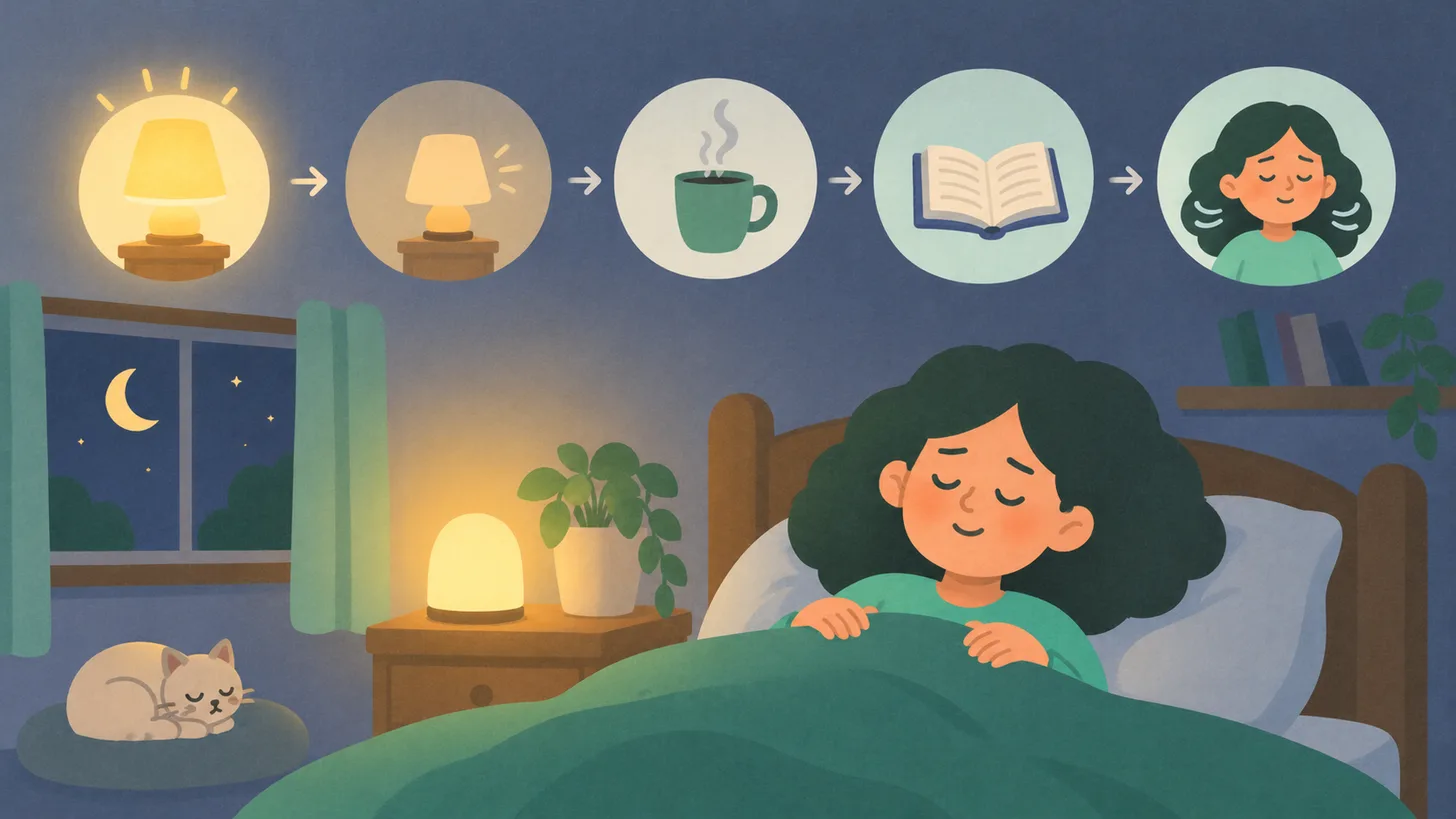
A good therapist does not drop you into a pitch-black room on day one. They build a ladder with you, rung by rung. A simple adult ladder might look like this.
- Rung 1: sit in bed with the main light on, read 15 minutes
- Rung 2: do the same with only the bedside lamp on
- Rung 3: lie down with a dim night light and a calming track
- Rung 4: corridor light on, room light off
- Rung 5: only a weak phone-screen glow, two nights a week
- Rung 6: full dark with your partner awake in the next room
- Rung 7: full dark alone, with the option to turn the light back on
Each rung is held for a few nights, until it stops producing a spike. A therapist will usually pair this with cognitive behavioural therapy, or CBT, a short, structured therapy that teaches you to spot and reframe anxious thoughts.
If you catch yourself thinking “there is someone in the corridor” every time the pipes creak, CBT works on that specific loop, not on your character.
Not every adult needs a therapist for this. If your fear is mild and sleep-related, two to four weeks of a self-made ladder can shift it. If your fear is severe or tied to past trauma, that is a reasonable moment to bring in professional support.
Journaling helps you spot the loop. A therapist helps you break it.
In short: The ladder is boring on purpose. The slowness is the medicine.
How do child therapists help a kid who is afraid of bedtime darkness?
Most children grow out of real difficulty with the dark over time, with warm bedtime routines, and gentle light stepping that works with the imagination rather than against it. For a child whose fear is still at the front of their day and night after six months, a child psychologist is the right call.
Not a generic adult counsellor. For children under 15, play-based care matters more than talk-based.
A child psychologist is trained in play-based graded exposure, which looks completely different from the adult version. It uses stories, drawings, soft toys and games to help a child’s brain practise being in the dark without being flooded.
The therapist might ask the child to draw their monster, then draw a tiny version of it, then put the drawing in a box and switch the lamp off while the box stays in the room. For older children, it may be a graded flashlight game where the child controls how much light stays on.
Parent coaching is as important as the child’s session. The therapist will usually spend time with the parent on three things: the bedtime routine, how to respond to night waking without accidentally reinforcing the fear, and how to walk the line between comfort and avoidance.
One honest piece: if a parent is also afraid of the dark, the child picks that up quickly, and the therapist may suggest a parent track too.
If you are in India and looking for someone who works with children, filter for RCI registration (the Rehabilitation Council of India registers psychologists) and specific child experience.
For a child under 15, insist on a child psychologist, not a general counsellor. GoodLives can match you with a child specialist in your language.
In short: Under 15 is not just a small adult. Play, parents and patience are what the fear usually needs.
When should you speak with a therapist about this?
Four signs make it worth booking a session. The fear has lasted six months or more, with no sign of fading. You are losing sleep most nights, or your child is. You are planning your week around avoiding dark rooms. Or you already live with anxiety or past trauma, and the dark is a trigger.
Fear of the dark often sits inside other things. It can appear alongside generalised anxiety, panic disorder or post-traumatic stress, as Cleveland Clinic notes in its specific-phobia overview.
When it does, it usually gets better when the broader anxiety gets attention, not just when you focus on the dark alone.
A first session is not a commitment. The therapist will ask you about when the fear started, how it shows up during the week, what you have tried, and what a better night would look like.
You can start, see how it feels, and stop. Most clients leave with one small thing to try before the next session, usually a shorter version of a ladder.
The Mental Healthcare Act 2017, the Indian law on mental healthcare rights, protects your right to confidentiality. A therapist cannot share what you say in a session with your family or your employer, except in narrow legal cases. If that is the thing stopping you from booking, it is worth knowing.
Not every fear needs therapy. Some of this is a season you walk through with a plan, sleep, and one honest conversation with the person who shares your room.
If what you need is a long-term shift, a therapist is faster than another decade of lamps.
In short: Six months, lost sleep, avoidance, or an underlying anxiety are honest reasons to speak with someone. A first session costs an hour and gives you a plan.
FAQ
What is nyctophobia caused by?
What is the difference between achluophobia and nyctophobia?
How do you cure nyctophobia?
What are 7 rare phobias people search alongside this one?
Is fear of the dark normal in children?
Does sleeping with a light on help or make it worse?
Can online therapy work for fear of the dark?
This post is for information only and is not a substitute for professional care.

Share your thoughts