
Helpline block If you are not safe right now, please pause and call one of these first. They are free, confidential, and open to anyone.
- Tele-MANAS · 14416 · 24/7 · 20 Indian languages, Government of India
- iCall (TISS) · 9152987821 · Mon to Sat, 8 am to 8 pm · multilingual, free
- Vandrevala Foundation · 1860 266 2345 · 24/7 · free
- AASRA · +91 98204 46726 · 24/7 · suicide prevention
- For immediate danger to life, dial 112 or 100.
Quick Summary > A heavy chest in the morning, a day that will not start, a mind that keeps saying what is the point. Depression is a treatable medical and psychological condition, not a weakness or a mood you should snap out of. This guide walks you through signs, causes and how care works in India.
What this blog includes
- The honest difference between sadness and depression
- The signs you can see in your body, mind, sleep, appetite and energy
- What tends to cause it, in biology, life events and daily load
- How treatment works in India, from therapy to psychiatry to small daily steps
- When low mood becomes an emergency and who to call
If you have been Googling depression symptoms late at night, half-sure something is wrong with you, you are in the right place. What you are feeling has a name. Plenty of us have been there.
GoodLives has been trusted by 500K+ people across therapy, workshops and awareness programmes, and holds a 5 Google rating.
The most common thing we hear is “I did not know this was depression. I thought I was just being lazy.” You are not lazy. Depression is a medical and psychological condition. It is also treatable, more than most people realise.
How is depression different from everyday sadness?
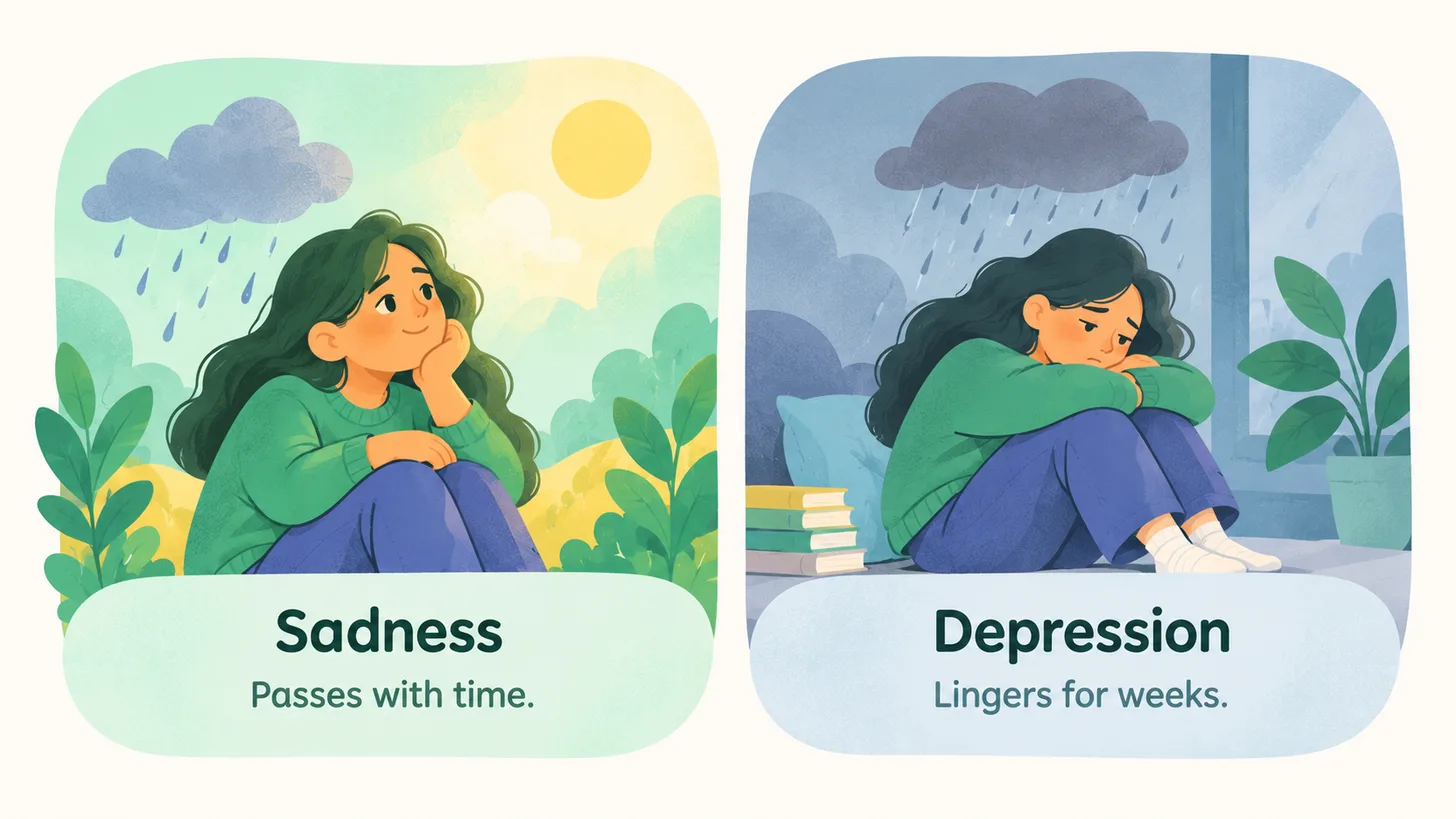
Sadness is a feeling. Depression is a condition. A sad week ends when something good happens on the weekend. Depression keeps the lights off even when a friend finally texts back.
The World Health Organization describes depression as low mood that lasts most days for at least two weeks and interferes with daily life.
Here is the honest line we use at GoodLives. Sadness responds to the world; depression stops responding. If you have been low for most days for two weeks or more, and the things that used to pick you up now feel flat, this is a reason to pay attention. It is not a reason to panic.
A short real-world test. Think of three things that used to feel good: your morning chai, a show you love, a weekend plan with a friend. If all three now feel like effort, you are not being dramatic. You are describing something a doctor would recognise.
In short: everyone has sad days; depression is when the sad days stop lifting on their own, and the ordinary joys stop landing.
What are the common depression symptoms?
Depression shows up in the body as much as in the mind. According to the World Health Organization, a clinical diagnosis looks for low mood or loss of interest, plus changes in sleep, appetite, energy, focus or self-worth, lasting at least two weeks. A clinician checks the pattern, not one bad day.
The signs people describe to us at GoodLives are specific. Waking at 4 am and not getting back to sleep. Or sleeping ten hours and still tired. Food tasting of nothing, or finishing a packet of biscuits without noticing. A heavy, slow feeling in the arms. A brain that keeps playing the same scene from three years ago.
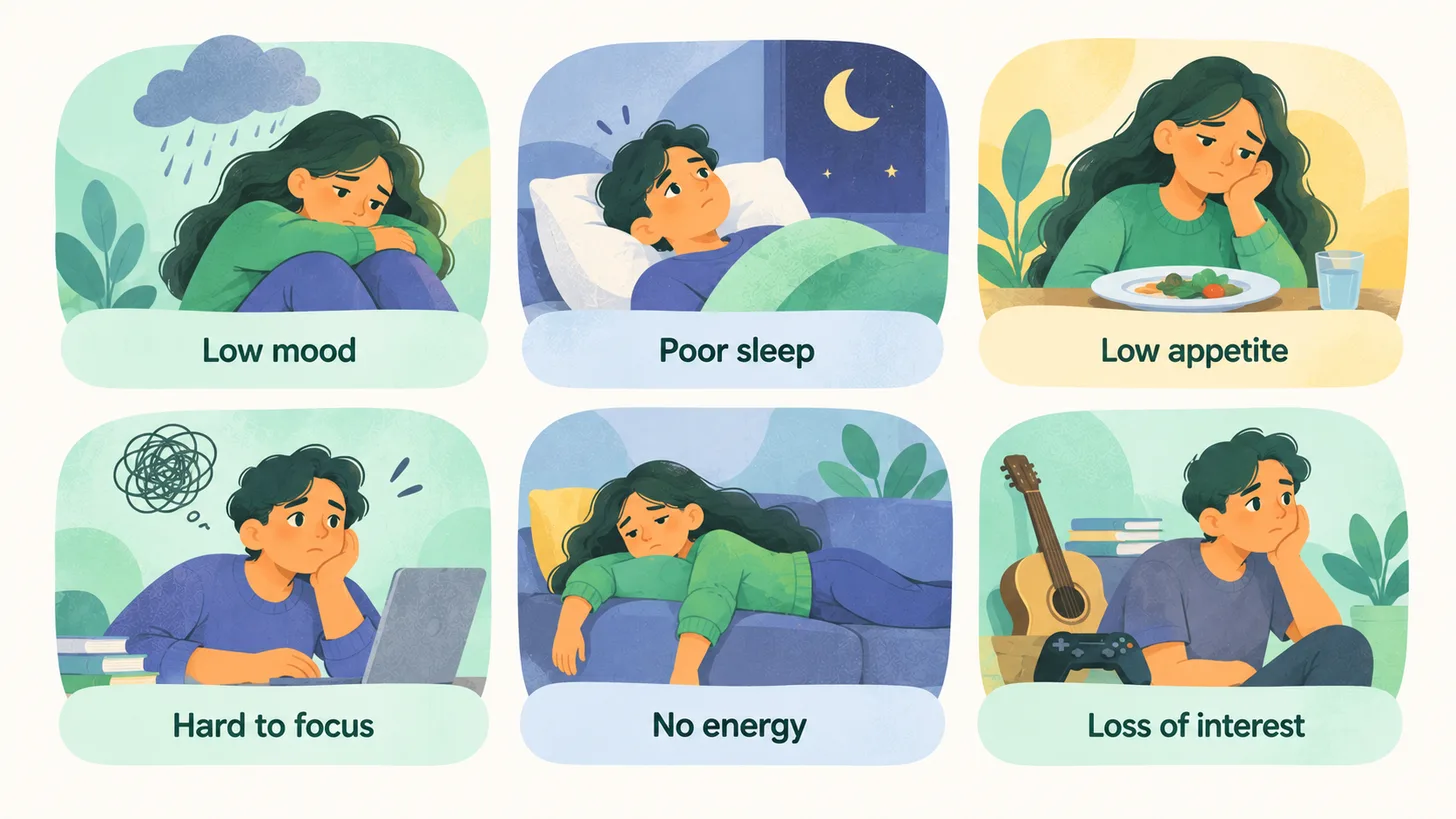
A quick list of what to watch for, with the honest asterisk that one or two of these happen to everyone some weeks. It is the number, the length and the interference that matter.
- Low mood for most of the day, most days
- Lost interest in things you used to care about
- Sleeping too little or too much
- Eating much more or much less than usual
- Hard to focus at work or in a conversation
- A heavy or restless body with no clear reason
- Guilt or self-blame that keeps running on a loop
- Thoughts that you would be better off not here
That last one is important. If it is there, please read the helpline block at the top again. You do not have to feel this way by yourself tonight.
In short: depression is a pattern across mood, sleep, appetite, focus and self-talk that lasts at least two weeks and gets in the way of normal life.
What does depression look like in Hindi?
Many people search for depression in Hindi: avsad, a Hindi word for the heavy sadness that will not lift. If English words like “clinical depression” feel distant to you, know that the condition is the same. The Hindi name does not change the biology, only the language in which you reach for help.
Common search phrases people type in India include “depression symptoms in hindi”, “avsad ke lakshan”, “awsad”, “mann bhari hona” and “depression mai kya hota hai”. These are all names for the same experience: a low mood that is longer, heavier and more interfering than ordinary sadness.
If you prefer to read about this in your own language, we have a sister page in Hindi and Hinglish on depression meaning in Hindi that lists the same signs in simpler words. Reading in your own language often makes it easier to notice yourself in the lines.
In short: depression and avsad describe the same condition; the Hindi version of the guide is linked if that is easier to read.
What causes depression?
Depression rarely has one cause. The best current science looks at three circles that overlap. Biology: genes, hormones, sleep, physical health. Psychology: how you have learned to think about yourself. Life: loss, chronic stress, loneliness, money, family pressure. One circle rarely explains the whole knot.
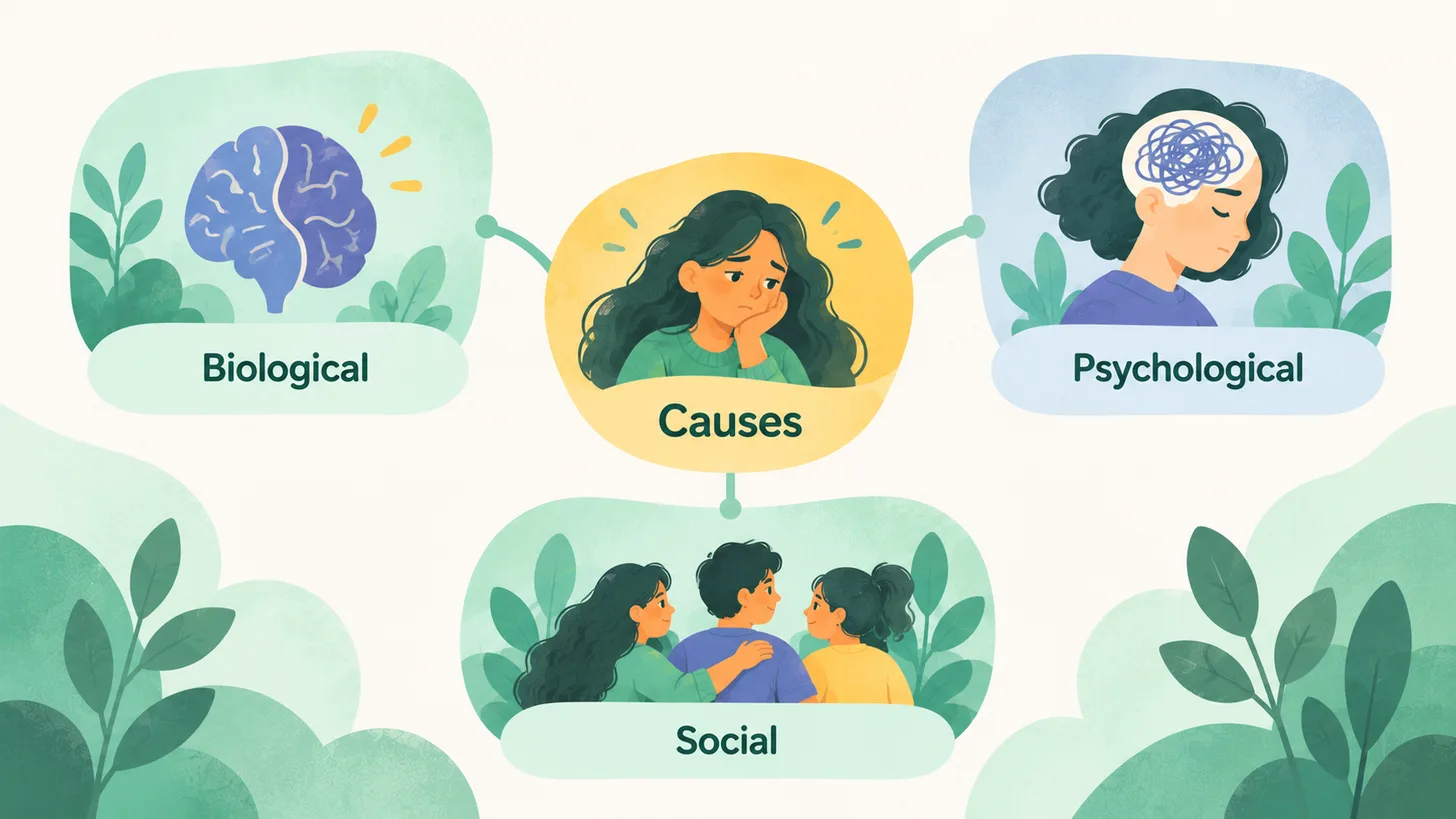
Some of what we know from research in India and worldwide:
- Family history matters. If a parent or sibling has had depression, your own risk is higher. It does not mean you will have it.
- Big losses can start it. Grief, a break-up, a job loss, a move to a new city. If this feels like you, our guide to grief and the paths to healing may land.
- Chronic stress at home and at work wears you down. The National Mental Health Survey of India found depressive disorders in roughly one in twenty Indian adults in their lifetime, with urban metros slightly higher. Source: NMHS 2015 to 2016, MoHFW summary report.
- Physical health matters. Thyroid problems, long COVID, iron and vitamin D deficiency, chronic pain and sleep disorders can all look and feel like depression. A blood test is a kind step, not a waste.
- Learned patterns play a role. If you grew up believing it is your job to carry everyone, see learned helplessness for how that quietly becomes depression later.
What you did not cause. You did not cause depression by being weak, lazy, ungrateful or spoiled. We hear this from readers often and it is almost always said with shame. It is not true. Depression is a condition, not a character flaw.
In short: biology, psychology and life circumstances all contribute; one strand rarely explains the whole knot, and none of it is a moral failing.
Can depression cause weight loss or weight gain?
Yes. Depression can change appetite in either direction, and the weight follows. Some people lose interest in food and drop kilos without trying. Others eat to feel something, and the weight climbs. The DSM-5 lists significant weight change in either direction as a possible symptom. One condition, two faces.
This matters for two reasons. One, a sudden unexplained weight change can be the sign that gets you to a GP. Please go.
Two, friends and family often notice the body before the mind. If someone in your home has lost ten kilos in three months without a diet, and seems quieter at dinner, ask gently how they are sleeping.
A short note on thyroid. Low thyroid can look exactly like depression: slow mood, weight gain, fatigue, foggy thinking. A simple TSH test rules it in or out. If your GP has not checked it in the last year, ask.
In short: weight loss, weight gain and no change are all possible with depression, and a basic blood check at the start of the journey saves time.
Contextual CTA Not sure if what you are feeling is depression or something else? A verified psychologist can help you tell the two apart in one session, without a long form. English, Hindi and more Indian languages. No pressure to continue. Button: Match Me with a Therapist
How is depression treated in India?
Depression is treatable. For most people, treatment is a mix of talk therapy, lifestyle changes and sometimes medication, chosen with a clinician. Mild to moderate cases often respond well to therapy alone. Moderate to severe cases improve faster when therapy and medication work together. Severe depression needs a psychiatrist as the lead doctor.
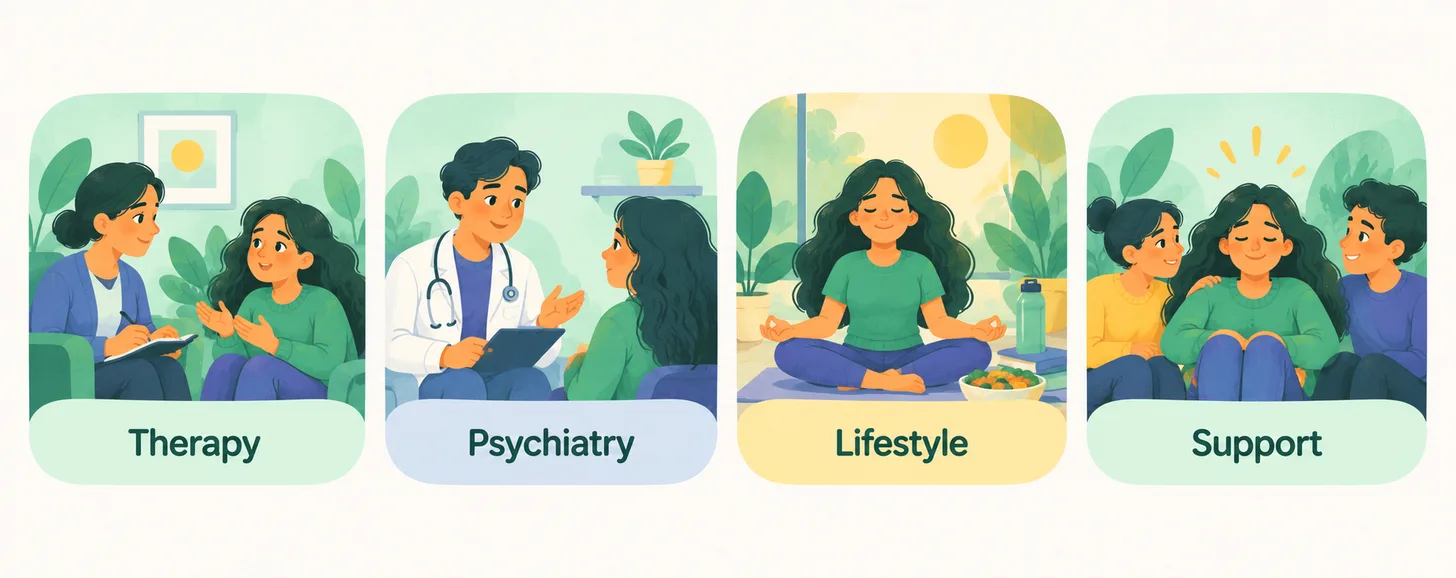
Here is the honest version of what each path looks like. Our fuller guide to ways to treat depression walks through this in more depth.
Talk therapy. Cognitive Behavioural Therapy (CBT), Interpersonal Therapy (IPT) and Behavioural Activation are the three with the strongest evidence for depression.
A psychologist meets you weekly for 50 minutes and helps you spot the loops that keep the low mood in place. Expect eight to twenty sessions. You should feel a shift in six to eight weeks, not six days.
Medication. If a doctor prescribes an antidepressant, it is usually from a class called SSRIs (selective serotonin reuptake inhibitors). We do not name specific drugs in this blog on purpose: the right drug for you is a decision for a psychiatrist, not a search engine.
SSRIs take two to four weeks to begin working. They are not addictive. They are not a moral failure. For many people they are the thing that lifts the fog enough to use therapy well.
Lifestyle changes with evidence. Thirty minutes of moderate movement most days (walking counts), seven to nine hours of regular sleep, less alcohol, sunlight before 10 am, and one honest conversation a week with a safe person. These are not a cure. They are the floor that holds the roof up.
Honesty bit. Recovery from depression takes weeks to months, sometimes longer. Many people have one depressive episode and never another. Some have more than one across a lifetime, and manage them earlier each time with the tools they have learned. Both stories are normal.
In short: depression care in India is layered. Therapy is the backbone, medication helps where it is needed, daily steps make both work, and the timeline is weeks, not days.
What small habits can lift a low day?
The first thing that helps is lowering the bar. On a hard day, your goal is to get through the day, not to be your best self at it. A warm shower, one glass of water, one meal, one open window, one five-minute walk. If that is all you did today, that is enough today.
A second helpful habit is noticing one thing that did not go wrong. Depression quietly erases the ordinary good: the chai that tasted right, the small kindness from the auto driver, the fact that the dog looked happy to see you.
Writing down three of these at night slowly rebuilds the pathway. If you want to try it right now, this takes less than two minutes.
If you want, take one slow minute with this before you read on.
Even on hard days, a few small things hold up.
Let's find three. It takes about a minute, and it never leaves your device.
Three good things
Take them one at a time. Small really counts here. If a prompt doesn't fit, swap it for another.
Your good list for today
Noticing good things doesn't cancel the hard parts. It just gives them some company.
Come back tomorrow and add three more.
This stays on your device. Nothing is saved or sent.
If a thought keeps running, something like “I am a burden” or “nothing will change”, try to notice it as a thought, not a fact. The idea is not to argue with the thought. The idea is to stop treating every thought as a verdict.
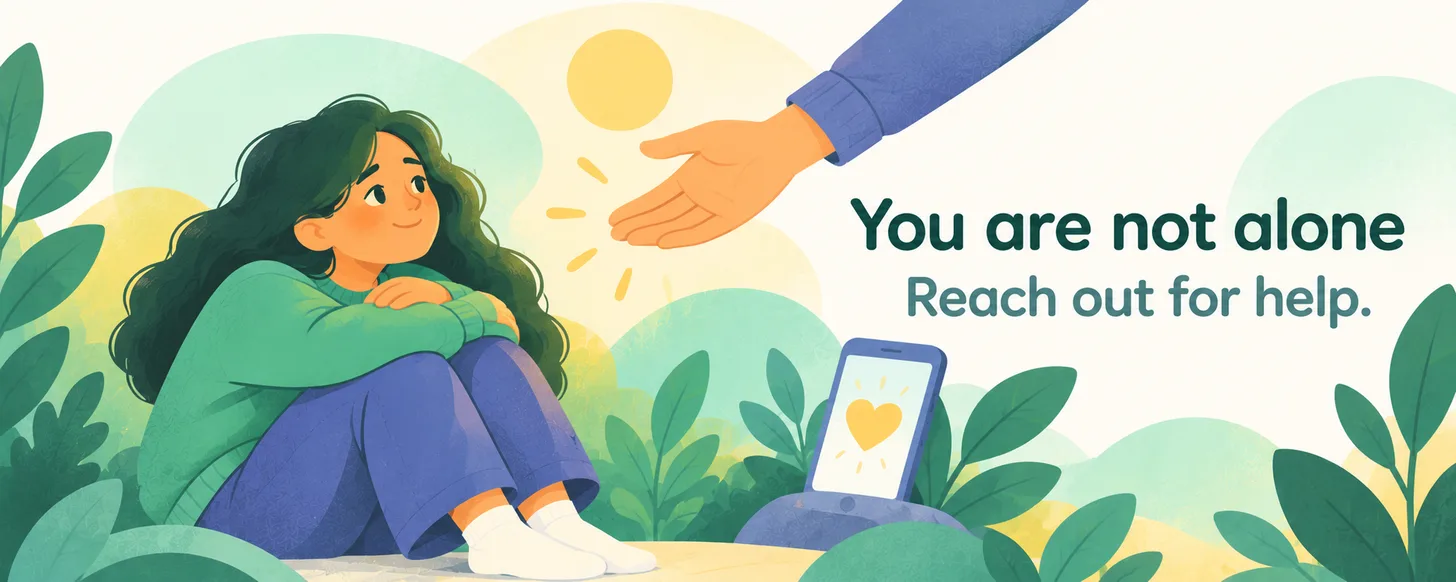
Finally, do not stop reaching out. Depression tells you no one wants to hear it. That is the illness talking, not the people in your life. One honest message to one person this week, something like “I have been low, can we talk”, is not a weakness. It is a treatment.
Journaling helps you notice the loop. A therapist helps you break it.
In short: lower the bar on bad days, notice one thing that did not go wrong, treat your harsh thoughts as thoughts and not facts, and keep one honest line open to one person.
When should you reach for urgent help?
Please read this part even if you think it does not apply to you right now. Depression becomes an emergency when the risk of harm goes up. You need urgent help tonight, not next week, if any of these lines sound like you or someone close to you.
- You are thinking about ending your life, or have a plan
- You are hurting yourself, or feel pulled to
- You have not eaten or slept for days and your body feels unsafe
- You are a new parent and the thoughts about yourself or the baby are scaring you
- You are using alcohol or substances to switch the feelings off, and the pattern is getting worse
- A close friend or family member is in one of the states above and you cannot leave them alone
What to do, in order. If you can, tell one person in the room. Call Tele-MANAS (14416): it is free, 24/7 and in 20 Indian languages. If you are not safe where you are, go to the emergency department of the nearest hospital, or call 112.
The Mental Healthcare Act, 2017 protects your right to urgent care. You do not need a referral, and no public hospital can refuse treatment because of a mental health condition. Source: Mental Healthcare Act, 2017.
A note we have to say out loud. If someone has died by suicide in your life, your grief is real, your questions are allowed, and none of it is your fault. There are no shortcuts. We have a longer piece on the difference between grief and depression when you are ready.
In short: thoughts of ending life, self-harm, severe neglect of the body, perinatal distress, or spiralling substance use are reasons to call tonight; Tele-MANAS 14416 is the fastest free door.
What are your rights under the Mental Healthcare Act, 2017?
Many Indian readers do not know their rights, and the law is kinder than most realise.
The Mental Healthcare Act, 2017 gives every person the right to affordable mental healthcare, to be treated with dignity, to confidentiality, and to community living. Section 115 presumes an attempted suicide is under severe stress.
What this means in practice. If you want therapy and your family does not understand, you still have the right to seek it as an adult. If a workplace or insurer discriminates against you for a mental health condition, that is unlawful. If you ever need urgent care, no public hospital can turn you away for being in distress.
Not every low mood needs therapy. Some weeks are a season you walk through, with sleep, movement and one honest conversation. The point of the law is that when you do need help, nobody can lawfully stand in your way.
In short: the law is on your side; you have a right to care, dignity, confidentiality and community living, and attempting suicide is not a crime.

Share your thoughts