
What this blog includes
- What learned helplessness means, and the 1967 experiments that named it
- The three thoughts that keep the loop stuck (universal, internal, stable)
- Where it shows up in real Indian life: abusive relationships, chronic poverty, exam-rank trauma, caregiver burnout
- What actually works to unlearn it, from attributional retraining to therapy
You know this feeling. You have asked for the leave, applied for the role, told the partner, called the office one more time. Nothing moved. After the fifth or the tenth try, something inside you went quiet. You started saying “it does not matter what I do”. You stopped reaching for the phone.
If you are reading this at midnight, you are not weak and you are not imagining it. Learned helplessness is a specific, researched pattern of thinking, with a shape and tools that help. GoodLives is trusted by 500K+ people across India, and the posts here are written by people who have sat on the other side of this quiet.
What is learned helplessness, really?
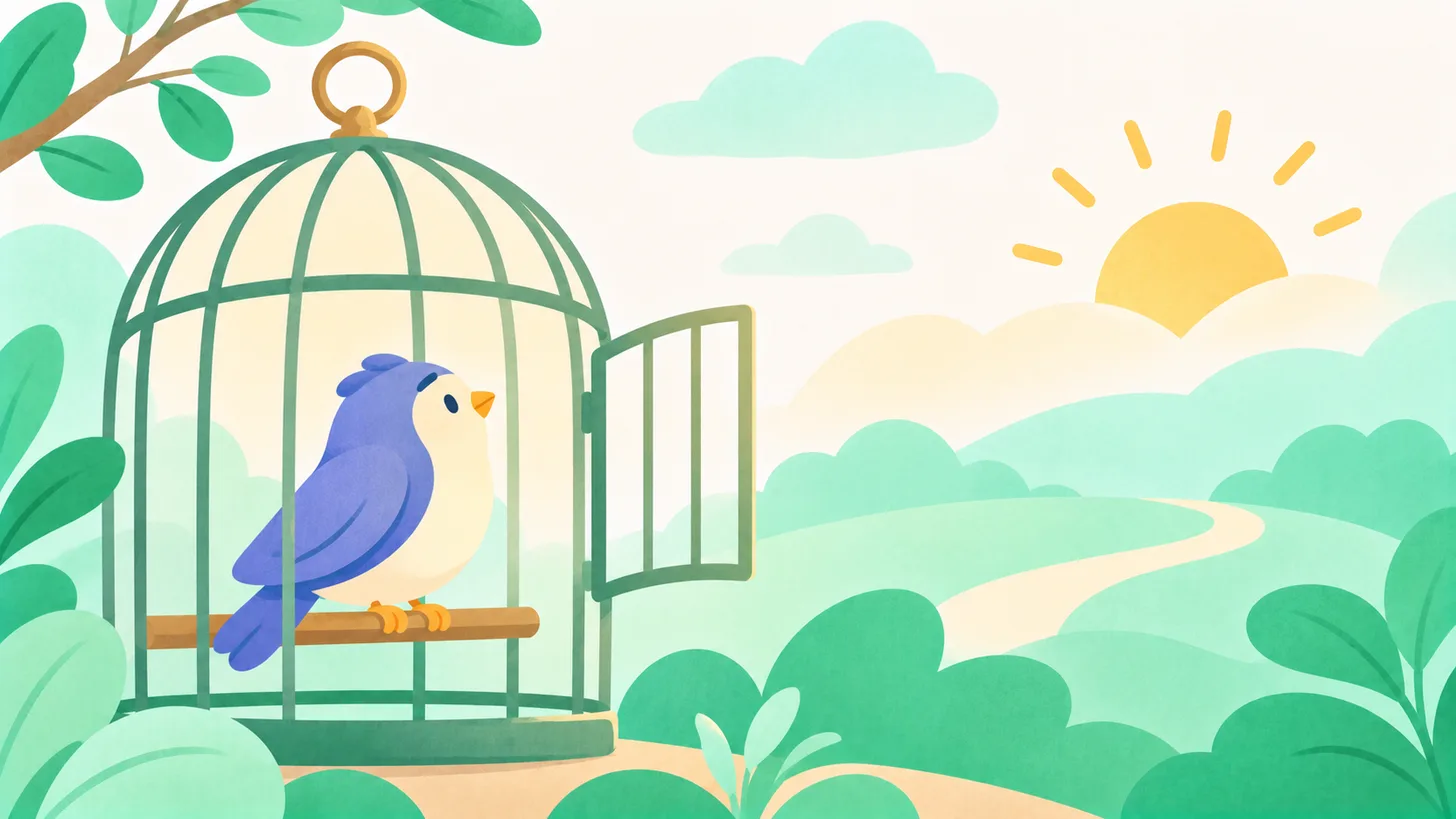
Learned helplessness is a pattern in which, after repeated experiences where your actions did not change a bad outcome, you stop trying to escape it, even when escape becomes possible. The brain learns the wrong lesson from a hard history, and keeps applying it after the history has changed.
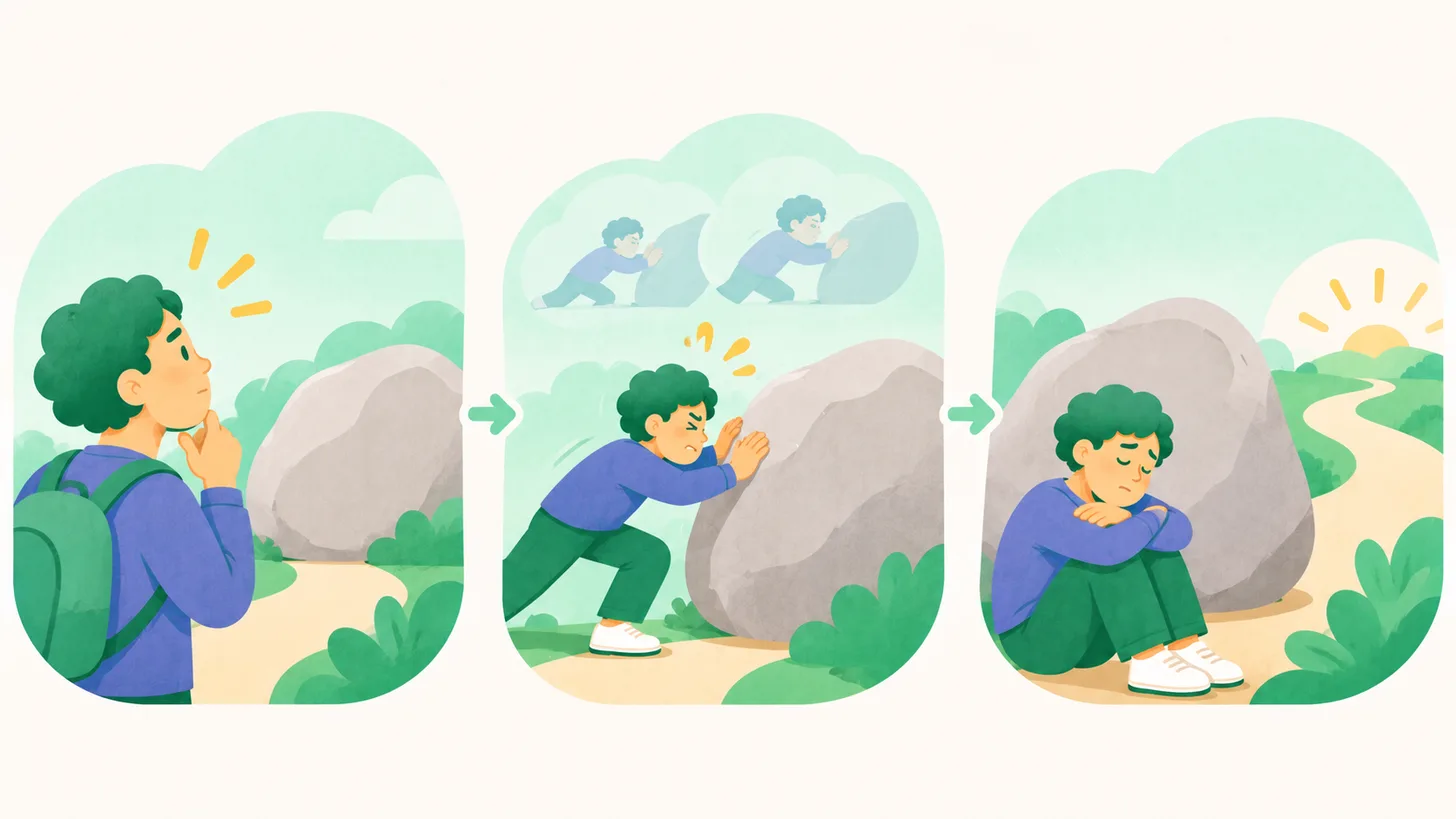
The term comes from a 1967 experiment by Martin Seligman and Steven Maier at the University of Pennsylvania. Dogs in one group received small electric shocks they could stop by moving to a different part of the box. Dogs in a second group received the same shocks, but nothing they did changed them.
Later, both groups were placed in a box where escape was easy, a low barrier they could step over.
The first group stepped over. The second group lay down and took the shocks.
Something had been learned, and it was not an action. It was a conclusion about the self: nothing I do matters. That conclusion then showed up in a situation where it was no longer true.
The study was later replicated across species and, carefully, in humans. The same pattern appears in people who grow up with unpredictable violence, in students who fail an entrance test after years of coaching, in employees in an organisation that will not change, in patients who stop advocating for themselves inside a long illness.
In short: learned helplessness is a lesson your nervous system learned from an unfair history. It stays because it once helped you survive, not because it is true now.
Why your brain gives up
The intuitive explanation for decades was that helplessness itself is learned. Fifty years in, Maier and Seligman updated the theory.
In their 2016 paper Learned Helplessness at Fifty, they argue the opposite. Passivity in the face of a bad event is the brain’s default. What organisms actually learn, when the environment allows it, is control, that an action here produces a change there.
Repeated inescapable stress does not teach you to be helpless. It teaches you that control is not available, so the default stays.
This is more hopeful than it sounds. It means the fix is not to defeat a learned helplessness; it is to let your brain learn control again, in small doses, in situations where it is really available.
You might be worried that this applies to you because you are weak or you lack discipline. It does not. It applies to you because the environment taught you something an animal brain is designed to learn. That same brain is capable of learning the opposite. That is the whole point of the next few sections.
In short: learned helplessness is less about learning to give up and more about never getting the chance to learn control. The repair is not willpower; it is a different experience.
The three thoughts that keep the loop stuck
The 1978 attributional reformulation by Lyn Abramson, Martin Seligman and John Teasdale narrowed it further. Not everyone who lives through an uncontrollable bad event ends up stuck. The people who stay stuck share three explanations in their head.
Universal. “Nothing I do matters, in anything.” The failure in one area spreads to all areas. One bad board exam becomes a verdict on your whole future.
Internal. “Something is wrong with me.” The cause of the bad event is located inside you, not in the circumstance. A lost job becomes a sign of your worth, not of a bad market.
Stable. “This will never change.” The cause is permanent, not a season. A rough stretch becomes the shape of your life.

Any one of these is heavy. Together they predict a slide into depression. Seligman’s later hopelessness model of depression grew directly out of this work. The clinical insight is that these three sentences are the ones a good therapy session will work on, in order.
The person who tells themselves “that one interview went badly because the interviewer had a bad morning, and I will prepare differently next time” is not helpless. The person who tells themselves “I failed because I am not good enough, and I will keep failing” is on the slope the research describes.
In short: three sentences in your head decide whether a hard event stays local and temporary or becomes a story about who you are forever.
Where learned helplessness shows up in real life
The experiments were small boxes. The pattern lives in the rest of our lives.
Abusive and controlling relationships. After enough times of being told “you cannot do this without me”, of being overruled, of being punished for leaving, the partner stops trying to leave even when a safer option is on the table.
This is one of the reasons it is cruel to ask “why didn’t she just leave”. She did try. The system did not let her, and her nervous system learned.
Chronic illness and long caregiving. People who have spent years inside a hospital system, their own or a parent’s, often stop advocating for small things that would help. Appointments, questions, second opinions. The quiet is not laziness; it is the mind catching up with a decade of being told to wait.
Work and management. The manager who has watched three CEOs promise and leave, the engineer whose last four proposals went nowhere, the HR partner whose policy drafts sit unapproved. The giving-up looks like disengagement. Underneath, it is a lesson about where effort does and does not land.
Chronic poverty. When systems have taught several generations that forms do not get processed, that complaints do not get addressed, that savings get wiped out by one hospital bill, the sense of control itself gets eroded.
This is not a mindset problem. It is a direct consequence of an environment that does not let effort pay off.
Caste, gender and family systems. In homes where decisions are made for you, where leaving is punished, where speaking is scolded, the muscle for having an opinion of your own thins over years. If your early years taught you that your choice did not count, your adult life needs a different experience to learn otherwise.
If any of this is near you, our note on toxic relationship signs sits next door to this one.
What actually helps you unlearn it
There is no reset. There are specific tools, used often enough that your brain gets a different experience to learn from. These are drawn from fifty years of clinical research.
Attributional retraining. This is the direct repair for the three sentences from the Abramson, Seligman and Teasdale paper. You learn to catch each one and offer a more accurate alternative.
For universal, you narrow it: this one job, not every job. For internal, you widen it: a bad market, not a bad me. For stable, you time-stamp it: this month, not this life.
If you want to try it on the actual thought that has been looping for you today, start here.
Catch the thought
What thought is weighing on you right now? Write it down just as it sounds in your head.
Name the trap
Does your thought fall into one of these common patterns? Pick any that fit. This part is optional.
Look again
Use these as nudges, not rules. Then write one line back to yourself.
Your reframe
Thoughts are not facts. You just practised stepping back.
This stays on your device. Nothing is saved or sent.
Behavioural activation. Depression research is consistent on one point: action tends to come before motivation, not after. Pick an action so small the loop cannot find a reason to refuse. Walk to the gate, open the laptop, send one short message, apply for one role.
The point is not the action. It is giving your brain one piece of evidence that effort met result. Over a few weeks, the evidence stacks up.
CBT for the loop. Cognitive behavioural therapy with a trained psychologist does what you cannot easily do alone: it maps your specific triggers and the specific thoughts that follow, and it builds a plan for the next time one shows up. Sessions are usually 50 minutes, often 8 to 16 of them for a defined issue.
ACT, for the parts you cannot change. Acceptance and Commitment Therapy teaches a different move. Where the situation really is not changeable, a chronic illness or a slow family decline, ACT helps you place your energy on what is yours to act on. Without pretending the hard thing is not hard.
Trauma-informed therapy if the root is early. If learned helplessness was built in a childhood home, an abusive first relationship, or years of school humiliation, the loop lives in the nervous system, not only in the thoughts.
A trauma-informed therapist will go slower, with your body, before working with words. Our note on trauma symptoms and types sits next door.
Graded mastery, Albert Bandura’s piece. Bandura’s self-efficacy work found that the strongest way to rebuild a sense of agency is small, successful experiences. Not pep talks. Not visualising. Doing a thing you were avoiding and seeing it work. Then one bigger thing. The ladder is the therapy here.
Movement, when words are not enough. Daily walking, yoga, a weekly swim. The nervous system learns control through the body as much as through sentences. For readers inside a long low mood, our depression guide for India covers this ladder in detail.
Self-help gives you the vocabulary. A therapist helps you place the right tool against the specific history you are in.
What does not work (even if your family keeps saying it)
The hardest part of this topic is that the common advice makes it worse. Three in particular.
Shame, from parents, partners or your own voice.
- Shame is a brake on the exact nervous system that needs to feel safe to risk again
- “Others have it worse” never ends in effort; it ends in collapse
- A kinder sentence, said to yourself the way you would say it to a scared cousin, moves the needle
In short: you do not out-push a learned helplessness. You rebuild it one small, honest, successful action at a time, with somebody who can see what you cannot.
When is this a conversation with a therapist, not a weekend project?
Most learned helplessness is a bad lesson from a hard history, and small daily work can soften it over months. Sometimes it has crossed into clinical territory and needs a careful assessment.
A rough rule: speak to a therapist when four or more of these are true for more than six weeks.
- The quiet has become most of the day, most days
- You have stopped doing basic self-care, sleep, meals, hygiene, moving your body
- You are using alcohol or sleep medication to switch off
- You cannot see a time it was ever different, or ever will be
- There is a specific abusive or controlling situation you cannot see a way out of
- Thoughts of self-harm or that you would be better off not here have begun to show up
If the last one is familiar, this is not a next-week problem. You do not have to be in crisis to call. You can call because the quiet got loud this week.
If you are inside a long low mood, our longer piece on depression in India sits next door.
In short: learned helplessness is reversible. The brain that learned it can learn differently. If the loop has moved into daily living or into thoughts about not being here, the next step is a conversation with a trained person, not another article.
FAQ
What is learned helplessness in simple words?
Who discovered learned helplessness?
Is learned helplessness the same as depression?
How do I know if I have learned helplessness?
Can learned helplessness be unlearned?
What is the difference between learned helplessness and giving up?
Can therapy really help with learned helplessness?
This post is for information only and is not a substitute for professional care. If you are struggling, please speak to a qualified mental health professional.


Share your thoughts