
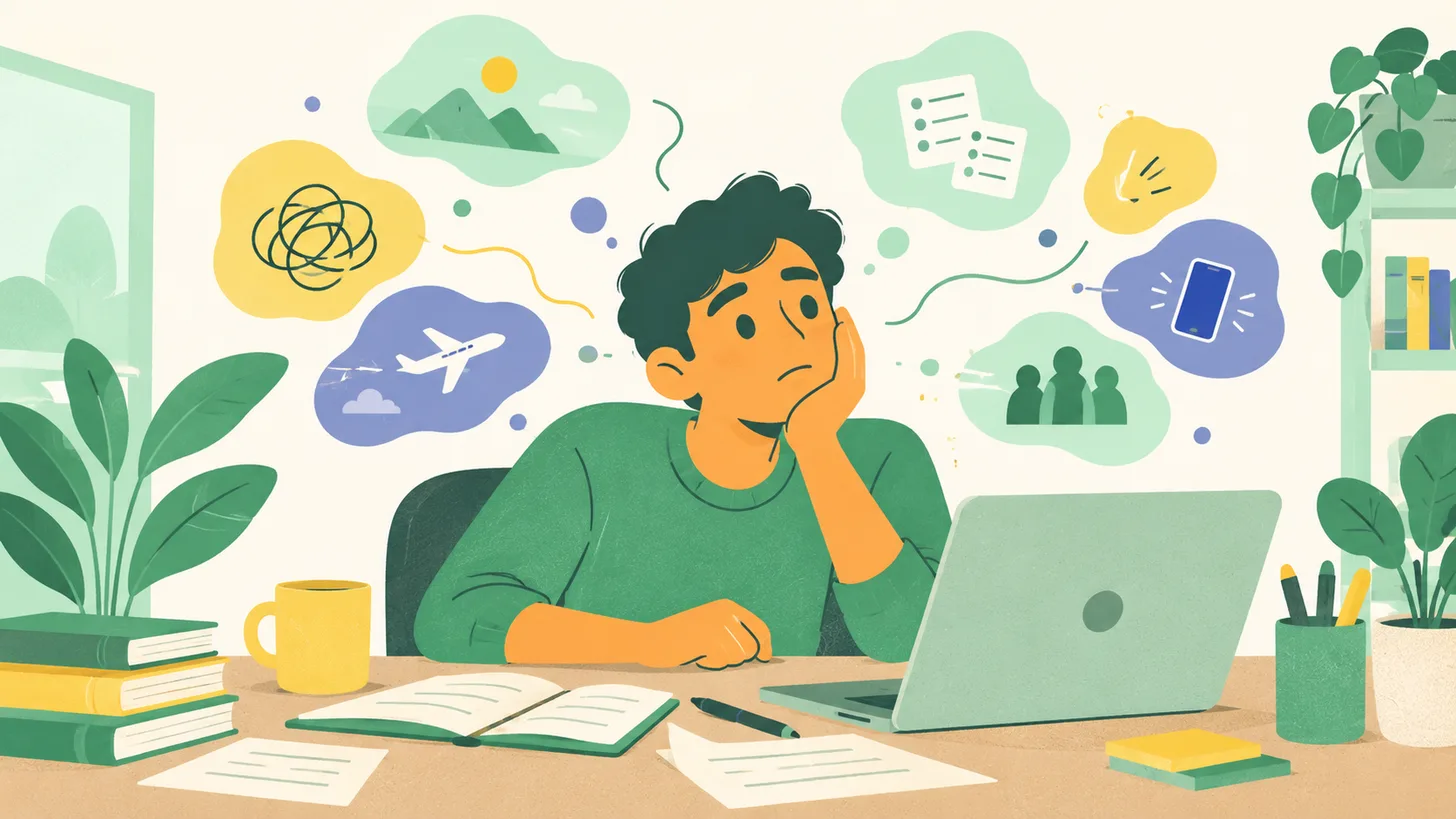
Adult ADHD in India is more common than most of us realise. Trusted by 500K+ people, GoodLives helps adults who have spent years calling themselves lazy or distracted finally put a name to the pattern. If the signs below sound like your week, you are not being dramatic. A short self-check and one honest conversation with a psychologist can be the beginning of a different kind of calm.
What ADHD actually is, in plain words
ADHD stands for attention deficit hyperactivity disorder. It is a brain-based condition that affects how you focus, sit still, and manage impulses. The World Health Organization groups ADHD with the neurodevelopmental disorders, which begin in the developmental period of childhood (WHO: Mental disorders fact sheet). For many people the signs continue into adulthood. It is not a sign of weak character. It is not caused by too much phone time. It is not something you grow out of by trying harder.
Many adults in India live with ADHD without knowing. Girls and women are often diagnosed much later than boys because the quieter inattentive signs are read as “she is just shy” or “she is dreamy”. Men are often diagnosed when a career plateau or a difficult appraisal brings years of near-misses into focus.
In short: ADHD is a brain difference, not a moral failure, and most adults in India are catching the diagnosis late.
How ADHD shows up in adult life in India
Adult ADHD rarely looks like a child bouncing off the walls. It looks like missed deadlines you did not plan to miss, a to-do list with the same three tasks for three weeks, and the particular Indian flavour of bechaini: the restless hum that will not switch off even on a Sunday afternoon.
Common signs:
- Time blindness. The two-minute task that eats an hour. Reaching for the phone and losing a morning. “I will do it in five minutes” that becomes 11 pm.
- Hyperfocus and crash. You can code or paint or clean for six hours straight, then cannot start the next thing for three days.
- Starting is harder than doing. Opening the laptop is a mountain. Once the file is open, the work flows.
- Emotional dysregulation. Small criticism lands like a slap. A delayed Zomato order ruins the hour. You know it is “too much” and you cannot find the brake.
- Forgetting the things you care about. The friend’s birthday, the parent’s medicine refill, the WhatsApp reply you meant to send yesterday.
- Mental tabs. Twenty thoughts, each half-finished, running at the same time. Trying to pick one is like trying to pick a song on a radio stuck between stations.
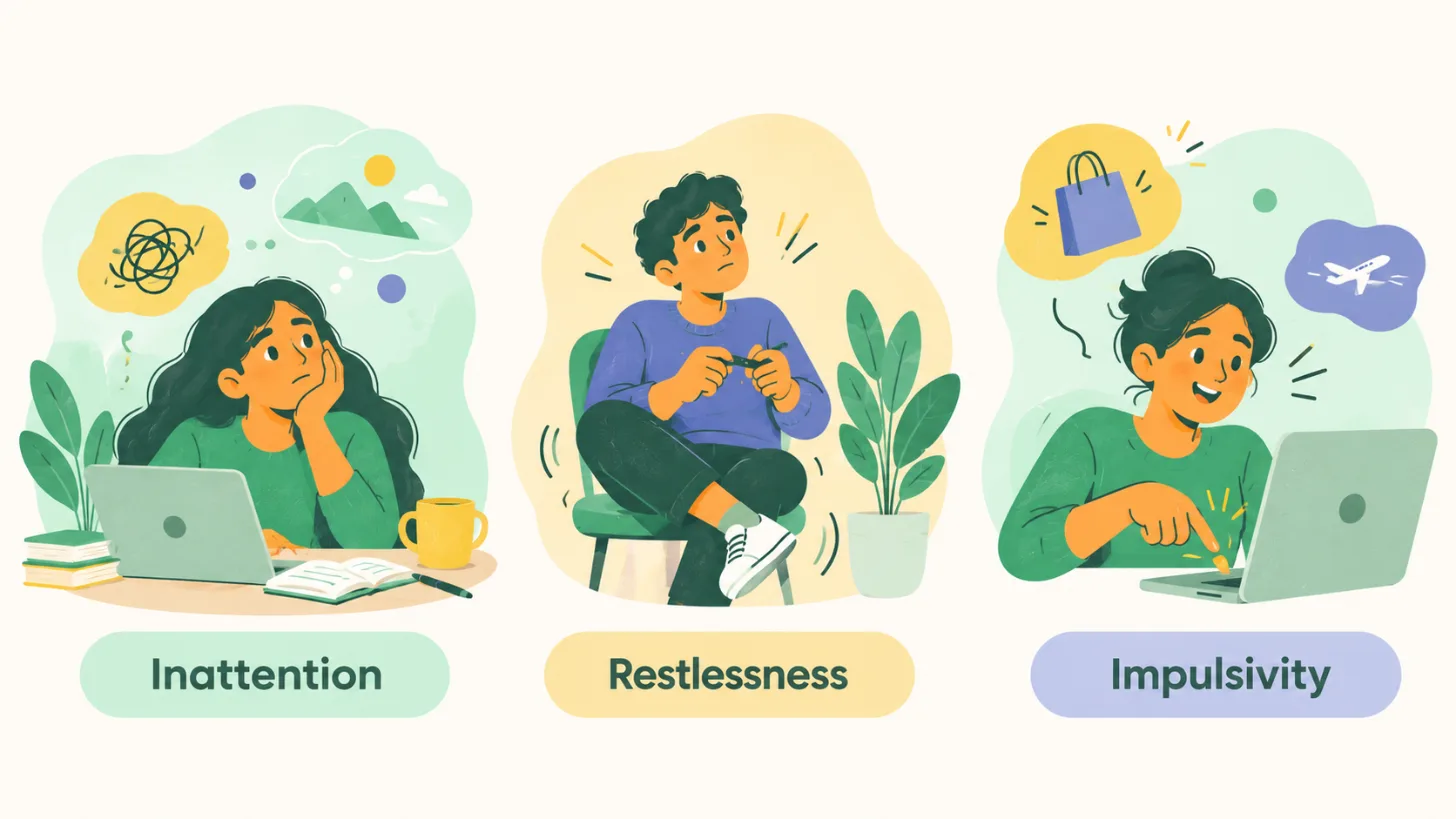
If three or four of these are a weekly story for you, that is worth a conversation with a psychologist. These signs on their own are not a diagnosis. Together, over months, they are a pattern worth taking seriously. Jotting down a few real examples from the last month is a useful starting point to carry into a consult.
In short: adult ADHD often hides as “I am just like this”. It is a pattern, not a personality.
Is ADHD a learning disability, a mental illness, or something else?
ADHD sits in its own category. In the World Health Organization’s international classification, it is grouped under neurodevelopmental disorders, alongside autism and specific learning disorders. It is not a learning disability by itself, though many people with ADHD also have one (such as dyslexia or dyscalculia). It is not the same as depression or anxiety, though those often ride along.
In India, the Rights of Persons with Disabilities Act, 2016 names 21 specified disabilities, including specific learning disabilities and autism spectrum disorder (RPwD Act 2016, Government of India). ADHD is not named on that list by itself. In practice, whether you can get workplace adjustments or exam accommodations depends on your assessment and on the rules of your employer or education board, so ask your psychiatrist what applies to you.
In short: ADHD is a brain-development condition, not a learning disability on its own. What support you can get in India depends on your assessment, not the label alone.
How ADHD is different from anxiety, depression or burnout
Many adults in India are told they have “anxiety” or “burnout” when ADHD is quietly running underneath. The two can look similar on a bad week. They are different in root.
- It was there in childhood, even if nobody caught it
- Focus and starting tasks is hard across every area of life, not only the stressful ones
- Rest and holidays do not fully fix it
- They tend to have a start point you can trace
- They often lift (slowly) when the pressure eases
- Sleep, time off and therapy can shift them without a specialist diagnosis
In short: ADHD is the root in some cases that look like anxiety or burnout. A good assessment separates the two.
The honest diagnosis route in India
There is no blood test for ADHD. Diagnosis is done through a structured clinical interview, usually by a psychiatrist, sometimes supported by a clinical psychologist. Here is the route that works for most adults in India today.
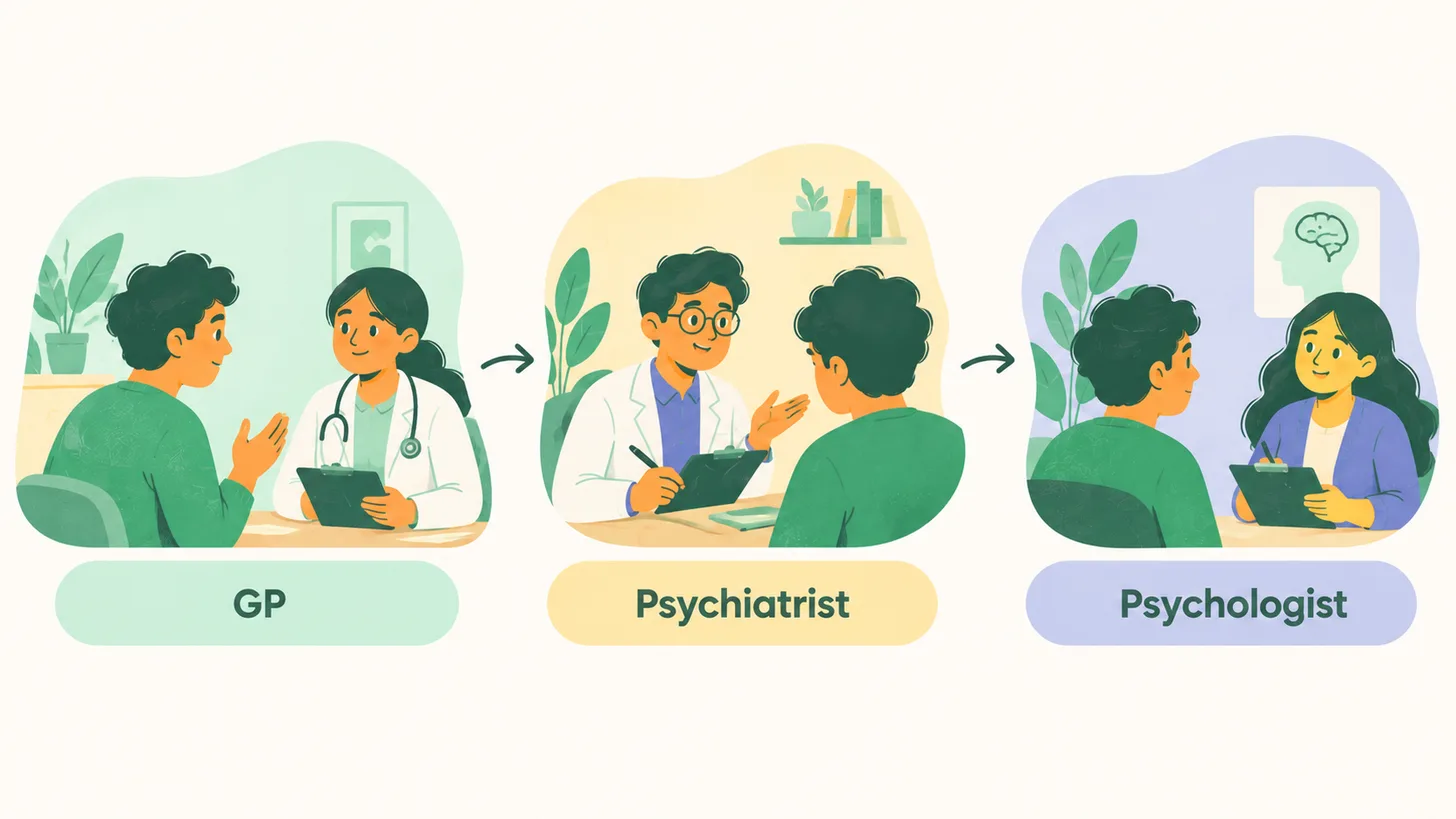
- Start with a GP or your family doctor if you have a trusted one. They can rule out thyroid issues, iron deficiency, sleep apnoea and other medical conditions that mimic ADHD. These rule-outs matter, because treating a thyroid problem with ADHD medication would be wrong.
- See a psychiatrist, a medical doctor registered with the National Medical Commission or a state medical council. They can diagnose ADHD and, if appropriate, prescribe medication. The first appointment is often longer than a usual consult. The psychiatrist will ask about childhood symptoms (yes, really; bring a parent or a sibling if you can, for perspective).
- Work with a clinical psychologist for the therapy and skills side. In India, clinical psychologists are registered with the Rehabilitation Council of India (RCI). On GoodLives, you can talk to a verified psychologist in English, Hindi and more. A psychologist cannot prescribe medication; a psychiatrist cannot do weekly therapy. Both roles are different and both matter.
A full assessment often takes more than one session. Expect questions about school, work, relationships, sleep, and your family’s mental health. Bring a few examples of your tougher weeks. Honesty here helps more than performing a put-together version of yourself.
In short: GP first for medical rule-outs, psychiatrist for the diagnosis itself, psychologist for the therapy. Different roles, different value.
What ADHD treatment looks like for adults in India
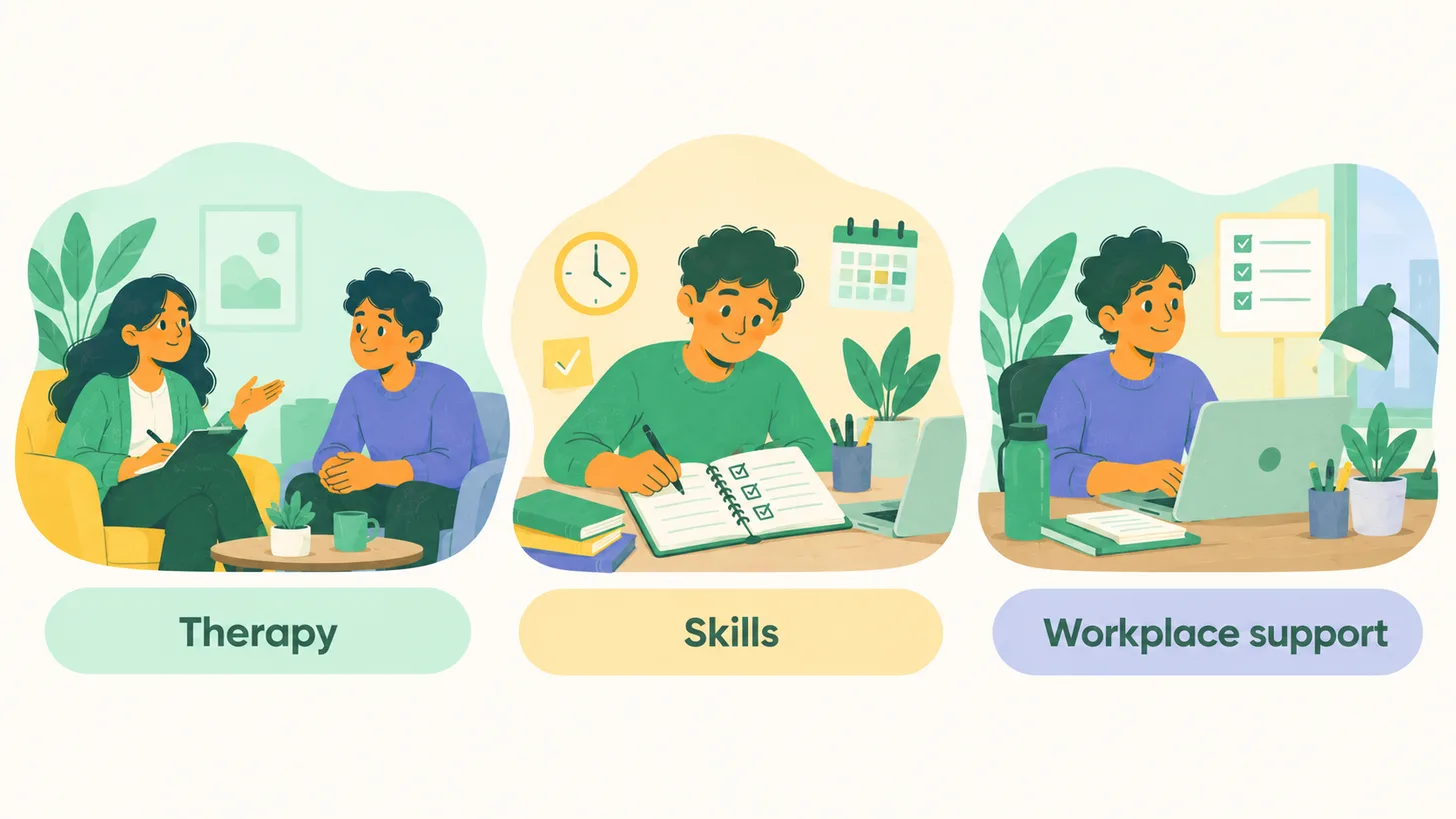
ADHD is managed, not cured. Many people in India search for an “ADHD cure”, and the honest answer is that there isn’t a cure, but there is a good life. The combination that works best for most adults is therapy plus skills plus (sometimes) medication, with the mix decided by a specialist.
Therapy for adult ADHD
A psychologist can help you with the parts medication cannot touch:
- Cognitive behavioural therapy (CBT) adapted for ADHD. Spotting the thought patterns that make small setbacks feel catastrophic, and building ways to reframe them.
- Skills coaching. Practical scaffolding for time, planning, task breakdown, and the particular struggle of starting. External structure (not willpower) is the lever here.
- Emotional regulation work. The ADHD brain often reads criticism as rejection. This has a name: rejection sensitive dysphoria (RSD).
Therapy does not “fix” an ADHD brain. It teaches you to work with one. For most adults the gain is slow and steady over months, not days.
Medication (talk to a psychiatrist)
Medications for ADHD exist and work for many adults. They are prescription-only and need regular review. This is a conversation to have with a psychiatrist, not with a blog post or a WhatsApp group. If medication is right for you, your psychiatrist will walk you through the options, side effects, and the follow-up schedule.
Workplace and lifestyle support
- Protect sleep like it is a job. Lack of sleep makes every ADHD symptom louder.
- Build short, specific routines. “At 10 am I open the project document” beats “I will work on it today”.
- Share with one person at work (a manager you trust, HR, or a buddy) who can gently nudge you back.
- Movement most days, even a 20-minute walk, helps focus more than caffeine, with no crash.
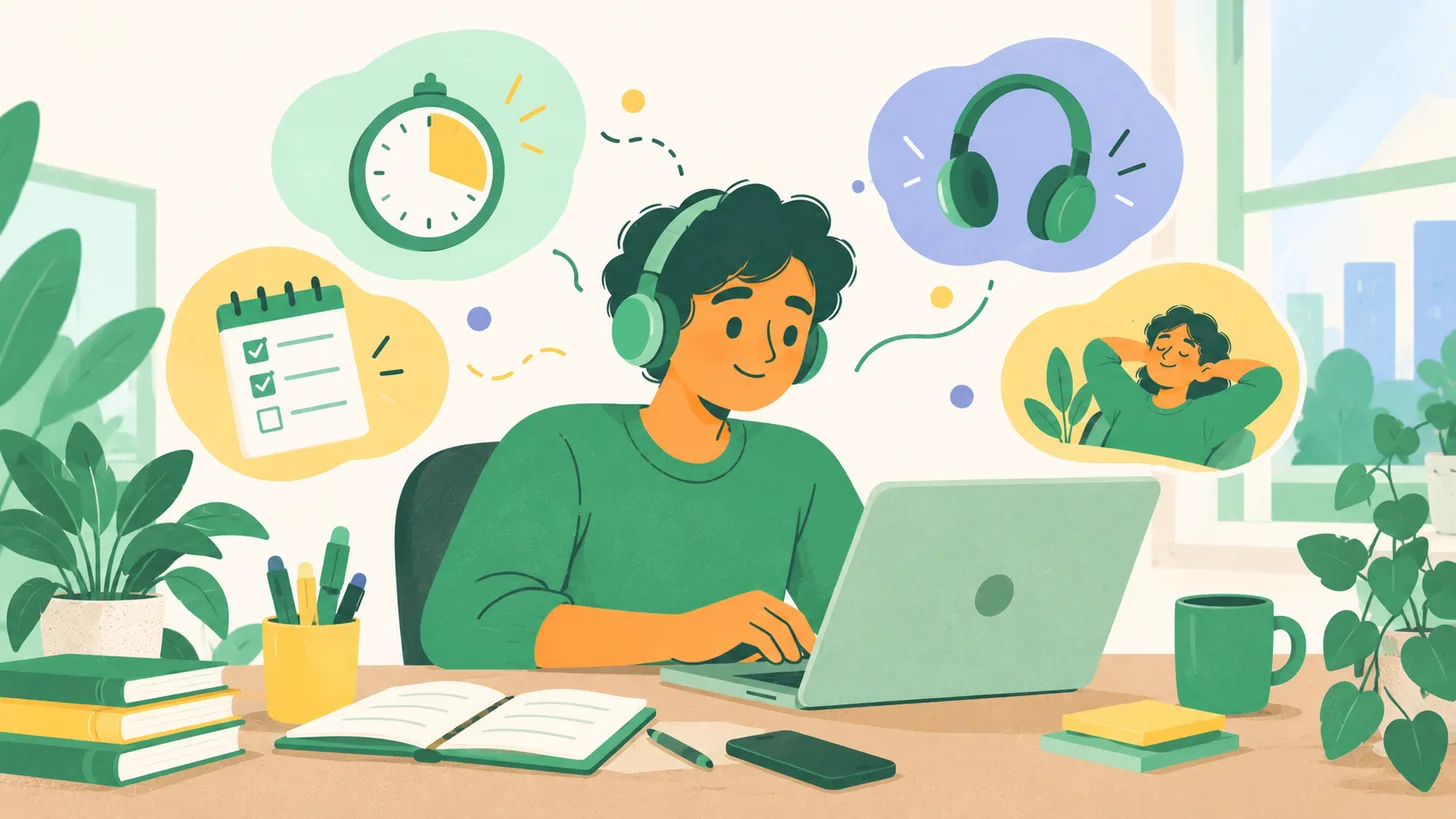
In short: the real “treatment” is therapy, skills, workplace tweaks and (sometimes) medication from a psychiatrist. ADHD is lived with, not cured.
Emotional dysregulation and untreated ADHD in adults
Of all the parts of adult ADHD that nobody warns you about, this one is the loudest. ADHD does not only affect how you work. It affects how you feel about how you work.
Emotional dysregulation shows up as:
- A delayed email reply that convinces you the sender is angry
- A missed deadline that spirals into “I will probably get fired, I should quit before they fire me”
- A small argument with a parent that ruins the week
- Rejection sensitive dysphoria, where a small hint of disapproval feels unbearable
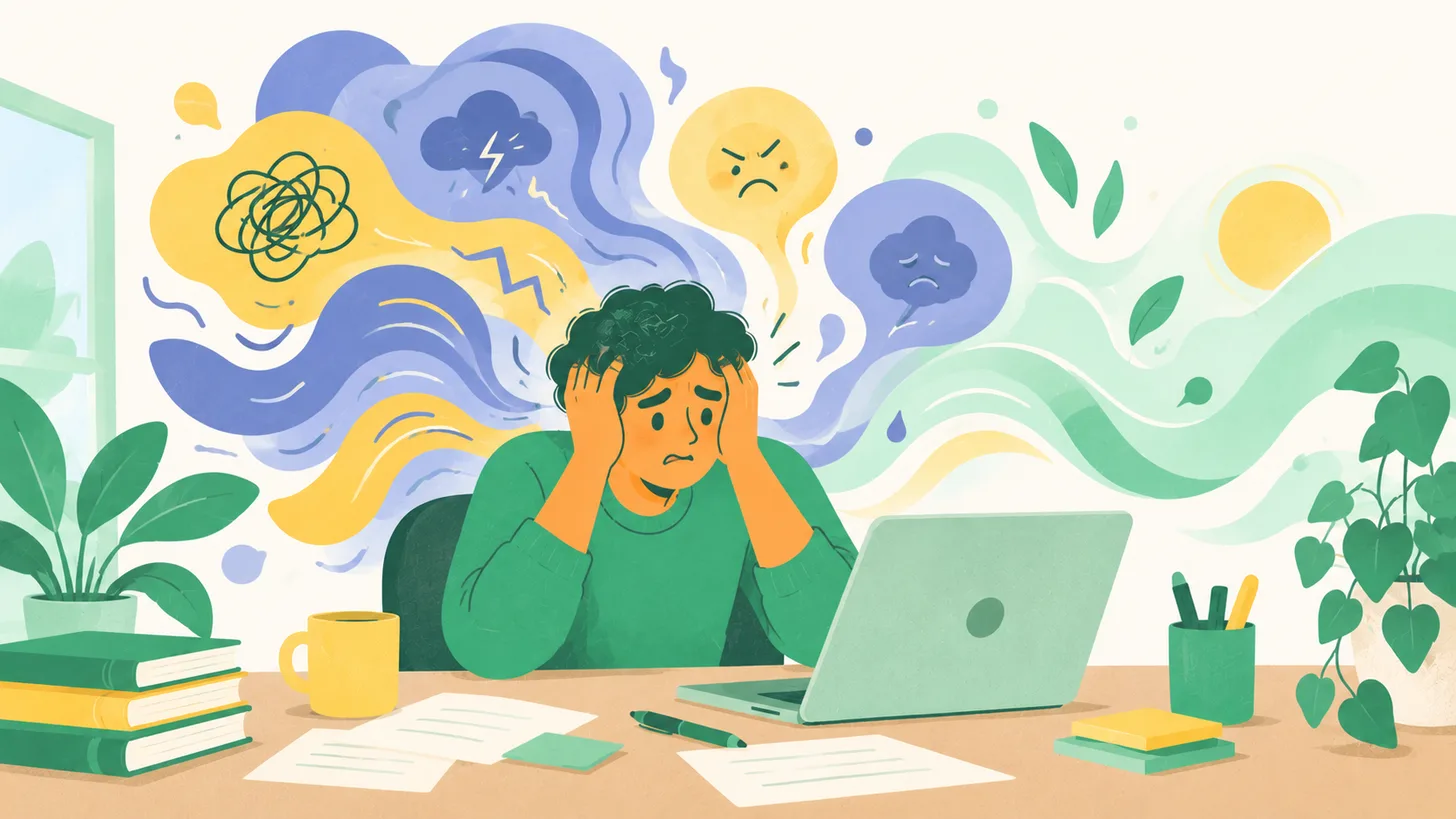
When ADHD is untreated for years, these waves pile up. Many adults in India arrive at therapy not for ADHD but for anxiety, low self-worth, or burnout, and only in the fourth or fifth session does the pattern get its real name. By then the self-blame has layered thick. The good news: once you can see it, a therapist can help you unlearn it. The waves don’t vanish, but they stop knocking you over.
If an ADHD wave is rising right now — a snapped reply, a dread spiral, a 2am loop — try one slow minute with your senses before you read on. It won’t fix the week. It just gets your foot off the accelerator.
In short: untreated ADHD often arrives at therapy wearing an anxiety mask. Catching the pattern is the first calm in years.
Who adult ADHD often shows up in, and who to see first
- Working professionals in their 20s to 40s. The most common adult group arriving at a psychologist with ADHD symptoms. Often triggered by a job change, a project overload, or a shift in how work is structured.
- New parents. The demands of a new child make low-level ADHD impossible to hide. Common for women to notice signs post-pregnancy.
- Students in late undergrad or postgrad. Timetables loosen, procrastination has nowhere to hide, and old coping tricks (deadlines, exam adrenaline) stop working.
- Adults with a diagnosed child. Many parents discover their own ADHD while sitting across from a child psychologist for their child.
If you are reading this for yourself: start with a self-check, then a psychiatrist consult. If you are reading for someone else — a partner, a friend, your sibling — the best thing you can do is share a link, not push a diagnosis. “I read something that reminded me of you, maybe have a look” works better than “You have ADHD.”
In short: adults from every walk of life. Start with the person, not the label.
Common doubts people have before they book a consult
- “Isn’t ADHD a child thing?” It begins in childhood, and for many people the symptoms continue into adulthood. The hyperactive bit often quiets with age; the attention and emotional bits don’t.
- “Will I need medication forever?” Not necessarily, and not everyone needs it. A psychiatrist (a medical doctor) decides on medication with you.
- “My family won’t believe me.” Common. A diagnosis gives you the vocabulary to explain it. Our guide on dealing with family pressure may help if your family’s reaction is the harder part.
- “What if I am just lazy?” You are reading an India-specific guide on adult ADHD at the end of a long day. That is not laziness. That is a person looking for an answer.
In short: the doubts are normal. They are the exact reason a good first consult is worth the hour.
Not every pattern needs therapy. Here is when it does.
To be fair: not every stressful week is ADHD, and not every ADHD-looking week needs a specialist. If one tough month is tied to a project ending or a family shift, give yourself permission to just rest. If you have tried obvious fixes (sleep, structure, less screen time) for two to three months and nothing moves, that is when the pattern deserves a professional eye.
Also honestly: therapy is not the fastest tool if what you need tonight is sleep. Protect the sleep first. Book the consult for next week. Both can be true.
FAQ
What is the 24-hour rule for ADHD?
The “24-hour rule” is a self-help practice (not a clinical treatment) where you wait 24 hours before making a big decision when you are emotionally activated. It is useful for ADHD because the ADHD brain often wants to act immediately on a strong feeling. It is not a diagnosis or a cure, just a pause button worth keeping.
Is ADHD a disability in India?
ADHD is not one of the 21 disabilities named in the Rights of Persons with Disabilities Act, 2016, though specific learning disabilities (which some adults with ADHD also have) are on the list. Whether you qualify for workplace or exam adjustments depends on your assessment and the institution’s rules. Your psychiatrist can tell you what paperwork applies.
Can ADHD be cured in India?
ADHD cannot be cured, but it is well managed with therapy, skills, workplace structure and, where appropriate, medication from a psychiatrist. Many adults live full, successful lives once they understand their brain and build the right scaffolding around it.
Can therapy alone treat adult ADHD without medication?
For some adults, yes. For others, therapy plus medication works better than therapy alone. Your psychiatrist is the right person to decide whether medication fits you. A psychologist can begin the therapy and skills work in parallel.
Can I talk to a psychologist on GoodLives about adult ADHD?
Yes. GoodLives connects you with verified psychologists who can help with focus, time, stress and emotional regulation, in English, Hindi and more. The formal diagnosis and any medication stay with your psychiatrist. See our pricing page for session costs.
What is the first step if I think I have ADHD?
Note down a few real examples where focus, time or emotions have tripped you up in the last few months. It is not a diagnosis, but it gives you a clearer picture to carry into a consult. Then book an appointment with a psychiatrist for the formal diagnosis.
Is ADHD a learning disability?
No. ADHD is a neurodevelopmental condition. It is not the same as dyslexia or dyscalculia (which are specific learning disabilities), though some adults have both. A clinical psychologist can tell them apart.
Not medical advice
This guide is educational. It is not medical advice. If you need care, speak with a licensed mental-health professional.
If you or someone you know is in immediate distress, please reach out.
- Tele-MANAS (Government of India, 24×7): 14416 (free, 20+ Indian languages)
- iCall (TISS): 9152987821 (Monday to Saturday, 8am to 10pm; multilingual, free)
- Vandrevala Foundation (24×7): 1860 266 2345 or 1800 233 3330
If life is at risk, call a hospital emergency number or go to the nearest emergency department.


Share your thoughts