
What this blog includes
- The honest meaning of a toxic relationship, and when “difficult” crosses into harmful
- The 8 signs most people miss, including the quiet ones
- Why leaving feels impossible, and the India-specific reasons people stay
- A step-by-step safe-exit plan with documents, money and a trusted contact
- Named Indian helplines, legal protections and where therapy fits in
You have probably googled this twice this week. You already know something is wrong. You have told yourself it is not that bad.
The word “toxic” gets used for everything. So let us be careful. A toxic relationship is not a rough patch. It is a chronic pattern of harm. There is a power imbalance. There is some form of control.
About 1 in 3 women across the world have faced partner violence in their life. That is from the WHO fact sheet on violence against women (18 June 2026). You are not dramatic. You are not alone.
You might be worried that if you tell a friend, they will not believe you. Many do not, at first. Find the right person to tell. Do not stay silent.
GoodLives has supported more than 500K+ people. We hold a 5 Google rating from the people we have walked with. This post is for you. At your pace. No pressure to decide today.
What does a toxic relationship actually mean?
A toxic relationship is a pattern, not an event. It is marked by chronic harm. There is a power imbalance. And there is some form of control, through fear, guilt, money or silence. Every couple fights sometimes. That is not toxic. Toxic is when the fights follow a script, you shrink, and leaving feels unsafe.
The clinical word for the controlling pattern is coercive control. It narrows your choices. It cuts your friendships. It takes your freedom. All of this can happen without a single bruise.
In India, the Protection of Women from Domestic Violence Act, 2005 names five kinds of abuse. Physical. Sexual. Verbal. Emotional. And economic. The law understands what friends sometimes do not.
Not every unhappy relationship is toxic. Some are tired, mismatched or going through a hard season. The test is honesty. When you are with this person, do you become smaller? More watchful? Less yourself?
In short: Chronic harm plus a power imbalance plus some form of coercion. If that is the pattern, the word toxic is accurate, and the problem is not you.
8 signs of a toxic relationship
These are the eight toxic relationship signs that come up again and again on intake calls. One or two of them, on their own, can mean a hard week. Four or more that keep repeating, and keep getting worse, point to a pattern. That pattern will not fix itself with one more conversation.
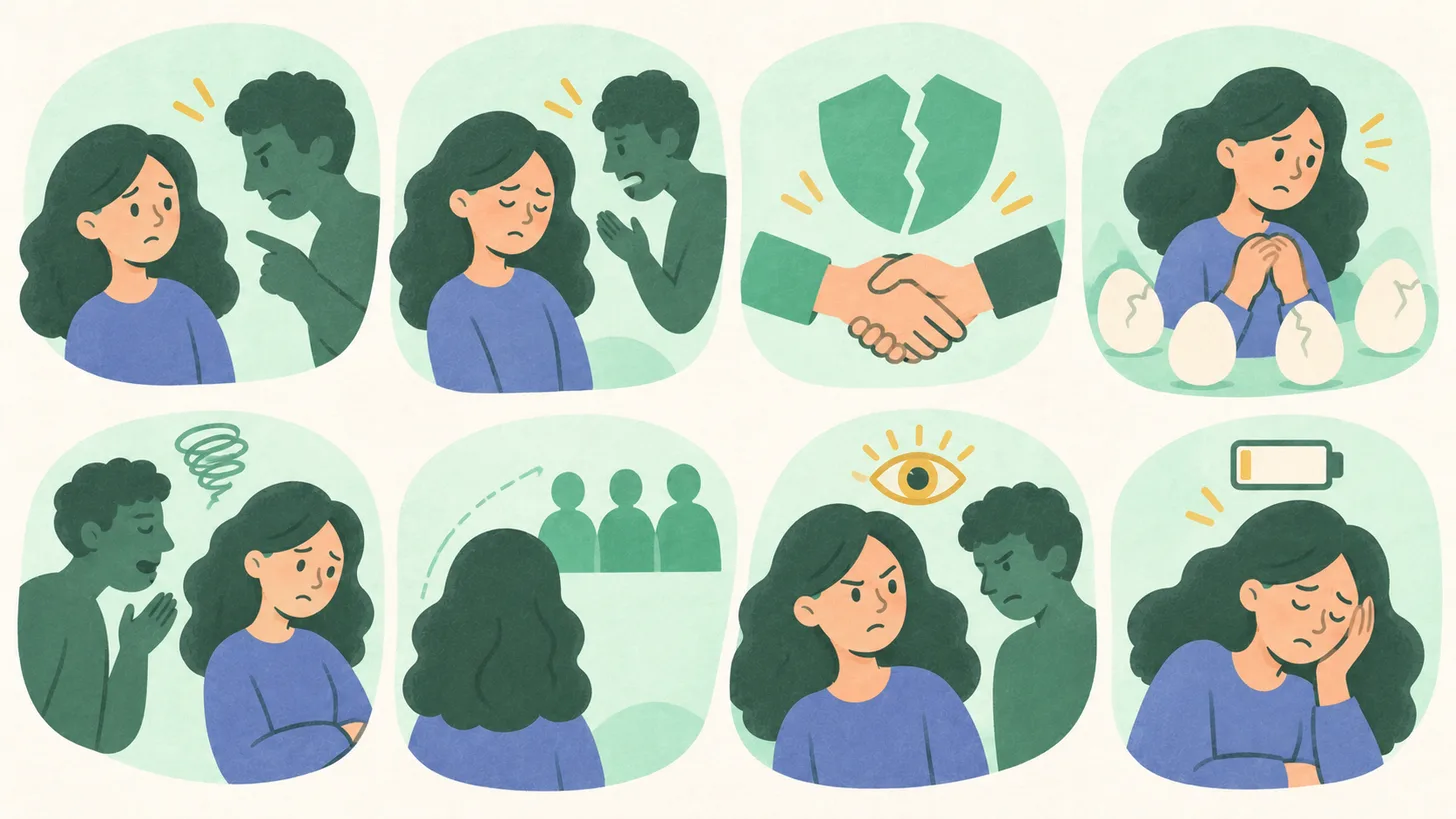
- Walking on eggshells. You spend energy predicting their mood before you share your own feelings.
- Constant criticism, disguised as “honesty”. Your clothes, your family, your laugh. You start to agree with the picture they paint of you.
- Isolation. Friends drift away, your family is “the problem”, and your world quietly shrinks to one person.
- Jealousy and surveillance. Phone checks, location sharing demanded one-way, questions about every late reply.
- Gaslighting. You remember a thing clearly. They tell you, often enough that you start to doubt, that it never happened.
- Financial control. They decide what you spend. Or you earn, and they take. Or you are not told what is in the joint account.
- The apology loop. A big incident, flowers, a promise. Then it happens again. The cycle itself is a sign, not the fight.
- You are afraid. Of their anger. Of what they will do if you leave. Of how a friend would judge you if you told the full story.
Toxic relationship quotes travel on Instagram for a reason. They name what the person inside the relationship cannot yet say. Two we come back to, from named writers.
Quote “When someone shows you who they are, believe them the first time.” Maya Angelou, interview in The Oprah Magazine, May 2000
Quote “Love and abuse cannot coexist.” bell hooks, All About Love (2000)
In short: You do not need all eight signs. You need a pattern, a direction, and the quiet knowing that nothing you do seems to make it stop.
Why the cycle feels so hard to break
The reason it is hard to leave is not that you are weak. Abusive relationships move in a predictable cycle. The cycle itself bonds you to the person. Once you can see it from the outside, you can start to plan your way out of it.
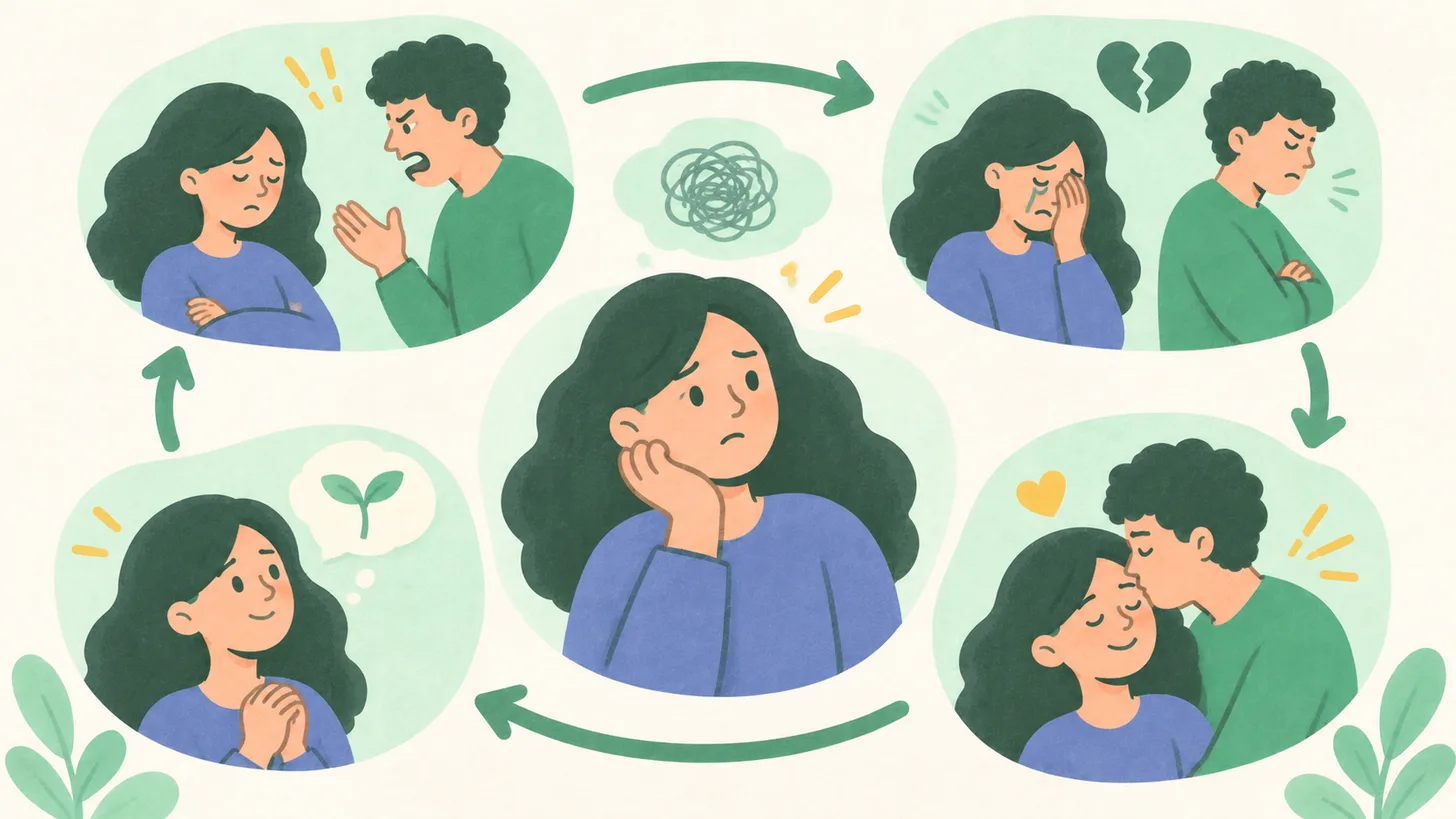
The researcher Lenore Walker named three phases of the cycle of abuse. First, tension building. Then an incident, which may be verbal, physical or sexual. Then reconciliation and calm, sometimes called the honeymoon phase. Indian clinicians still teach these three today.
The reconciliation phase is where the trap sits. It feels like the real relationship coming back. There are gifts. Long apologies. Promises. Maybe tears. Your body has been in fight-or-flight for weeks. Now it finally rests. Your nervous system reads the calm as safety, and the safety as love. Then the tension starts again.
This is a toxic relationship meaning that does not fit on a mug. The cycle is not your partner’s two sides. It is one pattern with a predictable shape. Each time it completes, the next tension phase starts sooner. The next incident tends to be worse.
In short: You are not confused. The cycle is confusing by design. Naming it in writing, on paper or in a note to yourself, is often the first step out.
Why people stay
People stay for reasons that make complete sense from the inside. Saying them out loud helps. It can stop you from blaming yourself for not having left yet. Nobody stays for only one reason. See which ones feel like yours. It is okay if more than one does.
- Money. You may share rent, a loan or a child’s school fee. You may have left your job for his career, or his family. Economic abuse is real abuse, and leaving without a plan can mean leaving without a home.
- Children. You worry about custody, school changes, their father, their questions. The research on children raised in high-conflict homes is clear, but it does not make the choice simple.
- Family and shame. In many Indian families, ghar ki baat (matters of the home) stays in the home. You may be the first in your family considering a divorce, and your parents may ask you to adjust one more time. That request is not kind, even when it is well-meaning.
- Visa or city. For NRIs and inter-city couples, your visa, your lease or your work permit may sit on one person. Leaving is a logistics problem on top of an emotional one.
- Love and the good days. You are not stupid for remembering the good days. They were real too. That is why this is so hard.
- Hope and change. You believe they can change. Sometimes they can. Rarely, in the middle of a cycle, without professional help and a willingness they have not shown.
In short: Staying is not weakness. It is almost always a fair response to real constraints that friends on the outside do not see.
Can it be fixed?
The honest answer is: sometimes, yes. Often, no. Less often than people hope. A toxic relationship can be repaired when three things are true. The harmful behaviour has fully stopped. Both people own their part. And both are in their own therapy for the long haul.
Here is the hard line in writing: couples therapy is not the right next step when there is active abuse. It can raise the risk. The victim cannot speak freely in the same room as the abuser.
International bodies and most trained Indian couples therapists agree on this. GoodLives’s couples therapists screen for this at the start. They will tell you so, honestly, if a joint session is not safe yet.
If there is no active abuse, and both of you want this, individual therapy is the usual first step. Our couples therapy page shows how a joint session can come later. Each person does their own work first.
In short: “Can we fix this?” is a fair question with an honest answer. Not every relationship should be saved, and not every relationship can be. A good therapist will tell you if yours is one of them.
How to leave safely
Leaving is the most dangerous time in an abusive relationship. That is not a line to scare you. It is a reason to plan carefully. Tell exactly one person you trust before you move. What follows is a starting point, not a legal plan.
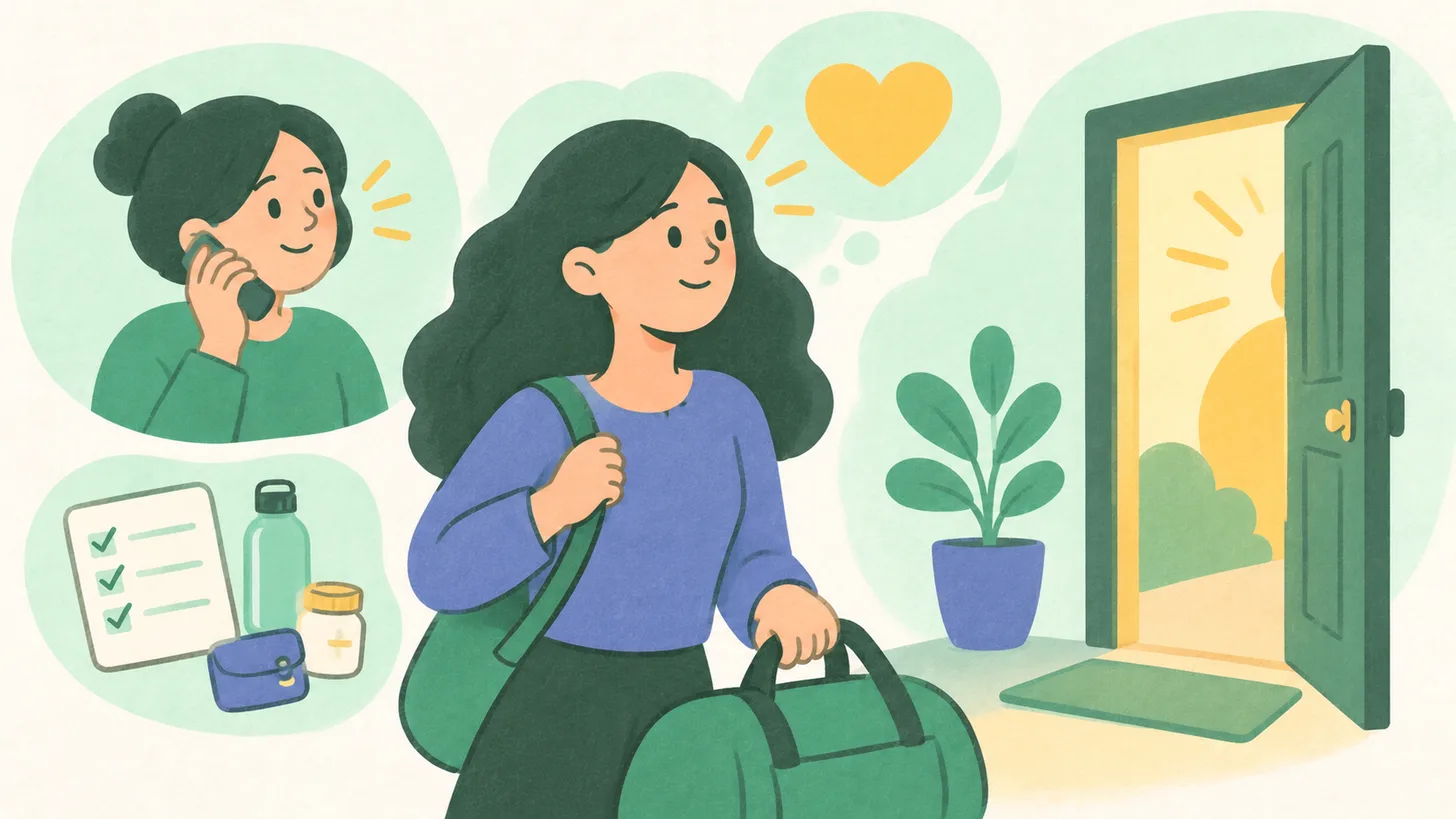
- Pick one trusted person. A sibling, a cousin, a friend outside the family, a colleague. One person who knows the full picture. Someone who holds a spare set of keys, a copy of your documents, and whom you can call at any hour.
- Secure your documents. Make copies and leave them with that person. Aadhaar, PAN, passport, educational certificates, marriage certificate, bank passbooks, PIN codes, and photos of jewellery or shared assets.
- Prepare a quiet go-bag. A small bag kept at your trusted person’s home, your parents’ home or your office locker. Two sets of clothes, a charger, cash, a prepaid SIM, your children’s things if relevant, and any medication.
- Separate your money quietly. Open a bank account at a bank where your partner does not bank. Use a different mobile number. Redirect even small amounts: a side income, a tuition fee, a gift. If you work, move your salary account over time.
- Document the pattern. Dated notes in a locked notes app. Screenshots to a cloud account only you can open. Photos of injuries with timestamps. Not for Instagram. For a lawyer or for you, later.
- Know your legal rights. Under the Protection of Women from Domestic Violence Act, 2005, you can seek three things. A protection order. A residence order. And monetary relief. The route is through a Protection Officer or a Magistrate. You do not have to file a criminal case to get a protection order.
- Pick your moment, not his. Leave when he is at work or out of town, not after a fight. The calm is safer than the storm.
- Or call a local women’s shelter. Tell them you are planning to leave. They will tell you what is available in your city.
- If you are in immediate danger, call 112 or 100 now. You do not need a plan to call the police. You need a phone.
In short: A safety plan is not a decision to leave. It is a decision to be ready. Documents, one trusted person, and a quiet account are the three things to do this week.
What support looks like after you leave
Leaving is not the end of the story. The first six months are often the hardest, which surprises people. You will miss him on a Tuesday for no reason you can name. You will second-guess yourself. You will wonder if it was really that bad. All of this is normal.
Three kinds of support tend to help, side by side.
Legal and practical: a lawyer who knows PWDVA 2005. A Protection Officer in your district. A safe place to live.
Emotional: your own therapy, ideally with someone trained in trauma. A small circle of people who already believed you.
Community: honest friendships. A workshop. A support group. Any space that reminds you other people live without this.
Our posts on trust issues and narcissistic personality disorder cover what often comes up next. Red flags and green flags can help if you start to date again.
You don’t have to be in crisis to see a therapist. It’s okay to be unsure, to be angry, or to still love him. Many people start therapy while still inside the relationship. The therapist becomes the one adult in their week who is on their side.
In short: Recovery is not linear. The grief is real, and so is the relief. Both get to be true at the same time.
FAQ
What are the signs of a toxic relationship?
What are the top 5 toxic behaviours?
Is a toxic relationship the same as an abusive one?
Can a toxic relationship become healthy again?
Why do I feel love for someone who treats me badly?
Where can I get help in India if I want to leave?
This post is for information only and is not a substitute for professional care. If you are in immediate danger, dial 112.


Share your thoughts