
What this blog includes
- What thanatophobia means and when it is more than ordinary worry
- The signs death anxiety shows in daily life
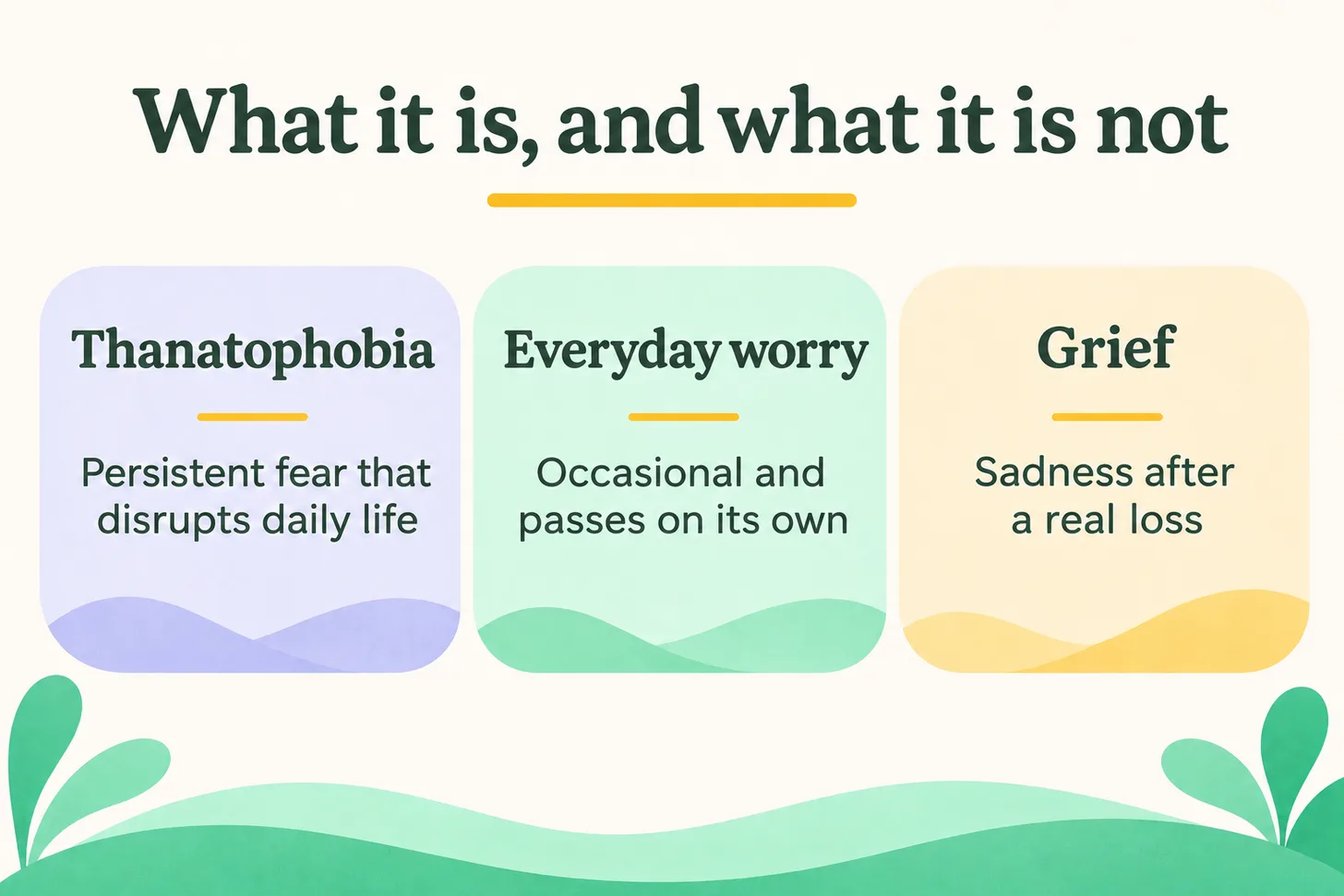
- How it is different from grief and panic disorder
- How CBT and ACT therapy work on the fear of death
- What can help on a hard night, honestly
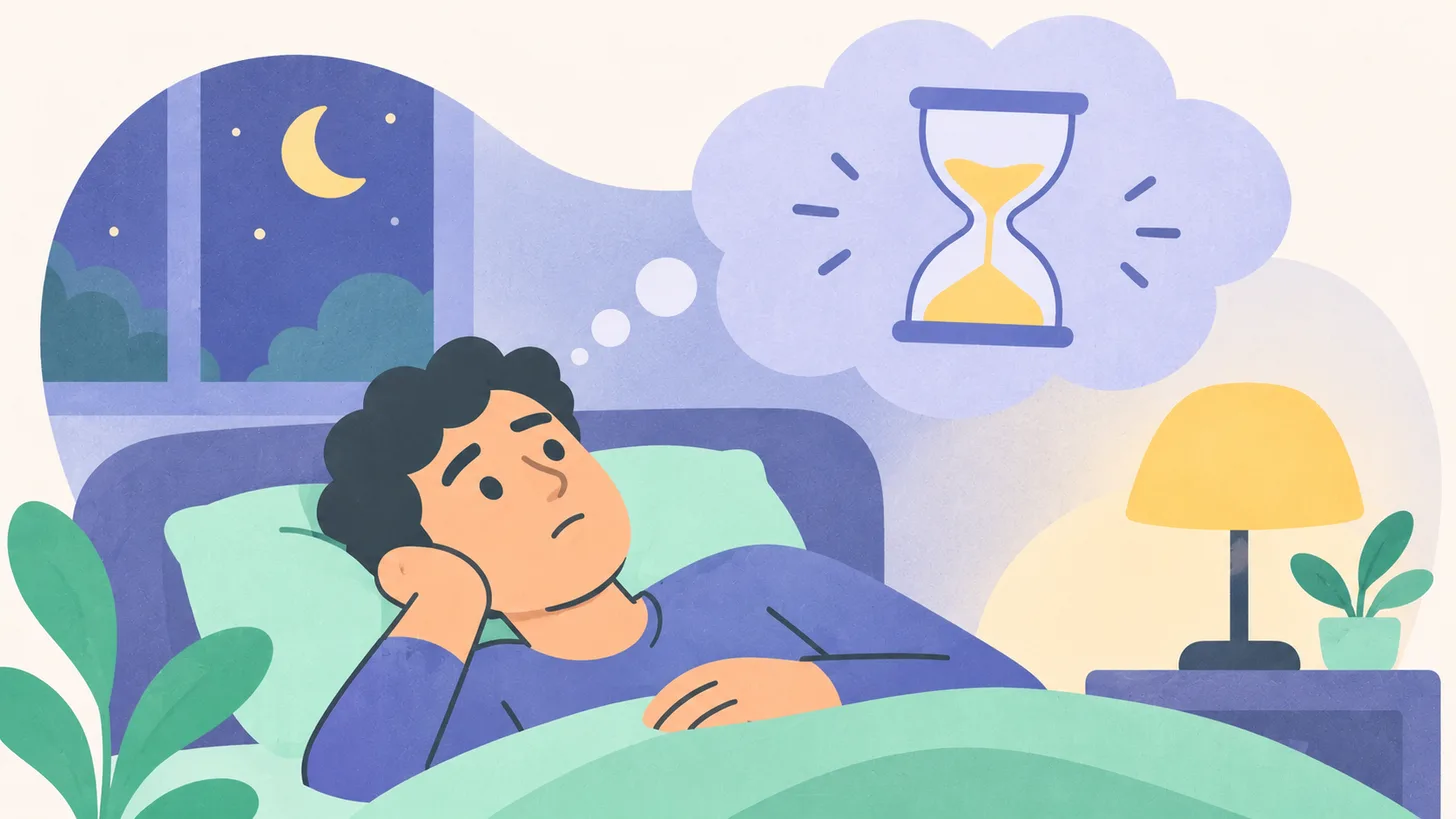
If you have ever sat up at 2 am Googling what happens when we die, closed the tab, and still felt your chest humming, you know this feeling. You are not being morbid. You are a person trying to make peace with a fact none of us can edit.
GoodLives, India’s online therapy platform, is trusted by 500K+ people. What follows is a plain, person-first walk through thanatophobia and what actually helps.
What does thanatophobia mean?
Thanatophobia is a persistent, distressing fear of death or of dying. The word is Greek, from thanatos, meaning death. A person living with thanatophobia feels it as a chronic undertow, not as an occasional worry on a bad day.
An honest note. Thanatophobia is not a stand-alone entry in the DSM-5-TR. Clinicians usually treat it under a broader label: specific phobia, generalised anxiety disorder, or illness anxiety disorder. The feeling is real, even when the label is not.
In Hindi, many readers describe this as mrityu-bhay (the fear of death). The phrase is older than any clinical word. That recognition is worth something.
In short: thanatophobia is the ongoing fear of death, treated in clinics under broader labels. The feeling is real, the care is real.
What are the signs of thanatophobia in daily life?
The fear of death rarely shows up as one big moment. It shows up as quiet avoidance, a 2 am loop, a tight ride in a lift, a refusal to open a new health report. A person living with thanatophobia often calls the pattern “being careful” long before anyone names it.
Common signs include:
- Night-time rumination about dying, existence, or what comes after
- Panic-like episodes triggered by a thought, a news story or a mild body symptom
- Avoidance of hospitals, funerals, graveyards, insurance paperwork or wills
- Checking the body for symptoms, Googling them, then checking again
- Reassurance-seeking from family, doctors or search engines
If three or more have shown up on most days for six months, and they are costing you sleep, work or closeness, the fear has likely tipped into a pattern. A therapist can tell the two apart in one or two sessions.
In short: this is not a cinematic fear. It looks like a careful person who cannot set down the thought of dying, and who is tired.
When does the fear of death tip into pathology?
Most of us think about death sometimes. A funeral, a diagnosis in the family, a parent getting older. That is being human. Thanatophobia is a pattern, not a thought.
In short: the tipping point is not how scary the thought feels. It is how much of your life the fear is shaping.
How is thanatophobia different from grief and panic disorder?
The three are often confused because they share some territory. The right next step is different for each, so naming the difference matters.
In short: grief honours a loss. Thanatophobia loosens a fear. Panic disorder treats the panic itself. The right care follows the pattern, not the name you came in with.
What does therapy for thanatophobia look like?
Therapy for the fear of death is usually weekly, one-on-one and time-limited. A thoughtful therapist does not start by arguing you out of the fear. They start by hearing the shape of your fear on a normal Tuesday, and only then choose the tools.
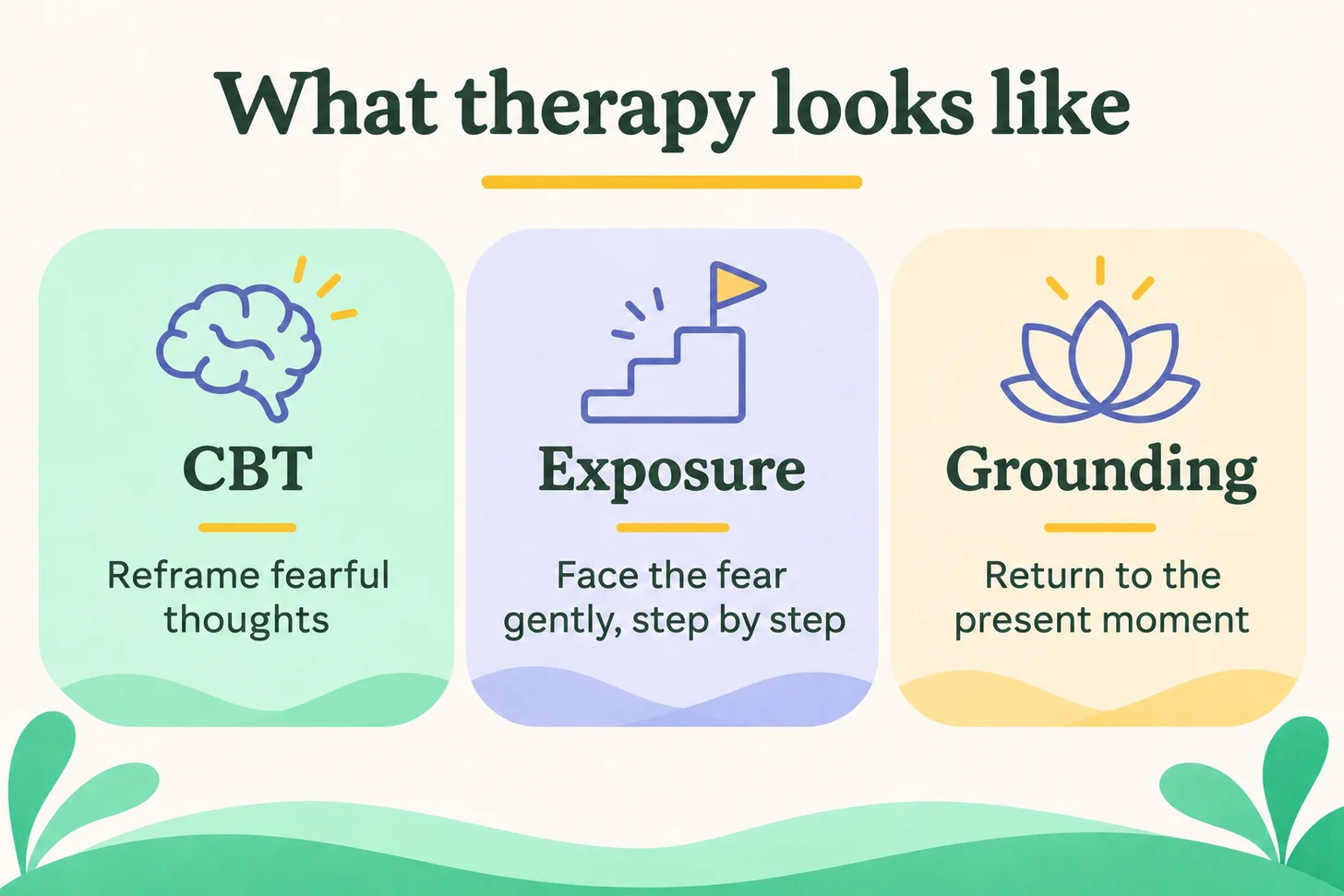
Two evidence-based approaches do most of the useful work on thanatophobia in Indian clinics today.
- CBT (Cognitive Behavioural Therapy), documented in Indian settings by the Indian Journal of Psychiatry, works on the thoughts and behaviours that keep the fear running. You notice the catastrophic thought, test it against evidence, and build a kinder next sentence. Small behavioural experiments follow, like reading the health report with your therapist in the room.
- ACT (Acceptance and Commitment Therapy) takes a different angle. Instead of fighting the thought of dying, you learn to make room for it, while your choices get guided by what matters. If being present with your parents matters, ACT helps you show up for Sunday lunch even when the fear is loud.
A reasonable course of CBT or ACT for thanatophobia is often 12 to 20 sessions. Many people feel the first shift inside four to eight. The World Health Organization’s mental health guidance places talking therapy at the first line for anxiety-type conditions, which includes specific phobias.
When the fear is severe enough to block sleep or work, your therapist may suggest a psychiatry consult. A therapist cannot prescribe in India, so that visit is with a separate psychiatrist.
In short: CBT works on the thoughts. ACT works on your relationship with the thought. Both let you live more and avoid less.
What can help on a hard night?
Therapy is the long work. On a hard night at 2 am, you need smaller tools. These will not solve the fear. They take the edge off.
- Name the pattern. “This is thanatophobia. It is a feeling, not a forecast.” Said out loud, it interrupts the loop.
- Lengthen the out-breath. Try 4 seconds in, 6 seconds out, for three minutes.
- Move the body a little. Stand up, open a window, drink water, feel your feet on the floor.
- Set a reassurance limit. One honest conversation with one trusted person. Endless reassurance feeds the loop.
- Close the tab. Googling symptoms at 2 am will always find a scarier page.
A steady morning also helps: sleep, protein by 10 am, 20 minutes of walking, less late-night news. Our anxiety guide for India and the phobias guide sit nearby if you want to read more.
Therapy is not the right next step for every reader, and that is okay. If what you need this week is steadier sleep, start there. If the fear has shaped six months of your life, that is the moment to book.
In short: small nightly tools, one steady day, and the long work of therapy. In that order, not instead of.
This post is for information only and is not a substitute for professional care.


Share your thoughts