
What this blog includes
- What unrequited love is, in plain words
- The five phases most people move through
- Why one-sided love hurts so much (even when nothing “happened”)
- What makes it worse, and what actually helps
- Signs it has tipped into something that needs a therapist
Something in you has been bending the day around them for weeks. You check their last-seen. You read into a two-word reply. If you have been Googling unrequited love at midnight, this is a soft tap. What you are feeling has a name, and plenty of us have been there.
What is unrequited love, honestly?
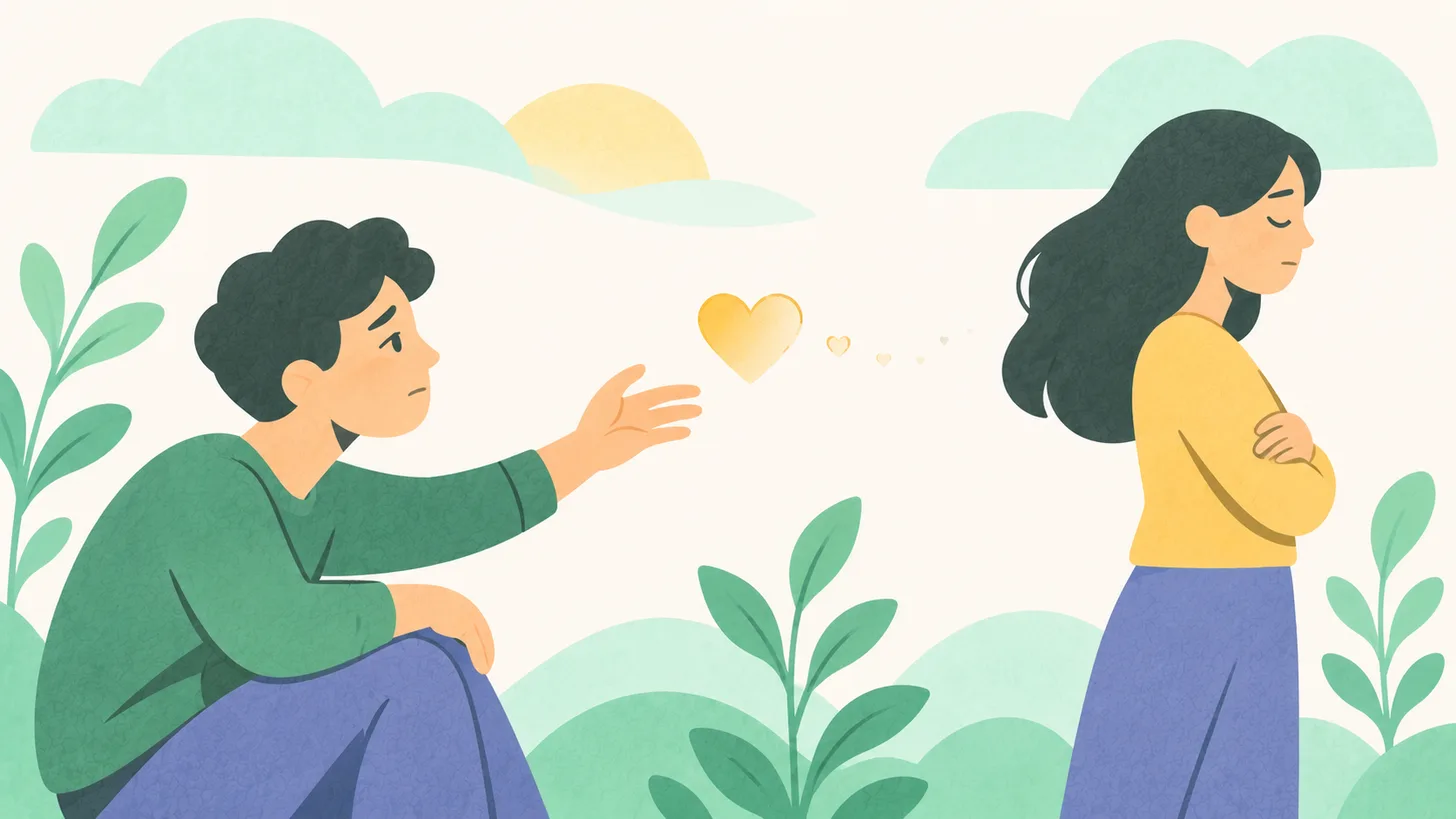
Unrequited love is when your emotional investment in someone is much larger than theirs for you. A 1993 study by Baumeister, Wotman and Stillwell found that about 98% of young adults had been on one side or the other of this (Journal of Personality and Social Psychology).
It is not rare, and it takes many shapes.
- A crush on a friend who sees you only as a friend
- A partner you love harder than they love you
- Someone unavailable because they are married, moving away, grieving or not ready
- A parasocial pull toward a celebrity or someone online
- Limerence, the word psychologist Dorothy Tennov used in 1979 for the intrusive, mood-swinging infatuation that will not switch off
In short: One-sided love is not a flaw in you. It is a very ordinary human experience that happens to hurt in a very specific way.
Why does one-sided love hurt this much?
Your brain treats being wanted as a basic need. Research led by Helen Fisher using fMRI scans found that romantic rejection lights up the same brain regions as physical pain and craving. Your body is not making it up.
There is a second ache under the first. You are grieving a relationship that mostly existed inside your head. The future dinners, the slow Sunday, the family you half-imagined. All of it felt real, because to your nervous system it was. You now have to grieve a thing that never happened.
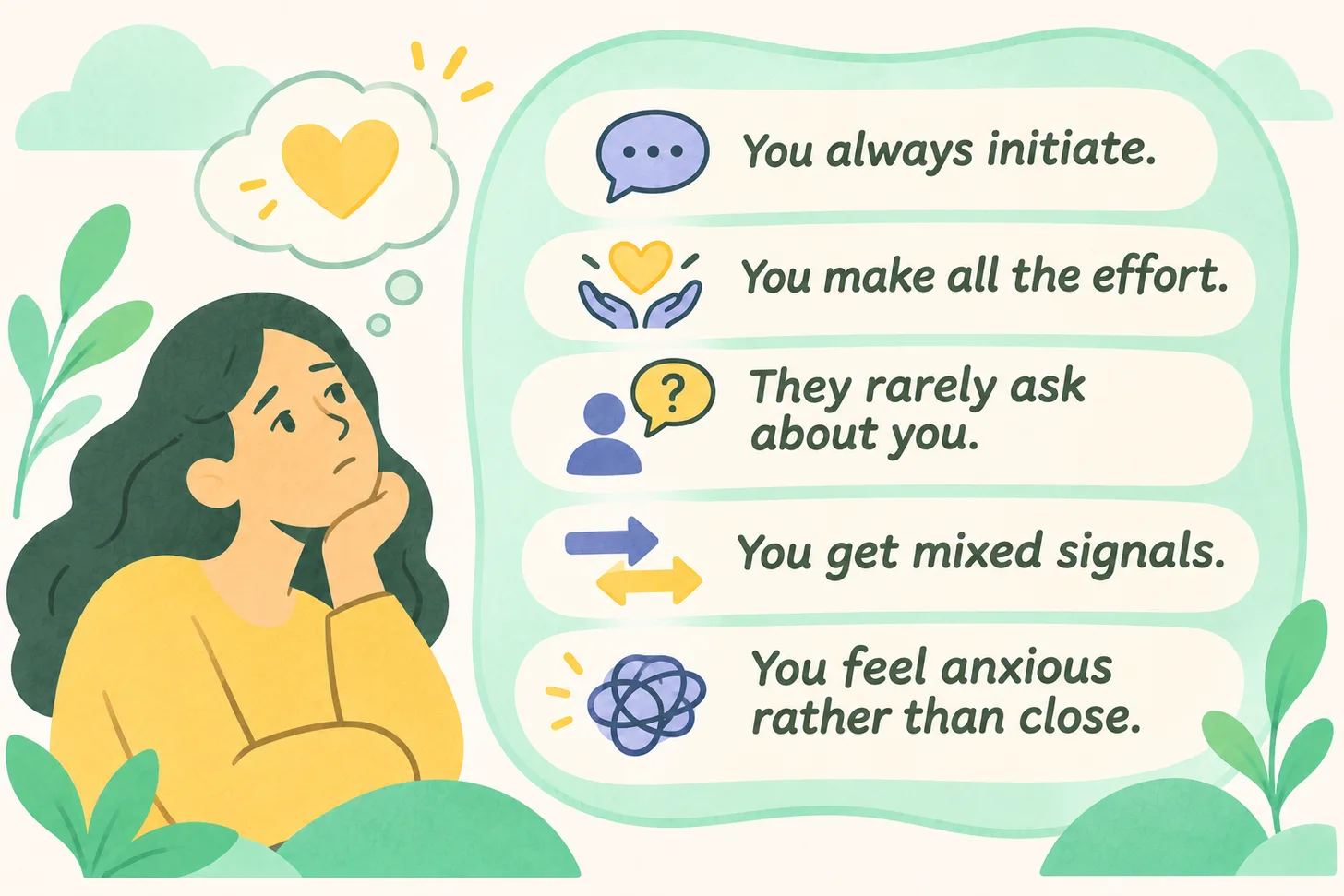
In short: The relationship may have been imagined. The feeling was not. Healing starts by honouring that difference.
The five phases most people move through
Not everyone takes them in order, and some people loop. A shape emerges often enough to name.
- Hope and idealisation. Small signs are read as big ones. You see a version of them that may not be the full person.
- Reality collision. Their energy toward you is not the same as yours toward them. A cancelled plan hits harder than it should.
- Trying harder. You double down. More effort, more thoughtfulness, more proving. The prove-your-worth loop takes over the week.
- Grief. Not just for them, but for the imagined future. Anger, bargaining, flat days, a strange exhaustion.
- Acceptance. You stop asking the question that was running the day. You feel something other than them for the first time in a while.
In short: The grief is not for the person alone. It is for the life you had half-written with them in it.
What makes one-sided love harder in India
Our stories do not help us here. Films teach a strong myth that if you want someone enough, and chase them well, the hill tilts. The quiet line pyaar nahi hua, zabardasti kyun (the love did not happen, why force it) is one almost no song sings.
A few other things an Indian reader will nod at.
- Family and community pressure around who you can and cannot love
- Caste or community barriers that make a feeling feel impossible, not just unrequited
- The hovering between best friend and crush where no one says the real word
- Social media. Every reel, every last-seen is a tap on the wound.
- A culture that reads the dignified move, stepping back, as “giving up”
If you grew up on films where the hero wears the heroine down and wins, your head may read letting go as losing. It is not. Our attachment patterns learned at home sit under all of this.
In short: The story around you has been teaching you to override a reasonable instinct, which is to walk back toward yourself.
Match Me with a Therapist
What usually makes one-sided love worse
Most of us try the opposite of what helps. That is not a character flaw. It is grief making a plan.
- Grand gestures to “prove” yourself. A gesture does not change how someone feels, it only tells your nervous system the game is still on.
- Repeated tests. “If they really cared, they would…” sets a trap you will keep walking into.
- Social-media surveillance. Checking their stories gives you one more hit while keeping you stuck.
- Being the always-available friend, waiting to be upgraded. The waiting is the wound.
- Reading mixed signals as hidden love. Mixed signals are a signal, and this is not a yes.
- Making them responsible for your mood, or chasing a rebound that drags someone else into the ache.
In short: Most of what feels like love in this phase is a plan to make the ending stop. The ending has to be allowed.
What actually helps
Nothing here is quick. But each one does something real.
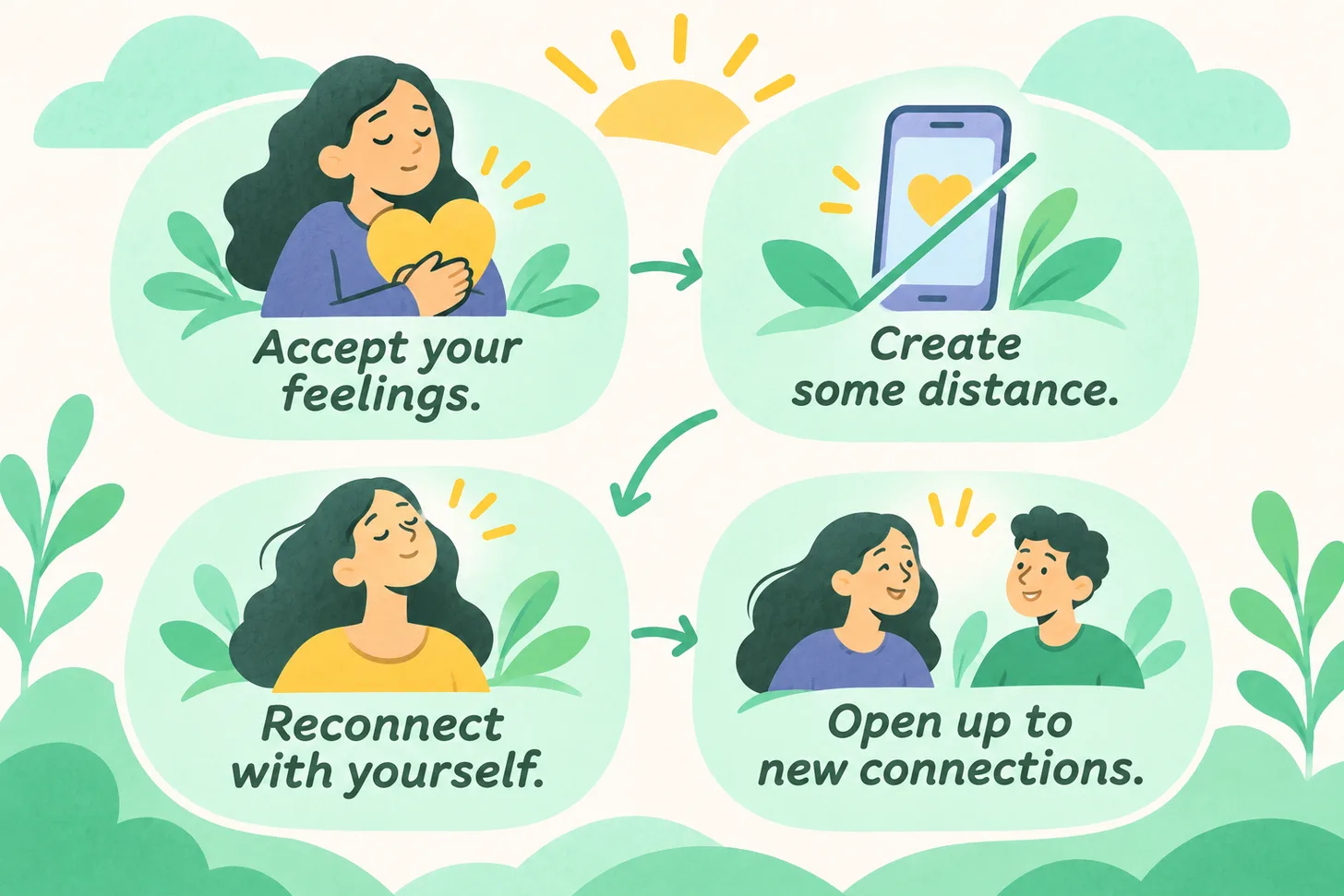
- Space, honestly. A clean break for at least thirty days. No texts, no checking, no “quick hello” at the party. Just long enough for your brain to stop expecting them.
- Grieve the imagined relationship. Write down what you thought the two of you would be. Read it back to yourself gently. That is the funeral.
- Name the unmet need. This love was meeting something. To be seen, to feel chosen, to escape a flat week. What else can meet that need?
- Rebuild outside their orbit. New routes to work. One hobby they do not know about. People who did not know you as half of an imagined couple.
- Self-compassion over self-criticism. Harsh self-talk feeds rumination. The NIMHANS National Mental Health Survey (2016) found that about 10.6% of Indian adults live with a mental health condition. If this ache is bleeding into anxiety or low mood, the work is not meant to be done alone.
If you want, try one slow minute with this before you read on.
Catch the thought
What thought is weighing on you right now? Write it down just as it sounds in your head.
Name the trap
Does your thought fall into one of these common patterns? Pick any that fit. This part is optional.
Look again
Use these as nudges, not rules. Then write one line back to yourself.
Your reframe
Thoughts are not facts. You just practised stepping back.
This stays on your device. Nothing is saved or sent.
- Movement and sleep. Grief sits in the body. Walks, swimming, a dance class. Protect your sleep like it is medicine.
- The one honest conversation. If you have never asked them directly where they stand, one clear conversation beats a hundred guesses. The answer may not be what you want. The clarity will still be a gift.
In short: The work is not forgetting them. It is slowly handing yourself back the parts of you that were living in their orbit.
When one-sided love tips into something that needs a therapist
A season of one-sided love is painful but survivable. Sometimes it tips over. Some signs it has:
- Daily life is not working. You cannot focus, cannot eat, your sleep has been broken for weeks.
- The fantasy of them is quietly replacing real connection with anyone else.
- You are using alcohol or sleep medication to get through the evenings.
- The ache is turning into resentment or an urge to retaliate.
- You have had thoughts of hurting yourself.
- You cannot see a future without them in it, more than three to six months in.
If any of these are true, this is a reasonable moment to talk to a therapist. Not because something is wrong with you, but because something has moved beyond what self-help can hold alone.
Therapy helps here in specific ways. A good therapist can work with attachment patterns, because anxious attachment leaves people open to long unrequited loves.
Cognitive behavioural therapy can quieten the intrusive-thought loop, and if it is tangled with relationship anxiety, both get care in the same room.
In short: You do not have to wait for the ache to turn into something scarier before you ask for support.

Share your thoughts