

What this blog includes
- A plain definition of depersonalization and derealization
- When this becomes a diagnosable disorder (DSM-5-TR)
- Why it happens: trauma, anxiety, cannabis, sleep loss
- How it differs from psychosis, and from spiritual detachment
- What helps in ten minutes, and what helps over months
- When to see a clinical psychologist in India
If this sounds like what you are living with, you are not alone, and you are not going mad.
The depersonalization meaning most people search for is this: a dissociative experience of feeling detached from your own body, thoughts, feelings or sense of self. GoodLives is trusted by 500K+ people, and this post walks you through what it is, why it happens, and what honestly helps.
Depersonalization meaning: what the word actually describes
Depersonalization is the feeling of being an outside observer of your own body or mind. Your hands look foreign. Your voice sounds like a recording. Emotions feel muted. You know it is strange, and you know it is you. That is part of what makes it scary.
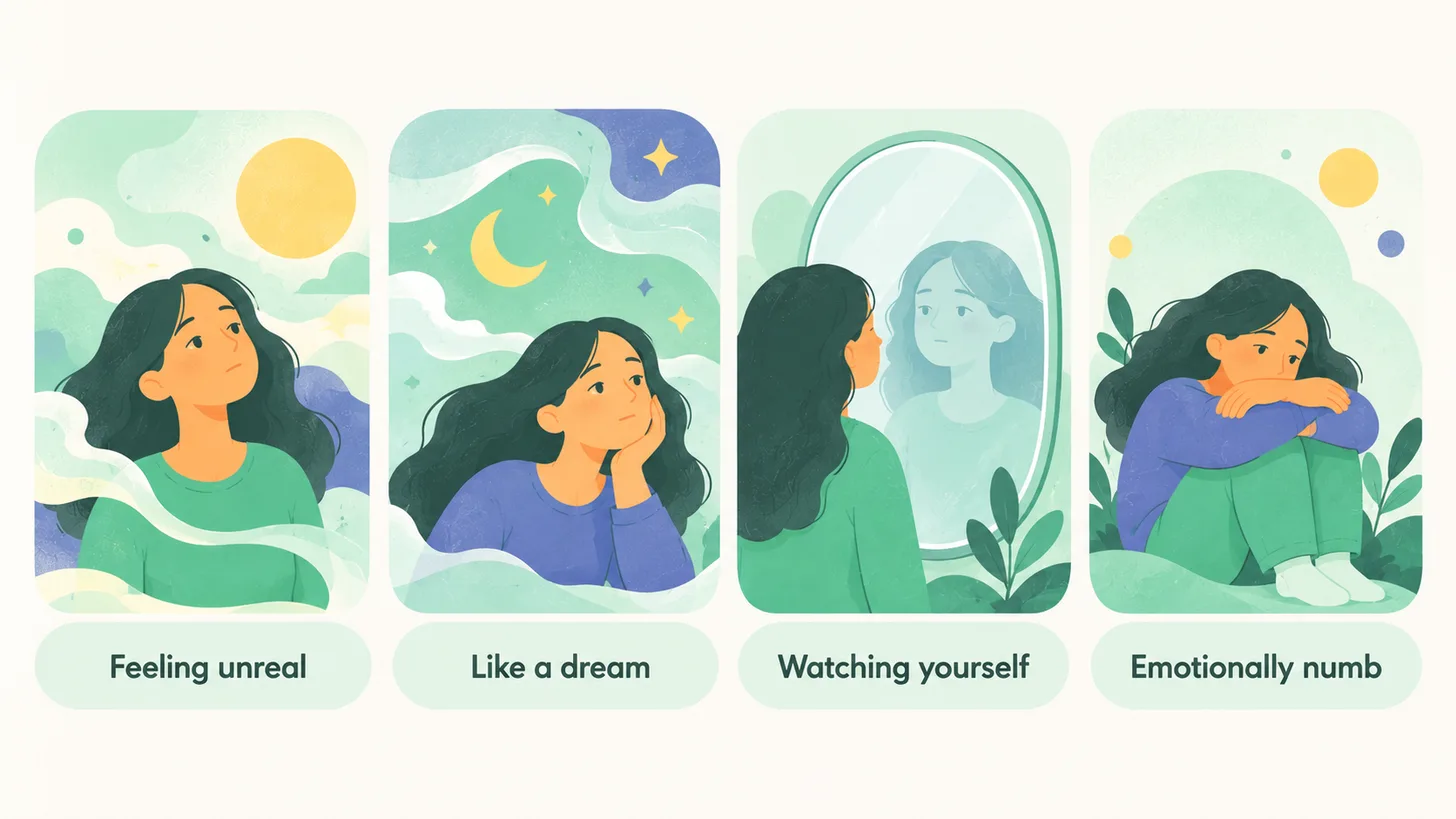
The clinical name sits inside a wider family called dissociation. Dissociation is how the mind pulls back from what is too much to hold. Depersonalization is one kind of pullback. Daydreaming is another, far gentler kind.
Short, passing episodes are very common. The Merck Manual reports that 25 to 75 percent of adults have had at least one brief episode in their lifetime. One episode after a hard week is not a disorder.
In short: depersonalization is not psychosis and not weakness. It is the mind briefly stepping back from itself.
What it feels like, and how it differs from derealization
People describe it in lines that sound almost poetic, which is strange, because the feeling is anything but. Common ones we hear:
- “I feel like a robot going through the day.”
- “I am watching myself from a few feet behind my own head.”
- “My body is here but I am somewhere else.”
- “Life feels like a video game I cannot wake from.”
- “I know I love my partner, but I cannot feel it.”
Depersonalization is about your sense of self. Derealization is about the world around you. The two often ride together. In derealization, your room looks flat, and the trees outside look painted on. You might fear the numbness means you do not care. The opposite is often true. The system turned the volume down because what sat underneath was loud.
When this becomes a disorder: the DSM-5-TR criteria
A short episode after a sleepless night is not a disorder. A pattern that will not lift is a different story.
The DSM-5-TR, the manual clinicians use, calls it depersonalization/derealization disorder, or DPDR. The Cleveland Clinic says DPDR affects about 1 to 2 percent of people. It tends to start in adolescence or young adulthood.
The DSM-5-TR criteria, in plain language, are:
- Persistent or recurrent experiences of depersonalization, derealization, or both.
- Reality testing stays intact. You know the feeling is unusual. You are not confused about what is real.
- The experience causes real distress, or affects your work, studies or relationships.
- It is not caused by a substance (like cannabis or a medication), or another medical condition (like a seizure disorder), or better explained by another mental-health condition.
In short: a short episode is not a disorder. The pattern becomes DPDR when it persists, causes distress, is not caused by a substance, and your reality testing stays intact.
Why depersonalization happens: trauma, anxiety, cannabis, sleep
There is almost always a reason, even when the reason is not visible on the surface.
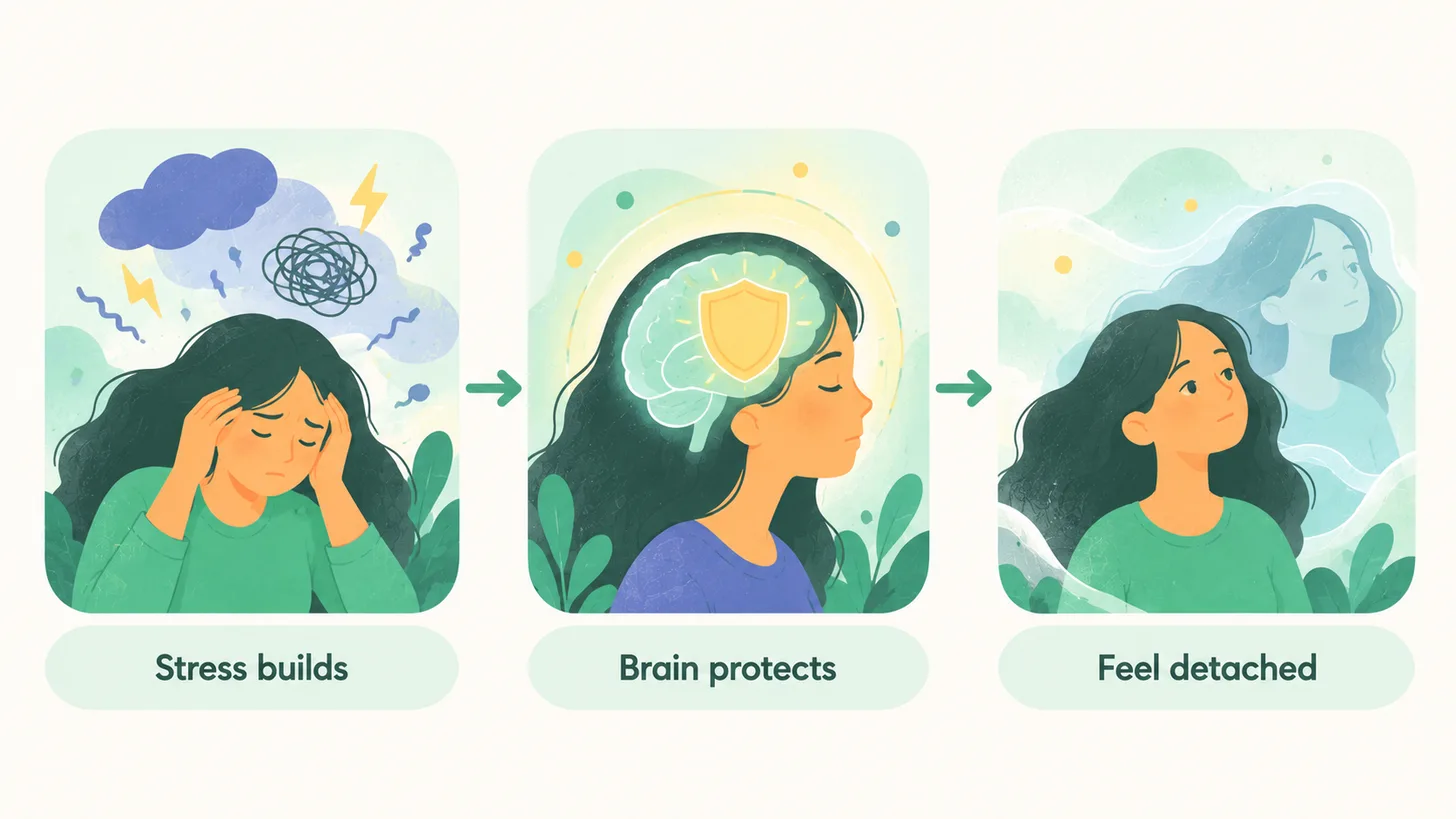
The honest list of common triggers:
- Trauma, past or present. The mind distances itself from what is too much to feel. Years later, the same system switches on under smaller pressures. This pathway often shows up alongside post-traumatic stress disorder.
- Panic attacks and severe anxiety. Feeling unreal is one of the DSM-5-TR panic-attack symptoms. Online therapy for anxiety treats the anxiety and the dissociation together.
- Depression. Flat emotion is a known feature. Heavy depressive episodes can tip into a dissociative numbness.
- Cannabis and other substances. Many Indian clinicians, especially in metros, are seeing more young adults with this pattern after cannabis use. For some it clears when they stop. For others it persists for months, which is called cannabis-induced depersonalization.
- Severe sleep deprivation. Three nights without proper sleep can tip anyone into a mild version.
- Chronic stress. The slow kind. Deadlines, caregiving, a difficult home.
Rarely, this points at a neurological cause like temporal lobe epilepsy or migraine aura. If an episode arrives with a headache or loss of time, see a doctor.
In short: depersonalization is a signal, not a flaw. Finding the trigger is half the treatment.
Is this psychosis, or spiritual detachment? The honest answers
Two fears come up in almost every first conversation with a therapist. Let us name them.
It is not psychosis. In depersonalization, you know the feeling is unreal. You can tell your therapist, “I feel like a robot,” and you know you are not actually one. That intact awareness is the clinical line between this and psychosis. In psychosis, the altered perception is believed as real.
It is not spiritual detachment either. This matters in India. Many of us grow up with the language of maya (illusion). The two feel different in one honest way. A spiritual state usually feels calm or peaceful. Clinical depersonalization feels distressing. You want it to stop. You cannot feel your family.
If you ever find yourself saying “I wish I could feel something,” that is almost always the clinical kind. The difference is worth taking seriously.
In short: knowing it is unreal rules out psychosis. Wanting it to stop rules out a chosen spiritual state.
What helps when you feel detached
Nothing in this section is a cure. Each piece calms the body, or widens the gap between a wave of unreality and your next choice. The slower work sits with therapy.
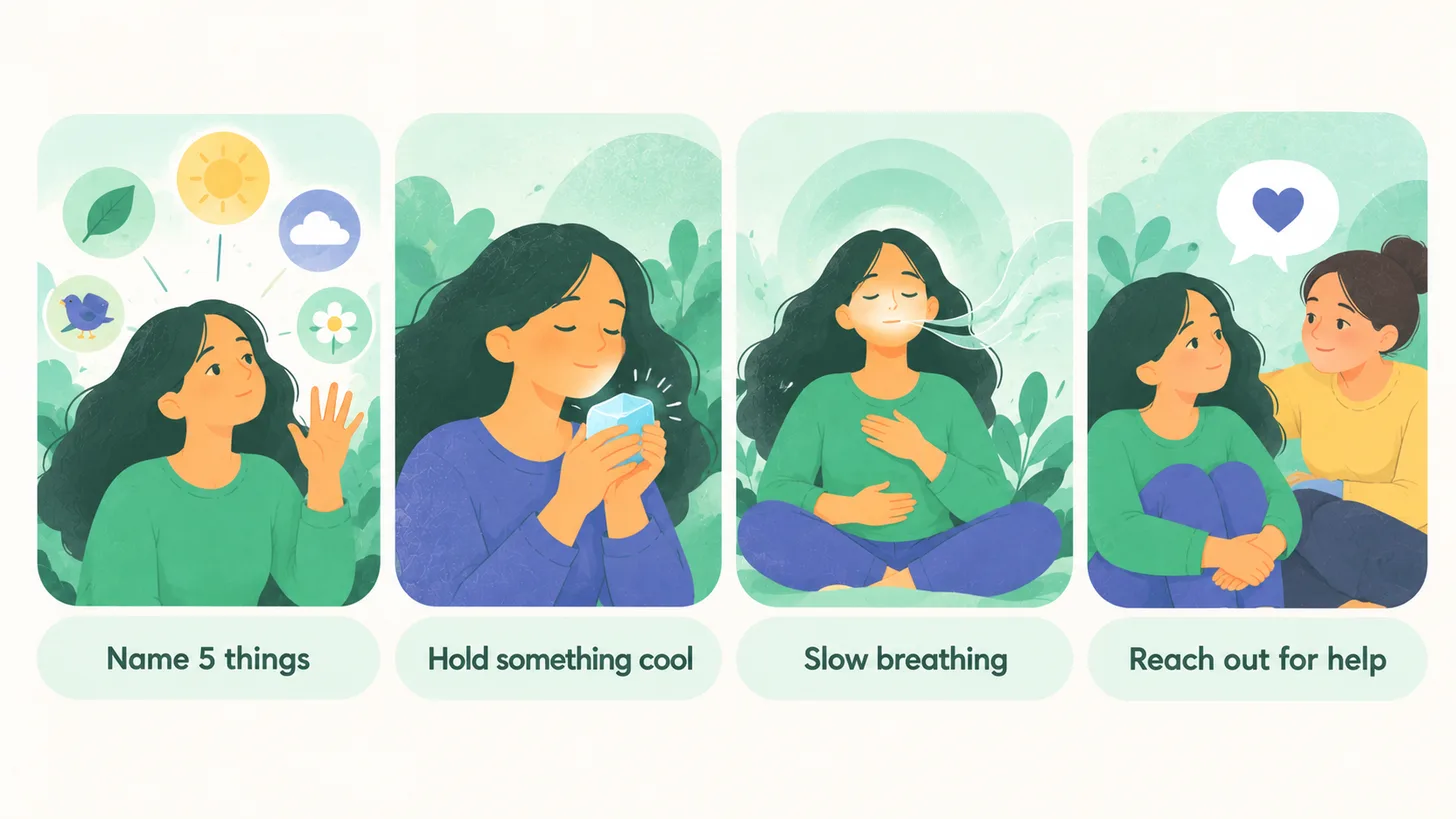
For the next ten minutes, the goal is to pull yourself back into your body, gently. The simplest tool is sensory grounding. Name five things you can see. Four you can touch. Three you can hear. Two you can smell. One you can taste. If a tap is nearby, run your hands under cool water. The point is not to fight the feeling. The point is to give your nervous system a soft handrail back.
Try one short grounding round now.
For the longer timescale, the work tends to be trauma or anxiety focused. Cognitive behavioural therapy has a specific protocol for this, developed by Dr. Elaine Hunter at the Maudsley Hospital in London. Mindfulness-based cognitive therapy can retrain the attention that keeps pulling inward. For comorbid anxiety or depression, a psychiatrist may discuss an SSRI as support alongside therapy.
Three practical rails help almost everyone. Sleep at consistent hours, even on weekends. Reduce or stop cannabis and alcohol, and tell your therapist the exact timeline. Watch caffeine, late screens and skipped meals. Each is small. The small adds up.
In short: slow the body down with grounding, and treat what sits underneath with therapy. The feeling almost always eases with time and the right help.
When to see a therapist in India
If the feeling has lasted more than a few weeks, or if it is making it hard to work, study or be with the people you love, it is worth talking to a professional.
The right person to see first is usually an RCI-registered clinical psychologist with experience in dissociation, trauma or anxiety. If sleep, mood or safety is affected, a psychiatrist can sit alongside. Online therapy in India is a fair first step when no trauma-informed therapist is near your city.
Not every episode needs therapy this month. One foggy weekend after a hard week often clears on its own. The bechaini (restlessness) that comes with depersonalization is real, and so is the help on offer.
In short: when the detachment starts shaping your week, a second pair of eyes helps.
FAQ
Is depersonalization dangerous?
Can depersonalization go away on its own?
How long does depersonalization last after cannabis?
Is depersonalization the same as derealization?
Is depersonalization a sign I am going mad?
What is the best therapy for depersonalization in India?
This post is for information only and is not a substitute for professional care. Your right to care is protected under the Mental Healthcare Act 2017.




Share your thoughts