
What this blog includes
- Eleven honest signs couples therapy may help
- Five situations where couples therapy is not safe or not enough
- What a typical course of couples therapy looks like, in sessions and tools
- The main evidence-based methods: Gottman, EFT, Imago, Behavioural
- Discernment counselling, a short honest option when one of you is “leaning out”
- India context: cost, stigma, and how to vet a couples counsellor in one call
So you typed “do we need couples therapy” into a search bar at 11 at night. Something has shifted at home. Reading this at all is one small, honest step.
On GoodLives, trusted by 500K+ people, “do we need couples therapy” is one of the most common first questions couples ask our care team before they book anything. It is a reasonable question, and the honest answer is “sometimes yes, sometimes not yet, and sometimes a different kind of help first”. This guide walks you through all three.

What couples therapy actually is, briefly
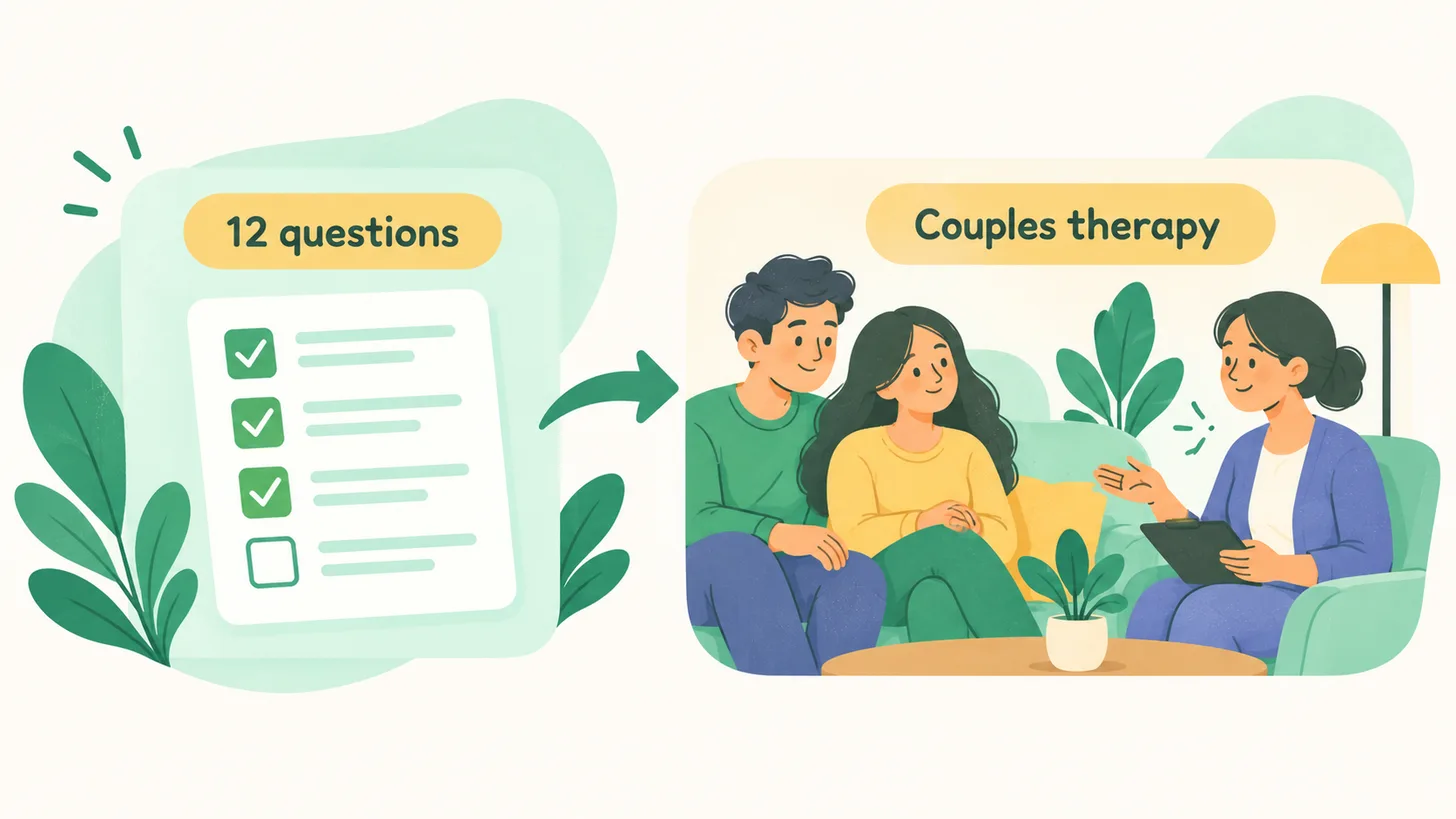
Couples therapy is a short, structured talk between two partners and one trained counsellor, usually weekly, usually for a few months. The counsellor holds the room. They ask what you two cannot ask alone, slow down the fast moments, and teach small tools you can use at home.
It is not marriage advice. It is not a verdict on your bond. The counsellor is not a judge. Their job is to help both of you be heard, and to show you the pattern you keep sliding into.
The goal is not always to stay together. For most couples, the work ends with a stronger, calmer bond. For a few, it ends with a kinder, clearer parting. Either outcome is honest work.
In short: couples therapy is a method, not a verdict. Two people, one counsellor, a plan.
Eleven honest signs couples therapy may help
Not every rough patch needs a therapist. Some weeks need sleep, one honest talk, and time. The list below is where the pattern has outlived those small fixes.
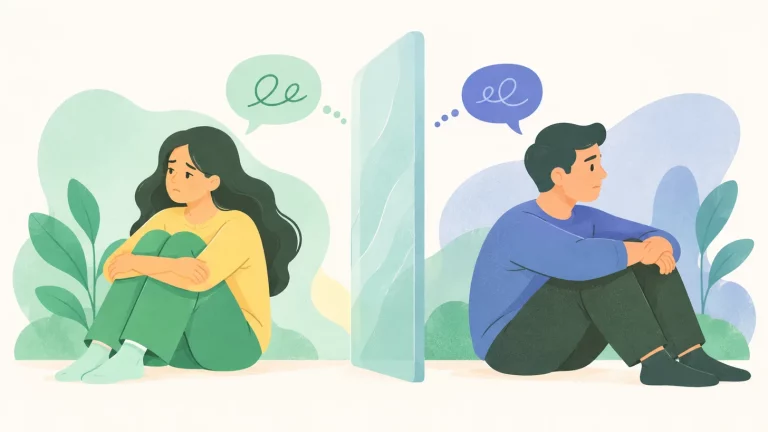
The same fight keeps running in circles. Different trigger, same ending. Months of this is a pattern, not a bad week. A trained counsellor can show you the loop you cannot see from the inside.
Intimacy has quietly gone. Physical, emotional, or both. Many Indian couples hit this after the first child, or after a few years of back-to-back work stress. It is common. It is also workable.
Resentment is piling up. Small unaddressed hurts stack. You start keeping a mental tally. A counsellor can help you empty the drawer before it rots the room.
Communication has shrunk to logistics. Groceries, kids, bills, car service. The emotional talk went quiet months ago. If you miss the longer talks, that is a soft signal worth acting on.
You have started thinking about separation or divorce. Even just as a thought. This is not shameful. It is information. Couples therapy, or discernment counselling (more below), is the right next step.
A big life change is pressing on the relationship. A new baby. The loss of a parent. A move across cities. A career flip. Transitions crack open old patterns. Short work in a transition can prevent long damage.
Infidelity has been disclosed or discovered. This is one of the hardest places couples therapy helps. It takes months, not weeks. Both partners need to want to try. A trained couples therapist is more useful here than any amount of advice from friends.
One partner is dealing with a mental health issue and it is affecting both of you. Depression, anxiety, trauma, or an addiction in recovery. Individual therapy comes first, and couples work alongside helps the two of you not drift apart. More on attachment issues and styles.
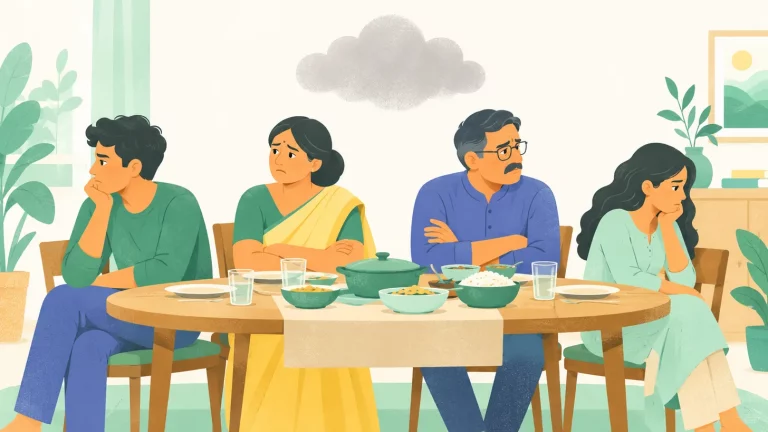
Interfaith, intercultural, or inter-caste differences are surfacing. Many Indian couples go years before family and festival routines start pulling. A counsellor who is comfortable with Indian family dynamics helps a lot here.
Pre-marital or pre-live-in counselling. This is the one most Indian couples skip. Pre-marital work is not problem-solving. It is relationship-building. Four to six sessions before a big step can save years of hard ones.
In short: if two or more of these are true in your week, this is a reasonable time to try a few sessions.
Five situations where couples therapy is not the right room
Please read this part slowly. Couples therapy has limits. In the situations below, it can be unhelpful or unsafe. The right first step is different.
Active domestic violence or coercive control. If one partner is being hit, threatened, financially controlled, isolated from family, or made afraid, couples therapy is not the right room. The partner being hurt cannot speak freely with the other in the session. Individual help, a safety plan and a helpline come first. See toxic relationship: signs and how to leave safely for the longer version.
Active, untreated substance abuse in one partner. Addiction warps every conversation. Individual treatment comes first. Couples work can start once the addicted partner is in steady recovery, usually a few months in.
Severe untreated mental illness in one partner. Untreated psychosis, severe bipolar in a mood episode, acute suicidal risk. Stabilisation and individual care come first. Couples work is useful later.
One partner has already decided to leave. When one of you is already out of the door in your head, standard couples therapy stalls. The honest option is discernment counselling (see the next section). Starting standard couples work here often ends in disappointment on both sides.
Infidelity that is ongoing or still hidden. Couples therapy needs honesty in the room. Secret affairs make the work stall or go backwards. The affair ends, or is disclosed, before the real work can start.
In short: harm is not a barrier to repair. It is a different problem, and it needs a different first step.
Discernment counselling: the honest shorter option
Many Indian couples arrive at this question with one partner “leaning in” and one partner “leaning out”. Standard couples therapy assumes both of you want to try. When that is not true, the work gets stuck.
Discernment counselling, developed by Bill Doherty at the University of Minnesota, is a short, structured option of one to five sessions. The goal is not to repair the marriage. The goal is to help both of you reach a clear decision between three paths. Status quo. A full go at six months of couples therapy. Or a mutual, respectful end.
It is honest. It is quick. It is for the moment before you commit to the longer work, or decide not to. See the Doherty Relationship Institute’s description of discernment counselling for the fuller frame.
In short: when one of you is “leaning out”, discernment counselling is a kinder first step than months of unwilling couples therapy.
What a course of couples therapy looks like in India, honestly
Most couples do between 12 and 20 sessions over three to six months. A few do fewer. Some do more. The honest shape is slower than most couples expect.
First two or three sessions. The counsellor hears both of your stories, often with one individual session for each. They map the patterns. They give you a few early tools so the week does not feel bleaker between sessions.
Middle stretch, usually sessions four to twelve. Skills building and underlying work. Communication tools, pause and repair, bids for connection, attachment work, intimacy conversations. This is where most of the change happens, slowly.
Later sessions. Integration and maintenance. How to keep the gains after sessions stop. How to use early signs of the old loop before it becomes the whole evening.
Session length is usually 60 to 90 minutes. Weekly to begin with, often moving to every two weeks after the first six.
Here is the honest part most posts skip. The first two or three sessions often feel worse before better. Years of silence surface. Fights you had put away come up. This is normal, and it is one reason couples quit too soon. Give it six sessions before you decide if it is working.
In short: 12 to 20 sessions, slow is the shape, worse before better is common, and six sessions is the fair test.
The four main evidence-based methods
Most trained couples counsellors in India draw from one or more of the methods below. All four have real research behind them. The right fit depends on your pattern, not on the name.
The Gottman method. Built over decades of lab work with real couples by John and Julie Gottman. Teaches small daily “bids for connection”, swaps the four horsemen (criticism, contempt, defensiveness, stonewalling) for softer counters, and holds a 20-minute cooldown rule when either body is flooded. Strong for communication-heavy problems. See the Gottman Institute’s research page for the base.
Emotionally Focused Therapy (EFT). Sue Johnson’s attachment-based model. Works on the layer under the words, not just the words. Helps the anxious partner feel safer and the avoidant partner stay present. Good for couples where the same fight keeps running and words alone are not moving it.
Imago therapy. Harville Hendrix’s dialogue-based method. The receiving partner mirrors back what the other said before replying. Slow. Sometimes awkward. Very useful for couples who talk over each other, or where one partner feels unheard for years.
Behavioural couples therapy. The oldest of the four. Focuses on specific behaviours and clear agreements. Less about feelings, more about actions. Helps couples who want practical, measurable changes.
Most Indian couples therapists hold a Master’s in clinical or counselling psychology plus RCI registration, and then specialised training such as Gottman Levels 1 to 3, EFT training, or Imago certification.
In short: four methods, strong evidence base, and a counsellor’s training matters more than the brand name.
If this week feels loud, pause here
A moment to breathe
Follow the circle. Breathe in, hold, breathe out, then hold. Four counts each. Stay as long as you like.
In short: slower breath, clearer decision.
Honest India context: stigma, cost, access
Three things make couples therapy harder in India than in a lot of other places. All three are shifting, slowly.
Stigma. “We do not need outsiders in our marriage.” Many Indian families still frame talking to a counsellor as a last resort, or a sign the relationship is already failing. This is slowly changing in urban India, among couples in their 20s and 30s. If this frame runs in your home, consider starting individually before you tell anyone you are going as a couple.
Cost. Couples therapy in India, as of October 2026, usually sits in the ₹2,000 to ₹5,000 per session range for a trained counsellor. Online sessions are at the lower end. Veteran couples therapists in metros can go higher.
Access and language. Fewer counsellors are trained in couples work than in individual work. Even fewer are comfortable in Hindi, Marathi, Bengali, Tamil, Telugu or Kannada for a therapy session. Online widens the pool. Many couples now meet a Bengaluru-trained Gottman therapist from Guwahati every Thursday.
Couples therapy is not a last resort. The best time to go is before things get bad. Many urban Indian couples now use it as a tune-up, not a repair.
In short: cost is manageable, stigma is softening, and online has quietly opened access across the country.
How to find a couples therapist in India, honestly
A few things worth checking before you book.
RCI registration plus couples-specific training. An RCI (Rehabilitation Council of India) registered psychologist with Master’s level training is the baseline. Add Gottman, EFT or Imago training on top for actual couples work. Not every therapist with “couples therapy” on their profile has specialised training. It is fair to ask.
Both partners feel the therapist is fair. The counsellor is not a judge. Both of you should feel heard in sessions one to three. If one partner steadily feels teamed-up-on, say so, and switch if it does not shift.
Switch if it is not working after four to six sessions. A fair test. Not every therapist fits every couple, and that is not failure on anyone’s part.
GoodLives has verified, RCI-registered couples therapists available online across India. English, Hindi, and more Indian languages. Both partners can join from the same room or two cities. See our couples therapy page for the fuller picture.
In short: training, fairness, and the courage to switch if the fit is wrong.
CTA Not sure if a session is right for the two of you? A verified couples therapist on GoodLives can meet you both for a first conversation, in English, Hindi or your home language, from wherever you are. Button: Match Me with a Couples Therapist
FAQ
Do we really need couples therapy or can we fix this ourselves?
How many couples therapy sessions does it take to see change?
How much does couples therapy cost in India?
Is online couples therapy as effective as in person?
What is discernment counselling and how is it different?
Can couples therapy work if only one partner wants to go?
Is it too late for couples therapy if we are already thinking about divorce?
Where to go from here
Not every couple needs therapy, and not every couple needs therapy right now. Reading this all the way to the end is a kind thing you did for your relationship. The next kind thing is a slow conversation with your partner this week.
If a few sessions feel right, the smallest step is the first one. A trained counsellor can take it from there.
This post is for information only and is not a substitute for professional care. If you are struggling, please speak to a qualified mental health professional.

Share your thoughts