
What this blog includes
- What dialectical behaviour therapy is and where it came from
- The four skill modules and the full-programme architecture
- Who DBT helps and when another therapy fits better
- Honest India availability, fees in rupees and how to vet a DBT therapist
DBT therapy in India is slowly becoming more available, but the full programme is still rare. Dialectical behaviour therapy, often shortened to DBT, is a structured therapy for people who feel emotions very intensely. It teaches you to hold two things at once. You are doing your best right now. You can also learn to do differently.
The therapy was developed by Dr. Marsha Linehan at the University of Washington in Seattle in the late 1980s. Her first randomised trial in 1991 showed DBT cut self-harm, suicide attempts and hospital stays for women with Borderline Personality Disorder.
The UK NICE guideline lists DBT as a recommended therapy for BPD.
GoodLives matches you with a verified psychologist, often in English, Hindi and more Indian languages. Trusted by 500K+ people, with a 5 Google rating on our homepage.
You do not need a diagnosis to want calmer weeks. If you have been told “you feel too much” since you were a child, this guide is for you.

What is DBT, in plain words
Dialectical behaviour therapy is a cognitive therapy that adds mindfulness and acceptance to the usual change-focused tools. The word dialectic means holding two true things together, even when they seem to contradict each other.
The core dialectic sits at the heart of every DBT session. You are doing the best you can with the skills you have today. You can also learn new skills, and your life can be worth more than it is right now. Both are true. Neither cancels the other.
That matters because many of us arrive at therapy carrying one of two stories: that we are broken and must change everything, or that everything is fine and we just need to try harder. DBT refuses both. It asks you to accept where you are and work on where you want to go, at the same time.
In India, the pull toward one of those stories is strong. A feeling spike can get named at home as weakness, or as nautanki (drama for attention). DBT gives you a shared vocabulary to say: this is a real pattern, it has a name, and there is a skill for it.
In short: DBT is a structured therapy that teaches you to accept where you are and change what you can, side by side. The dialectic itself is the medicine.
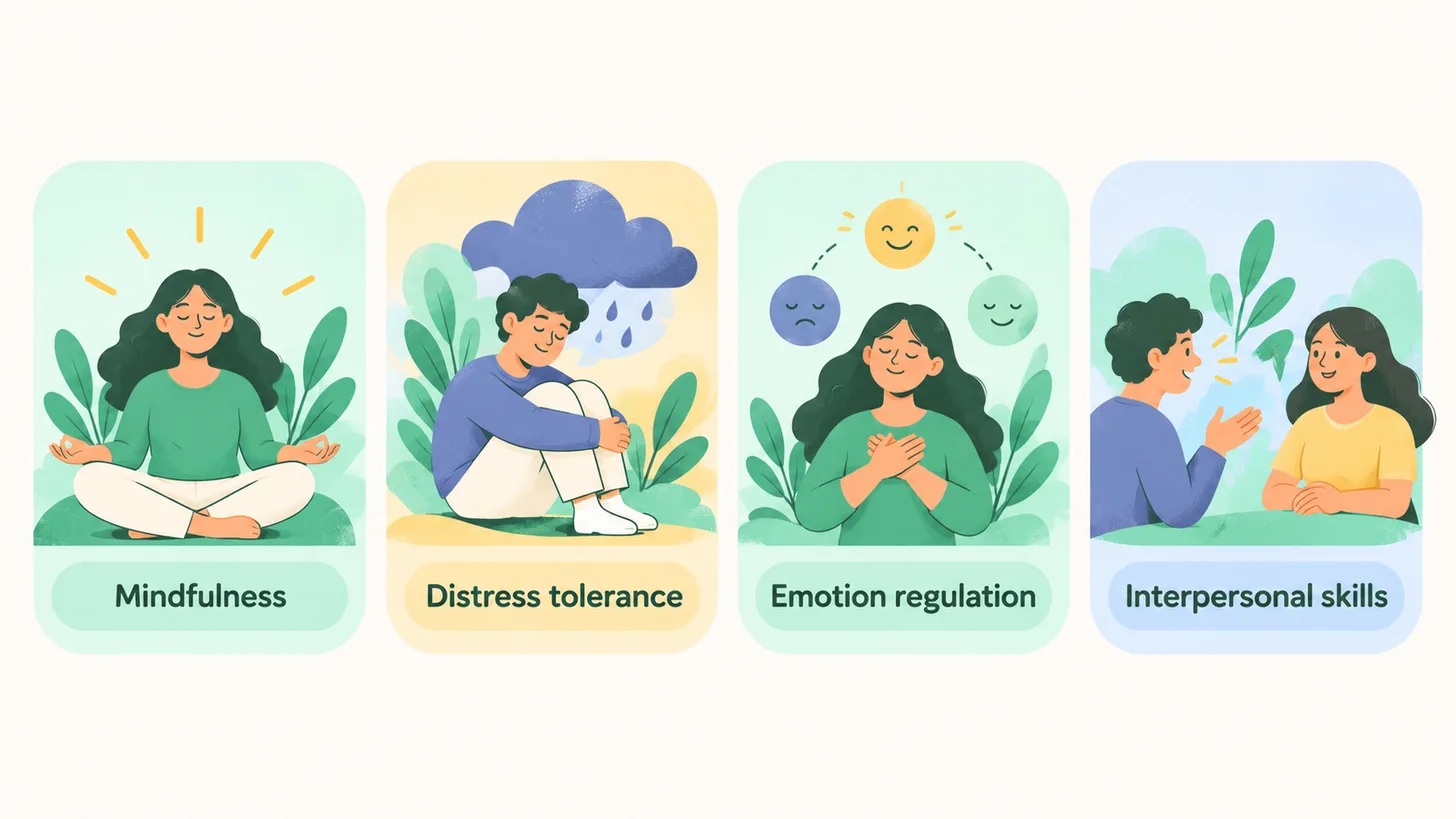
The four DBT skill modules
DBT skills are taught in four modules. In a full programme, you work through all four, usually over six to twelve months. In many Indian therapist’s rooms, the first three sessions are spent learning the first module.
- Mindfulness. The core skill. You learn to notice your mind doing what it is doing, without arguing with it. This is attention training so the other skills can land.
- Distress tolerance. Crisis-survival tools for the next ten minutes. TIP (temperature, intense exercise, paced breathing), self-soothe with the five senses, and radical acceptance for things you cannot change today.
- Emotion regulation. Longer-horizon tools to stop the storm before it starts. Check the facts, opposite action, build mastery, and the PLEASE skill for sleep, food and movement.
- Interpersonal effectiveness. Scripts for hard conversations. DEAR MAN to ask for what you need, GIVE to keep the relationship, FAST to keep your self-respect.
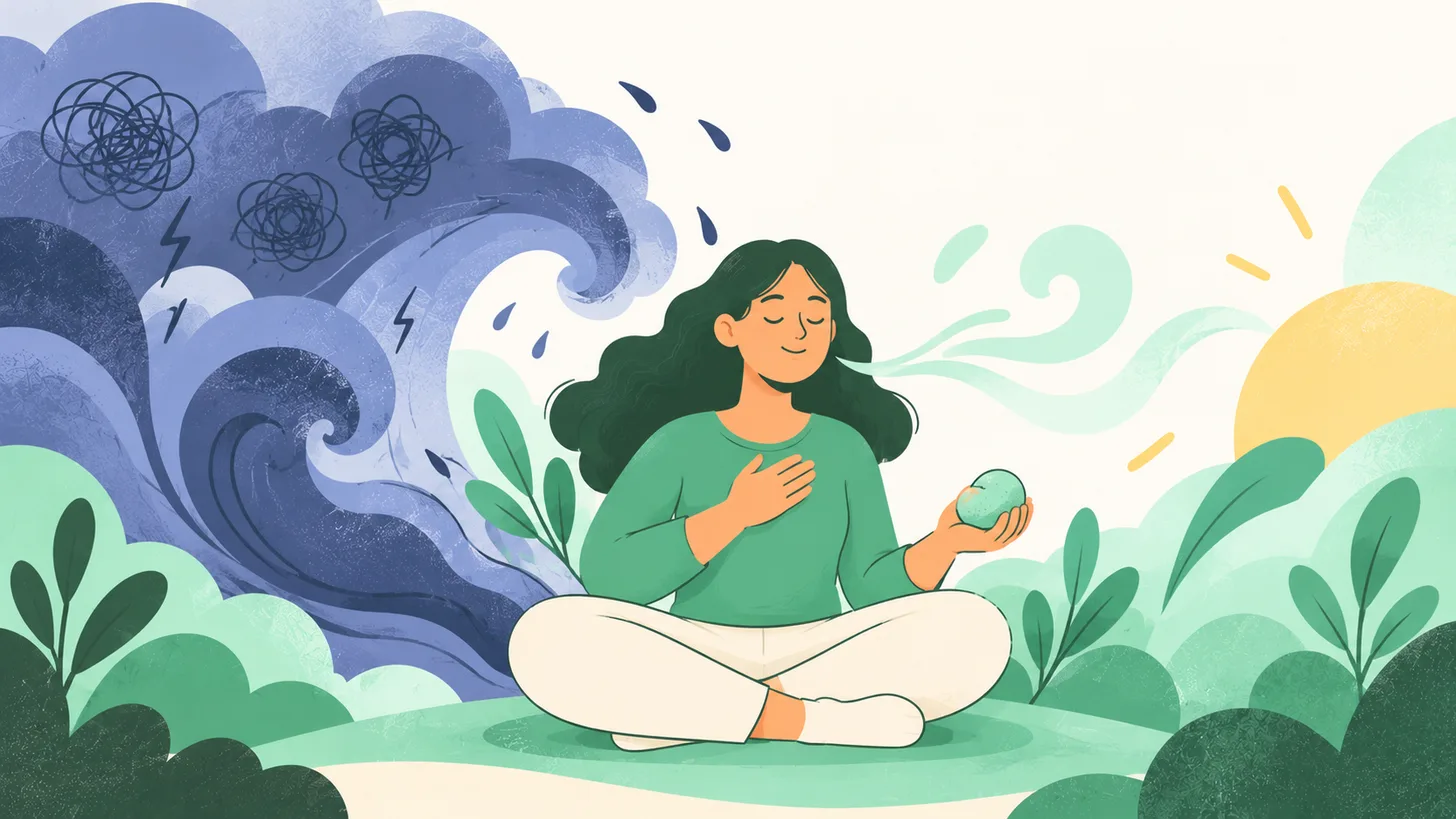
If a loud wave of distress has just hit, try this one short grounding exercise before you read on.
Grounding gives you the next ten minutes back. A DBT therapist helps you figure out which triggers it works best for across your week.
In short: the four modules are mindfulness, distress tolerance, emotion regulation and interpersonal effectiveness. Mindfulness runs under all three others, which is why Dr. Linehan built it in first.
What a full DBT programme actually looks like
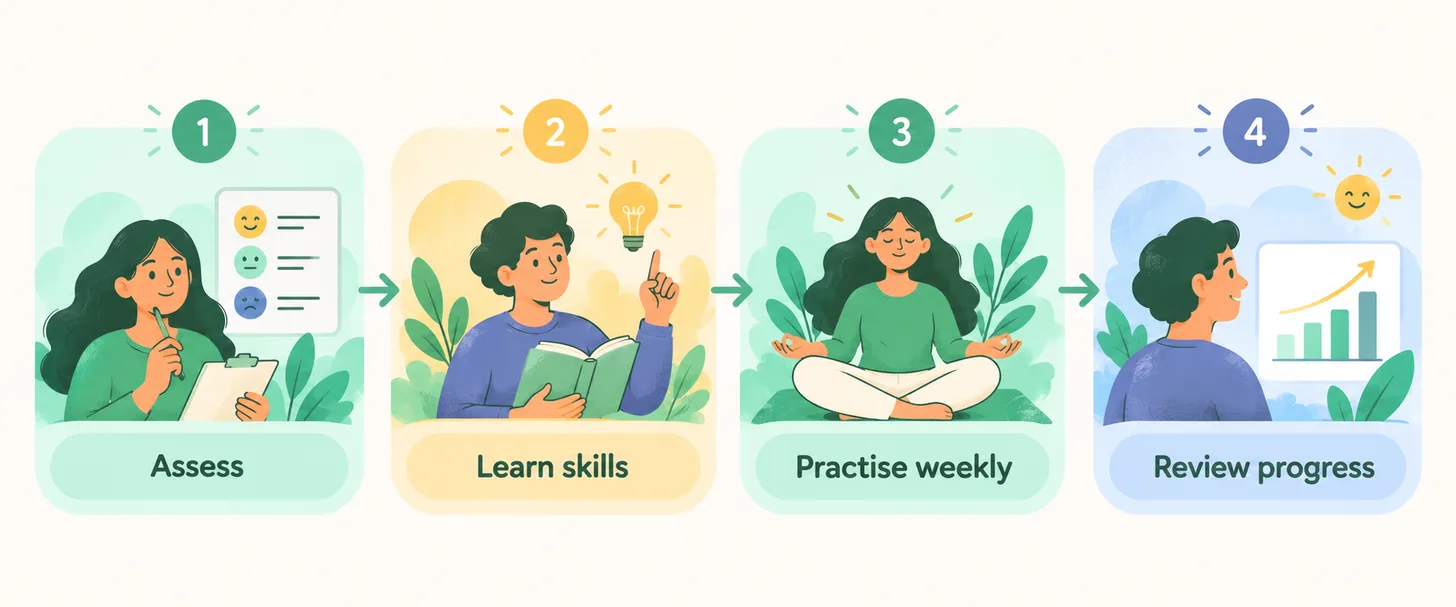
A full DBT programme has four moving parts. All four together are what the research tested, and what gets the strong results in Dr. Linehan’s trials.
In short: full-programme DBT is individual therapy, skills group, phone coaching and a therapist consultation team, in parallel, across six to twelve months. Research-grade results come from the full set, not the first row.
Who DBT is for, and when another therapy fits better
DBT was built for one of the hardest problems in mental health: chronic, high-intensity emotion that leads to self-harm and suicidal thinking. It has grown out of that corner, and now has evidence in several other areas, but the core fit has not changed.
DBT tends to help when:
- You have been diagnosed with borderline personality disorder, or your pattern sits in that neighbourhood
- You harm yourself, or think about it, when a feeling gets too big
- Standard CBT has helped a little and then stopped
- Your emotions move faster and bigger than most people around you
- Binge-eating or substance use shows up when a feeling spikes
- Adolescents with intense emotion dysregulation and family conflict, where a parent is willing to join a parallel skills group
DBT tends not to be the first tool when:
- You are in acute suicidal crisis right now, where stabilisation and possibly inpatient care comes first
- Untreated psychosis is in the picture, where other therapies and psychiatric care come first
- Your main problem is a single-event trauma, where EMDR or trauma-focused CBT often fits better
- Severe cognitive impairment makes the skill learning out of reach
Many Indian psychiatrists work alongside a DBT therapist. They may prescribe an SSRI (a common class of antidepressant with a long track record in anxiety and depression) when low mood sits alongside the emotion dysregulation, or a mood stabiliser if there is also a bipolar diagnosis. The medication question is a psychiatrist’s call, with you.
Not every intense feeling needs DBT. For many readers, a season of weekly CBT for anxiety or social anxiety is enough. DBT asks for a bigger commitment and makes sense when the pattern is older and the stakes are higher.
In short: DBT fits chronic emotion dysregulation, BPD symptoms and self-harm patterns better than almost any other therapy. If your problem is a one-off event or an acute crisis, something else usually comes first.
DBT therapy in India: how available is it, really
Honest answer first. Full-programme DBT is still rare in India. Most of it sits inside a handful of tertiary hospitals and specialist private clinics in a few cities.
The clearest institutional home for DBT in India is the National Institute of Mental Health and Neurosciences, NIMHANS in Bengaluru. DBT has been part of its clinical offer for over a decade, mostly for inpatient and OPD care of severe emotion dysregulation.
A small number of private groups in Bengaluru, Mumbai, Delhi NCR, Chennai and Pune now run DBT-informed programmes. The rigour varies.
DBT-informed individual therapy is more widely available online. Many Indian platforms list a therapist as “DBT trained” based on a short workshop. That can still help, especially for the mindfulness and distress-tolerance modules. It is not the same as a full programme.
Rights reminder: the Mental Healthcare Act 2017 names the right to treatment and insurance parity for mental illness in India. BPD and other severe conditions are covered.
Many insurers now reimburse part of OPD mental health. The practice is patchy, and you may need to push the claim.
In short: full-programme DBT is rare in India and strongest at NIMHANS and a few specialist private groups. DBT-informed therapy is wider, often online, and useful if you vet it with the four questions above.
What DBT costs in India in 2026
Fees vary by city, therapist experience and whether the service is part of a full programme or a standalone session.
In short: budget 2,500 to 6,000 rupees per individual session and 1,500 to 3,500 for a group session, with a full programme landing between 15,000 and 30,000 a month in private practice. Government hospitals are cheaper and have waiting lists.
How to find a DBT therapist in India, honestly
A small checklist before you book your first intake call, which keeps you from paying for DBT in name only.
- Ask about their training. Linehan Institute foundational training (previously Behavioral Tech), ISITDBT accreditation, or supervised DBT practice at a known hospital like NIMHANS. “Attended a workshop” alone is not enough for full-programme care.
- Ask what the programme includes. You are looking for individual therapy, skills group and phone coaching between sessions, plus a note that the therapist sits on a consultation team.
- Ask about the first phase. A full DBT programme starts with pre-treatment, where you agree on targets and commit to reducing life-threatening and therapy-interfering behaviours. If that language is familiar to the therapist, it is a good sign.
- Ask about the diary card. A real DBT programme uses a daily diary card and reviews it in session. If the therapist does not use one, you are in DBT-informed territory, which is fine as long as it is named.
- Trust the first two sessions. If you leave feeling smaller, more ashamed or more confused, say so. A real DBT therapist expects you to push back, and will stay warm about it.
Not every DBT therapist is right for every reader. If the first fit is not the one, pausing is reasonable, not a verdict on therapy. Online therapy in India widens your choices beyond your city.
A short note on evidence. DBT is one of the most studied therapies in mental health. Many of the trials are in Western samples, and Indian replications are still catching up. The clinical consensus, including from NIMHANS, is that it adapts well to Indian contexts when therapists are properly trained.
In short: vet the therapist on training, programme architecture, pre-treatment, diary card and your own first-session gut. Pay for a full-programme DBT only when the therapist can answer the architecture questions clearly.
FAQ
What is DBT therapy in simple words?
Is DBT the same as CBT?
Can I do DBT online in India?
Does DBT work for BPD?
How long does DBT take?
Do I need a diagnosis to start DBT?
Is DBT available on government mental health schemes in India?
Your next step
DBT is not a quick fix. It is a serious piece of work for a serious set of patterns, and it has helped more people with chronic suicidal thinking than almost any other therapy. If you have read this far, something in the pattern probably fits.
A first conversation with a therapist is not a commitment to a six-month programme. It is a chance to find out whether DBT is the right next step for you, or whether a different therapy comes first.
In short: book one honest conversation with a DBT-trained or DBT-informed therapist. Decide the week after whether to go further.
If you are in distress or thinking about hurting yourself, you do not have to wait for a therapist. These lines are free, confidential and run by trained listeners.
This post is for information only and is not a substitute for professional care.




Share your thoughts