
What this blog includes
- The plain apathy meaning, in words that fit real life
- How apathy is different from laziness, sadness, burnout and anhedonia
- What causes apathy, from depression to Parkinson’s to some antidepressants
- What actually helps, with a small first step you can take tonight
- When apathy needs a doctor, not a weekend reset
A lot of us Google “what is apathy” after someone close says “I just do not care about anything right now”. Or we type it in about ourselves, between the fifth unopened WhatsApp and the dinner we did not want to cook.
The honest answer is not scary. GoodLives is trusted by 500K+ people, and this question comes up often. Our psychology terms hub sits next to this piece, which slots under our depression guide for India.
What you are feeling has a name. Plenty of us have been there.
What does apathy actually mean?
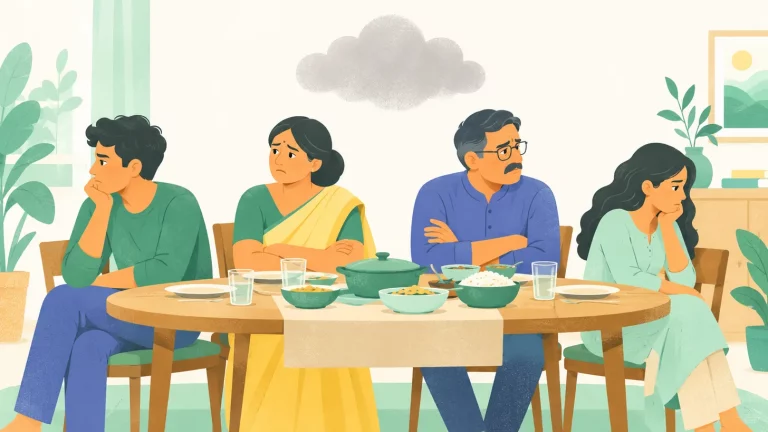
In plain words, apathy is a flat state where three things go quiet at the same time. The drive to do things gets quiet. The thoughts about doing things get quiet. The feelings you would normally get from doing things get quiet too. The wanting itself is gone.
Psychiatrist Robert Marin set out this three-part shape in a 1991 paper in the Journal of Neuropsychiatry and Clinical Neurosciences. It still frames how clinicians think about apathy today.
- Reduced goal-directed behaviour. You stop starting things.
- Reduced goal-directed thinking. You stop planning what next.
- Reduced emotional response. The things that used to move you do not land.
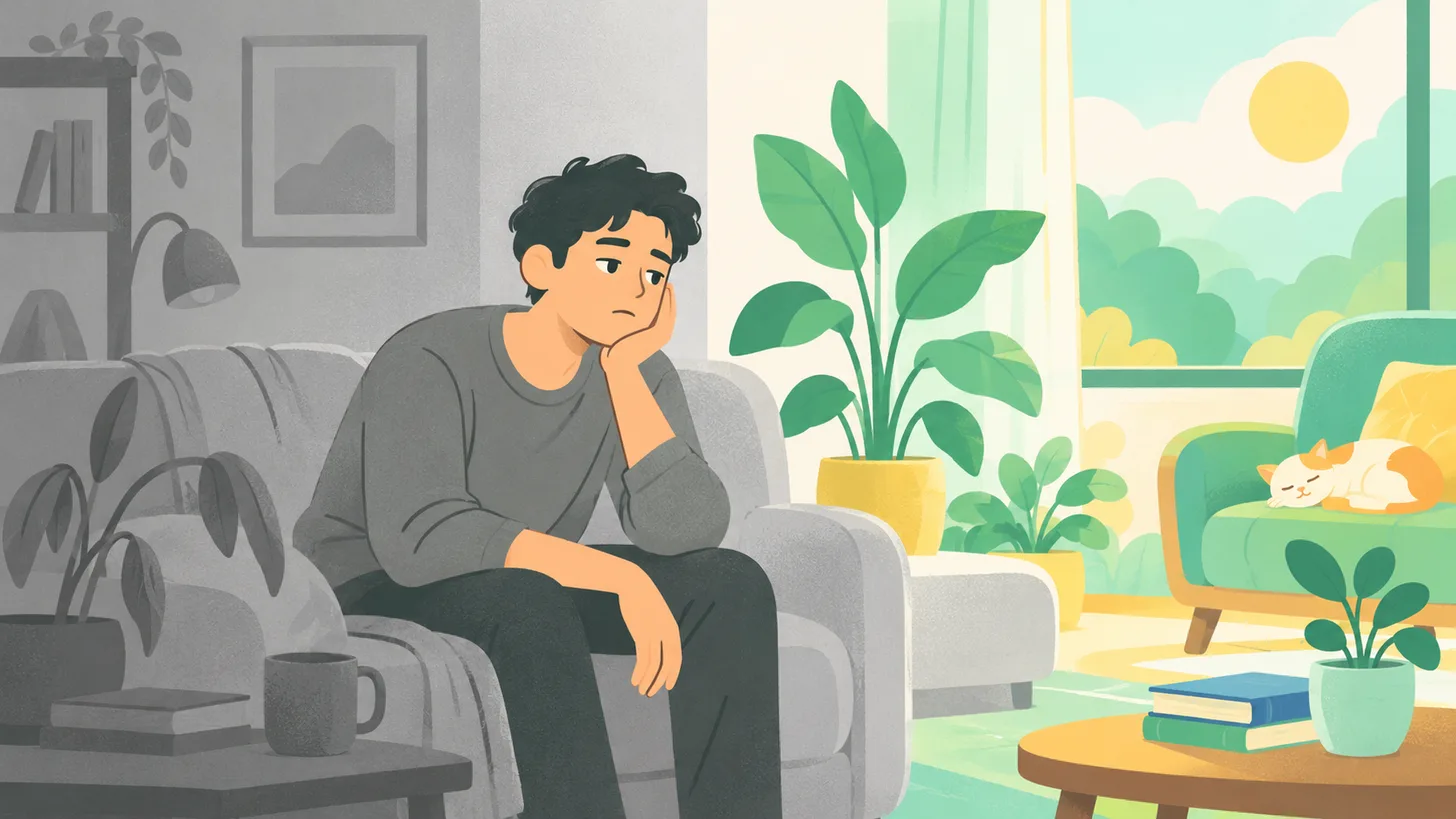
In short: Apathy is a motivational-emotional state. Drive, thought and feeling all go quiet together.
Apathy is not laziness: three honest differences
This is the part that gets missed most. From the outside, apathy looks like laziness. The dishes stack up. The reply does not get sent. People push, and the push does not land.
Laziness is a choice when alternatives feel available. You know you could get up. You pick not to. Something cheaper is pulling you.
Apathy is the absence of that choice. There is no cheaper option that feels better. There is no feeling, full stop.
Three ways to tell them apart in the mirror.
- Can you imagine the thing feeling good once you do it? If yes, it is probably resistance. If the imagining is blank, that is closer to apathy.
- Does a small reward move you? Laziness responds to a bribe. Apathy does not.
- Does being pushed help? Laziness sometimes shifts under pressure. Apathy flattens.
In Indian households this matters. The first response, often loving, is “just get up and do it”. That line works for a Sunday slump. For apathy, it adds shame on top of flatness.
In short: Laziness picks the easier option. Apathy cannot feel the options.
Apathy vs depression, burnout and anhedonia
These four states live close to each other. People use the words as if they were the same, and they are not. Getting the name right changes what helps.
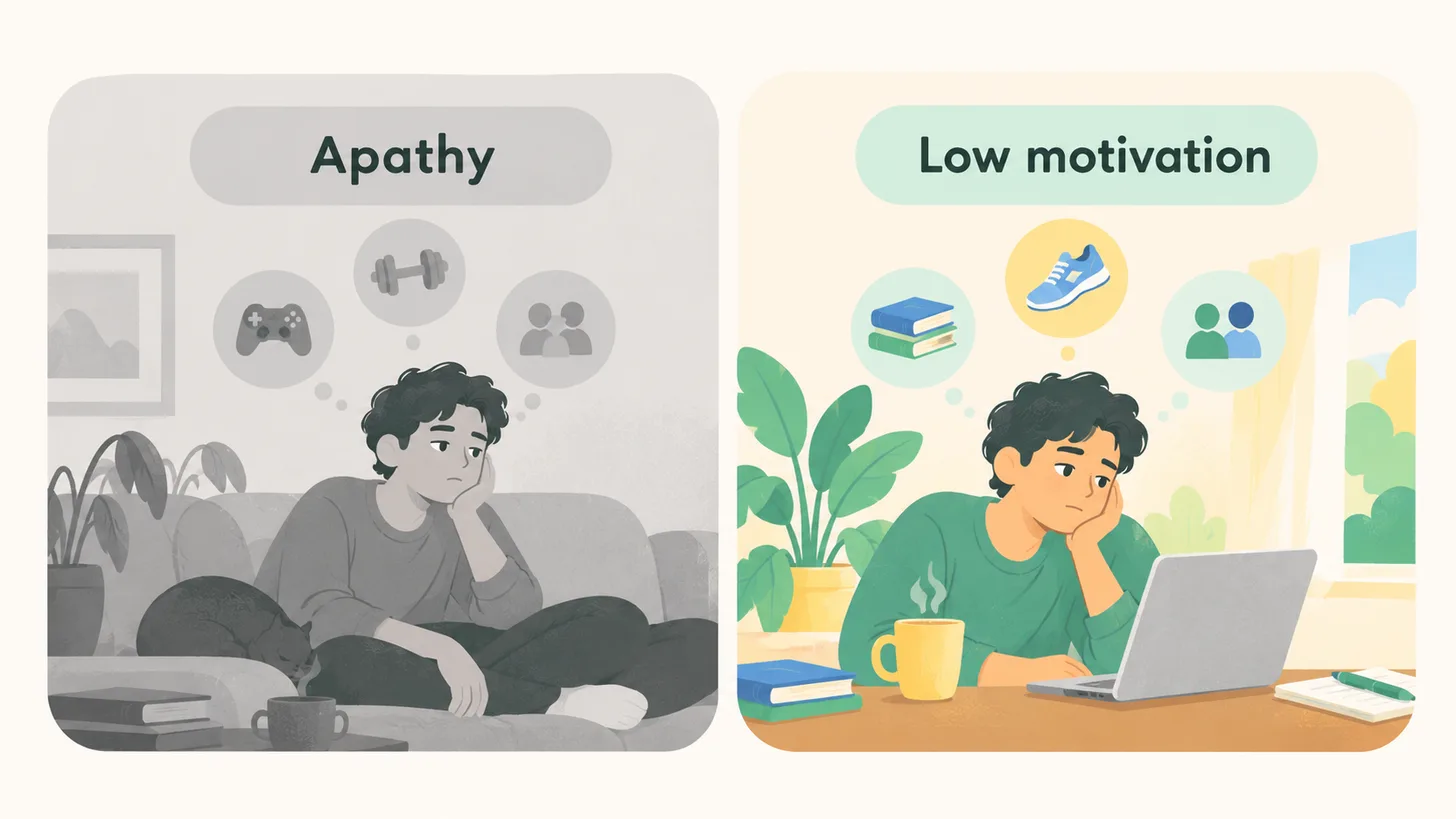
Apathy and depression can live together, and often do. Depression tells you “I feel bad”. Apathy tells you “I do not feel”.
That difference matters. The treatment that lifts depression does not always lift apathy on the same timeline. Sometimes the medication itself keeps it in place, which is covered next.
In short: The feeling tells you which state you are in. Heavy, hot, blank or pleasureless each has its own path.
What causes apathy, and why it is often missed
Apathy has more than one address. The same flat state can come from very different places, and the fix lines up with the cause.
- Depression, especially the kind where the body slows down and nothing feels like anything. Our depression guide for India covers this in detail.
- Neurological conditions. Apathy is common in Parkinson’s disease, in strokes affecting the frontal lobe, in Alzheimer’s and in frontotemporal dementia. The Parkinson’s Foundation lists it as a frequent non-motor symptom.
- Some antidepressants. SSRIs (a common type of antidepressant) can bring on emotional blunting, a flattening of highs and lows. If your flat state started after a new medication, tell your psychiatrist. Do not stop on your own.
- Burnout that has tipped past exhaustion. When the resentment finally leaves and only the flatness stays, the state has often moved into apathy. Our page on work stress and burnout in India covers that slide.
- Chronic stress and trauma. The body can go into a long shutdown that looks like not caring.
- Substance use. Heavy cannabis use is linked to amotivation in some people. Stimulant withdrawal can leave a flat crash for days.
- Grief, in its later months, where acceptance can look like apathy from the outside.
One small, honest detail. Apathy that lifts in two or three weeks after a big life hit (a job loss, a breakup, a death) is often normal. Apathy that stays past that, especially with thoughts of “why bother”, is worth taking to someone trained.
In short: Apathy is a signal, not a verdict. The cause decides the fix.
What actually helps when you do not care
Here is the honest, inconvenient part. The techniques that help with anxiety (breathing, grounding, journaling) do less for apathy. The problem is not an overactive nervous system. It is an underactive one.
The evidence-based move for apathy is behavioural activation.
Behavioural activation is a core piece of cognitive behavioural therapy (CBT). It sounds obvious and it is not. It says: do the thing before you feel like doing it. Pick an action so small your brain cannot find a reason to refuse. Motivation follows action, not the other way around.
What this looks like on a flat Tuesday.
- Open the curtain. That is the whole task.
- Walk to the gate and back. Not a 30-minute walk. Just the gate.
- Message one person a one-line reply. Not a conversation.
- Eat one real meal, even one you did not cook.
If you want to start right now, this is the gentlest behavioural step we know. Write three small, true good things from today. It is not a cure. It gives the brain one honest signal that something was worth noticing. That is the exact signal apathy mutes.
If you want, take a minute with this before you read on.
Even on hard days, a few small things hold up.
Let's find three. It takes about a minute, and it never leaves your device.
Three good things
Take them one at a time. Small really counts here. If a prompt doesn't fit, swap it for another.
Your good list for today
Noticing good things doesn't cancel the hard parts. It just gives them some company.
Come back tomorrow and add three more.
This stays on your device. Nothing is saved or sent.
A few other things that help, usually alongside behavioural activation.
- Daylight and gentle movement. Apathy sits in the body as much as the mind.
- A structured routine. When internal motivation is low, you borrow motivation from the clock and the calendar.
- One social contact a day, even one you did not want. Company often works even when it feels pointless.
- Treating the underlying cause. If depression, substance use or a neurological change is driving the apathy, the thing to treat is that.
You may have already tried most of this. If one small action a day for two weeks does not move the needle at all, that is useful information. It is a sign to add a trained person to the picture. It is not a sign that you failed.
Three things to avoid, which look like they should help and often do not.
- Big goals. Apathy cannot plan a thirty-day reset. Smaller than you think.
- Catastrophising. “I will always be like this” is not a fact. Apathy lies about the future.
- Pure cognitive work. Reading another article will not shift apathy as much as five minutes of movement will.
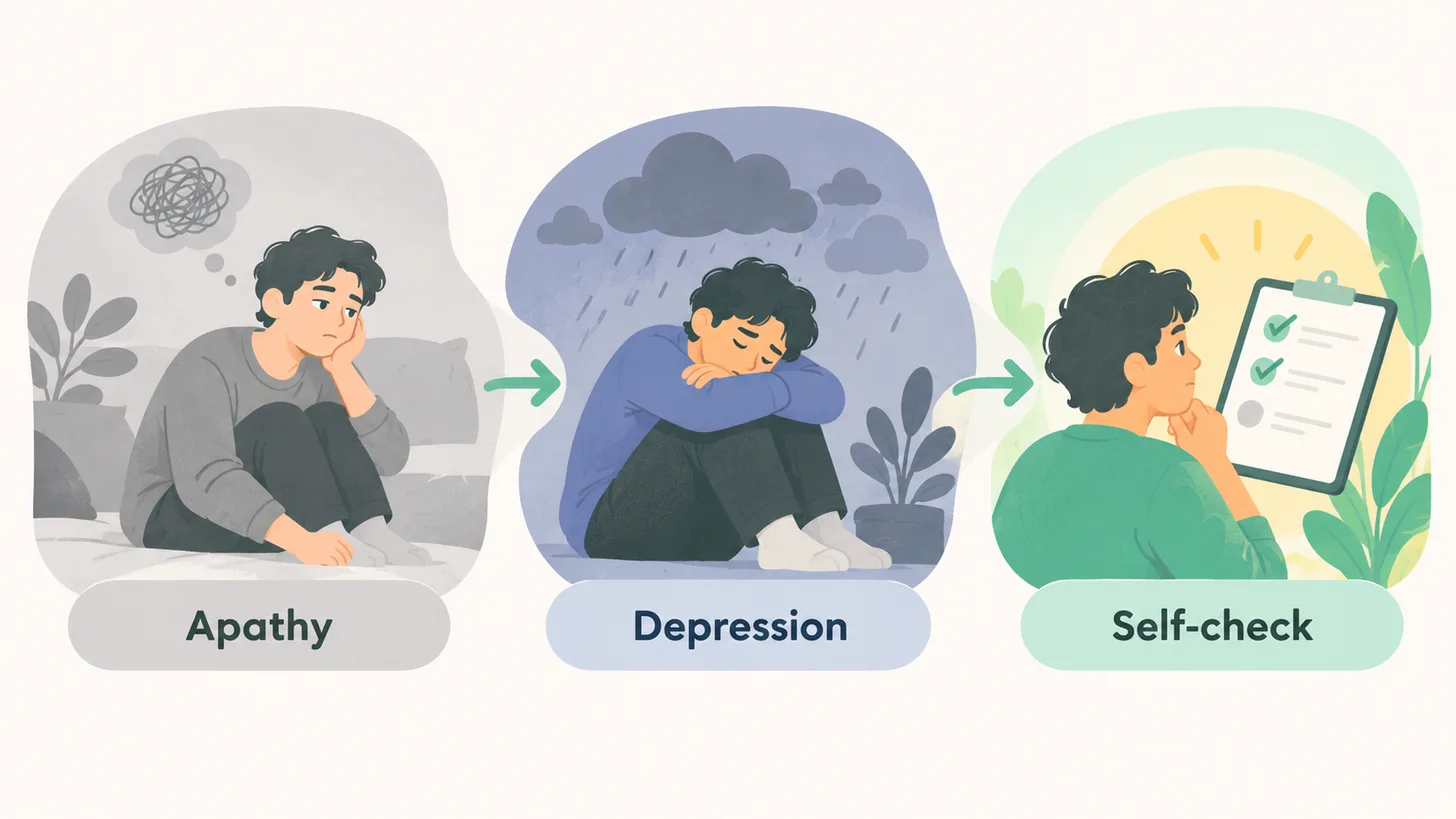
In short: Action first, feelings follow. The step is smaller than you think.
When apathy needs a doctor, not a reset
Most apathy is not an emergency. Some apathy is. Treat the following as reasons to see a GP or a psychiatrist this week.
- Thoughts of “why bother”, with any flicker of wanting to not be here.
- Basic self-care has slipped for over a week, including eating, washing, taking medication.
- New neurological signs, including memory changes, slurred speech, movement changes, falls or sudden personality shifts.
- The apathy started soon after a new medication was added or a dose was changed.
- The apathy followed a head injury, a stroke or a serious illness.
The usual order is a GP or a psychiatrist first, to rule out a neurological cause or a medication effect. Then a clinical psychologist, where CBT and behavioural activation have the most evidence. Our page on online therapy in India covers how it works.
In short: Suicidal thoughts, slipping self-care or new neurological signs are reasons to call someone trained now.
Closing
Apathy does not announce itself. It arrives slowly, and the first thing it takes is the sense that it is worth doing anything about. If something in this piece felt like being described, that noticing is itself the start of the work.
Tonight, do one tiny thing. Open the curtain, write three honest good things, or send one one-line reply. Tomorrow is a longer conversation.
When you are ready, book a 50-minute session with a verified psychologist on GoodLives. English, Hindi and more Indian languages. Start when it feels right. button: Book a Session
—
—
This post is for information only and is not a substitute for professional care. If you are struggling, please speak to a qualified mental health professional.


Share your thoughts