
What this blog includes
- A plain take on what trauma is, and how it is different from stress
- The eight recognised types of trauma, from acute to intergenerational
- Five symptom clusters: body, mind, mood, memory and relationships
- Why trauma is often missed in India, honestly
- Therapies that work: EMDR, TF-CBT, somatic experiencing, IFS
- Daily anchors, helplines, and where therapy fits
You’ve probably had a moment like this. The event is over, maybe long over, but the body does not know. A song, a smell, a certain shout, and you are back there. People say you are “fine now”. The sleep says otherwise. The stomach says otherwise. The way you flinch when a door shuts says otherwise.
Trauma has a shape. Trusted by 500K+ people and holding a 5 Google rating, GoodLives speaks with first-time readers on trauma almost every day. You do not need a label to deserve care. You need someone who can read the shape with you.
What does trauma actually mean, and how is it different from stress?
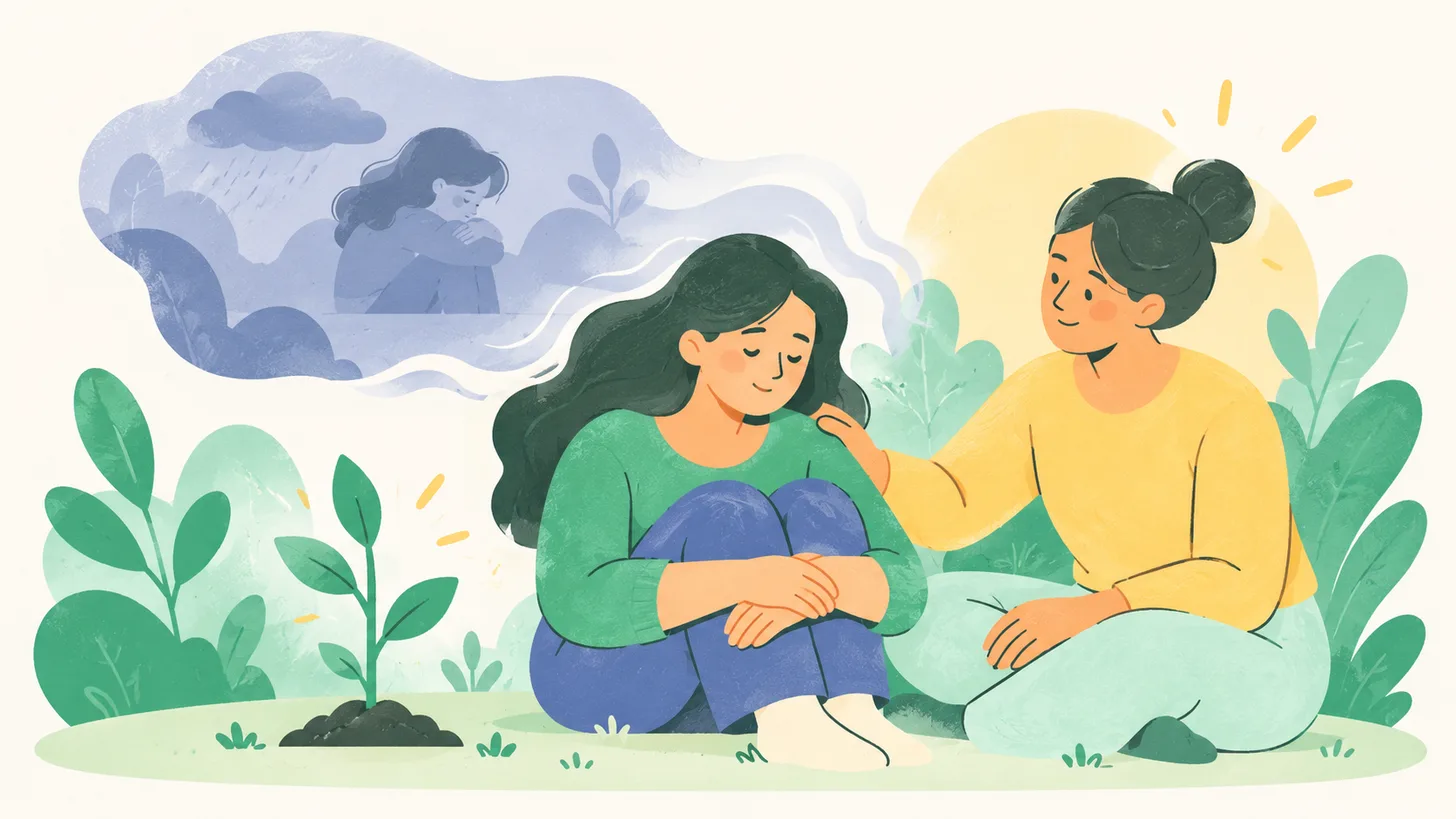
Trauma is what happens inside a person when an event, or a series of events, overwhelms the ability to cope and the body cannot return to safety on its own. The event could be sudden, like an accident or an assault. It could be long, like growing up with a violent parent, or caring for a sick family member for years. It could be something you never named at the time.
Stress and trauma are not the same thing. Stress is the body’s response to a load it can carry, even reluctantly. The load lifts, the body resets. Trauma is a load the system could not resolve in the moment, and the body kept the readiness switched on. The American Psychological Association defines trauma as an emotional response to a terrible event, with ongoing shock, denial, and often long-term reactions.
The International Society for Traumatic Stress Studies adds a helpful line. What makes an event traumatic is less about the event itself, and more about whether the person could stay safe, make sense of it, and reach a trusted other during and after.
In short: stress is a load that lifts. Trauma is a load the body carried too long without a safe exit.
What are the main types of trauma?
Clinicians name trauma by what the event looked like and how the person was reached, before, during and after. The categories overlap. One person can carry more than one.
Acute trauma. One frightening event. A road accident, an assault, a disaster, a sudden death, a medical emergency. The event is time-bound, the response can be strong.
Chronic trauma. The hard thing goes on. Domestic violence over months or years, a long illness in the family, chronic poverty, caregiving that erases the self. The body stays switched on for a season of life, not a moment.
Complex trauma (cPTSD). Repeated, interpersonal, and often early in life. Childhood neglect, abuse, repeated betrayal by someone close. The World Health Organization added Complex PTSD to the ICD-11 in 2019. On top of the usual trauma symptoms, cPTSD leaves a difficult relationship with the self, trouble handling strong feelings, and ongoing trouble feeling close to others.
Vicarious or secondary trauma. You take in the pain of others, as part of the work or the family role. Therapists, counsellors, doctors, nurses, journalists, first responders and primary caregivers are at higher risk. The US National Child Traumatic Stress Network describes it as the natural consequence of caring deeply for traumatised people.
Developmental trauma. Harm happens before the brain has words. Pre-verbal neglect, early medical trauma, early separation from a safe caregiver. Named by Bessel van der Kolk, developmental trauma shapes the nervous system itself.
Intergenerational trauma. Patterns passed through family systems. Behavioural (anger, silence, avoidance) and sometimes biological. A 2016 study by Rachel Yehuda and colleagues at Mount Sinai00652-6/fulltext) found measurable epigenetic effects in children of Holocaust survivors. Our childhood trauma guide sits alongside this for the family-of-origin side.
Collective trauma. A whole community is harmed at the same time. Partition in 1947, the Kashmir conflict, the North-East, the Gujarat and Delhi riots, caste-based violence, the pandemic grief wave. The event is shared, and so is the silence after.
Insidious trauma. A slow accumulation of being unsafe or unseen. Microaggressions, chronic marginalisation, systemic discrimination, growing up queer in a family that could not hold you, growing up Dalit in a space that would not. The injuries are small each day, and heavy over a lifetime.
In short: trauma is not one shape. It is a family of eight, and one person’s story may hold more than one.
What are the symptoms of trauma?
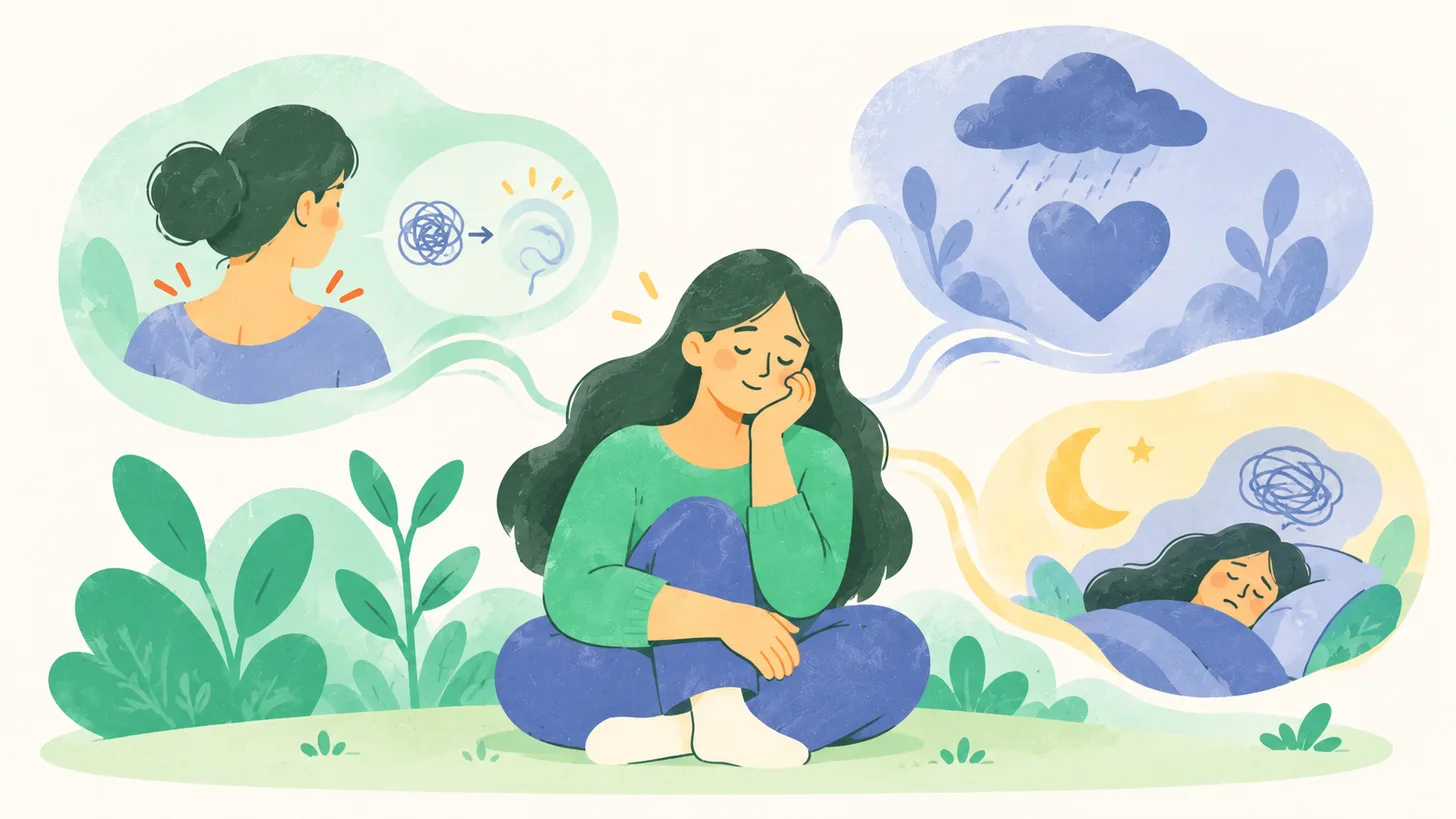
The DSM-5-TR, published by the American Psychiatric Association, groups post-traumatic symptoms into four clusters, meant to last more than a month and get in the way of daily life. Clinicians treating complex and developmental trauma add a fifth: the body.
Intrusion. The event comes back without being called. Flashbacks that feel like now. Nightmares. Images that run through the mind without an off switch. A racing heart when a sound or a scene matches a piece of what happened.
Avoidance. You stay away. From the road, the person, the kind of conversation, the news. You keep the memory at a distance because getting close to it costs too much. Avoidance is a sign of pain, not of weakness.
Negative shifts in mood and thought. The world feels unsafe. People feel unsafe. You feel to blame, or shut down. Joy is harder to reach. Some memories are blurry or missing. You pull away from people you used to lean on.
Hyperarousal. The body stays on. You jump at a car door. You can’t settle. Sleep is thin. You snap at small things. You scan a room before you sit down.
Somatic symptoms. Chronic headaches, gut issues, back pain, fatigue, immune flare-ups. Bessel van der Kolk’s The Body Keeps the Score brought this into wider reading. The Adverse Childhood Experiences study by Felitti, Anda and colleagues at the CDC and Kaiser Permanente linked early trauma with higher adult rates of heart disease, autoimmune illness and depression. The body is not making it up.
Three more pieces often show up with complex and developmental trauma.
Dissociation. Depersonalisation (watching yourself from outside), derealisation (the world feels like a film), losing time, patchy memory, zoning out when triggered. For a longer walk through this, see our dissociation and dissociative identity guide.
Relational symptoms. Trust that will not settle. Isolation. Over-caretaking. Walking out at the first sign of conflict, or staying in places that are not safe. Attachment research by Mary Ainsworth and later John Bowlby describes how early safety shapes adult relating.
Cognitive symptoms. Memory gaps, trouble concentrating, decision paralysis, foggy thinking. The brain is spending a lot on keeping you safe, so other work slows.
In short: trauma shows up in five places, not one. The body, the mind, the mood, the memory and the relationships. A trauma-trained therapist reads all five.
Why trauma is often missed in India, honestly
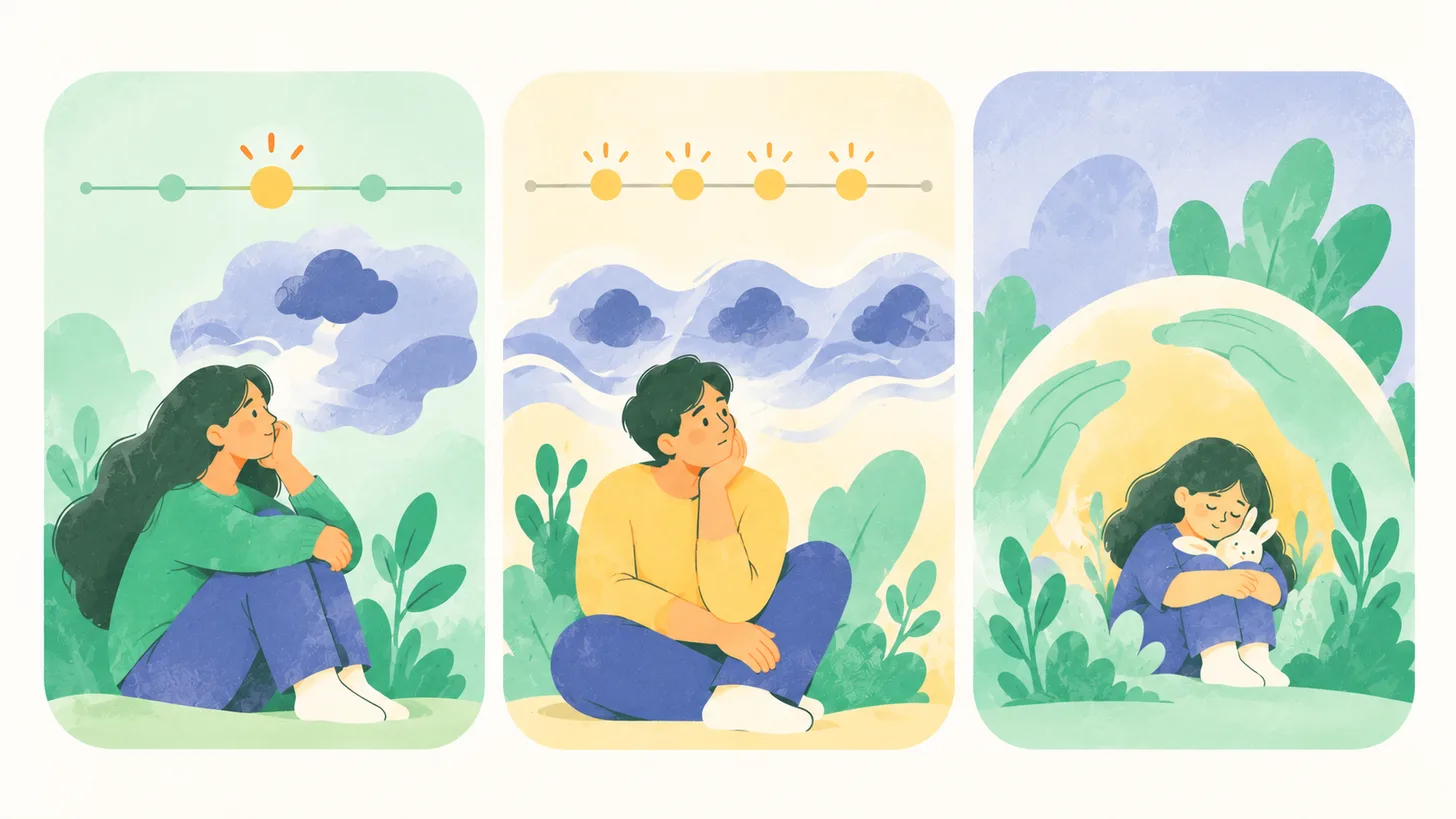
Trauma is common here. It is also often unnamed. Three honest reasons.
Social dismissal. “You survived, be grateful.” “It was long back, let it go.” “Everyone has it hard.” These lines are everywhere. They do not help. They teach the person to carry the memory in silence.
Shame around disclosure. Especially after sexual violence, domestic violence, caste or communal violence, or abuse by a family member. The family’s reaction is often part of the trauma, not the balm. For survivors of child sexual abuse, the POCSO Act, 2012 gives legal protection; the social and family side is still rebuilding.
Thin on-ground services. Trauma-trained therapists are concentrated in a few metros. EMDR, somatic experiencing, prolonged exposure and other trauma-focused therapies are growing in Mumbai, Delhi, Bengaluru, Pune, Hyderabad and Chennai, and still thin elsewhere. The National Mental Health Survey of India, 2015 to 16, by NIMHANS found a mental health treatment gap of 70 to 90 percent across conditions. Trauma care is not reported separately, but the pattern of missed care is familiar.
A note on the long memory. Partition, Kashmir, the North-East, the Gujarat and Delhi riots, and caste-based violence have left intergenerational trauma that is only now being named. A 2015 study in the Indian Journal of Psychiatry on Partition survivors found measurable long-term psychological distress across generations. If this is part of your family’s story, you are not making it up.
A second quiet piece. Medical trauma is widespread here and rarely named. Hospital stays without clear communication, obstetric violence during childbirth, ICU admissions, and the loss of a loved one during the pandemic have left many families with real post-traumatic responses, often blamed on “overthinking”.
In short: trauma in India is common, often missed, and shaped by context. Being missed does not mean being untreatable.
What therapies help with trauma, and what does the research say?
The research on trauma treatment is some of the strongest in mental health care. The US VA and DoD clinical practice guideline on PTSD and the UK NICE PTSD guideline (NG116) both list trauma-focused talking therapies as first-line.
EMDR (Eye Movement Desensitisation and Reprocessing). Developed by Francine Shapiro in the late 1980s. You briefly focus on a slice of the memory while your eyes follow the therapist’s hand or a light bar. The memory loses its sharpest edges over sessions. EMDR has strong evidence for single-event trauma. A trained therapist in India can list EMDR Level 1 or Level 2 certification.
Trauma-focused CBT (TF-CBT). Developed by Judith Cohen, Anthony Mannarino and Esther Deblinger. A structured therapy that helps you understand the thoughts around the event and update them. Used with children, teens and adults, and well-studied.
Prolonged Exposure (PE). Developed by Edna Foa at the University of Pennsylvania. You talk through the memory with a trained therapist, slowly and in a safe room, until the body learns the memory is a memory, not a now.
Cognitive Processing Therapy (CPT). Developed by Patricia Resick. You look at the beliefs the trauma left behind, like “it was my fault” or “the world is not safe”, and rewrite them with your therapist.
Somatic Experiencing (SE). Developed by Peter Levine. The focus is the nervous system, not the story. Through gentle attention to sensations, the body learns to complete the responses that were frozen during the event. Useful when words feel too much, too soon.
Internal Family Systems (IFS). Developed by Richard Schwartz. You meet the parts of yourself that carry different pieces of the trauma, with care. IFS is used widely in complex and developmental trauma. A 2021 study in the Journal of Aggression, Maltreatment & Trauma found promising results for cPTSD.
Narrative Exposure Therapy (NET). Developed by Maggie Schauer, Thomas Elbert and Frank Neuner for refugees and survivors of collective trauma. You build a lifeline, and place the trauma inside the whole story.
Medication. A psychiatrist may add a medicine when symptoms are severe or sleep has collapsed. Medication is a chat with a psychiatrist, not a Google search. Our guide on which doctor to consult for mental health in India walks through who does what.
A note on what is not first-line, per NICE: short counselling without a trauma focus, and single-session debriefing. A good trauma therapist does not rush you through the story.
In short: trauma has strong, named, evidence-based treatments. EMDR, TF-CBT, SE, IFS and PE are the leading options. The right one for you depends on the type of trauma and your current capacity.
Pause here if you need to.
[gl-breathe]
How to find a trauma-trained therapist in India
Three doors.
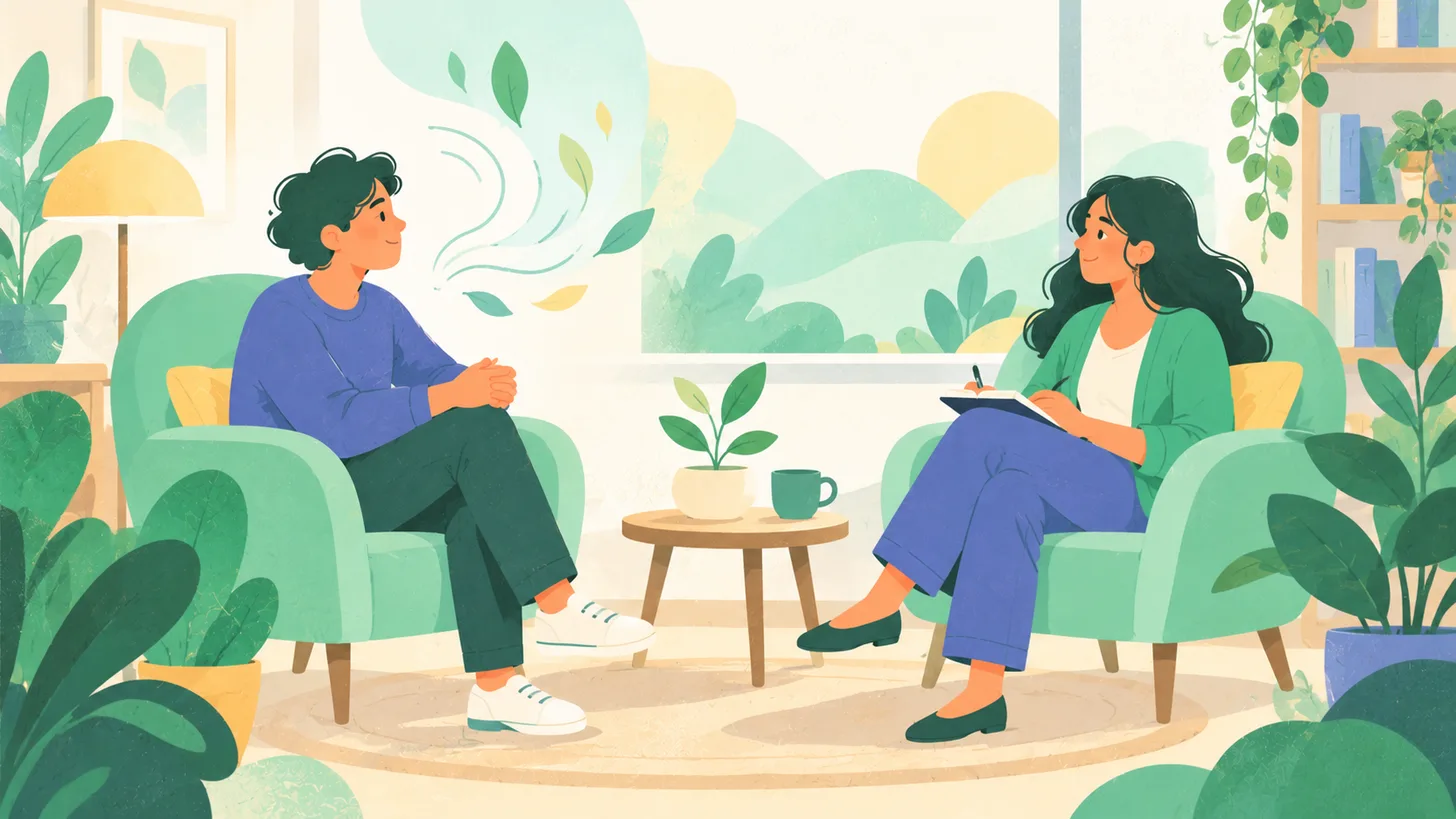
- A trauma-trained clinical psychologist. Ask about EMDR Level 1 or Level 2, somatic experiencing Level 2 or above, prolonged exposure certification, or CPT training. The Rehabilitation Council of India (RCI) register lists qualified mental-health professionals. RCI registration is the first filter in India.
- Specialist government and institutional care. The departments at AIIMS and NIMHANS run trauma clinics. District Mental Health Programme clinics are free; ask at your nearest government hospital.
A GoodLives therapist can walk alongside the depression, anxiety and relationship side of trauma. If you aren’t sure who to talk to first, our anxiety guide for India and post-traumatic stress disorder guide share overlapping ground.
In short: a trauma therapist is a specialist. Ask about training by name. The question itself is a good sign that you are being thoughtful about your care.
When trauma symptoms need urgent care
Trauma care is usually slow and planned. A few signs mean the next step is sooner, not later.
- Active thoughts of harming yourself, or a clear plan
- Self-harm that is escalating
- Alcohol or substance use that is spiralling
- Dissociation that is making daily life unsafe (missed time at work, driving blackouts)
- Not being able to eat or sleep for more than a few days in a row
These lines are free. They are also, often, the first warm voice a person reaches.
In short: most trauma care is paced. A few signs call for a faster first step.
Daily things that help alongside therapy
Nothing on this list replaces trauma therapy. These are the quiet anchors that make the bigger work possible.
- Steady sleep. A fixed wake-up time, even on a bad week. The body learns the day begins again.
- A grounding practice. 5-4-3-2-1: name five things you see, four you can touch, three you hear, two you can smell, one you can taste. It brings the mind back from a flashback into the room.
- Gentle movement. Walking, light yoga, trauma-sensitive yoga if available. Not punishing exercise.
- A trusted person. One person who knows a little, so you aren’t carrying the memory in full silence.
- Pacing. Permission to rest after hard days. You are not lazy. You are healing.
- A limit on triggering content. News, true-crime, social media. Some seasons of healing need a quieter diet.
A gentle note on language. People live with trauma. It is not a battle to win or a flaw to hide. Dialectical behaviour therapy skills often sit well alongside trauma therapy for the daily parts, especially when emotions run very high or very low.
If reading this at 2 am, with the mind loud, be kind. The bechaini (restlessness) you may feel has a name. It responds, slowly, to the right care.
In short: trauma is treatable. The daily habits are small and ordinary, and the therapy is the real engine.
FAQ
What are the main types of trauma?
What are the five main symptoms of trauma?
What is the difference between stress and trauma?
How is trauma diagnosed in India?
Can trauma be healed?
Can I have trauma symptoms from something that happened in childhood?
What is intergenerational trauma, and is it real?
This post is for information only and is not a substitute for professional care.


Share your thoughts