
What this blog includes
- Why fast anxiety tools work (and what “fast” really means)
- 7 ways to reduce anxiety fast, in minutes, in the room you are already in
- What does not help (and often quietly makes it worse)
- When self-help is not enough, and what therapy does differently
If you are reading this at 2 am between two tabs, you are not being dramatic. What you are feeling has a name, and your body has ways to come down from it. At GoodLives, trusted by 500K+ people, we hear the same thing often: “I need something that works right now.”
This post is a plain answer to how to reduce anxiety fast, in minutes, without magical thinking. “Fast” is not instant. A spike usually peaks and falls within 10 to 20 minutes if you stop feeding it. The tools below let you ride it and get your thinking brain back online.
Why anxiety spikes, and why these fast tools work at all
Anxiety is your nervous system’s smoke alarm. The fight-or-flight side pushes your heart up and your breath shallow. The rest-and-recover side can bring all of that down, but it listens to inputs, not instructions. Telling yourself to calm down rarely works. Specific inputs do.
Those inputs are breath, cold, body movement, sensory grounding, and the right kind of thought. Each tool below uses one of them. Pick the one that fits what your body is doing right now.
In short: You cannot think your way out of a body alarm. You can send your body a signal it will listen to.
What is the fastest way to reduce anxiety right now?
The fastest tool with real evidence is the physiological sigh: a double inhale through the nose, then a long exhale through the mouth. A 2023 Cell Reports Medicine study00474-8) found it beat other breathing patterns, and most people feel the shift inside a minute.
How to do it: inhale through your nose, pause, take a second short sip of air, then exhale slowly through your mouth, twice as long as the inhale. Three to five cycles. The long exhale activates your vagus nerve, which tells the body it is safe.
Pair it with one of the tools below if the alarm is still loud after a minute.
In short: Two nose-inhales, one long mouth-exhale. Repeat for a minute. This is the shortest route your body knows to a calmer state.
7 ways to reduce anxiety fast, in the next 10 minutes
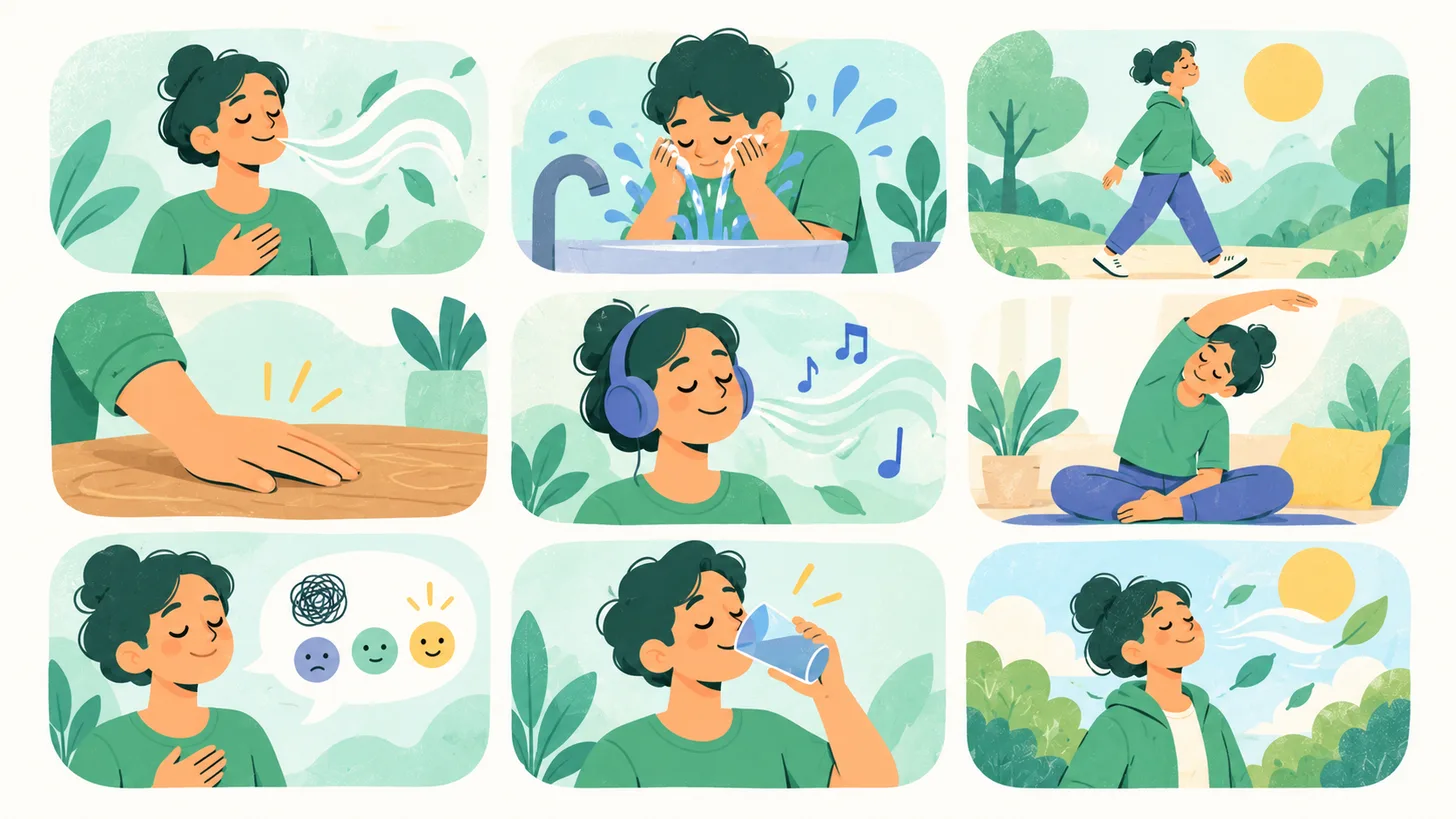
Open your mouth, splash water on your face, step away from the screen. Then pick one. You do not need all seven. One used fully beats three used half-heartedly.
1. The physiological sigh (one minute, anywhere)
Covered above. If you are in a meeting and cannot do it visibly, just make the exhale slow and silent. The ratio matters more than the sound.
2. Cold water on your face (30 seconds, if you have access)
Fill a bowl with cold water and ice, hold your breath, and submerge your face for 15 to 30 seconds. If a bowl is not available, press a cold pack against your cheeks and forehead. This triggers the mammalian dive reflex, which drops your heart rate within seconds. It is part of the DBT TIP toolkit therapists use for distress.
Skip this if you have a heart condition or a reason to avoid breath-holds. Cool water on your wrists works too, more gently.
3. Box breathing for two minutes
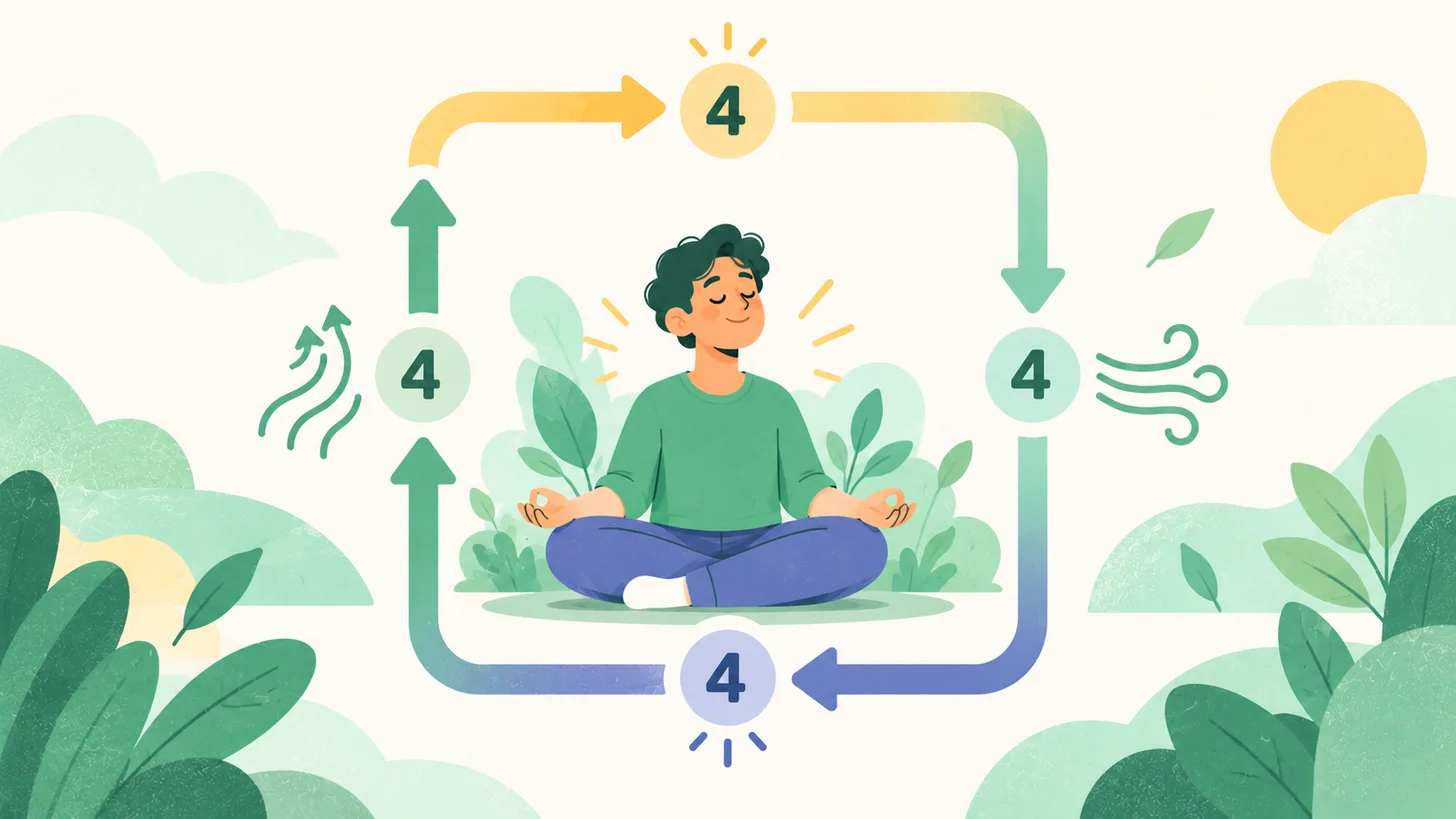
Box breathing is simple to remember when your head is loud. Four counts in, four hold, four out, four hold. Repeat four times.
If you want, try one slow minute of it with this before you read on.
A moment to breathe
Follow the circle. Breathe in, hold, breathe out, then hold. Four counts each. Stay as long as you like.
The widget above walks you through the count without you having to look at a clock. Use it on a bad commute, before an interview, or when you cannot sleep.
4. The 5-4-3-2-1 ground
Name 5 things you can see, 4 you can touch, 3 you can hear, 2 you can smell, 1 you can taste. This is sensory override. It pulls your attention out of your head and into the room, which is almost always safer than your thoughts say. It is especially useful when the spike feels unreal.
5. A brisk two-minute walk
Cortisol and adrenaline want to be used, not stored. A brisk walk down the corridor or around the block moves them through your system, resets your breathing, and interrupts the ruminating loop. Two minutes is usually enough.
6. Progressive muscle relaxation (five muscle groups)
Tense each muscle group hard for five seconds, then let go for ten. Do your hands, shoulders, face, stomach, legs. The contrast between clenched and released teaches your body what calm actually feels like. Most people only notice how tight they were after they let go.
7. A short cognitive reframe
Three sentences, said quietly. “This is a wave, and waves pass.” “I am safe right now, in this room.” “The one piece of data I actually have is X.” The reframe is not a fight with your thoughts. It is a reminder that a feeling is not a fact.
In short: Pick one tool, give it 90 seconds. If the alarm is still loud, pick a second from a different family (breath → cold, cold → movement, movement → ground).
What does not help (even when it feels like it should)
Not everything that offers a quick break helps you reduce anxiety fast. A few popular ones quietly make the next hour worse.
In short: Avoidance and stimulants both borrow against tomorrow. If you want fast relief without a tax, use the seven tools above.
When fast tools are not enough
Fast tools calm the storm. They do not change the pattern of storms coming. If you need the second thing too, that is what therapy is for.
See a professional, not just a widget, when any of these are true. Anxiety most days for more than two weeks. Panic attacks weekly or more. Avoiding normal activities because of anxiety. Sleep broken most nights. Any thought of harming yourself, in which case a conversation today matters more than any breathing exercise.
An honest line on the Indian context
Pranayama and bhramari humming have been part of Indian practice for a long time, and the research on slow nasal breathing overlaps with the physiological sigh. What is not honest is “chai pee lo, sab theek ho jayega” when someone is awake for the fourth night with ghabrahat (the restless, chest-tight feeling Hindi names better than English).
A therapist’s job in the bigger loop is to teach you which tool fits your pattern, work on what is feeding your anxiety, and build a baseline that makes the spikes rarer.
In short: Fast tools calm the storm. Therapy slowly changes the weather. You need both when the storms become the season.
For a deeper read on long-term care, our anxiety guide for India walks through types and timelines.
If English is harder for you, our post on anxiety meaning in Hindi is a gentler start, and the grounding technique guide goes deeper on 5-4-3-2-1.
If you have decided to try therapy, see how online therapy for anxiety works in India.
This post is for information only and is not a substitute for professional care. If you are struggling, please speak to a qualified mental health professional.


Share your thoughts