
— title: “Best Online Therapy Apps in India 2026: An Honest Comparison” slug: best-online-therapy-apps-india What each one costs, who it fits, where it falls short, and the red flags to spot before you pay.” category: Online Therapy
By Sakshi Shah, Co-founder, GoodLives. GoodLives is one of the platforms listed below, so please read our placement in that light.
Last re-checked: October 2026. Prices and features change often, so we refresh this page every few months.
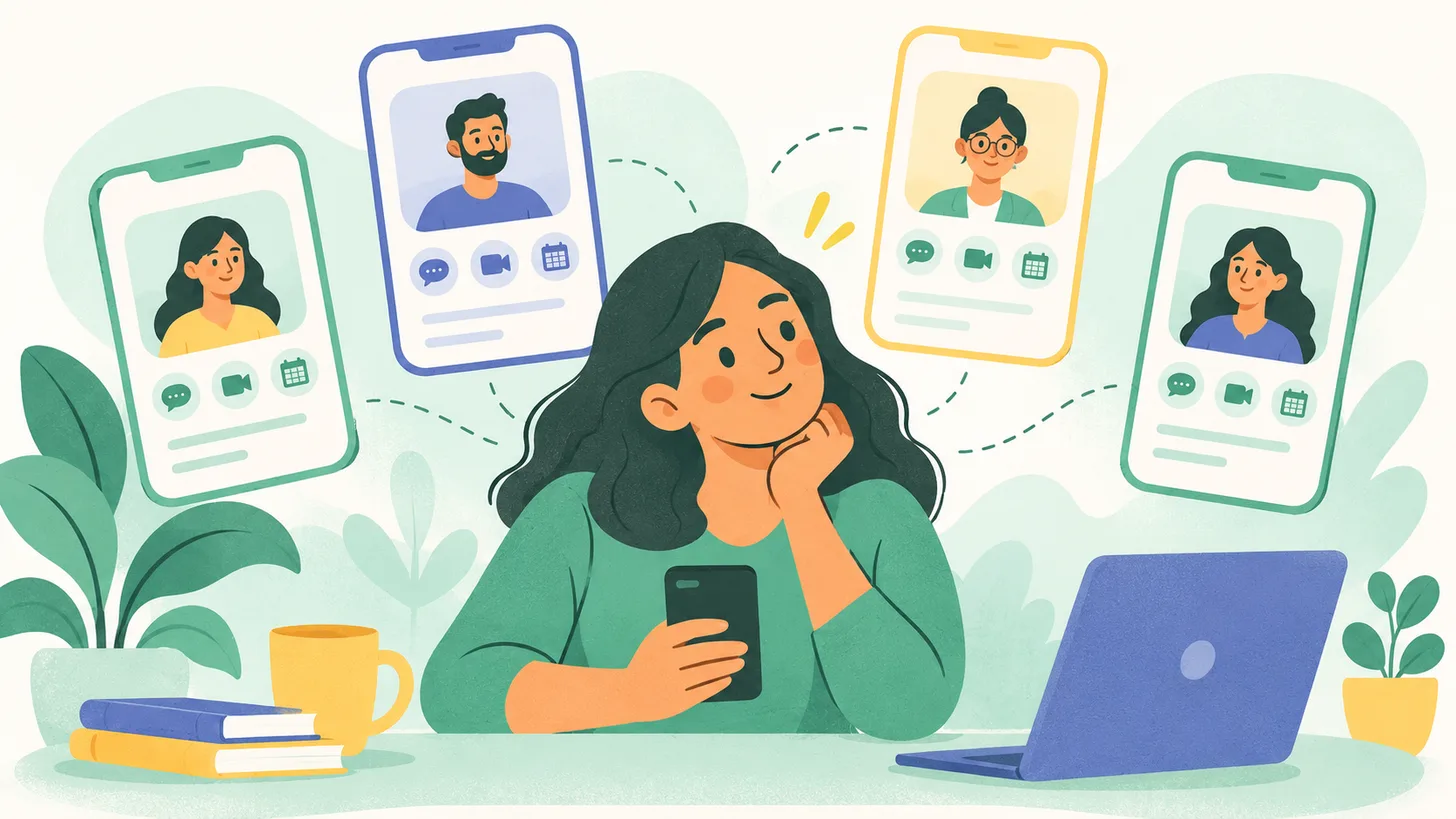
If you have been looking for an online therapy app in India, you have probably noticed what we noticed: most “top 10” pages list the same names, in the same order, with almost no real information about any of them.
This page is our attempt to fix that.
In October 2026 we signed up on each platform, read every therapist profile the vendor publishes, checked the fine print on pricing, and compared each one against the same honest checklist. No awards. No “we tested 50 apps”. Just what each app is, who it genuinely fits, and where it falls short.
We also run one of the platforms on this list. GoodLives is placed at the top. That is a real conflict, so we have tried to be as frank about our own gaps as about anyone else’s. Judge for yourself.
Who this comparison is for
- You are thinking about starting therapy in India and want to understand the options before paying.
- You tried one app, it did not feel right, and you want to know what else is out there.
- You are looking for therapy for a parent, partner, child or team member.
- You are a student or working professional on a tight budget and want to know what a session actually costs.
Both are free. Comparisons can wait a few hours.
Quick picks
- Most RCI-registered therapists, India-first intake, free discovery call: GoodLives
- Largest therapist pool, broad categories, strong college tie-ups: YourDost
- Daily guided content plus therapy and psychiatry: Amaha (ex-InnerHour)
- In-house therapist model with structured programs, hospital backing: Mindtalk (by Cadabam’s)
- 24 by 7 availability inside a general healthcare platform: Rocket Health
- Chat-first and lower price point: BetterLYF
- Known hospital or foundation brand plus in-person option: Lissun, Mpower, Fortis Mental Health
What we actually checked
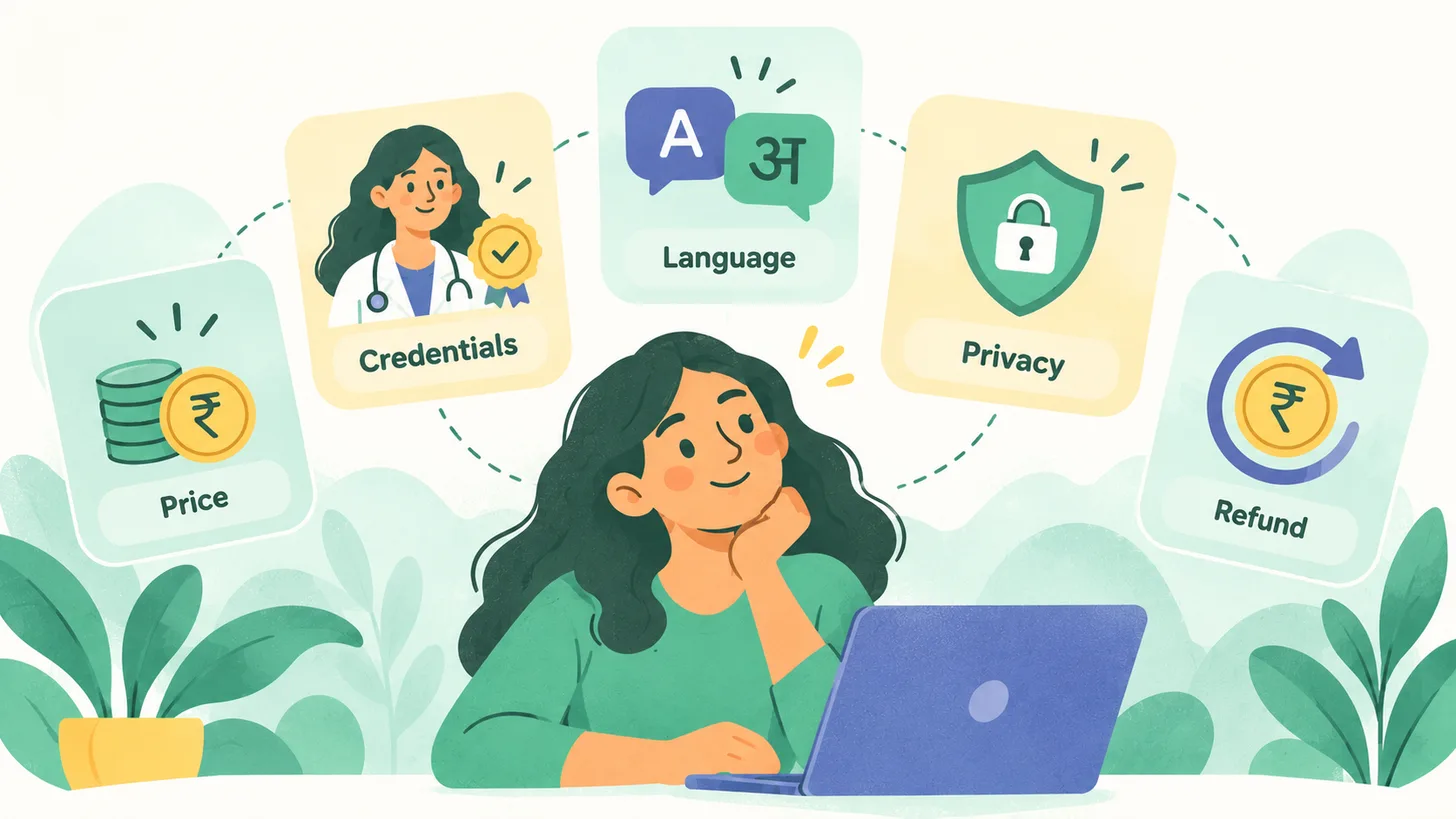
For every platform we looked at six things:
- Whether the therapists listed are RCI-registered or supervised by an RCI-registered clinical psychologist. RCI is the Rehabilitation Council of India, which licenses clinical psychologists in the country.
- What a session actually looks like: video, audio or chat, duration, who you see each week.
- Fee range, read live on the vendor’s own page in October 2026.
- Language support beyond English.
- What the privacy and confidentiality policy actually says, not just what the homepage claims.
- One honest gap we would want a friend to know before they paid.
The honest line nobody tells you
The app is not the therapist. The app is a booking layer, a video window and a payment system. The person on the other side of that video window is the therapist, and the fit between you and that person is almost everything.
A good therapist on a basic app will help you more than an average therapist on a slick one. So when you compare, compare the therapists you can see on each platform, not just the homepage copy.
Red flags to spot before you pay
Any one of these is a reason to pause and ask more questions:
- The therapist’s profile does not list an RCI number or a named supervisor. For clinical psychology work, this matters.
- “Instant match” with a therapist before any intake call or screening form.
- Claims of an “AI therapist” or “AI counsellor” that can replace human care. AI tools can support therapy. They cannot practise clinical psychology in India.
- Upfront packages of 10 or 20 sessions before you have met the therapist once.
- No cancellation policy in writing, or a policy that keeps all of your money if you miss one session.
- Pricing that only appears after you share your phone number.
- Promises of a “cure”, a “fix” or a specific recovery timeline.
Good platforms are usually boring about these things: clear therapist credentials on each profile, a short intake step, pay-as-you-go or small packs, and written cancellation terms.
Not sure if what you are feeling needs therapy? Start with a free 15-minute discovery call. No commitment, no package. Book a free discovery call.
The platforms, in detail
1. GoodLives
What it is: An India-first online therapy platform with RCI-registered clinical psychologists and supervised counsellors. Intake is a short form plus a free 15-minute discovery call before you are matched with a therapist. Sessions run on a secure video window.
Who it fits best: First-time therapy seekers who want to meet the therapist before paying, people who care about RCI credentialing, and anyone who prefers a human intake over an algorithmic match.
Credentials: Every clinical psychologist on GoodLives is RCI-registered. Counsellors work under clinical supervision. Credentials are shown on each therapist’s profile.
Modality: Video sessions, 50 minutes. Chat and audio on request.
Fee range: Current pricing lives on the booking page. We do not quote it in prose because it changes.
Languages: English, Hindi and several regional languages depending on which therapist you choose. The directory lets you filter by language.
Confidentiality: No session recording. Session notes are stored encrypted. Client data is handled under the Digital Personal Data Protection Act 2023.
Honest gap: We are smaller than YourDost or Amaha, so if you want to filter across hundreds of therapists you will find a bigger pool there. We are also still expanding our iOS and Android app, so the primary booking is through the website and WhatsApp. If you want a full-featured mobile app with daily content, Amaha is further along than we are.
A kind of reader we often see (fictional, for shape): A 28-year-old product manager in Pune, two months into a new job, cannot sleep and feels blank at work. Books a Sunday-evening discovery call, meets a therapist on Tuesday, continues weekly for twelve weeks. Returns for a check-in six months later.
2. YourDost
What it is: One of the oldest online emotional-support and therapy platforms in India, with a large expert pool and a chat-first history that has grown to include audio and video.
Who it fits best: People who want a broad pool of counsellors across many categories (career, relationships, parenting, academics), and students on institutional YourDost subscriptions provided by their college or university.
Credentials: A mix. The pool includes RCI-registered clinical psychologists, trained counsellors and life coaches. The specific credential depends on which expert you pick, so read the profile before you book.
Modality: Chat, audio and video.
Fee range: Pay-per-session for individuals; institutional and corporate plans priced separately.
Languages: English, Hindi and several regional languages depending on the expert.
Confidentiality: Standard confidentiality terms published on the policy page.
Honest gap: Because the pool is wide and mixes clinical psychologists with life coaches, matching matters a lot. If you need clinical psychology work (trauma, OCD, severe depression, bipolar follow-up), filter hard on credentials or ask the help desk to route you to a clinical psychologist.
A kind of reader we often see (fictional): A 21-year-old engineering student uses the college-provided YourDost subscription, chats with a counsellor during exam stress, and later moves to weekly video sessions.
3. BetterLYF
What it is: A chat and voice-first counselling platform with a lower price point and a focus on accessibility.
Who it fits best: Readers who find video calls too much to start with, who prefer written conversations, or who want a lower-cost entry into counselling.
Credentials: A mix of counsellors with different qualifications. Check each specific counsellor’s listed credential before booking.
Modality: Chat, call and video.
Fee range: Among the lower per-session fees on this list, especially on the chat tier.
Languages: English and Hindi primarily.
Confidentiality: Standard terms on the policy page.
Honest gap: The lower price point partly reflects the credential mix. For clinical psychology work, confirm the counsellor is RCI-registered or ask who supervises them. The chat-first format is also lighter on what therapists call “containment”, which some presentations need.
A kind of reader we often see (fictional): A 25-year-old in Delhi who dislikes video calls uses BetterLYF for weekly text conversations about work anxiety for two months before switching to voice sessions.
4. Amaha (formerly InnerHour)
What it is: A long-running Indian mental-health company offering a self-help app with mood tracking and guided content, plus therapy and psychiatry.
Who it fits best: People who want daily tools (mood logs, guided tracks, exercises) alongside their sessions, and anyone who may need both therapy and psychiatric consultation under one roof.
Credentials: Therapists include clinical psychologists and counsellors; psychiatrists are MD psychiatrists. Credentials visible on profiles.
Modality: Self-help app content, plus video therapy and psychiatry.
Fee range: Mid to upper range for therapy; psychiatry is priced separately. Check the booking page.
Languages: English and Hindi; regional support varies.
Confidentiality: Enterprise-grade security claims on the privacy page.
Honest gap: The app does a lot. Some readers love this, and some find the daily content overwhelming. If you want a quiet space where you simply book, show up and leave, Amaha’s self-help layer may feel like homework. Pricing also sits on the higher side of this list.
A kind of reader we often see (fictional): A 34-year-old marketing lead with mild depression uses the Amaha app daily for mood tracking and meets a therapist and psychiatrist about once a month each.
5. Mindtalk (by Cadabam’s)
What it is: Online and in-person therapy backed by Cadabam’s Hospitals in Bengaluru, with an in-house therapist model and structured programs for conditions like anxiety, OCD and child and adolescent issues.
Who it fits best: People who want structured programs rather than open-ended sessions, those near a Cadabam’s physical centre, and anyone who may later need to step up to in-person care or psychiatric input.
Credentials: Clinical psychologists and counsellors employed in-house. Hospital-group backing means clinical pathways are joined up with psychiatry and in-person care when needed.
Modality: Video, phone and in-person at centres.
Fee range: Mid-range for therapy; higher-end programs priced separately on the website.
Languages: English, Hindi, Kannada and others depending on therapist.
Confidentiality: Hospital-group standards; check specifics on the policy page.
Honest gap: The in-house model means less variety in therapist style than open directories. If one therapist is not the right fit, you may find fewer “very different” options to switch to.
A kind of reader we often see (fictional): A 40-year-old parent in Bengaluru starts weekly sessions online, and when a child-related issue surfaces, moves to the Cadabam’s in-person team for a joint consult.
6. Rocket Health
What it is: A general online healthcare platform in India that offers therapy and psychiatry alongside other medical consultations.
Who it fits best: People who already use Rocket Health for other medical consults, or who want 24 by 7 availability and quick appointment slots.
Credentials: Clinical psychologists, counsellors and psychiatrists are listed, with credentials on profiles. Check each professional’s qualifications before booking.
Modality: Chat, audio and video; prescriptions available through psychiatry consults.
Fee range: Varies by professional and session type. Published on the booking flow.
Languages: English and Hindi, with others depending on the professional.
Confidentiality: Standard medical confidentiality.
Honest gap: Because therapy sits inside a larger medical platform, the default experience feels more “consult” and less “ongoing relationship”. If you want longer therapy, be deliberate about booking the same therapist every week.
A kind of reader we often see (fictional): A 29-year-old who had a late-night anxiety spike books a next-morning session on Rocket Health and continues weekly with the same therapist for a few months.
7. Lissun, Mpower and Fortis Mental Health (worth knowing)
These are not standalone consumer apps so much as mental-health arms of larger brands.
- Lissun focuses on structured programs, including maternal mental health and child and adolescent care.
- Mpower is a well-known foundation and clinic chain with online counselling and strong public-education presence.
- Fortis Mental Health connects you to psychiatrists and clinical psychologists through the Fortis Healthcare network.
Who they fit best: People who want the comfort of a known hospital or foundation brand, or who want online therapy that can roll into in-person care at a specific city clinic.
Honest note: Pricing on these tends to sit on the higher side, closer to private-clinic rates. Availability of specific sub-specialties (child, trauma, perinatal) varies by city.
Want help picking? Share two or three lines about what you are going through and we will tell you honestly whether GoodLives fits or whether another platform on this list would be better for you. Talk to our care team.
What about BetterHelp, Talkspace and other global apps?
They come up in every search, so it is worth saying this plainly: they are not built for India.
- No RCI. BetterHelp and Talkspace credential their therapists against US and other Western licensing boards, not India’s RCI. For Indian clients, that usually means the therapist you see is not registered to practise clinical psychology in India.
- Pricing in USD. Weekly or monthly subscriptions can work out to about Rs 10,000 to Rs 20,000 a month or more, which is well above most India-first platforms.
- Cultural distance. Caste, joint-family dynamics, arranged-marriage context, workplace hierarchies, gender expectations: these shape how distress shows up in India, and a therapist with no India training may frame them in ways that do not quite land.
- Insurance. Indian health insurance that reimburses outpatient mental-health sessions (as the Mental Healthcare Act 2017 allows) usually requires an India-licensed professional.
If you are an Indian citizen living in India, we would almost always point you to an India-first platform. If you are a non-resident Indian living in a country where BetterHelp or Talkspace operates and you want a Western-licensed therapist who understands your local context, that is a different question, and they may fit.
How to choose based on your actual situation
You are new to therapy and feel anxious about starting: Pick a platform that offers a free discovery or screening call before you pay for a session. GoodLives has one, and some Amaha and Mindtalk flows do too. A 15-minute “meet before you pay” removes the biggest barrier for first-timers.

You are dealing with trauma, PTSD, OCD, bipolar follow-up or complex grief: Insist on an RCI-registered clinical psychologist with real experience in that area. GoodLives, Amaha, Mindtalk and Fortis publish credentials clearly. Ask the therapist directly how many clients they have seen with your presenting issue.
You want couples or family therapy: Not every platform offers it. Check for couples-specific therapists on GoodLives, Amaha and Mindtalk. Expect higher per-session fees for couples work, because the preparation time is longer.
You want Hindi or a regional language: GoodLives, YourDost and Mindtalk have strong regional-language coverage. Filter the directory by language before booking.
You want it to be insurance claimable: Check your insurer’s outpatient mental-health benefit. Many require an RCI-registered clinical psychologist or an MBBS or MD psychiatrist. Platforms whose counsellors are not RCI-registered may not qualify.
You are a student on a tight budget: Check if your college has a YourDost or similar institutional tie-up. BetterLYF’s chat tier also sits on the lower end. GoodLives offers sliding support in specific cases; ask us.
You want 24 by 7 availability: Rocket Health has round-the-clock booking.
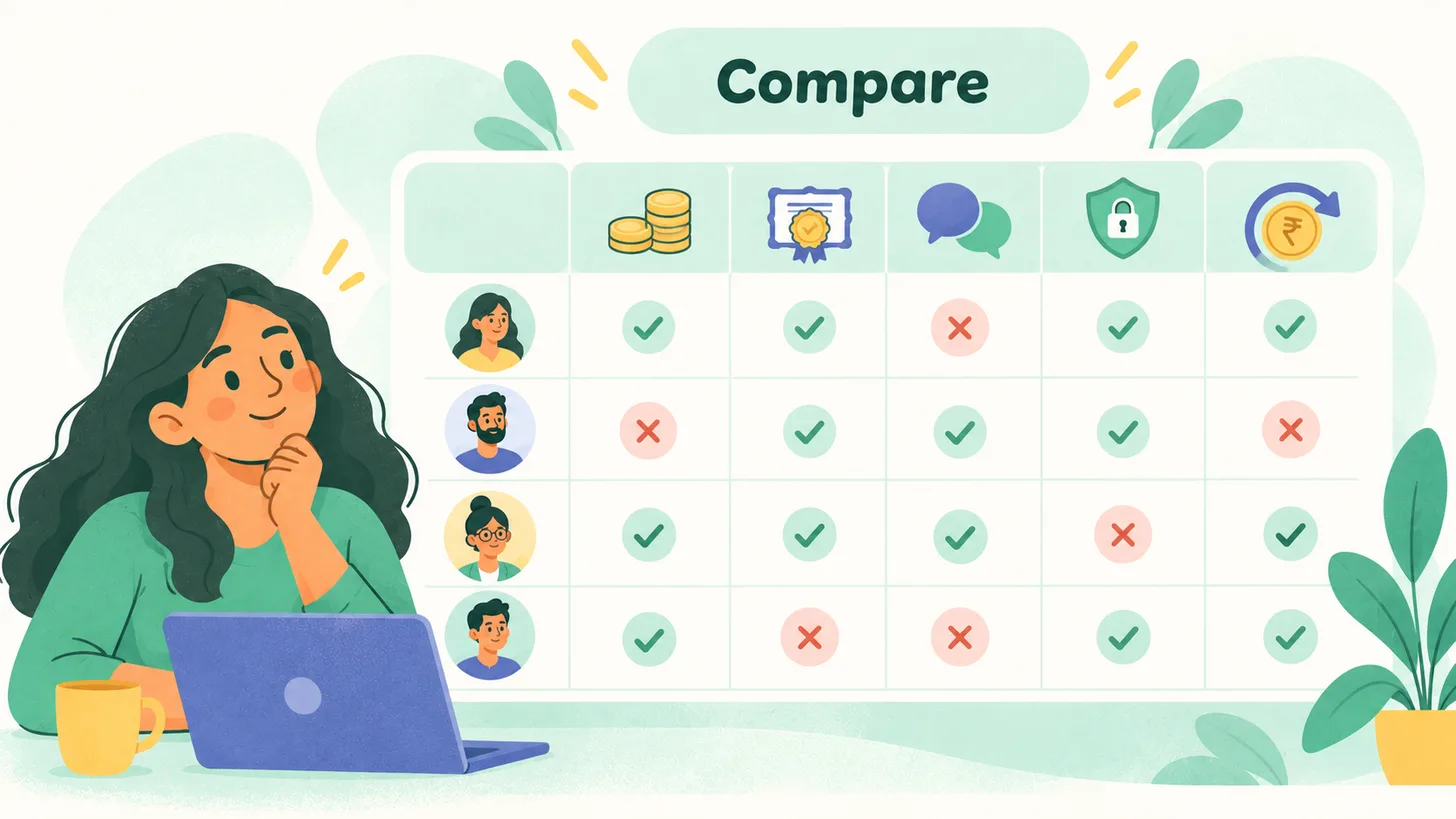
Side-by-side quick view
| Platform | Clinical psychologists are RCI-registered | Modalities | Languages | Free intro call | Honest gap |
|---|---|---|---|---|---|
| GoodLives | Yes | Video (chat and audio on request) | English, Hindi, several regional | Yes, 15 minutes | Smaller directory than mega-platforms; mobile app still expanding |
| YourDost | Mixed pool (clinical psychologists and life coaches) | Chat, audio, video | English, Hindi, regional | Varies | Filter credentials carefully; coach vs clinician matters for clinical work |
| BetterLYF | Mixed | Chat, call, video | English, Hindi | Varies | Chat-first; confirm RCI credentials for clinical work |
| Amaha | Yes (clinical psychologists) | Video, app content, psychiatry | English, Hindi, some regional | Varies | Higher price; app layer is heavy for some readers |
| Mindtalk | Yes (in-house) | Video, phone, in-person | English, Hindi, Kannada, others | Yes, varies | Less variety in therapist style |
| Rocket Health | Yes (clinical psychologists) | Chat, audio, video, psychiatry | English, Hindi | Varies | Feels more “consult” than ongoing relationship |
| Lissun / Mpower / Fortis | Yes | Online plus in-person | English, Hindi, varies | Varies | Higher price; city-dependent sub-specialties |
(Credential mix is reported from each vendor’s own therapist profiles as of October 2026. Always re-check before you book.)
Legal and privacy, briefly
- Clinical psychology practice in India is regulated by the Rehabilitation Council of India (RCI). An RCI number on a therapist’s profile is verifiable on the RCI public register.
- Mental-health rights in India are set by the Mental Healthcare Act 2017, including the right to confidentiality and the right to community-based care.
- Your personal and session data is covered by the Digital Personal Data Protection Act 2023 (DPDPA). You have the right to know how your data is stored, used and shared.
- This article is information, not medical advice. For a clinical opinion, speak to a licensed professional.
Our honest closing line
If you are reading this, you have already done the hardest part, which is admitting that something is heavy enough to look up. Not an immediate 20-session commitment.
Pick the platform where you can meet a therapist first, see credentials clearly, and leave if the fit is not right. That is the whole point of all of this.
If you would like to start with us, book a free 15-minute discovery call on the GoodLives booking page. If a different platform on this list fits you better based on what you have read, we would still rather you start somewhere than keep comparing.
Book a free 15-minute discovery call with GoodLives
Related reads on GoodLives:
- Online therapy in India: how it works, who it is for, and how to begin
- How to choose a therapist in India: a plain-language guide
- What RCI registration really means, and why it matters for therapy
- Online therapy vs in-person therapy: which fits your situation?
- Therapy pricing in India in 2026: what you should expect to pay
—
About the author: Sakshi Shah is Co-founder of GoodLives. GoodLives is listed in this article, with disclosure at the top. This piece was written in October 2026 and will be re-checked by January 2027. If you spot a factual error on any of the platforms above, write to hello@goodlives.in and we will fix it.



Share your thoughts