
What this blog includes
- What an online therapy session is, in plain words
- The four ways you can meet a therapist online
- What happens in session one, and what builds after that
- What a session costs in India, and how long therapy usually lasts
For many of us, the hardest part of therapy is the line before the booking. A quiet dread. A worry that the camera will make it worse.
Online therapy sessions have made the first step easier for many people in India. This blog is for the reader who has been circling the booking page for a week. GoodLives is one platform we will refer to. It is trusted by 500K+ people with a 5 Google rating.
The rest is practical. What to expect. What to ask. What it costs. When it is not the right fit.
What online therapy actually is in practice
Online therapy is a trained mental-health talk over the internet. The therapist is the same kind of expert you would meet in a clinic. The format shifts. The training does not. In India, a session runs 45 to 60 minutes.
You log in from your phone or laptop. The therapist joins. The session begins. They listen without judging. They ask the questions you have been avoiding. They teach a small skill to try during the week.
What changes is logistics. No travel. No waiting room. No one at the office seeing you walk in. For many Indian readers, that one shift makes therapy real for the first time.
In short: online therapy is not a lighter version of in-person therapy. It is the same work, through a new window.
The four ways you can meet a therapist online
Not every reader wants to be on video. That is fine. Most Indian platforms offer more than one format for online therapy sessions. Start where you feel least exposed. Move as you settle. Pick the one you can show up to twice.
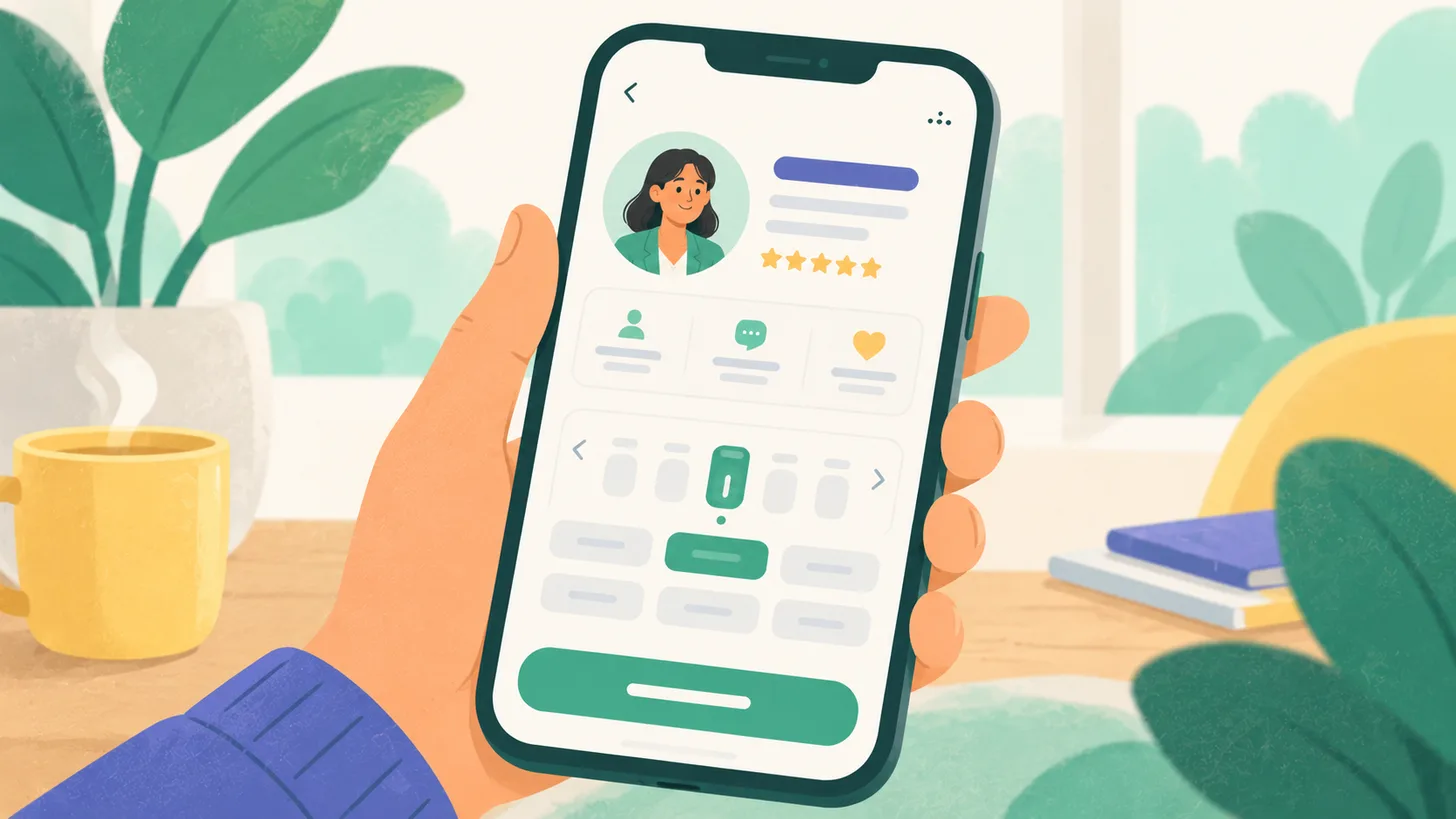
In short: start in the format you can show up to twice. You can switch after two sessions if a different one feels truer.
What happens in your first online therapy session
Session one is called an intake. The therapist gets to know you. You get to know how they work. There is no magic question. Most of it is you talking, with the therapist listening.
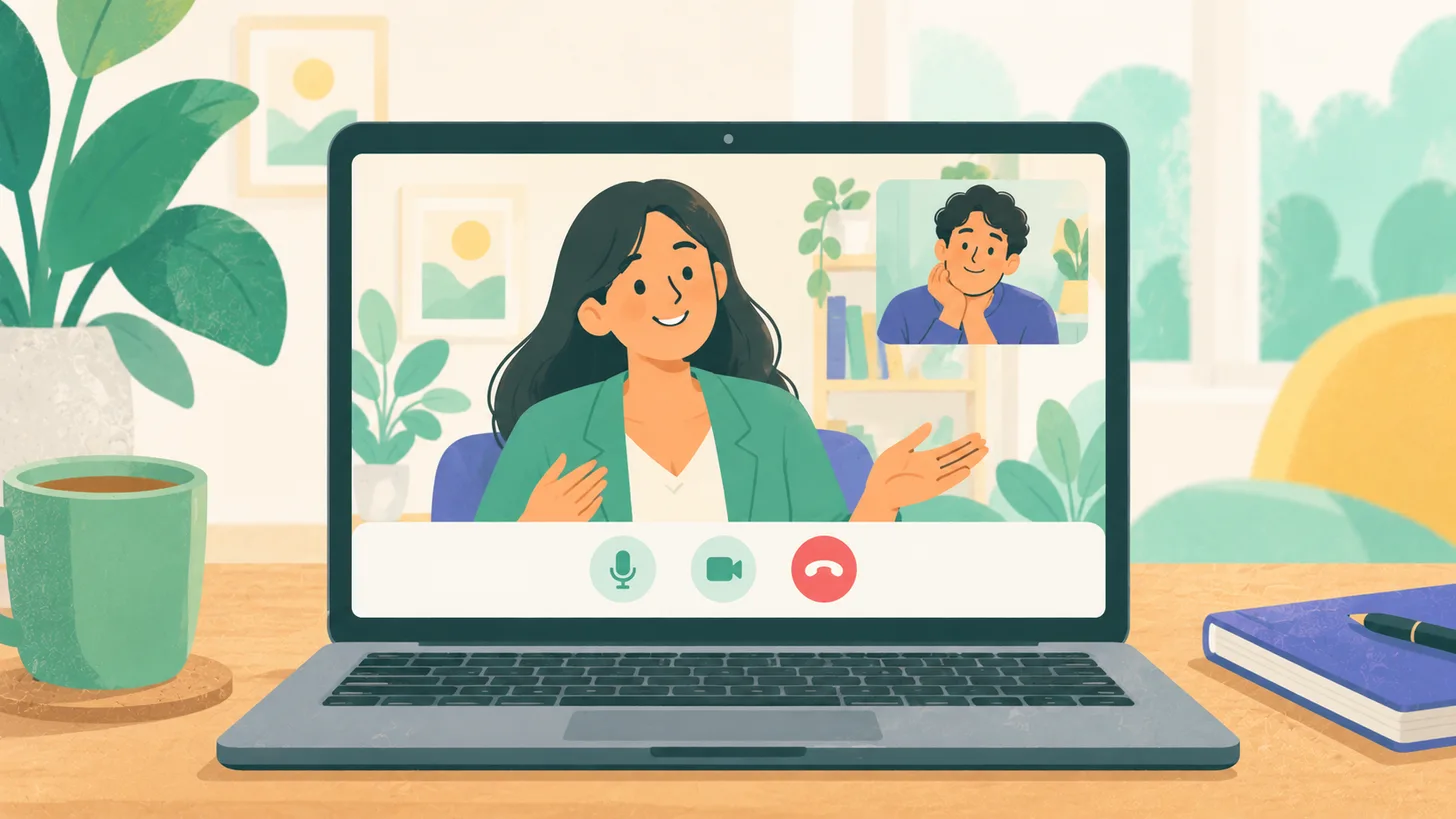
A typical intake covers your reason for coming. A short history. Family, work, past therapy, any meds. What you tried. What you hope to feel in three months. The therapist also lines up privacy, fee, and how to cancel.
Near the end they sketch a small plan. A technique to try. A journal prompt. Or nothing, if the session was mostly release. You can say “I am not sure yet, can we meet again”. That is a normal first-session answer.
You might be worried about freezing on camera. That worry has a name, ghabrahat (restless unease). It tends to settle in the first ten minutes. If it does not, say so. A good therapist will slow down.
In short: session one is a chat, not a test. You do not have to come with a diagnosis or a goal list.
The shape of ongoing therapy work
From session two, the shape changes. The therapist tracks patterns across weeks. You may begin an approach: CBT for anxious thought loops, DBT for mood swings, or a trauma-informed path for older wounds. For a plain rundown, see our page on the types of therapy.
Between sessions, you will have one small thing to try. In CBT this is often a thought record. In mindfulness work, a short daily sit. Homework is not a test. It is data for next week.
A tool like breathwork will not fix the thing that made you anxious. It will help you ride out a hard ten minutes. The therapist helps you spot the pattern that keeps feeding it.
Progress is uneven. Some weeks it works, some weeks it does not. That is normal, not failure. Your therapist looks at the month, not the one bad Tuesday.
In short: ongoing work is a loop of practice, review and small shifts. The therapist does with you what a tool cannot do alone.
How online therapy stays private in India
Privacy is the question most first-time clients ask last and worry about first. It deserves a straight answer.
Your health data is protected under the DPDPA 2023 law. A good platform stores session data on servers inside India. It uses end-to-end encryption on the video link. It keeps therapist notes in a separate, locked file.
A therapist is also bound by their ethics body. For psychologists in India that is the Rehabilitation Council of India (RCI). What you say stays between the two of you, with narrow exceptions the therapist names in session one.
Three questions to ask any platform:
- Where is my session data stored, and for how long?
- Who can see my therapist’s notes?
- What happens to my record if I stop therapy?
If a platform cannot answer plainly, that is useful too.
In short: privacy online is a tech setup and a human promise. Both have to be in place.
Setting up for a session that feels like therapy
The space you log in from changes the session. You do not need a studio. You do need 45 clear minutes and a door you can shut.
A simple checklist:
- A quiet room, with a door that shuts
- Headphones, so neither of you hears a flatmate
- A charged phone or laptop, and a backup if the network drops
- A bottle of water and a tissue box within reach
- Thirty minutes clear after, so you do not sprint to a meeting
The last line matters more than people think. A session often ends with a quiet pause. A buffer is part of the work.
If you want, take one slow minute with this before you start the call.
A moment to breathe
Follow the circle. Breathe in, hold, breathe out, then hold. Four counts each. Stay as long as you like.
In short: half of a good session is the quiet half hour before and after. The therapist cannot build that for you.
Does online therapy really work? What research says
The short answer is yes. For most of what people bring to therapy. The longer answer is in the next few lines.
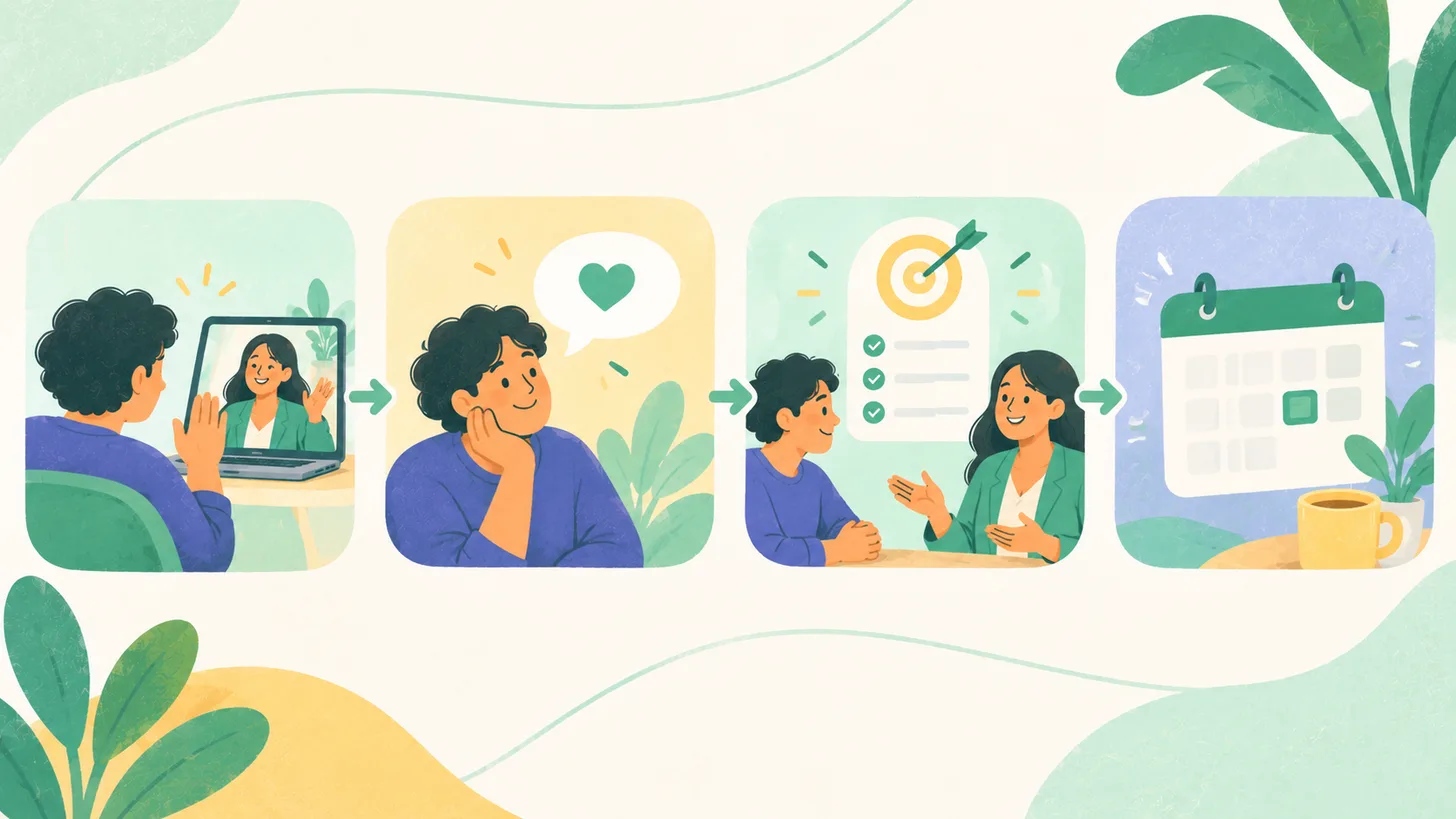
A 2021 APA review by Fernandez and colleagues pooled 56 trials of live video therapy against in-person care. Outcomes were close. Across depression, anxiety, PTSD and related issues. The bond with the therapist held up on video too.
Some people worry that online is for a “lighter” version of what they feel. That the hard stuff needs an office. Research does not say that. The format is a container. The work is between the two people in it.
In short: for anxiety, depression, trauma work and couples work, online outcomes sit close to in-person. Fit with your therapist matters more than the medium.
When online therapy is not the right fit
This is the honest part. Online therapy is not the right first move in a few cases. A good therapist will say so.
- Therapy is for after you are safe.
- Severe dissociation or active psychosis. When reality feels unstable, in-person care is safer.
- Severe eating disorders. These usually need an in-person medical team.
- Forensic or legal assessments. Court-ordered checks need in-person protocols.
- No private space at home. If family will walk into the only room, online can make it harder.
Not every anxiety needs therapy. Some weeks of hard sleep and one honest chat with a friend may be the real answer. A therapist will tell you if that is the case.
In short: online therapy fits most of adult mental health, not all of it. The right question is not “is online good enough”.
What online therapy sessions cost (and how long you stay)
Prices in India in late 2026 vary by therapist and platform. Across major platforms, a session falls between INR 1,500 and INR 3,500 in metros. Newer counsellors sit lower. Senior clinical psychologists sit higher.
Insurance for outpatient therapy is still patchy under IRDAI norms. Most people pay out of pocket. For current rates, see our pricing page.
How long therapy takes depends on what you bring. These are common ranges, not promises:
| What you are working on | Typical number of sessions |
|---|---|
| Mild to moderate anxiety or low mood | 6 to 10 weekly |
| Panic, social anxiety, specific phobias | 8 to 12 weekly |
| Trauma or long patterns | 12 to 24, sometimes more |
| Couples work | 8 to 20, often biweekly |
Ranges based on common clinical guides, for example NICE guidance for anxiety and depression. Your therapist will revisit the plan around session four.
In short: budget for the first six to eight sessions before you decide if therapy is working. One session is a chat, four is a trend.
How to pick an online therapist (red flags to watch)
The right therapist is not the one with the longest bio. It is the one who makes you feel heard in the first fifteen minutes. A short intake call before you commit is the easiest way to check.
How GoodLives screens its therapists. We verify RCI numbers. We ask for a Master’s in psychology or counselling. We confirm supervision hours. We agree an ethics line before onboarding. We match on language, including Hindi and Hinglish, and on the problem you bring.
In short: the right therapist is a person, not a brand. Fifteen minutes vetting them, ten vetting the platform.
FAQ
Is online therapy as good as in-person therapy?
How long is an online therapy session?
Can I switch therapists after one session?
Do I need special software for online therapy sessions?
Will my family or employer find out I am in therapy?
What if I freeze or cry in session one?
How much do online therapy sessions cost in India?
This post is for information only and is not a substitute for professional care. If you are struggling, please speak to a qualified mental health professional.

Share your thoughts