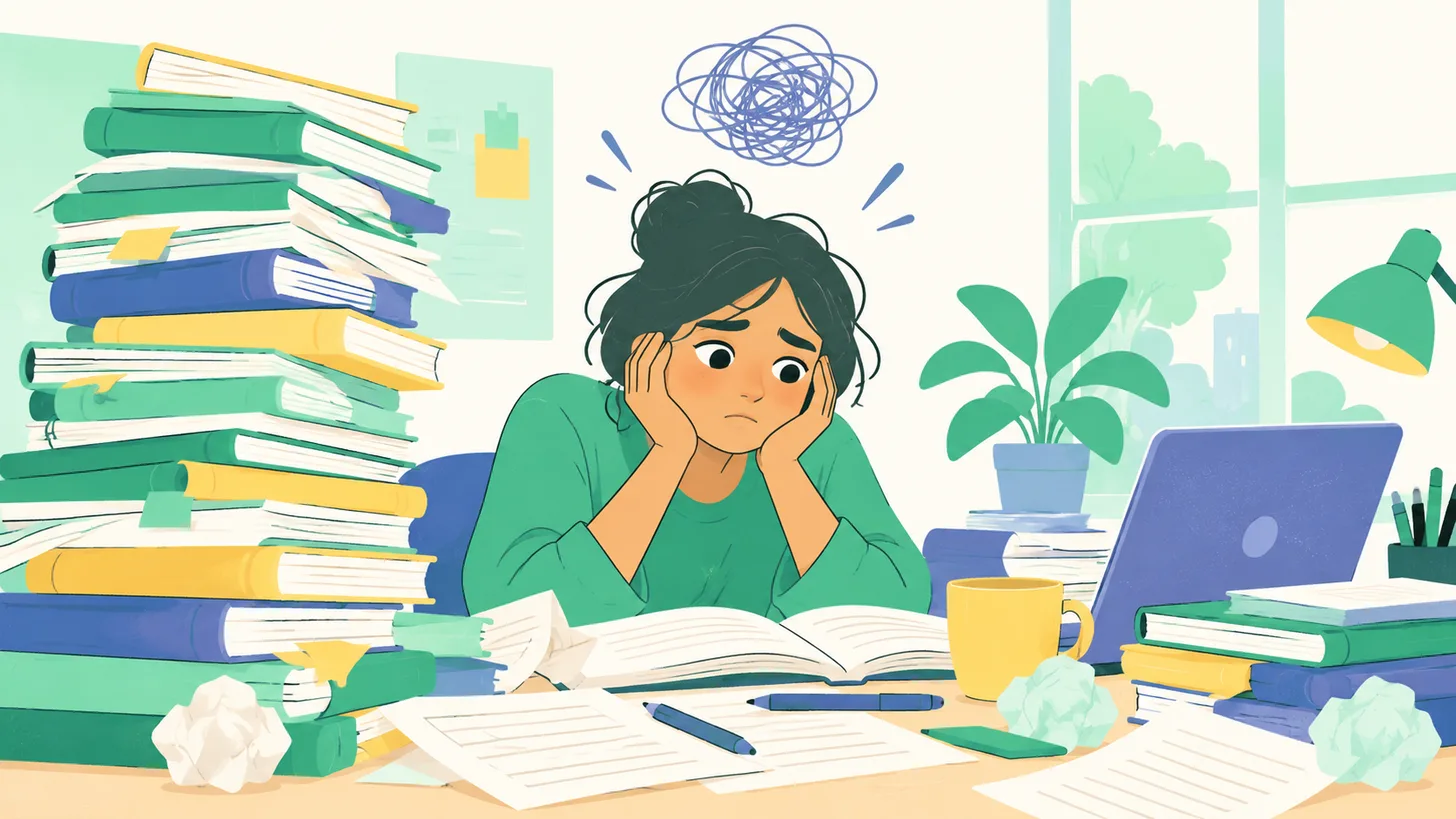

A tight chest before a viva. A loop that will not switch off at 1 am. A sense that one bad mock has decided the future.
If this is your week, or your child’s week, you are on the right page. Academic stress is a real body response, and tools exist. Trusted by 500K+ people, GoodLives sits with students and parents through this.
What academic stress actually is
Academic stress is your body’s alarm response to school and exam pressure that keeps running after the thing is over. The academic stress meaning most Indian students meet is this: a nervous system that cannot settle, even on a day with no test. Short pressure sharpens focus. A long loop is different.
If sleep, mood or appetite have shifted for ten days, that is a signal.
In short: a bad test week is normal; a loop after the paper is a signal.
Why academic stress in India hits so hard
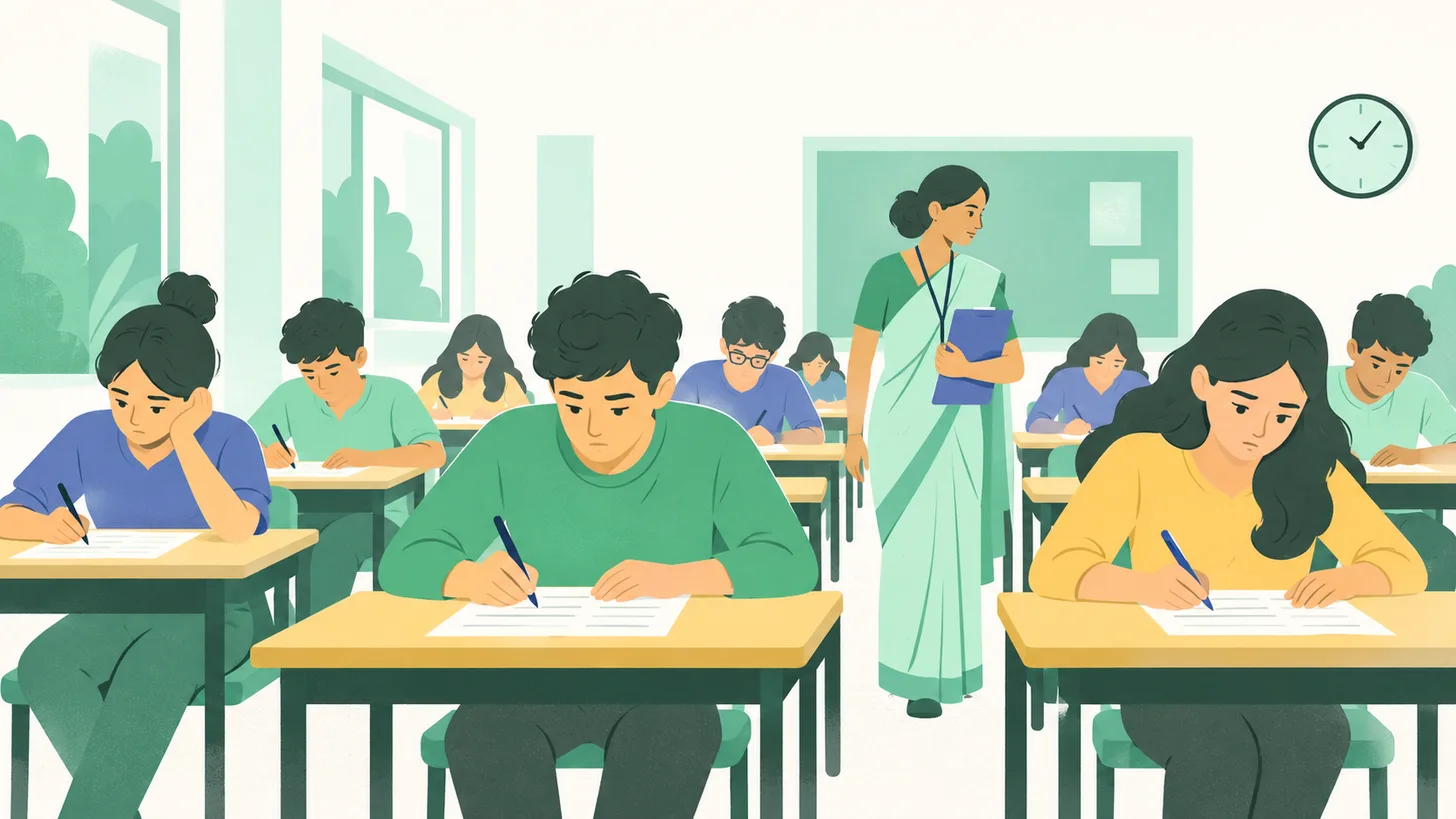
Academic stress in students here carries a weight most countries do not meet in the same shape. Boards gate college seats. JEE and NEET compress one year into one score. Family dinners carry ranks and cousins. The Hindi word bechaini, a restless, chest-tight uneasiness, is what many feel most evenings.
In 2021, the National Crime Records Bureau recorded 13,089 students who died by suicide in India (NCRB). Behind that number sit many more who are quietly unwell. Tele-MANAS was built for this.
In short: Indian exam pressure is not in your head. It sits in a system that stakes a lot on one score.
The signs a student is struggling
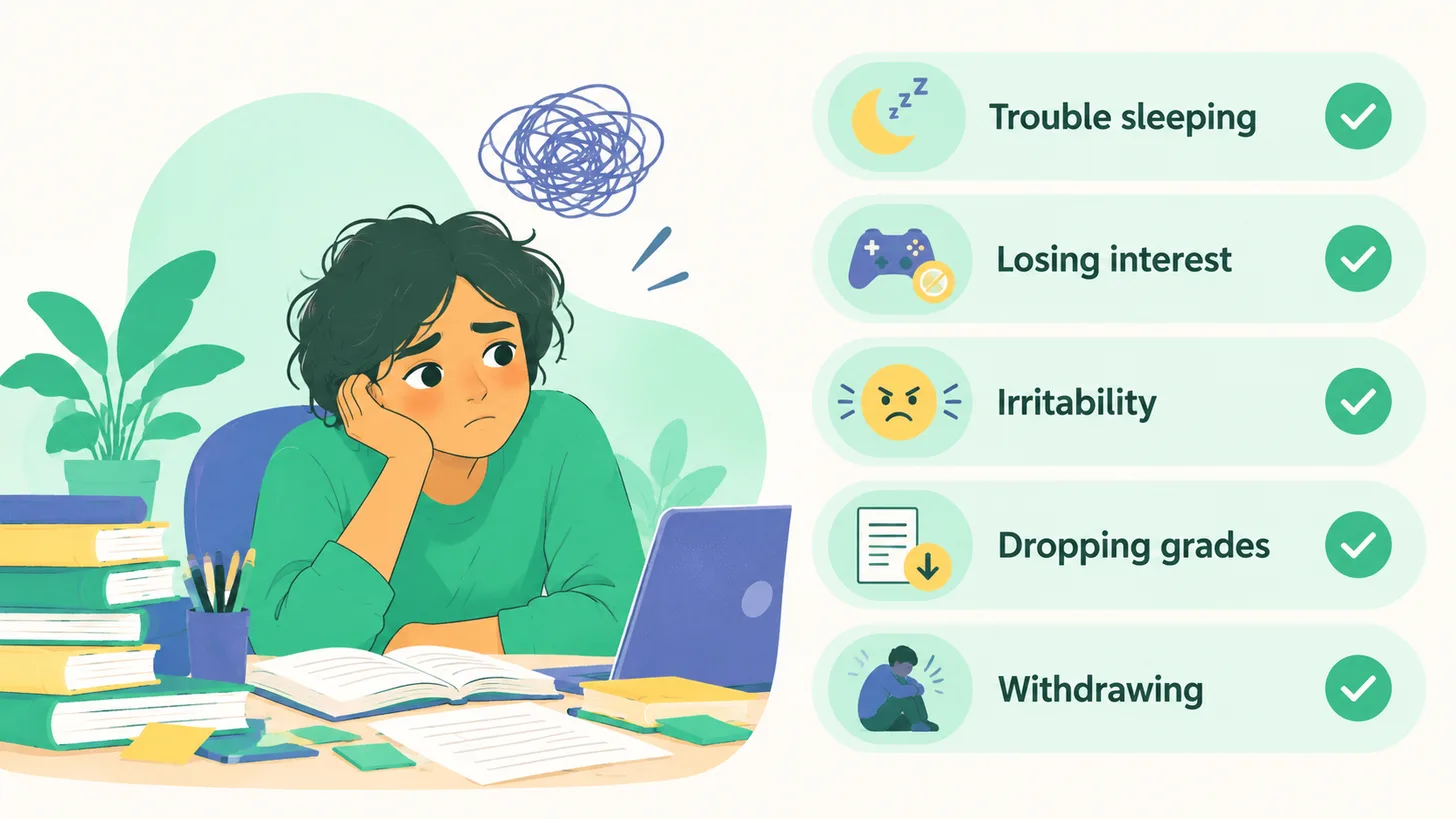
Stress in students shows up in the body first: trouble falling asleep, waking up tired, poor appetite or over-eating, headaches with no medical cause, a racing heart before class. On the mind: a loop that will not stop, fog, trouble finishing one chapter.
Parents often miss the quiet signs: over-sleeping, over-studying with no learning, “I am fine” scripts. Many of us have been the parent who missed these.
In short: watch for a steady change over two weeks, not a bad Monday.
The main causes of stress in students
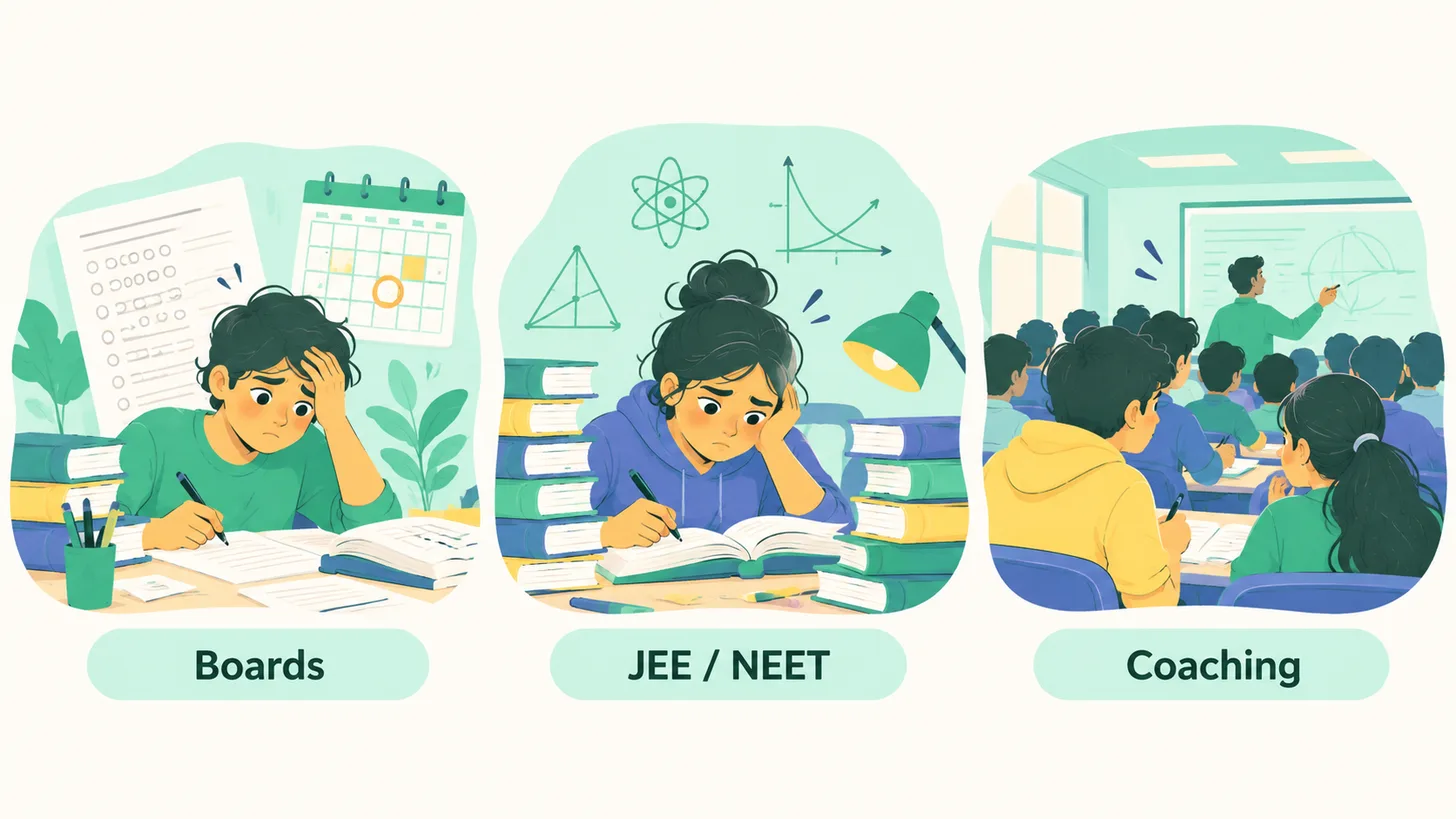
The causes of stress in students today sit in a few patterns. The stress faced by students is rarely one thing; usually it is a mix of three or four at once, and any real plan has to meet the whole mix.
- Boards and entrance exams that gate the next five years in one paper
- Parental expectation, often spoken as love, that equates marks with worth
- Comparison with cousins, class rank and Instagram highlights
- Coaching schedules that leave no time to rest or eat with family
- Hostel or PG isolation at 15 or 16
- Sleep debt and screen time that make everything feel heavier
In short: your student is likely carrying more than one of these at once.
What helps in the next 10 minutes
Before you reach for a long-term plan, calm the body first. A nervous system in alarm cannot hear advice. You have probably tried a breathing video and felt it did nothing. Two tools work in minutes, and they do different jobs: one for the body, one for a racing mind.
Box breathing slows the heart. The 5-4-3-2-1 ground brings a scattered mind back. Take one slow minute with this.
A moment to breathe
Follow the circle. Breathe in, hold, breathe out, then hold. Four counts each. Stay as long as you like.
For 5-4-3-2-1, name five things you see, four you touch, three you hear, two you smell, one you taste. It will not fix Monday’s test. It will give you a working ten minutes.
In short: calm the body first; plan the week next.
Habits that lower your baseline over a few weeks
Daily habits lower the baseline so small stresses do not stack on top of each other. Pick two from the list below and keep them steady for three weeks, not three days. The nervous system listens to repetition far more than it listens to willpower.
- Sleep in a 7 to 9 hour window
- Move for 20 minutes a day
- Study in 50 to 90 minute blocks; no phone in the break
- Eat something warm first thing
- Mute class group chats on test week
If the student in your life needs a first conversation, a GoodLives counsellor can help.
In short: two small habits held for three weeks beat seven big ones held for three days.
When to see a therapist
See a therapist when the loop has lasted more than two weeks, when sleep or appetite shift for ten days, when thoughts of self-harm appear even once, or when the student pulls away from the people they used to turn to. A conversation is often the fastest route back.
A psychologist registered with the Rehabilitation Council of India can sort pressure from anxiety or depression. You might be worried that therapy means something is broken. It does not.
In short: if you are asking “is it bad enough yet?”, that is usually the moment.
What parents can do differently
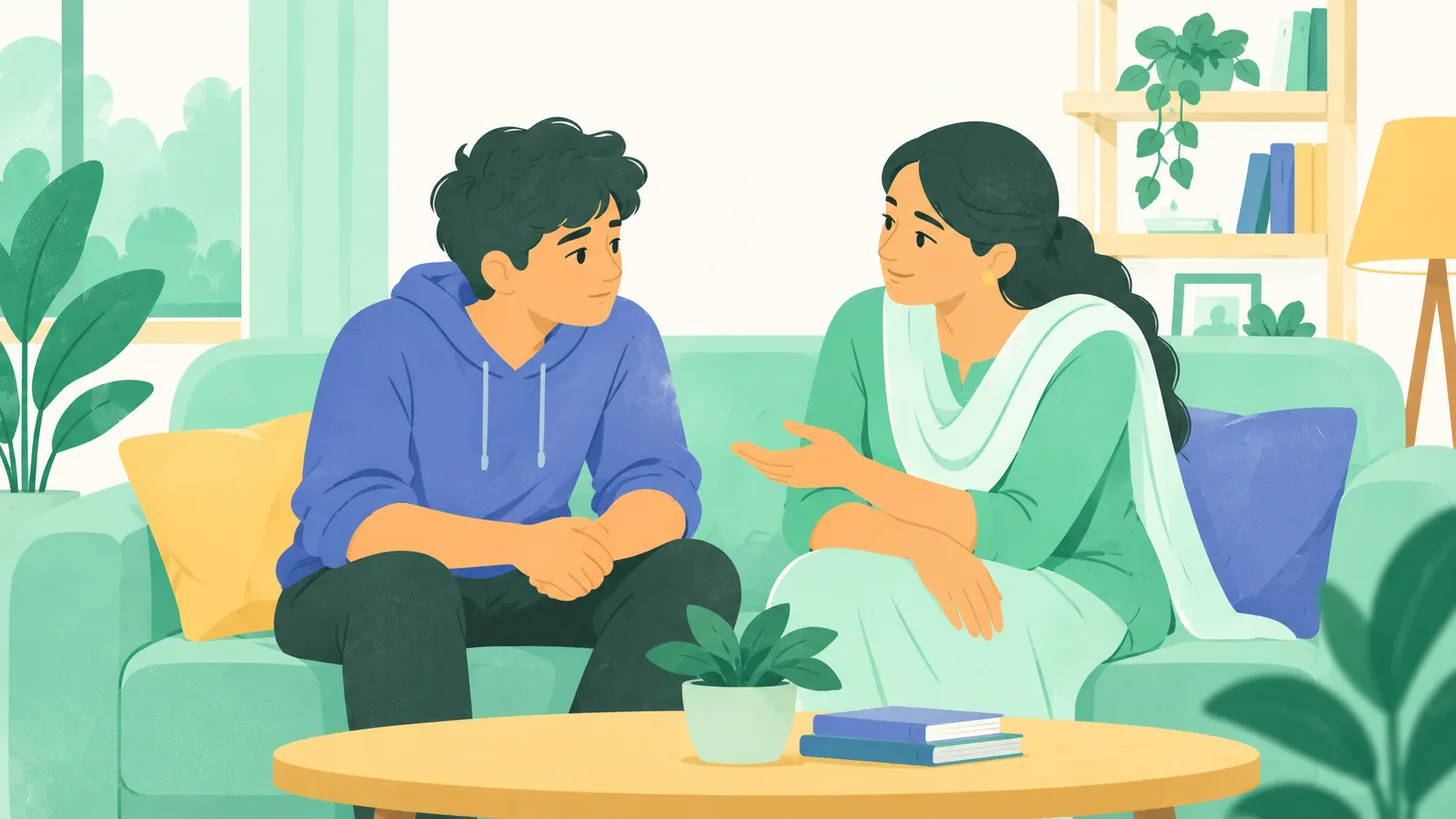
Listen before you fix. The first thing a stressed student needs is to be believed, not re-plotted. Say, “That sounds heavy. Tell me more.” Not, “You just need to study more.” You do not need to be a therapist; you need to be a safe room.
Three changes that matter:
- Do not compare, even in jest
- Treat marks as information, not identity
- Protect sleep and meals
In short: your calm face in a hard week predicts how your child will reach out next time.
How to raise this with your family
In many Indian homes, “stress” is still read as weakness. A short script lands better than a long explanation. Try this one: “I am not sleeping well before tests, and it is making studying harder. Can we talk to someone who does this for a living?”
A doctor for the mind is like a doctor for a cough. If a parent is reading beside you, share the page.
In short: a short script works better than a long speech.
For schools and teachers
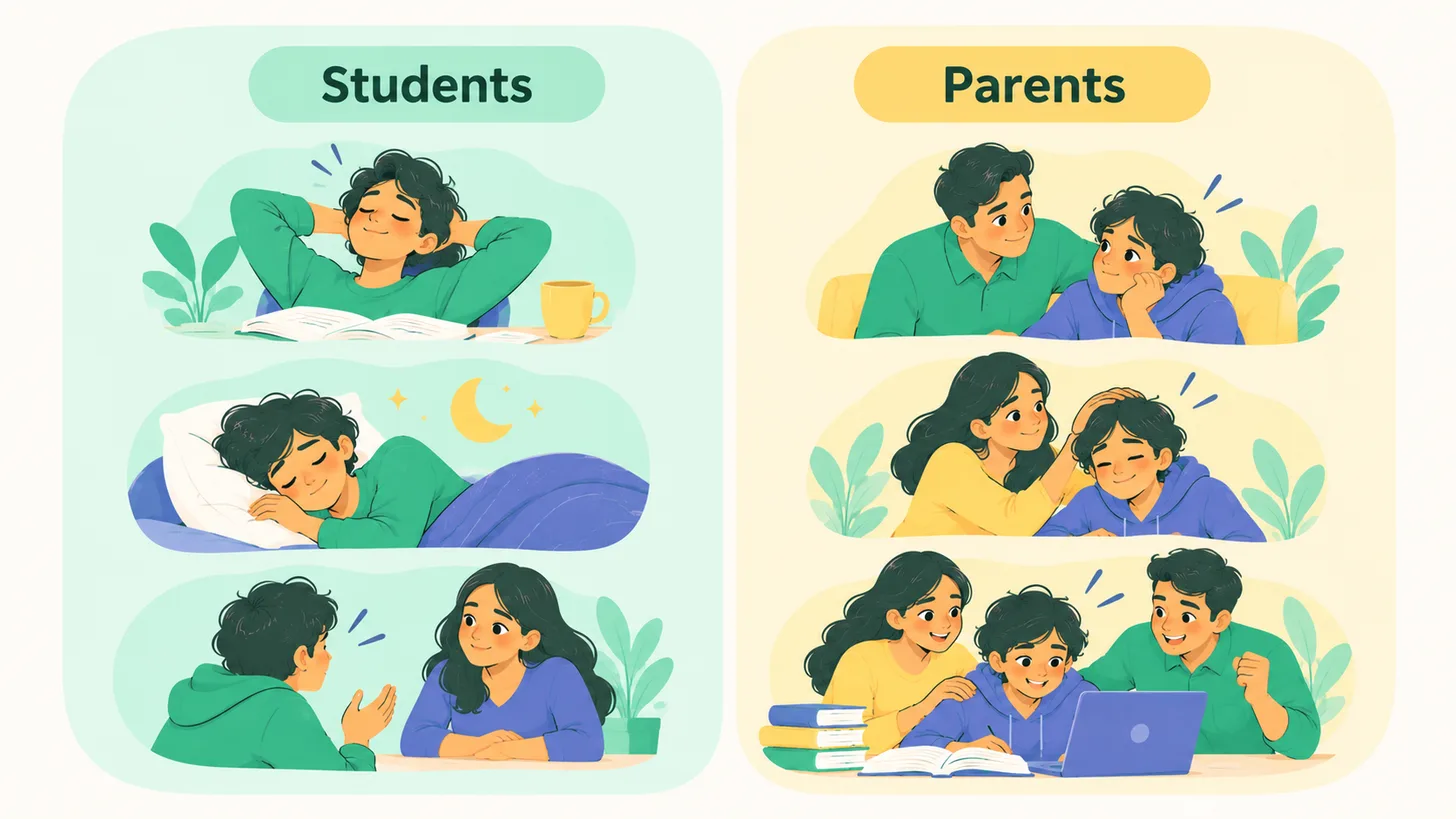
A teacher who notices a quiet change often sees it before parents do, because they see the student every single school day across a predictable week. Small, honest classroom changes lower the daily load more than any single motivational workshop can.
Short things that help: a confidential check-in once a week, a counsellor who is not the discipline teacher, a rule that marks are not read out, a flag for two missed days. The Ministry of Health’s Mental Health Programme sets the frame.
In short: one trusted adult in school changes outcomes.
If you have tried everything and nothing is working
Not every bout of pressure needs therapy, and this is the honest part. If what you need right now is to sleep tonight, a session on Friday is not the fastest tool. Call Tele-MANAS, drink water and go to bed.
If you have tried breathing, routine and two honest conversations, and the loop is still loud, pause before deciding it has failed. Some weeks it works, some weeks it does not.
In short: a bad fit, a hard month and a real problem look alike from inside.
FAQ
How to get rid of academic stress?
Not in a day, but you can lower it in a week. Calm the body with slow breathing or 5-4-3-2-1, hold two habits for three weeks, and talk to a trusted adult. If the loop stays loud, see a counsellor.
What is the relationship between study pressure and anxiety?
Related, not the same. Study pressure is a body alarm that eases when the trigger does. Anxiety is a longer loop that stays after exams end. If pressure has not lifted two weeks after a paper, talk to a therapist.
What are the silent signs that my child is stressed?
Watch for a quiet drift. Over-sleeping or over-studying with no real learning, perfectionism, “I am fine” scripts, avoiding results day, long hours alone, dropping a sport. These matter as much as tears or anger.
What are the main causes of stress in students in India?
Several at once. Boards and entrance exams, parental expectation, comparison with cousins, coaching schedules, hostel isolation, poor sleep and screen time. Most carry three or four together, which is why one single fix rarely holds.
Can study pressure cause depression?
Yes. Long pressure without rest or sleep raises the risk. Signs include low mood for two weeks, loss of interest, hopelessness and sleep or appetite shifts. If you see these, see a psychologist. Early help shortens the hard months.
Is online therapy good for a student afraid of being seen?
For many, yes. Online sessions keep the therapist out of school networks, save travel time, and let a student speak from a safe room. An RCI psychologist does the same work online.




Share your thoughts