

By Sakshi Shah, Co-founder, GoodLives. Updated October 2026.
What this blog includes
- What hustle culture is, in plain words
- How it got loud in India (and who it hits hardest)
- The honest cost: sleep, cortisol, heart risk, and your relationships
- What rest actually is, and reframes that help
- When hustle has tipped into burnout, anxiety or depression
What is hustle culture, in plain words?
Hustle culture is the belief that your worth equals your output. That rest is weakness. That being busy, tired and reachable at all hours is a sign of ambition rather than a problem. It is less a work schedule and more a worldview, and it shapes how you feel about yourself on a quiet Sunday.
You will recognise it in small moments. The guilt when a Saturday passes without a to-do list closed. The pride in replying to a WhatsApp from a client at 11 pm. The low restlessness, that bechaini (restlessness) that shows up on a day off because stopping feels unsafe.
In short: hustle culture is not about working hard. It is about believing you are only valuable when you are producing.
How did hustle culture get this loud in India?
A few things stacked. First, media did its part. In late 2023, Infosys co-founder Narayana Murthy said young Indians should work 70 hours a week to lift national productivity, and he stood by the comment through 2024. In January 2025, L&T chairman S.N. Subrahmanyan suggested a 90-hour work week, including Sundays. These were two of the loudest desks in Indian business, and they were cheered as plainly as they were criticised.
Second, LinkedIn turned being busy into a performance. The 5 am post, the humble-brag about missing a cousin’s wedding to ship a feature. If you are a first-gen professional in a WhatsApp group with cousins who all got into IITs, that feed is not neutral. It is a mirror that says do more.
Third, startup India needed a story, and the story became founders who do not sleep. The grind was dressed up as a national project.
In short: hustle culture in India is partly economic, partly performative, and almost entirely borrowed from a US tech script that even US tech has started to question.
The honest cost: what hustle culture does to your mind and body
The research is unkind here, and it is worth sitting with.
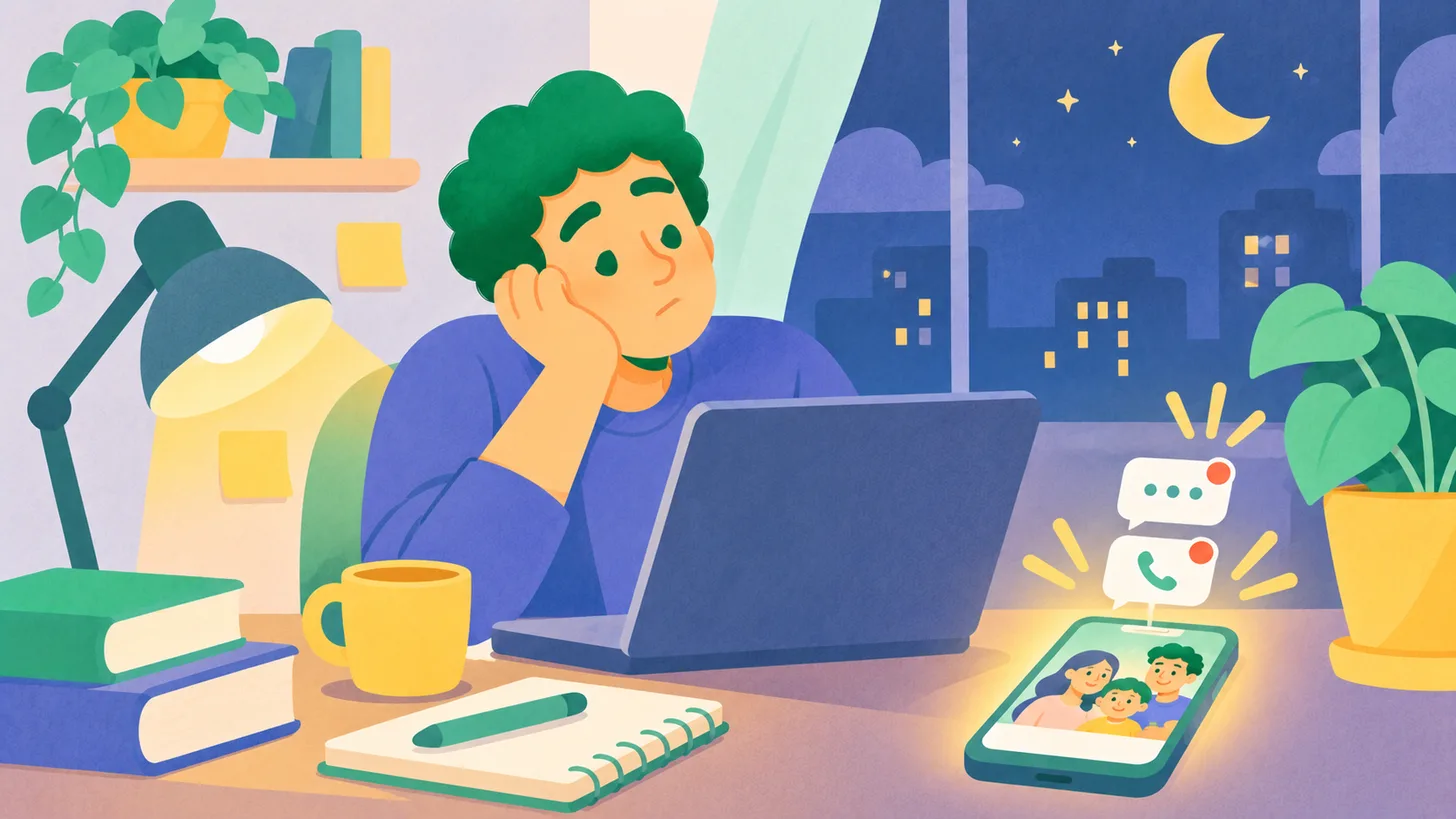
Working long hours is not just tiring, it is a health risk. The World Health Organization and ILO estimate that working 55 or more hours a week was linked to 745,000 deaths from stroke and heart disease in 2016, a 29% rise since 2000. People working those hours had a 35% higher risk of stroke and a 17% higher risk of dying from heart disease, compared with a 35 to 40 hour week. Most of these deaths were in people aged 60 to 79 who had worked long hours earlier in life. The bill does not arrive right away. It arrives twenty years late.
Sleep is where damage shows up first. In Why We Sleep, neuroscientist Matthew Walker lays out that adults need seven to nine hours a night, and that regular short sleep is linked to impaired memory, poorer immune function, higher accident risk and worse mood. Hustle culture asks you to treat sleep as negotiable. Your brain does not treat it as negotiable.
In short: sleep debt, cortisol wear, cardiac risk and relationship atrophy are the quiet taxes hustle culture collects over years.
If you want to see where your week sits right now, open the GoodLives app and take the burnout self-check. Two minutes, honest questions, no commitment. > Take the burnout self-check: open the app
Why hustle culture hits women and first-generation professionals harder in India
Not everyone pays the same price, and this is where the India context matters.
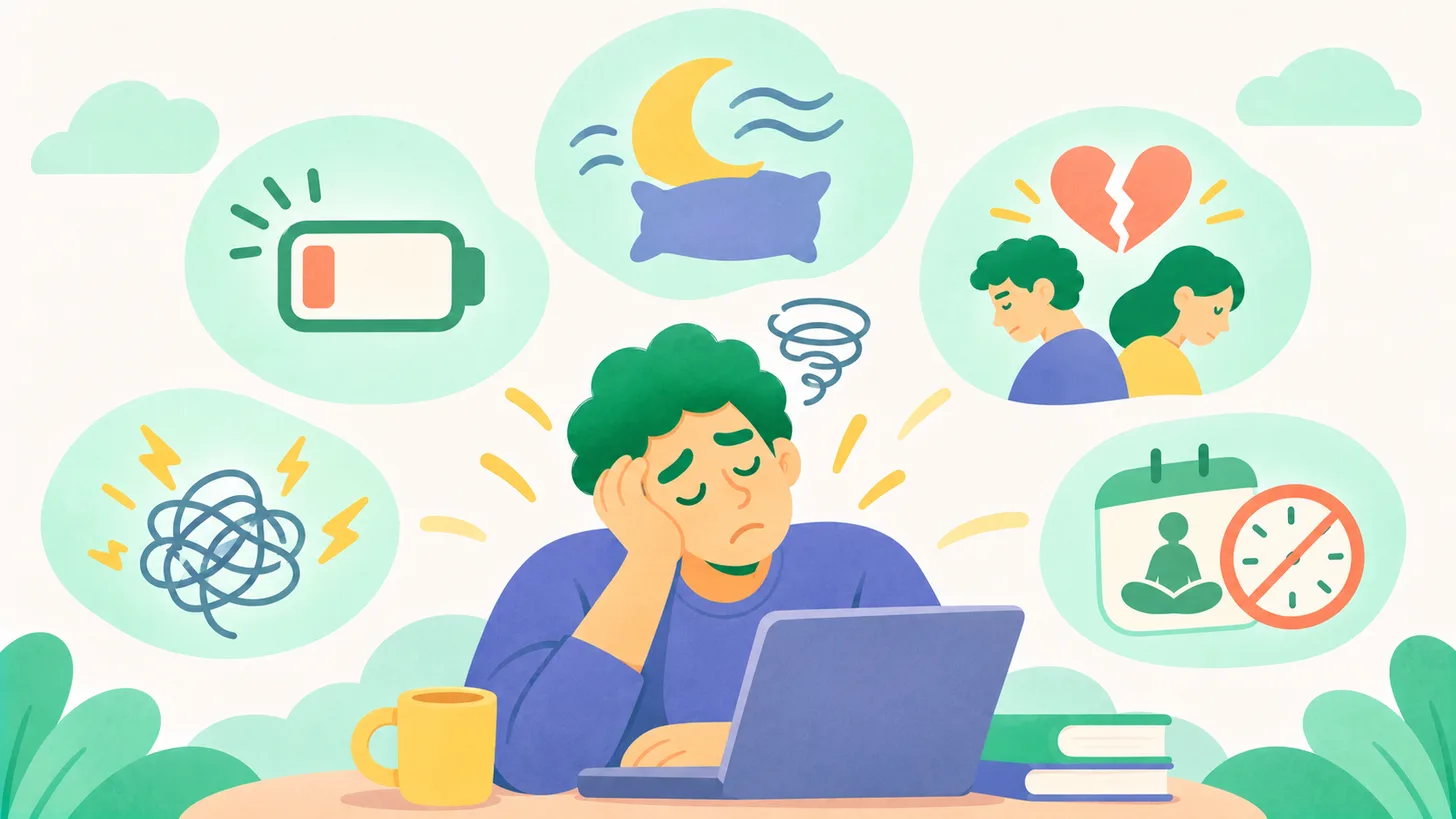
Women in Indian workplaces are often doing a second, unpaid shift at home. The paid day ends and the invisible labour starts: the groceries, the cook’s shift, the parent-teacher meeting, the elder parent’s appointment, the WhatsApp planning for a cousin’s wedding. Many women also report feeling they must out-work male colleagues to be read as serious. Add family expectations on a timeline, and the “70-hour week” becomes a 100-hour week with the extra 30 unpaid and uncounted.
First-generation professionals carry a different weight. If you are the first in your family to earn in rupees your parents did not grow up with, there is no safety net underneath the ambition. A quiet month at work does not feel quiet. It feels like the ceiling you fought your way through is about to collapse. The honest fear is scarcity, and hustle culture speaks fluently to scarcity. It says, if you slow down, you lose it all.
In short: women and first-gen professionals do not just do more work. They carry a heavier belief that stopping is unsafe, which is why rest can feel like betrayal.
What is actually underneath hustle culture?
The surface is schedules. Underneath are older feelings.
For many readers, hustle is a way to manage anxiety. If you keep moving, the thoughts do not catch up with you. Stopping feels dangerous because stopping is when the mind sits down and starts asking questions you have been avoiding.
For some, it is perfectionism. Being busy is a shield. If you did not finish, it is because there was too much, not because you are not enough. The hidden belief is that worth is conditional, earned by output, revoked when the output pauses.
For others, it is the fear of invisibility. In a competitive office, being the one who is always available is a way to be seen, especially early in a career when you are still proving you belong.
None of these is a character flaw. They are honest responses to real pressure. The problem is that hustle culture mistakes the shield for a strategy.
Rest is not laziness: what rest actually is
The reframe that helped me most, and that research backs, is this: rest is not the absence of work. Rest is a different kind of work your body and brain do while you are not at a laptop.
In his book Rest, Alex Soojung-Kim Pang argues that the historical figures we think of as hyper-productive (Darwin, Hemingway, Churchill) worked around four to five focused hours a day and treated rest as an active practice. He distinguishes between passive rest (collapsing on a sofa, scrolling, numbing) and deliberate rest: long walks, naps, strong hobbies, deep sleep, time with people who do not want anything from you.
Deliberate rest is where ideas settle, memory consolidates, and the nervous system comes off red alert. It is not an indulgence. It is the second half of the shift.
In short: rest is productive, in the plain biological sense. You are not slacking when you sleep. You are doing the maintenance work the day shift cannot do.
Reframes that help, when “rest is lazy” is still your first thought
If your first instinct is still that stepping back makes you weak, three reframes are worth sitting with. Rest IS productive. Sustainable pace beats unsustainable sprint. Worth is not earned.
Try this one with yourself when the “I should be working” thought lands too hard. Name the thought. Ask what it is costing you. Write a kinder, more accurate version. The exercise below walks you through it in two minutes.
Catch the thought
What thought is weighing on you right now? Write it down just as it sounds in your head.
Name the trap
Does your thought fall into one of these common patterns? Pick any that fit. This part is optional.
Look again
Use these as nudges, not rules. Then write one line back to yourself.
Your reframe
Thoughts are not facts. You just practised stepping back.
This stays on your device. Nothing is saved or sent.
The point is not to delete the thought. The point is to stop obeying it as if it were a fact.
When has hustle tipped into burnout, anxiety or depression?
A hard-working month is not burnout. Burnout is a pattern, and it has a shape worth knowing before you are deep in it.
Watch for these signals, especially if more than two have been true for a month or longer.
- You feel tired after a weekend of sleep, not just a weekday.
- Small requests at work feel disproportionate, like your fuse is shorter than the task.
- You feel cynical about work you used to care about, or detached, like you are watching yourself do your job from outside.
- Sleep is broken even when you have time to sleep.
- You have stopped doing one thing you used to love, and you cannot name when it fell off.
- Your body is talking louder: headaches, acidity, chest tightness, a lower back that will not settle.
- You are using more caffeine, alcohol, nicotine or scrolling to manage the edge.
If three or more are true, this is not a motivation problem. This is a signal.
Not every anxious month needs therapy. Some of this is a season you walk through, with sleep, a plan, and one honest conversation. But if the signals have been loud for more than four to six weeks, or if there are thoughts of hurting yourself, that is the moment to talk to someone trained for it, not someone who will tell you to push through. See our guide on burnout prevention and early signs if you want a slower read on this.
What recovery actually looks like at 3 months, 6 months and 1 year
Honest timelines, not promises.
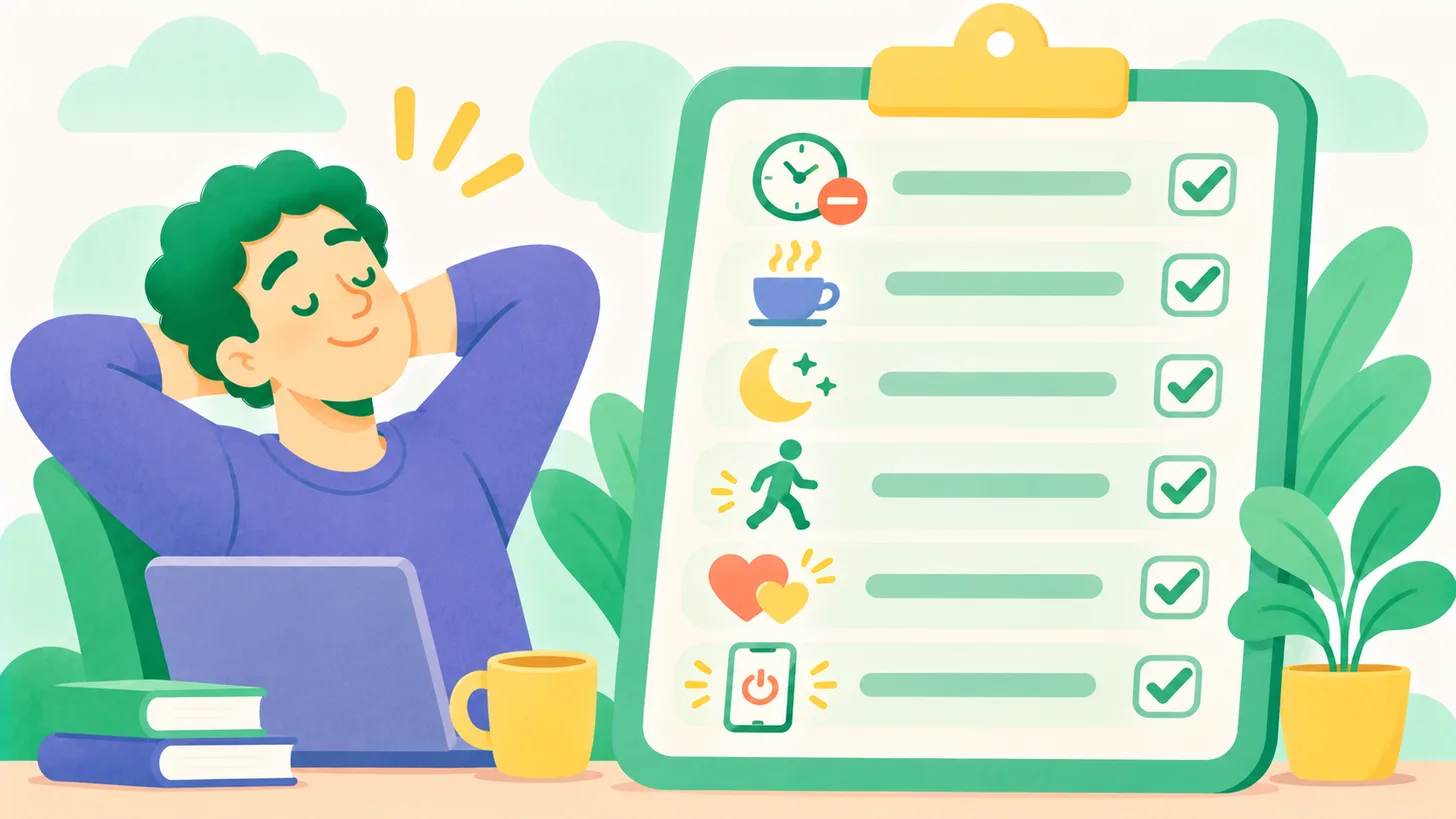
By three months, small things change. You might sleep through the night more often. The Sunday evening dread softens. One hobby you had abandoned starts to feel possible again. You still have hard days, and you still catch yourself reaching for the phone when you are tired. The pattern is not gone. It is just slower.
By six months, your week has a different shape. You have usually said no to one thing you would have said yes to a year ago, and the earth did not stop. You are starting to notice the people and conversations that drain you, and the ones that fill you back up.
By a year, your identity has shifted a little. You still work hard. You just no longer think work is where your worth lives. If you have been in therapy, this is where the stuff underneath the hustle (perfectionism, scarcity, the fear of being invisible) has been actually examined. The pressure outside you has not changed. Your relationship to it has.
In short: this is slow work, and that is why people who build sustainable careers get there before the sprinters do.
Journaling helps you spot the loop. A therapist helps you break it. If you want to try one session and see how it feels, you can book one on GoodLives with a verified psychologist in English, Hindi and more Indian languages, and stop whenever you want.
Book a session on GoodLives: open the app
If you are reading this and thinking you cannot afford to slow down, that may be literally true. Do the smallest version. One screen-free hour on Sunday morning. One honest voice note to one friend. One week of eight-hour sleep as an experiment. You do not have to overhaul your life. You have to make one place where hustle is not allowed in.
If this feels like you, the quieter guides on procrastination and getting things done and on self-doubt are often where the deeper work starts, because hustle culture usually sits on top of one of those two older stories.
Frequently asked questions about hustle culture
What is hustle culture?
Hustle culture is the belief that your worth is measured by how much you produce, and that rest is weakness. It is a cultural pattern, not a job description. You can hold it while working short hours; you can also work long hours without holding it.
Why is Gen Z pushing back against hustle culture?
Gen Z grew up watching an older cohort reach burnout, broken marriages and health scares in their forties, and often decided that trade is not worth it. The pushback is less about laziness and more about seeing the full receipt. Terms like “quiet quitting” and “soft life” are reactions, not slogans.
Is hustle culture good or bad?
Mostly bad for the person, and only sometimes good for the organisation. Short sprints during a product launch or exam season are human. A permanent sprint is where health, relationships and judgement break down. Hustle works until it doesn’t, and the breaking point is personal.
Who started hustle culture?
No one person owns it. It grew out of US startup culture in the 2000s and 2010s, got amplified by social media, and landed in India through a mix of tech employers, business media and public comments from senior figures. Treat it as a system, not a villain.
How do I manage work-life balance as a woman in India?
When should I see a therapist, not just rest more?
When the pattern has lasted longer than four to six weeks, when sleep and weekends are not fixing it, when you have stopped enjoying things you used to love, or when there are thoughts of hurting yourself. A therapist is not a last resort. They are a trained second brain who can help you see what you are too close to see.
—
Not medical advice. This article is for information and support. It is not a substitute for diagnosis, treatment or a therapist’s judgement.
—
—

Share your thoughts