
What this blog includes
- What the Support Circle is, in plain words, and what it is not
- Why peer support helps when you cannot talk to the people closest to you
- Who the circle fits, and when you still need a therapist
- How moderation, safety and anonymous handles actually work
- How to join, free, with no commitment
If you have tried to open up about anxiety at a family dinner and ended up making a joke of it instead, you are not alone. Most of us have had that moment, and swallowed it.
A mental health community in India has to meet you where that moment lives, which is on a phone, late, with family in the next room, with no appointment and no fuss. The GoodLives Support Circle is a free, moderated space where you show up under a handle you choose.
Trusted by 500K+ people, GoodLives built the circle because a therapy session is only one hour of your week, and the rest of your week also needs company.
What is the GoodLives Support Circle, and is it a mental health community that fits you?
The Support Circle is a free, online, moderated mental health community for people in India. You join under a handle you choose, pick a topic circle (anxiety, low mood, work stress, grief, relationships, students, LGBTQIA+), and share as much or as little as you want. It is not therapy, and it is not a diagnosis service.
The circle is a place to be heard first. If a sentence you have been carrying for weeks finally comes out at midnight, someone else who has carried the same sentence will reply. Nobody asks for your real name. Nobody charges you.
The circle is not a clinic. The peers moderating are trained volunteers, not clinical psychologists, and they will say so on the welcome page. For diagnosis, for medicine, for a 50-minute weekly hour, you still want a therapist. The circle sits beside therapy, not instead of it.
In short: the Support Circle is a free online room where other people in India can hear you quickly, under a handle you choose, with trained volunteers watching the room.
Why peer support helps when the people closest to you cannot know yet
Peer support is older than the word therapy. People sitting with people, saying the same thing out loud and feeling the room exhale, has a long record of changing how we feel.
The National Mental Health Survey of India 2015 to 2016, run by NIMHANS, found a treatment gap of more than 80 per cent for common mental disorders in India. Most people with a real concern never speak to a professional at all.
Peer-reviewed research backs the feeling. A 2017 systematic review by the US Substance Abuse and Mental Health Services Administration (SAMHSA) found that peer support is linked with reduced symptoms of depression and higher self-efficacy.
An earlier paper by Mead and MacNeil (2006) argued that the active ingredient is mutuality. When both of you know the terrain, nobody has to translate.
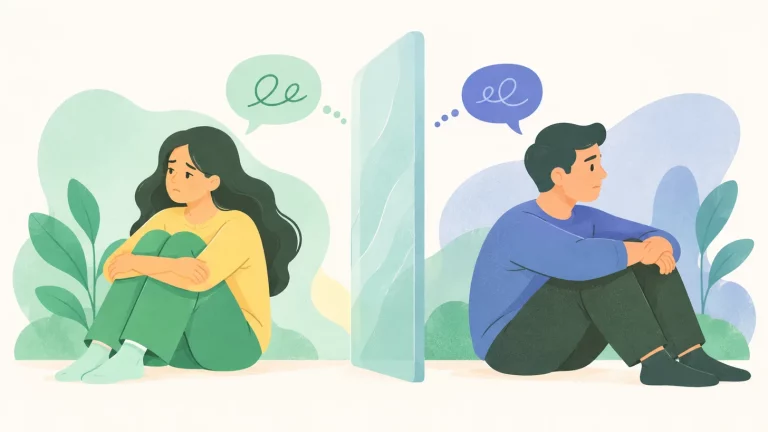
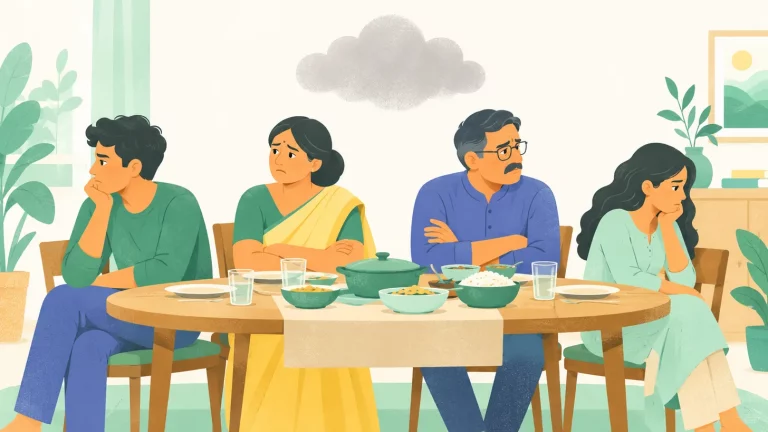
For an Indian reader, the gap is often not the therapist. It is the family dinner where you cannot say you have anxiety, the roommate who sleeps six feet away, the office group where talking about akelaapan (the specific kind of loneliness that lives in a crowd) would get screenshotted. The circle is where the sentence lands.
In short: peer support shows up where therapy cannot reach every week, and where family cannot be told yet, and research says it helps.
Who the Support Circle is for, and who it is not for
The circle fits a few familiar readers, and it is honest about who it does not fit.
Fits well
- Someone between therapy sessions who needs company on a bad Tuesday
- Someone who cannot afford therapy this month and wants a free start
- Someone exploring whether to try therapy, who wants to hear others first
- A student, a new parent, or an urban worker who feels alone in their city
Not the right place yet
- Someone in active crisis who needs a helpline tonight
- Someone wanting a clinical diagnosis
- Someone looking for medication guidance
- Someone needing a formal letter for school, HR, or court
In short: the circle fits people who feel alone, between sessions, or still deciding on therapy; it is not a replacement for a clinician or a crisis line.
What a conversation inside the circle actually looks like
A conversation does not look like a self-help thread, and it does not look like a group therapy session. It looks more like a trusted group chat with gentle guardrails.
You enter under a handle (`QuietCat`, `TuesdayStorm`, whatever you want), and you pick a topic circle. You can post, reply to a post, send a kind reaction, or just read for a week before you say a word. There is no required length. There is no streak. There is no gamification pretending to be care.
Example: Picture a 27 year old in Pune posting at 11.40 pm, “the sunday scaries hit on friday now, is this normal”. Three replies within the hour. One asks what time she stops answering email, one shares the same pattern, one points to the sleep thread in another circle. A moderator checks in the next morning if the thread goes quiet.
In short: the circle reads like a kind group chat, with handles instead of names, topic rooms instead of a feed, and moderators who notice when a thread goes quiet.
How moderation works, and the moment a therapist steps in
The circle is moderated, which means the room is watched by a human. GoodLives trains peer facilitators on three things: a plain code of conduct, the warning signs of acute distress, and the escalation pathway. The facilitators are not clinicians, and they will say so on the welcome page.
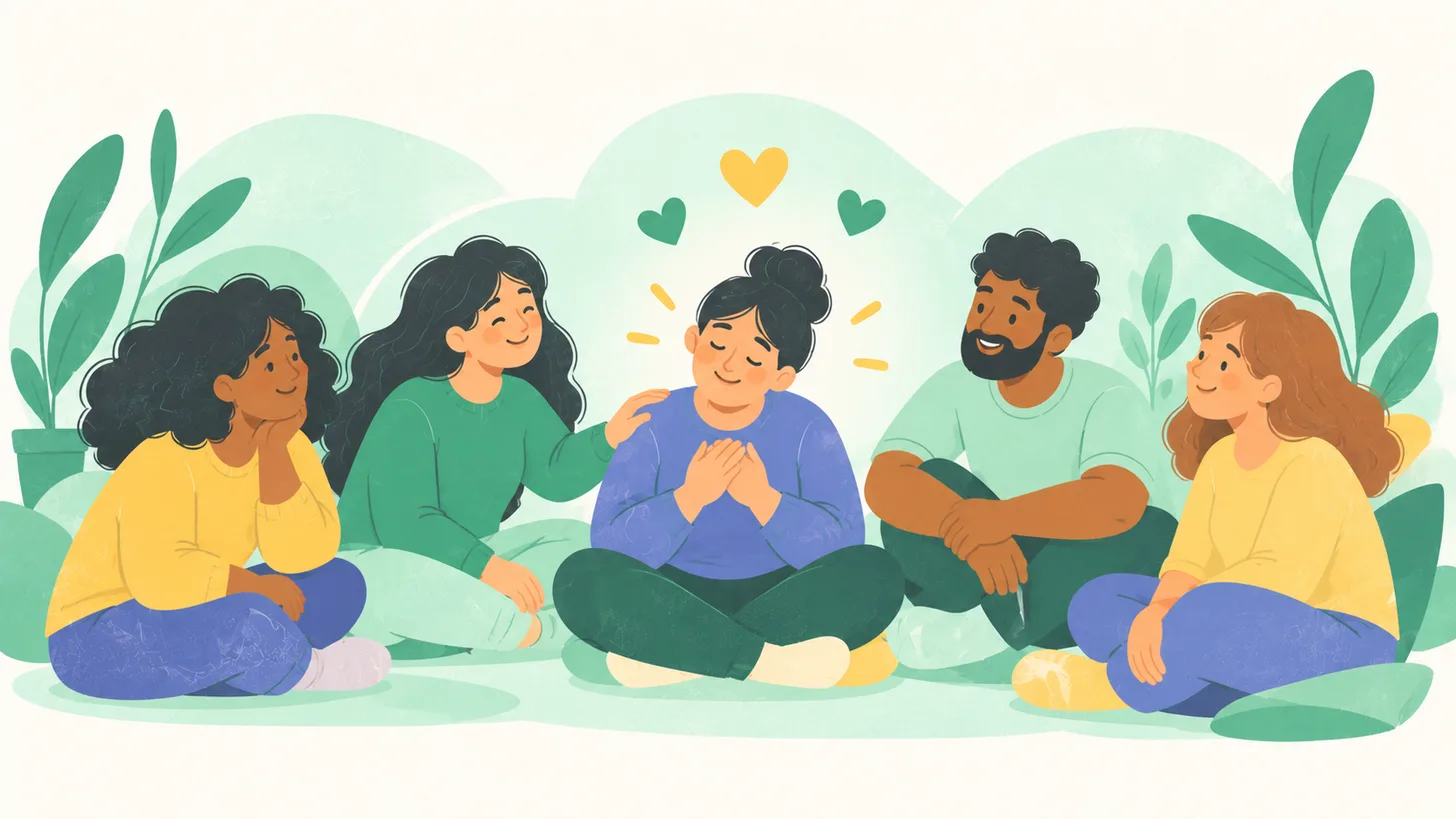
The moderator then flags the thread to a therapist on duty at GoodLives, who follows up through the app.
If you are the one who posted, you will not be publicly outed. The follow-up is private.
In short: peer facilitators run the room, moderators flag active crisis to a therapist, and nobody in the circle plays doctor.
Confidentiality, anonymous handles, and what happens to your data
The circle is designed so your name never has to leave your phone. You create a handle, you set a recovery email that is yours (never your parent’s, never your partner’s), and you can delete your account on your own from the settings.
GoodLives follows India’s Digital Personal Data Protection Act 2023 (DPDPA), stores conversations on encrypted servers, and does not sell data to advertisers.
The 5 Google rating on the GoodLives homepage reflects the trust people place in the way we handle sessions and messages. The circle sits inside the same rules.
If a family member picks up your phone, the app does not open with your real name on the screen. Push notifications can be muted by circle. You decide what the lock screen says.
In short: your handle is your identity in the circle, the storage is encrypted, DPDPA rules apply, and you can leave at any time.
When peer support is enough, and when you still need therapy
Not every heavy week needs a therapist. Some weeks need company, water, sleep, and a reply from someone who understands. Peer support is a good tool for feeling less alone, finding language for a feeling, and keeping going between sessions.
Peer support will not treat clinical depression, work through childhood trauma, prescribe medicine, or make a diagnosis. Peer support helps you ride out the week. A therapist helps you work on what caused the week.
A gentle test. If the same loop keeps coming back, if sleep has been off for three weeks, if daily function at work or at home has started to slip, that is the point to add a therapist to your week. The circle stays beside you in between.
If you have tried one therapist and it did not click, the circle is a reasonable place to pause before you try another. A bad fit is a real thing, not a verdict on therapy.
In short: use the circle for company and for finding words; add a therapist when the loop keeps coming back, sleep slips, or daily function is off.
How to join the GoodLives Support Circle today
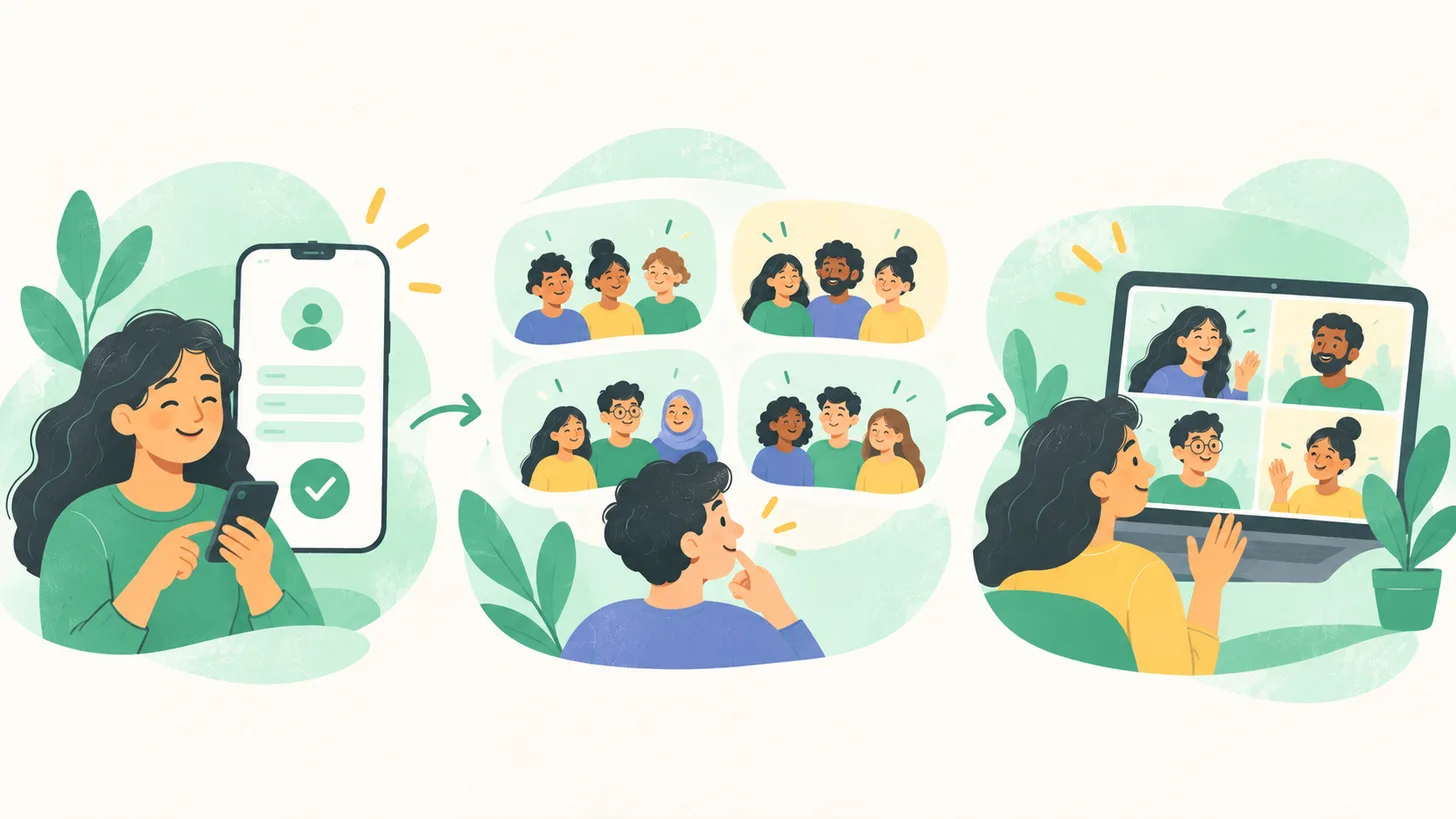
Joining takes about two minutes. You open the GoodLives app, choose a handle, pick one or two topic circles that fit your week, and read the code of conduct before you post. There is no payment page, no credit card, no “upgrade for more”. You can stay for one night and leave, or stay for a year.
If you want to listen before you speak, read for a few days. Nobody will ping you. If a post is sitting in you, write it in your notes app first, then paste it. If you are not sure which circle, pick the broadest one; a moderator will point you to the right thread.
For anyone who cannot afford therapy this month, our free online therapy in India guide names the government and NGO lines you can call tonight, and the circle is a kind place to sit while you wait for a call-back.
In short: the circle is one form, no payment, no commitment. Open the app, pick a handle, pick a circle, read first if you want.
FAQ
Is the GoodLives Support Circle really free?
Will my family or employer find out that I joined?
Is this an online therapy group?
What if I write something and get a cruel reply?
Can I talk about suicide or self-harm in the circle?
Which Indian languages are supported?
Can I join if I have never done therapy before?
This post is for information only and is not a substitute for professional care. If you are struggling, please speak to a qualified mental health professional.

Share your thoughts